Fresh Strawberry Lemonade Cake With Lemon Glaze Recipe
Fresh Strawberry Lemonade Cake With Lemon Glaze Recipe
Bring the sunshine into your kitchen with this vibrant Fresh Strawberry Lemonade Cake. Bursting with juicy strawberries and zesty lemon flavor, this moist, tender cake is topped with a sweet-tart glaze that perfectly captures the essence of summer in every bite.
20 minutes
55 minutes
1 hour 15 minutes
10-12 servings
Dessert
Baking
American
Vegetarian
There is something undeniably nostalgic about the combination of strawberries and lemons. It evokes memories of childhood lemonade stands, backyard picnics, and the golden glow of late afternoon sun. This Fresh Strawberry Lemonade Cake is essentially sunshine on a plate, designed to lift your spirits and tantalize your taste buds. Unlike heavy, dense winter desserts, this cake strikes a delicate balance; it is rich and buttery enough to feel indulgent, yet bright and acidic enough to remain refreshing.
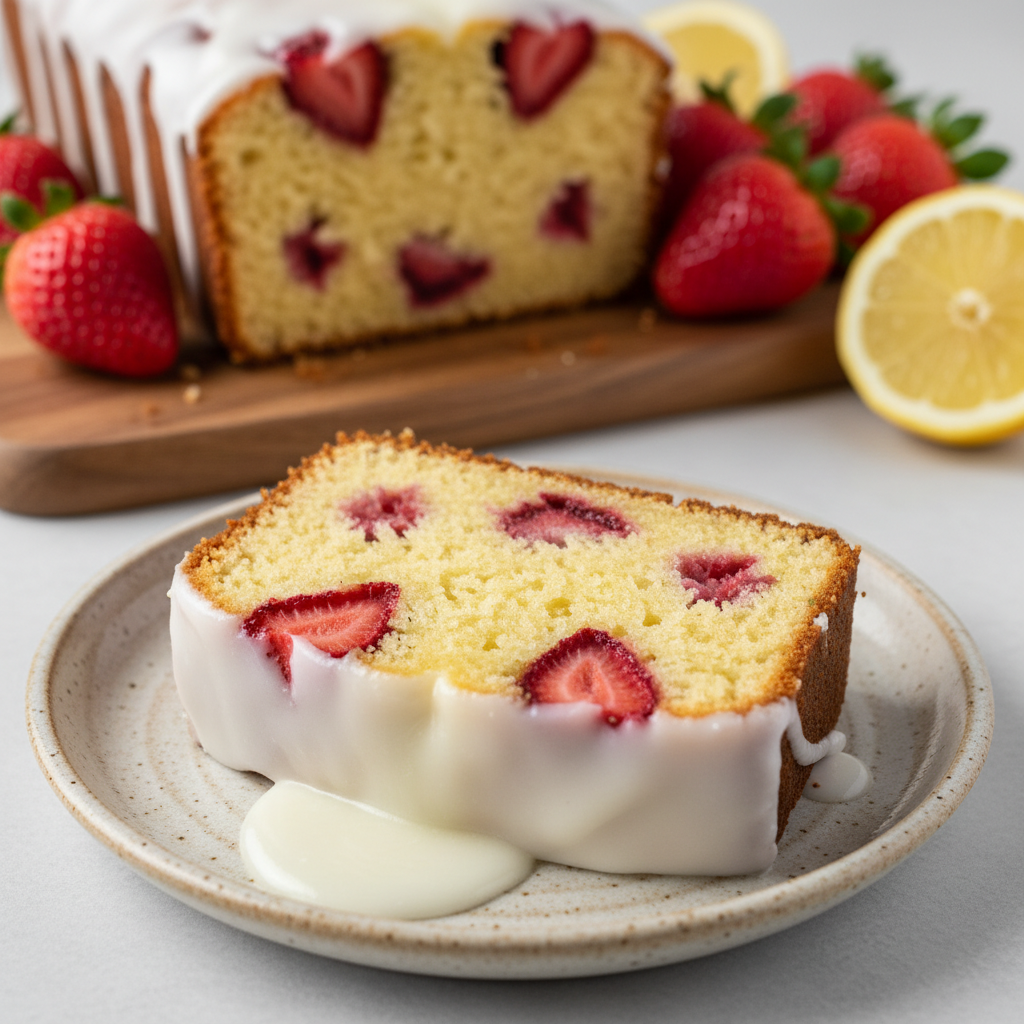
The magic begins with the batter, which is infused with fresh lemon zest and juice, ensuring that the citrus flavor permeates every crumb rather than just sitting on top. We fold in generous amounts of diced fresh strawberries, which roast slightly as the cake bakes, creating pockets of jammy sweetness that contrast beautifully with the tangy crumb. The texture is somewhere between a classic pound cake and a light sponge—sturdy enough to hold the fruit without becoming soggy, but tender enough to melt in your mouth.
To finish, a simple yet potent lemon glaze is drizzled over the top. As it sets, it creates a crackly, sugary shell that delivers an immediate punch of tartness. Whether you are hosting a bridal shower, looking for the perfect Easter dessert, or simply craving a sweet treat to enjoy with your morning coffee, this recipe is a guaranteed showstopper. It’s not just a cake; it’s a celebration of seasonal produce and the joy of baking from scratch.
History & Origins
The lineage of this Strawberry Lemonade Cake can be traced back to the classic American pound cake and the European tradition of fruit-studded tea cakes. Pound cake, dating back to the early 1700s in Northern Europe, originally called for a pound each of flour, butter, eggs, and sugar. Over centuries, leavening agents were introduced, resulting in lighter, more airy textures that we recognize today.
The specific pairing of strawberry and lemon, however, is deeply rooted in American culinary history. Lemonade itself gained massive popularity in the United States during the 19th century, particularly with the rise of the temperance movement, which promoted it as a wholesome alternative to alcohol. As refrigeration became more common in the 20th century, the availability of fresh fruit like strawberries expanded beyond their short growing season, allowing home bakers to experiment with incorporating fresh produce into their batters.
In the mid-20th century, ‘icebox cakes’ and fruit-flavored chiffon cakes became staples of community cookbooks and church potlucks. The concept of a ‘lemonade cake’ likely evolved from the desire to capture the flavor of the beverage in a solid form, often using lemonade concentrate in the 1950s and 60s. This modern iteration moves away from artificial concentrates, returning to the roots of baking with whole ingredients—fresh zest, real juice, and ripe berries—reflecting the contemporary shift towards farm-to-table cooking and the appreciation of authentic, natural flavors.
Why This Recipe Works
This recipe succeeds where others fail due to a few key scientific principles of baking. First, the issue of ‘sinking fruit’ is addressed. Fresh strawberries are heavy and full of water; in a thin batter, they will plummet to the bottom of the pan, resulting in a soggy base and a plain top. By using a batter with a slightly higher density—bolstered by sour cream—and tossing the diced strawberries in a tablespoon of flour before folding them in, we create friction that suspends the fruit evenly throughout the cake.
Secondly, the flavor profile is meticulously balanced. Lemon juice is acidic, which can sometimes inhibit the rising power of baking soda if not calculated correctly. Here, we use a combination of baking powder and baking soda to ensure a proper rise despite the acidity of the lemon juice and sour cream. The sour cream is a secret weapon; its fat content inhibits gluten formation just enough to keep the cake tender, while its acidity tenderizes the crumb.
Finally, the dual-application of lemon ensures the flavor doesn’t fade during baking. We use lemon zest rubbed into the sugar (to release essential oils) for the batter, and fresh lemon juice for the glaze. This layering technique means you get a deep, aromatic citrus note in the cake and a sharp, bright zing in the glaze, providing a multi-dimensional taste experience.
Why You’ll Love This Recipe
- ✓Bursting with fresh, jammy strawberries in every bite
- ✓Bright and zesty lemon flavor from both juice and zest
- ✓Moist, tender crumb thanks to the addition of sour cream
- ✓Simple two-ingredient glaze that sets perfectly
- ✓Beautiful presentation perfect for spring and summer gatherings
- ✓Freezes beautifully for make-ahead convenience
Equipment You’ll Need
- ✓9×5 inch Loaf Pan or 10-cup Bundt Pan
- ✓Stand Mixer or Electric Hand Mixer
- ✓Large Mixing Bowl
- ✓Medium Mixing Bowl
- ✓Microplane or Zester
- ✓Citrus Juicer
- ✓Rubber Spatula
- ✓Cooling Rack
- ✓Whisk
Ingredients
- ✓2 cups All-Purpose Flour (divided)
- ✓1/2 teaspoon Baking Powder
- ✓1/2 teaspoon Baking Soda
- ✓1/2 teaspoon Salt
- ✓1/2 cup Unsalted Butter, softened to room temperature
- ✓1 cup Granulated Sugar
- ✓1 large Egg, room temperature
- ✓1 teaspoon Pure Vanilla Extract
- ✓2 tablespoons Lemon Zest (approx. 2 lemons)
- ✓1/3 cup Fresh Lemon Juice
- ✓1/2 cup Sour Cream or Greek Yogurt
- ✓1 1/2 cups Fresh Strawberries, hulled and diced small
- ✓1 cup Powdered Sugar (for glaze)
- ✓2 tablespoons Fresh Lemon Juice (for glaze)
- ✓1 teaspoon Milk or Cream (optional, for glaze consistency)
Instructions
- Preheat your oven to 350°F (175°C). Grease a 9×5 inch loaf pan liberally with butter or non-stick baking spray and line it with parchment paper for easy removal.
- In a medium bowl, whisk together 1 3/4 cups of the flour, baking powder, baking soda, and salt. Set aside.
- In a small bowl, toss the diced strawberries with the remaining 1/4 cup of flour until they are evenly coated. This prevents them from sinking to the bottom of the cake.
- In the bowl of a stand mixer fitted with the paddle attachment (or using a hand mixer), cream the softened butter, granulated sugar, and lemon zest together on medium-high speed for 3-4 minutes until light, fluffy, and pale yellow.
- Add the egg and vanilla extract to the butter mixture. Beat on medium speed until fully incorporated, scraping down the sides of the bowl as needed.
- Reduce the mixer speed to low. Add about half of the flour mixture, followed by the lemon juice and sour cream. Mix just until combined.
- Add the remaining flour mixture and mix until just barely combined. Do not overmix.
- Remove the bowl from the mixer. Using a rubber spatula, gently fold in the flour-coated strawberries by hand. Be careful not to crush the berries.
- Pour the batter into the prepared loaf pan and smooth the top with the spatula. Tap the pan gently on the counter to release any large air bubbles.
- Bake for 50-60 minutes, or until a toothpick inserted into the center comes out clean or with just a few moist crumbs. If the top starts browning too quickly after 40 minutes, loosely tent the pan with aluminum foil.
- Remove from the oven and let the cake cool in the pan for 15-20 minutes. Then, lift it out using the parchment paper handles and transfer to a wire rack to cool completely.
- While the cake cools, make the glaze. In a small bowl, whisk together the powdered sugar and 2 tablespoons of lemon juice until smooth. If the glaze is too thick, add 1 teaspoon of milk; if too thin, add more powdered sugar.
- Once the cake is completely cool, drizzle the glaze generously over the top, allowing it to drip down the sides. Let the glaze set for 15 minutes before slicing.
Expert Cooking Tips
- ✓Room temperature ingredients are crucial. Ensure your butter, egg, and sour cream are not cold, or the batter may curdle.
- ✓Rub the lemon zest into the granulated sugar with your fingers before creaming with the butter. This releases the lemon oils for a more potent flavor.
- ✓Do not skip tossing the strawberries in flour. This is the only way to ensure equal distribution of fruit throughout the loaf.
- ✓Use fresh lemon juice, not bottled. The flavor difference is significant in a recipe that relies so heavily on citrus notes.
- ✓Dice the strawberries small. Large chunks of fruit contain too much water and can create soggy pockets that cause the cake to fall apart when sliced.
- ✓Let the cake cool completely before glazing. If the cake is warm, the glaze will simply melt and soak into the crumb rather than sitting on top.
- ✓If using a dark metal pan, check the cake 5-10 minutes early as dark pans conduct heat faster and can burn the edges.
Substitutions and Variations
This recipe is quite versatile regarding substitutions. If you don’t have sour cream, full-fat plain Greek yogurt is an excellent 1:1 substitute that maintains the moisture and tang. For a gluten-free version, use a high-quality 1:1 gluten-free all-purpose flour blend that contains xanthan gum; the texture may be slightly denser but still delicious. If strawberries aren’t in season, you can substitute raspberries or blueberries, though raspberries are more delicate and should be folded in very gently. You can also use frozen berries, but do not thaw them first; toss them in flour while frozen and increase baking time by 5-10 minutes. For a different citrus profile, try using orange or lime zest and juice instead of lemon.
Common Mistakes to Avoid
The most common mistake with this cake is overmixing the batter after adding the flour. Overmixing develops gluten, resulting in a tough, rubbery cake rather than a tender one. Stop mixing as soon as the flour streaks disappear. Another frequent error is using strawberries that are cut too large; they release too much moisture and can make the cake soggy or cause it to collapse in the center. Ensure your baking powder and soda are fresh; expired leavening agents will result in a dense, flat cake. Finally, rushing the cooling process is a mistake—trying to remove a hot cake from the pan often leads to it breaking apart.
Serving Suggestions
This cake is beautiful on its own, but can be dressed up for special occasions. Serve thick slices with a dollop of freshly whipped cream or a scoop of vanilla bean ice cream to cut the tartness. A garnish of fresh strawberry slices and a sprig of mint adds a professional touch. It pairs wonderfully with hot Earl Grey tea, iced coffee, or a cold glass of milk. For a brunch setting, serve it alongside a savory quiche to balance the sweetness.
Storage and Reheating Tips
Store the cake in an airtight container at room temperature for up to 3 days. Because of the fresh fruit, if your kitchen is particularly hot or humid, it is safer to store it in the refrigerator for up to 5 days, though this may dry out the crumb slightly—bring it to room temperature before eating. To freeze, wrap the unglazed loaf (or individual slices) tightly in plastic wrap, then in aluminum foil. It can be frozen for up to 3 months. Thaw overnight in the refrigerator and glaze before serving.
Nutrition Facts (Estimated)
| Serving Size | 1 slice |
| Calories | 340 |
| Fat | 16g |
| Saturated Fat | 9g |
| Unsaturated Fat | 6g |
| Trans Fat | 0g |
| Cholesterol | 65mg |
| Sodium | 180mg |
| Carbohydrates | 48g |
| Fiber | 1g |
| Sugar | 28g |
| Protein | 4g |
Frequently Asked Questions
Can I use frozen strawberries?
Yes, you can use frozen strawberries. Do not thaw them before using, as this releases too much liquid. Toss them in the flour while frozen and fold them in. You may need to add 5-10 minutes to the baking time.
Why did my berries sink to the bottom?
Berries usually sink because the batter is too thin or the berries weren’t coated in flour. Ensure you toss the diced berries in the reserved flour, which creates friction to hold them in place.
Can I bake this in a Bundt pan?
Yes, this recipe works well in a standard 10-cup Bundt pan. You may need to double the recipe for a large Bundt pan, or simply reduce the baking time slightly if the batter doesn’t fill the pan deep enough. Always grease a Bundt pan thoroughly.
Why is my cake soggy in the middle?
This usually happens if the strawberries were too large or the cake was underbaked. Test with a toothpick; if it comes out with wet batter, keep baking. If the top is browning, cover with foil.
Can I reduce the sugar?
You can reduce the sugar in the cake by about 1/4 cup without ruining the structure, but the cake will be less moist and more tart. We do not recommend reducing it further as sugar provides moisture and tenderness.
How do I make the glaze thicker?
Simply add more powdered sugar, a tablespoon at a time, until you reach your desired consistency. If it’s too thick, add drops of lemon juice or milk.
Can I make this into muffins?
Absolutely. Divide the batter into a 12-cup muffin tin lined with paper liners. Bake at 375°F (190°C) for 18-22 minutes.
Is the sour cream necessary?
Sour cream adds fat and acidity, which creates a very tender, moist crumb. If you omit it, the cake will be drier. Greek yogurt is the best substitute.
Conclusion
This Fresh Strawberry Lemonade Cake with Lemon Glaze is more than just a dessert; it is a vibrant celebration of flavor that brightens any day. The combination of sweet, ruby-red strawberries and zesty lemon creates a harmony that is both comforting and refreshing. Whether you are an experienced baker or a novice in the kitchen, this recipe is forgiving and rewarding, filling your home with the irresistible scent of warm citrus and vanilla. We hope this cake becomes a staple in your spring and summer recipe rotation, bringing smiles to everyone you share it with.