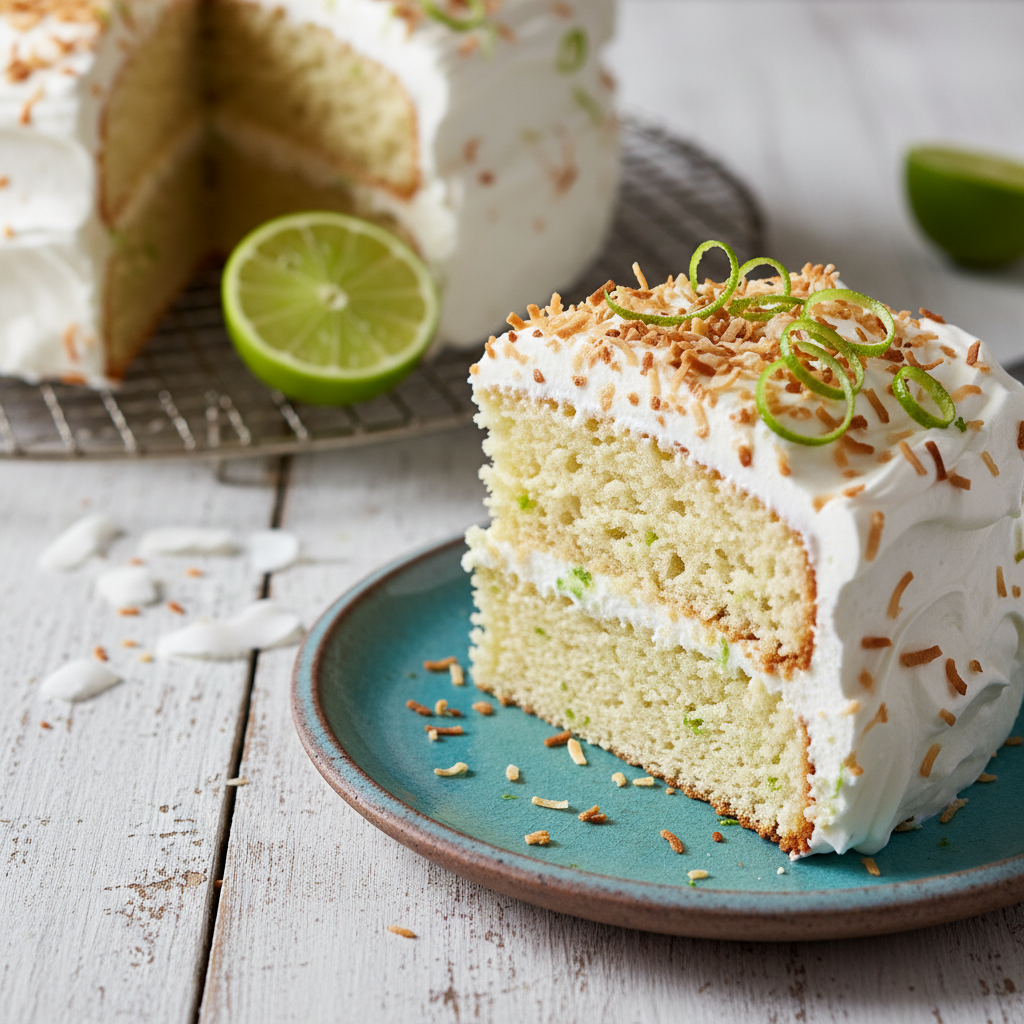
Paradise on a Plate: Fresh Coconut Lime Cake With Stabilized Whipped Cream Frosting
Fresh Coconut Lime Cake With Whipped Cream Frosting Recipe
Transport your taste buds to the tropics with this light and airy coconut lime cake. Featuring fresh lime zest, creamy coconut milk, and a cloud-like stabilized whipped cream frosting, it is the perfect balance of zesty and sweet for any celebration.
45 minutes
35 minutes
2 hours (includes cooling)
12 servings
Dessert
Baking
American / Tropical
Vegetarian
There is something undeniably magical about the combination of coconut and lime. It is a flavor pairing that instantly evokes images of white sandy beaches, swaying palm trees, and the refreshing breeze of a tropical vacation. This Fresh Coconut Lime Cake is designed to capture that exact feeling in dessert form. Unlike dense, heavy pound cakes or overly sugary confections, this recipe focuses on a tender, moist crumb that gets its richness from full-fat coconut milk rather than just butter alone. The addition of fresh lime zest and juice into the batter cuts through the sweetness, providing a bright, aromatic lift that dances on the palate. But the real showstopper here is the frosting. We have skipped the heavy, cloying buttercream in favor of a stabilized whipped cream frosting. Enriched with a touch of mascarpone cheese, this frosting holds its shape beautifully while remaining as light as a cloud. It is the perfect textural contrast to the soft cake layers. Whether you are hosting a summer barbecue, looking for a refreshing Easter dessert, or simply craving a slice of sunshine in the middle of winter, this cake delivers. The finish of toasted coconut adds a delightful crunch and a nutty depth that rounds out the experience. This isn’t just a cake; it is a sensory experience that balances tart, sweet, creamy, and crunchy in every single bite.
History & Origins
The coconut cake is a storied staple of the American South, with roots that dig deep into the 19th century. Originally, obtaining a coconut was a luxury and a labor of love; fresh coconuts had to be cracked, drained, and hand-grated, making the cake a dessert reserved for high holidays and very special occasions. It became a centerpiece of Southern hospitality, often associated with Christmas and Easter. The traditional Southern coconut cake usually features a Seven-Minute Frosting (a meringue-based icing) or a cream cheese frosting. However, as culinary influences from the Caribbean and Southeast Asia began to permeate American baking, the pairing of lime—specifically Key lime—with coconut became a natural evolution. The acidity of the lime was found to be the perfect antidote to the richness of the coconut cream. This specific iteration of the recipe moves away from the heavy, sugar-laden frostings of the mid-20th century, embracing the modern palate’s preference for lighter, fresher textures. By utilizing a whipped cream frosting, we nod to the European tradition of chantilly cakes, while the flavor profile remains firmly rooted in the tropical Americas. It represents a fusion of the Southern grandmother’s kitchen and the breezy, fruit-forward flavors of the tropics.
Why This Recipe Works
This recipe succeeds where others fail because of the careful balance of fat, acid, and structure. First, we use ‘culinary’ canned coconut milk (full fat) in the batter, not the watered-down coconut milk found in the dairy aisle. The high fat content in the canned milk ensures the cake remains incredibly moist, similar to how sour cream or buttermilk functions in other cakes, but with a distinct tropical flavor. Secondly, the ‘reverse creaming’ method or a very thorough standard creaming of butter and sugar creates air pockets that, when combined with the baking powder, result in a lift that prevents the heavy coconut milk from making the cake dense. The lime juice plays a dual role: it adds flavor, but the acidity also tenderizes the gluten strands in the flour, ensuring a soft, velvety crumb. For the frosting, the common problem with whipped cream cakes is that they ‘weep’ or melt at room temperature. We solve this by stabilizing the heavy cream with mascarpone cheese. The mascarpone has a high fat content and density that reinforces the structure of the whipped cream without altering the flavor profile as drastically as cream cheese would. This allows you to frost the cake beautifully without it sliding off, maintaining that ethereal, light-as-air texture that buttercream simply cannot mimic.
Why You’ll Love This Recipe
- ✓Perfect balance of tart lime and sweet coconut
- ✓Incredibly moist crumb due to full-fat coconut milk
- ✓Light, stabilized whipped cream frosting that won’t melt easily
- ✓Beautiful presentation with toasted coconut
- ✓Ideal for summer gatherings or holiday brunches
- ✓Can be made ahead of time
Equipment You’ll Need
- ✓Stand mixer or electric hand mixer
- ✓Three 8-inch round cake pans or two 9-inch pans
- ✓Microplane or fine zester
- ✓Rubber spatula
- ✓Wire cooling rack
- ✓Offset spatula for frosting
- ✓Parchment paper
- ✓Mixing bowls
Ingredients
- ✓3 cups Cake flour, sifted
- ✓1 tbsp Baking powder
- ✓1/2 tsp Salt
- ✓1 cup Unsalted butter, room temperature
- ✓1 3/4 cups Granulated sugar
- ✓4 large Eggs, room temperature
- ✓1 tsp Pure vanilla extract
- ✓1 cup Unsweetened canned coconut milk (full fat), shaken well
- ✓1/4 cup Fresh lime juice
- ✓2 tbsp Fresh lime zest
- ✓1 cup Sweetened shredded coconut (for batter)
- ✓2 cups Heavy whipping cream (cold)
- ✓8 oz Mascarpone cheese (cold)
- ✓3/4 cup Powdered sugar
- ✓1 tsp Coconut extract
- ✓1 cup Toasted coconut flakes (for garnish)
- ✓Lime slices and zest twists for decoration
Instructions
- 1. Preheat your oven to 350°F (175°C). Grease your cake pans with butter and line the bottoms with parchment paper for easy release.
- 2. In a medium bowl, whisk together the sifted cake flour, baking powder, and salt. Set aside.
- 3. In the bowl of a stand mixer fitted with the paddle attachment, beat the room temperature butter and granulated sugar on medium-high speed for about 3-5 minutes until pale and fluffy.
- 4. Add the eggs one at a time, beating well after each addition. Scrape down the sides of the bowl. Mix in the vanilla extract and fresh lime zest.
- 5. In a measuring cup, combine the coconut milk and lime juice. The mixture may curdle slightly; this is normal (like buttermilk).
- 6. Reduce mixer speed to low. Add the flour mixture in three parts, alternating with the coconut milk mixture, starting and ending with the flour. Mix only until just combined to avoid tough cake.
- 7. Gently fold in the 1 cup of sweetened shredded coconut by hand using a rubber spatula.
- 8. Divide the batter evenly among the prepared cake pans. Smooth the tops.
- 9. Bake for 30-35 minutes, or until a toothpick inserted into the center comes out clean or with just a few moist crumbs.
- 10. Allow cakes to cool in the pans for 10 minutes, then turn them out onto a wire rack to cool completely. They must be fully cool before frosting.
- 11. To make the frosting: In a chilled stainless steel bowl, whip the mascarpone cheese and powdered sugar until smooth. Slowly stream in the cold heavy cream and coconut extract while whipping on low speed.
- 12. Increase speed to high and whip until stiff peaks form. Do not overbeat or it will turn to butter.
- 13. To assemble, place one cake layer on your serving plate. Spread a generous layer of whipped cream frosting. Repeat with remaining layers.
- 14. Frost the outside of the cake. Press toasted coconut flakes onto the sides or top of the cake. Garnish with fresh lime slices and extra zest.
- 15. Refrigerate the cake for at least 30 minutes before slicing to allow the frosting to set.
Expert Cooking Tips
- ✓Ensure all your refrigerated ingredients (butter, eggs) are at room temperature for the batter, but keep the heavy cream and mascarpone ice cold for the frosting.
- ✓Toast your coconut flakes in a dry skillet over medium heat, watching constantly as they burn very quickly. Remove immediately once golden.
- ✓If you cannot find cake flour, you can make a substitute by removing 2 tablespoons of all-purpose flour per cup and replacing it with cornstarch, then sifting several times.
- ✓Do not open the oven door before the 25-minute mark, as the rush of cool air can cause the cake to collapse in the center.
- ✓Chill your mixing bowl and whisk attachment in the freezer for 15 minutes before making the whipped cream to get the best volume.
Substitutions and Variations
If you are unable to find mascarpone cheese for the frosting, you can substitute full-fat cream cheese, though the flavor will be slightly tangier (more like a cheesecake frosting). For a dairy-free version of the cake, substitute the butter with a high-quality vegan butter stick and the eggs with a flax egg or commercial egg replacer, though the texture will change. For the frosting, chilled coconut cream (the solid part from a can of coconut milk) whipped with powdered sugar is a great vegan alternative. If you don’t have fresh limes, bottled lime juice can work in a pinch, but fresh zest is essential for the aromatic oil that gives the cake its distinct flavor; dried zest is not recommended. You can use all-purpose flour instead of cake flour, but the crumb will be slightly denser and more bread-like.
Common Mistakes to Avoid
The most common mistake is overmixing the batter after adding the flour. This develops the gluten too much and results in a rubbery, tough cake rather than a tender one. Another frequent error is frosting the cake before it is 100% cool. Even a slightly warm cake will melt the whipped cream frosting instantly, causing the layers to slide apart. Using ‘light’ coconut milk instead of full-fat canned coconut milk will result in a drier cake lacking that rich, tropical mouthfeel. Finally, failing to stabilize the whipped cream (skipping the mascarpone) means the cake won’t hold up well if it sits out for even a short period, especially in warmer weather.
Serving Suggestions
This cake is best served chilled or slightly below room temperature. Use a sharp knife dipped in hot water and wiped dry between cuts to get clean, professional-looking slices. It pairs beautifully with a hot cup of Earl Grey tea, which complements the citrus notes, or a cold glass of iced coffee. For a festive summer presentation, serve alongside a scoop of mango sorbet or a fresh fruit salad containing pineapple and kiwi to enhance the tropical theme.
Storage and Reheating Tips
Because of the whipped cream and mascarpone frosting, this cake must be stored in the refrigerator. It can be left out for about 30-60 minutes before serving, but no longer. Store leftovers in an airtight cake carrier or cover the cut sections with plastic wrap to prevent the cake from drying out. It will keep fresh in the fridge for up to 3 days. The cake layers (unfrosted) can be frozen for up to 2 months if wrapped tightly in plastic wrap and foil. Do not freeze the frosted cake, as the texture of the whipped cream may become grainy upon thawing.
Nutrition Facts (Estimated)
| Serving Size | 1 slice |
| Calories | 520 |
| Fat | 32g |
| Saturated Fat | 22g |
| Unsaturated Fat | 8g |
| Trans Fat | 0g |
| Cholesterol | 95mg |
| Sodium | 210mg |
| Carbohydrates | 54g |
| Fiber | 2g |
| Sugar | 34g |
| Protein | 6g |
Frequently Asked Questions
Can I make this cake ahead of time?
Yes, you can bake the cake layers a day in advance. Wrap them tightly in plastic wrap and store them at room temperature or in the fridge. Make the whipped cream frosting on the day you plan to serve for the freshest texture.
Why did my whipped cream turn into butter?
This happens if you overbeat the cream. Once you see stiff peaks (where the cream stands up straight when you lift the beater), stop immediately. If it looks grainy/yellow, it’s gone too far.
Can I use sweetened coconut milk?
It is best to use unsweetened canned coconut milk to control the sugar level. If you only have sweetened (like Cream of Coconut used for cocktails), reduce the sugar in the recipe by about 1/2 cup.
How do I toast coconut flakes?
Spread them on a baking sheet and bake at 325°F for 5-10 minutes, stirring every 2 minutes. Or, use a dry skillet on the stovetop over medium heat, stirring constantly until golden brown.
Can I make this as cupcakes?
Absolutely. This recipe will yield approximately 24 cupcakes. Bake them for 18-22 minutes at the same temperature.
Is the mascarpone necessary?
It acts as a stabilizer. Without it, plain whipped cream will deflate and weep water after a few hours. You can use gelatin or a commercial whipped cream stabilizer powder if you prefer not to use cheese.
Why is my cake dense?
This usually happens if the butter and sugar weren’t creamed long enough (incorporating air) or if the baking powder is expired. Also, ensure you measured flour correctly (spoon and level method).
Can I use lemon instead of lime?
Yes! Lemon works beautifully with coconut. Just swap the juice and zest in equal amounts.
What is the difference between coconut milk and coconut cream?
Coconut cream is much thicker and higher in fat. You can use it, but it might make the cake slightly heavier. Shake the can of coconut milk well to mix the liquid and solid parts before measuring.
Can I use desiccated coconut instead of shredded?
Yes, but desiccated coconut is finer and drier. You might want to soak it in the coconut milk for 10 minutes before adding it to the batter to prevent it from absorbing moisture from the cake.
Conclusion
This Fresh Coconut Lime Cake is more than just a dessert; it is a celebration of bright, bold flavors that bring joy to the table. The labor of zesting fresh limes and whipping the cream is rewarded tenfold by the smiles of everyone who takes a bite. Whether you are a seasoned baker or trying your hand at a layer cake for the first time, this recipe is forgiving and reliably delicious. So, preheat your oven, grab your limes, and get ready to bake a slice of paradise. Don’t forget to share your creation on Pinterest and tag us so we can see your beautiful handiwork!