The Ultimate Fresh Lemon Raspberry Cake with Cream Cheese Frosting
Fresh Lemon Raspberry Cake With Cream Cheese Frosting Recipe
Brighten your day with this stunning Fresh Lemon Raspberry Cake, featuring layers of tender, citrus-infused sponge studded with juicy raspberries. Finished with a luscious, tangy cream cheese frosting, it is the perfect balance of sweet and tart for any celebration.
45 minutes
35 minutes
1 hour 20 minutes
12-14 servings
Dessert
Baking
American
Vegetarian
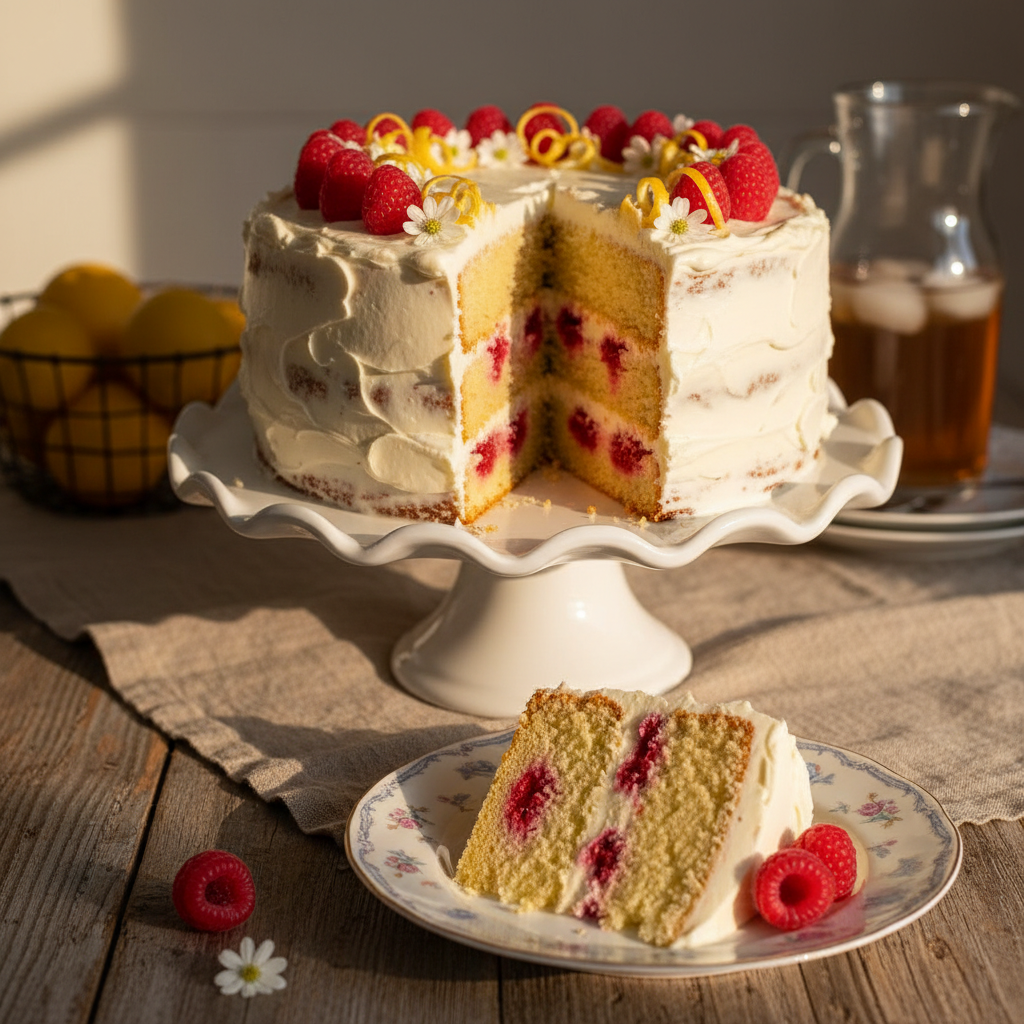
There is something undeniably magical about the combination of bright, zesty lemon and sweet, tart raspberries. It is a flavor pairing that screams of spring afternoons and summer picnics, bringing a burst of sunshine to even the gloomiest of days. This Fresh Lemon Raspberry Cake with Cream Cheese Frosting is not just a dessert; it is an experience. We are talking about three glorious layers of incredibly moist, tender crumb cake that is infused with fresh lemon zest and juice, ensuring that citrus punch permeates every single bite. Dotted generously throughout the batter are ruby-red raspberries, which bake down into jammy pockets of fruitiness that contrast perfectly with the fluffy cake texture.
But what truly elevates this cake to masterpiece status is the frosting. While a standard buttercream is delicious, a rich Cream Cheese Frosting provides the necessary tang to cut through the sweetness of the cake layers. The creaminess of the cheese mirrors the velvety texture of the crumb, creating a mouthfeel that is luxurious and indulgent. Whether you are baking for a birthday, a bridal shower, or simply because you crave something homemade and comforting, this recipe delivers on all fronts. It is visually stunning when sliced, revealing the speckles of berries, and the aroma that fills your kitchen while it bakes is intoxicating. Get ready to bake the best lemon raspberry cake of your life, one that will have your friends and family begging for the recipe.
History & Origins
The lineage of the lemon raspberry cake can be traced back to the evolution of the classic pound cake in Europe, particularly in England and France, where citrus was often used to flavor dense, buttery cakes. Historically, cakes were leavened with yeast, but the invention of baking powder in the mid-19th century revolutionized home baking, allowing for lighter, airier sponges like the one in this recipe. The incorporation of fresh fruit into cakes, rather than dried fruit which was common in fruitcakes, became more popular as refrigeration and transportation improved in the 20th century, allowing access to fresh berries year-round.
The specific pairing of lemon and raspberry is a modern classic, gaining massive popularity in the late 20th century in American baking culture, which favors bold, contrasting flavor profiles. The cream cheese frosting, a distinctly American invention linked to the rise of processed cream cheese in the 1930s (often associated with carrot cake or red velvet cake), found a natural home atop lemon cakes. The tang of the cheese complements the acidity of the lemon, creating a harmonious balance that traditional sugary glazes or buttercreams sometimes lack. Today, this cake represents the best of modern American baking: a fusion of European sponge techniques with the bold, fresh flavors and rich frostings that define the contemporary dessert landscape.
Why This Recipe Works
This recipe succeeds where others fail because of a few key chemical interactions and structural techniques. First, we use a combination of butter and oil. Butter provides that classic, rich flavor that we all love, while a touch of vegetable oil ensures the cake stays moist for days, as oil remains liquid at room temperature. We also utilize buttermilk, which is acidic; this acid reacts with the baking soda to create a superior rise and a tender crumb by breaking down long gluten strands.
Regarding the flavor, we don’t just use lemon juice; we rub the lemon zest into the sugar before creaming the butter. The abrasive texture of the sugar crystals breaks open the oil cells in the zest, releasing potent essential oils that infuse the entire batter with a deep, aromatic lemon flavor that juice alone cannot achieve. Furthermore, a common pitfall with berry cakes is ‘sinking fruit.’ To prevent the raspberries from ending up at the bottom of the pan, we toss them in a light coating of flour before folding them in. This creates friction between the berry and the batter, holding them in suspension while the cake sets. Finally, the cream cheese frosting is stabilized with a high ratio of butter to cream cheese, ensuring it is pipeable and holds its shape without sliding off the cake.
Why You’ll Love This Recipe
- ✓Bursting with natural citrus flavor from fresh lemon zest and juice.
- ✓Incredibly moist texture thanks to a blend of buttermilk, butter, and oil.
- ✓Jammy pockets of raspberries in every slice.
- ✓Tangy, velvety cream cheese frosting that balances the sweetness.
- ✓Beautiful presentation perfect for holidays, birthdays, and showers.
- ✓Stays soft and delicious for days.
Equipment You’ll Need
- ✓Three 8-inch round cake pans
- ✓Stand mixer or handheld electric mixer
- ✓Large mixing bowls
- ✓Whisk
- ✓Rubber spatula
- ✓Microplane or zester
- ✓Citrus juicer
- ✓Wire cooling rack
- ✓Offset spatula
- ✓Parchment paper
Ingredients
- ✓3 cups cake flour (spooned and leveled)
- ✓1 tsp baking powder
- ✓1/2 tsp baking soda
- ✓1/2 tsp salt
- ✓1 cup unsalted butter, softened to room temperature
- ✓1/4 cup vegetable oil
- ✓1 3/4 cups granulated sugar
- ✓Zest of 3 large lemons
- ✓4 large eggs, room temperature
- ✓2 tsp pure vanilla extract
- ✓1/2 cup fresh lemon juice
- ✓3/4 cup buttermilk, room temperature
- ✓2 cups fresh raspberries (washed and thoroughly dried)
- ✓1 tbsp all-purpose flour (for coating berries)
- ✓16 oz full-fat brick cream cheese, softened (for frosting)
- ✓1 cup unsalted butter, softened (for frosting)
- ✓6 cups powdered sugar, sifted
- ✓1 tbsp fresh lemon juice (for frosting)
- ✓Pinch of salt
Instructions
- Preheat your oven to 350°F (175°C). Grease three 8-inch round cake pans, line the bottoms with parchment paper, and grease the parchment. Dust with flour and tap out the excess.
- In a medium bowl, whisk together the cake flour, baking powder, baking soda, and salt. Set aside.
- In the bowl of a stand mixer fitted with the paddle attachment, combine the granulated sugar and lemon zest. Rub them together with your fingertips until the sugar is moist and fragrant.
- Add the softened butter and vegetable oil to the sugar mixture. Beat on medium-high speed for about 3-4 minutes until light, fluffy, and pale in color.
- Add the eggs one at a time, beating well after each addition. Scrape down the sides and bottom of the bowl as needed. Mix in the vanilla extract and lemon juice (the mixture may look slightly curdled, which is normal).
- In a measuring cup, whisk together the buttermilk and lemon juice. Reduce the mixer speed to low.
- Add the dry ingredients in three parts, alternating with the buttermilk mixture in two parts, starting and ending with the dry ingredients. Mix only until just combined—do not overmix.
- In a small bowl, toss the raspberries with 1 tablespoon of flour. Gently fold the raspberries into the batter by hand using a rubber spatula, being careful not to crush them.
- Divide the batter evenly among the three prepared pans. Bake for 30-35 minutes, or until a toothpick inserted into the center comes out clean or with a few moist crumbs.
- Allow the cakes to cool in the pans for 10 minutes, then turn them out onto a wire rack to cool completely before frosting.
- To make the frosting: In a large bowl, beat the cream cheese and butter together on high speed until smooth and creamy (about 3 minutes).
- Add the powdered sugar, 2 cups at a time, beating on low speed until incorporated. Once all sugar is added, increase to high speed and beat for 2 minutes until fluffy.
- Add the lemon juice and a pinch of salt, beating for another minute.
- Assemble the cake: Place one cake layer on your serving stand. Spread a thick layer of frosting over the top. Repeat with the second and third layers. Frost the outside of the cake and garnish with fresh raspberries and lemon slices.
Expert Cooking Tips
- ✓Ensure all cold ingredients (eggs, butter, buttermilk, cream cheese) are at room temperature to prevent the batter from breaking.
- ✓Do not skip tossing the raspberries in flour; this is crucial to keep them distributed evenly throughout the cake.
- ✓Use cake flour instead of all-purpose flour for a lighter, more tender crumb.
- ✓When zesting the lemons, avoid the white pith underneath the yellow skin, as it is bitter.
- ✓Weigh your flour using a kitchen scale for the most accurate results; too much flour leads to a dry cake.
- ✓Cool the cakes completely before frosting, or the butter in the frosting will melt and slide off.
- ✓If the frosting is too soft to pipe, refrigerate it for 15-20 minutes to firm up.
Substitutions and Variations
If you do not have cake flour, you can make a substitute by measuring 1 cup of all-purpose flour, removing 2 tablespoons, and replacing them with 2 tablespoons of cornstarch; sift this mixture twice. If fresh raspberries are out of season or too expensive, you can use frozen raspberries. Do not thaw them before adding to the batter, as they will bleed too much color; simply toss them in flour while frozen and bake immediately. Note that baking time might increase by a few minutes. For the buttermilk, you can make a ‘sour milk’ substitute by adding 1 tablespoon of lemon juice or white vinegar to a cup of whole milk and letting it sit for 5 minutes. Alternatively, plain Greek yogurt or sour cream thinned with a little milk works excellently as a direct 1:1 substitute for buttermilk. If you prefer a less tangy frosting, you can swap the cream cheese frosting for a standard vanilla or lemon buttercream, or a Swiss Meringue buttercream for a lighter texture.
Common Mistakes to Avoid
The most common mistake with this cake is overmixing the batter after adding the flour. Overmixing develops gluten, resulting in a dense, rubbery cake rather than a tender one. Mix only until the flour streaks disappear. Another frequent error is using butter that is too soft or melted; it should be cool room temperature, meaning it dents when pressed but doesn’t lose its shape. If the butter is oily, the cake will be greasy. Regarding the fruit, adding warm or wet raspberries can cause soggy pockets; ensure they are completely dry after washing. Finally, rushing the cooling process is a disaster for layer cakes. If the cake is even slightly warm, the heavy cream cheese frosting will melt, causing the layers to slide apart. Be patient and let them cool fully.
Serving Suggestions
This cake is a showstopper and deserves to be the centerpiece of your table. Serve it on a beautiful cake stand to elevate the presentation. It pairs wonderfully with hot beverages that cut through the richness, such as Earl Grey tea, which has its own citrus notes, or a strong dark roast coffee. For a summer gathering, serve slices with a glass of chilled Prosecco or a sparkling lemonade. You can garnish the plate with a coulis made from pureed raspberries and sugar for an extra gourmet touch, or simply add a dollop of lightly sweetened whipped cream on the side. A sprig of fresh mint adds a pop of green color that contrasts beautifully with the red berries and yellow lemon.
Storage and Reheating Tips
Because of the cream cheese frosting, this cake should not be left out at room temperature for more than 2 hours (or 1 hour on a hot day). Store the cake in an airtight cake carrier or cover it gently with plastic wrap and keep it in the refrigerator for up to 5 days. The cold fridge will firm up the cake, so for the best texture and flavor, remove the slice you intend to eat and let it sit on the counter for 20-30 minutes to come to room temperature before serving. To freeze, you can freeze the unfrosted cake layers individually wrapped in plastic wrap and foil for up to 3 months. You can also freeze individual slices of the fully frosted cake; place them on a baking sheet to freeze solid, then wrap tightly in plastic wrap and foil. Thaw in the fridge overnight.
Nutrition Facts (Estimated)
| Serving Size | 1 slice |
| Calories | 680 |
| Fat | 36g |
| Saturated Fat | 21g |
| Unsaturated Fat | 12g |
| Trans Fat | 1g |
| Cholesterol | 110mg |
| Sodium | 340mg |
| Carbohydrates | 82g |
| Fiber | 2g |
| Sugar | 52g |
| Protein | 6g |
Frequently Asked Questions
Can I use frozen raspberries instead of fresh?
Yes, absolutely. Do not thaw them first, as this will release too much liquid and turn your batter pink. Toss them in flour while frozen and fold them in at the very last second before baking.
Why did my raspberries sink to the bottom?
This usually happens if the batter is too thin or the berries weren’t coated in flour. The flour coating provides friction. Ensure your batter is thick enough by measuring ingredients accurately.
Can I make this cake ahead of time?
Yes. You can bake the layers a day in advance, wrap them tightly in plastic wrap, and store them at room temperature. Make the frosting and assemble the cake on the day of serving for the freshest taste.
My frosting is runny, how do I fix it?
Cream cheese frosting can become runny if the butter or cheese was too warm or if it was overbeaten. Try refrigerating the bowl for 20-30 minutes, then re-whipping. If it’s still too soft, add more powdered sugar, 1/4 cup at a time.
Can I make this as cupcakes?
Yes! This recipe will make approximately 24-30 standard cupcakes. Bake them at 350°F for 18-22 minutes. Check for doneness with a toothpick.
Do I have to use cake flour?
For the intended tender texture, cake flour is highly recommended. However, you can use all-purpose flour, but the crumb will be slightly tighter and denser. Avoid bread flour.
Can I use a 9×13 pan instead of layers?
Yes, you can bake this in a greased 9×13 inch rectangular pan. You will need to increase the baking time to roughly 40-50 minutes. Check frequently toward the end.
Is the lemon flavor strong?
It has a distinct, bright lemon flavor due to the zest and juice, but it is not sour. It is balanced by the sugar and the creamy frosting. If you want it less lemony, reduce the zest.
Why did my cake dome in the middle?
Doming often happens if the oven is too hot, causing the outside to set before the middle rises. Use an oven thermometer to ensure true temperature. You can also use cake strips around the pans to ensure even baking.
Conclusion
There are few desserts as cheerful and satisfying as this Fresh Lemon Raspberry Cake. It captures the essence of sunny days with its vibrant flavors and inviting colors. The effort put into grating the fresh zest, carefully folding in the delicate berries, and whipping the frosting to creamy perfection pays off the moment you take that first bite. It is a recipe that balances the nostalgia of homemade baking with the sophistication of a bakery-style treat. Whether you are an experienced baker or trying your hand at a layer cake for the first time, this recipe is designed to guide you to success. So, preheat your oven, grab those lemons, and get ready to create a dessert that will undoubtedly become a requested favorite in your household.