The Ultimate Fresh Lemon Blueberry Layer Cake With Cream Cheese Frosting
Fresh Lemon Blueberry Layer Cake With Cream Cheese Frosting Recipe
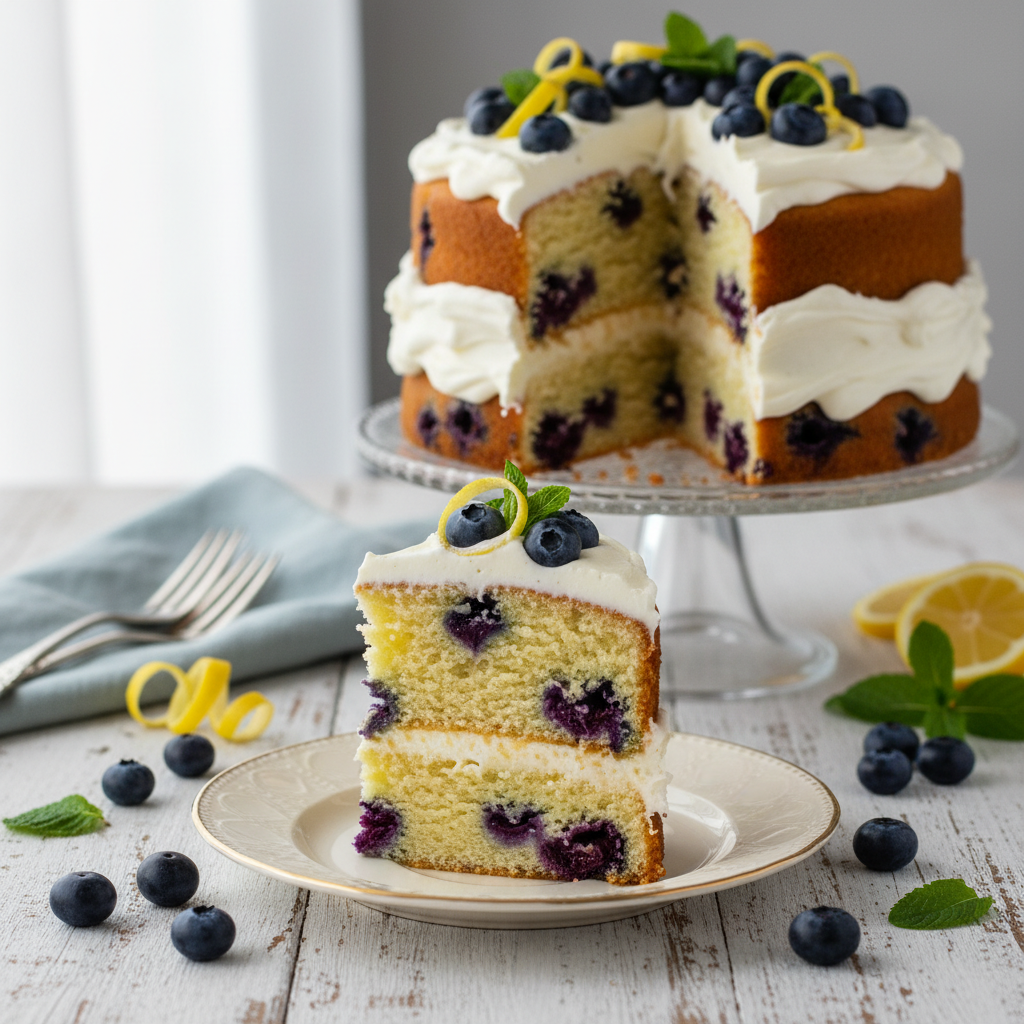
This show-stopping Fresh Lemon Blueberry Layer Cake features three ultra-moist layers of lemon-infused sponge bursting with juicy blueberries. Finished with a tangy, velvety cream cheese frosting, it is the perfect balance of zesty brightness and sweet indulgence for any celebration.
45 minutes
35 minutes
1 hour 20 minutes (plus cooling)
12-14 servings
Dessert
Baking
American
Vegetarian
There is something undeniably magical about the combination of bright, zesty lemon and sweet, juicy blueberries. It is a flavor pairing that screams of summer sunshine, garden parties, and leisurely afternoons, yet it brings a welcome burst of brightness to even the gloomiest winter days. This Fresh Lemon Blueberry Layer Cake is more than just a dessert; it is a sensory experience designed to delight from the very first slice. Imagine sinking your fork into a crumb that is impossibly tender, moist, and buttery, speckled with pockets of jammy, violet-hued blueberries that have burst during baking. The cake itself is infused with fresh lemon zest and juice, ensuring that the citrus flavor permeates every bite rather than just sitting on the surface.
But a cake is only as good as its frosting, and this recipe pairs the fruity sponge with a luxurious, tangy Cream Cheese Frosting that is whipped to ethereal perfection. Unlike heavy, overly sugary buttercreams, this frosting relies on the slight savoriness of cream cheese to cut through the sweetness of the cake, creating a harmonious balance that keeps you coming back for ‘just one more sliver.’ Whether you are a seasoned baker looking for your next masterpiece or a novice wanting to impress guests with a bakery-style creation, this recipe is meticulously crafted to ensure success. We explore the science behind the crumb, the secret to keeping blueberries suspended, and the technique for a perfectly smooth finish. Get ready to bake the most vibrant, delicious cake of your life.
History & Origins
The history of the layer cake is a fascinating journey through the evolution of baking technology and culinary refinement. While cakes have existed since ancient times, often as heavy, bread-like concoctions sweetened with honey, the light, fluffy layer cakes we adore today are a relatively modern invention. The game-changer was the development of chemical leaveners—specifically baking powder and baking soda—in the mid-19th century. Before this, bakers relied on yeast or the arduous task of whipping eggs for hours to aerate their batters. The introduction of these leaveners allowed for the creation of ‘butter cakes’ with a finer, more tender crumb that could structurally support multiple layers and heavy frostings.
Blueberries, native to North America, have been a staple in indigenous diets for centuries, utilized in everything from pemmican to medicinal teas. However, their integration into delicate cakes is a more recent culinary phenomenon, popularized as blueberry cultivation expanded in the 20th century. The pairing of lemon and blueberry likely gained traction in the American South and New England, regions known for their abundance of berries and love for bright, acidic contrasts in desserts. The addition of cream cheese frosting, a distinctly American innovation often associated with Carrot Cake and Red Velvet Cake, became popular in the mid-20th century. Combining these elements—the chemically leavened butter cake, the native North American fruit, and the tangy cheese-based frosting—results in a dessert that is deeply rooted in modern American baking tradition, representing a melting pot of agricultural bounty and food science innovation.
Why This Recipe Works
This recipe succeeds where many others fail because it addresses the two most common complaints about fruit cakes: dry, dense texture and sinking fruit. First, to achieve a moist yet fluffy crumb, we use a specific combination of butter and oil. Butter provides the essential flavor and structure, while a touch of vegetable oil ensures the cake stays soft and moist for days, even when refrigerated. We also utilize buttermilk, whose acidity interacts with the baking soda to create a tenderizing effect on the gluten, resulting in a melt-in-your-mouth texture.
Secondly, the ‘sinking berry’ phenomenon is tackled by tossing the fresh blueberries in a light coating of flour before folding them into the batter. This creates friction, helping the berries cling to the batter as it rises rather than plummeting to the bottom of the pan. Furthermore, the batter itself is thick enough to support the weight of the fruit. We also use fresh lemon zest rubbed directly into the sugar before mixing. The friction releases the essential oils in the zest, infusing the sugar crystals with intense citrus aroma that permeates the batter far better than juice alone. Finally, the cream cheese frosting is stabilized with a high ratio of butter and chilled slightly before piping, ensuring it holds its shape between the layers without sliding, creating a structurally sound and visually stunning tower of cake.
Why You’ll Love This Recipe
- ✓Uses both butter and oil for the perfect texture balance.
- ✓Rubbing lemon zest into sugar maximizes citrus flavor.
- ✓Flour-coated blueberries ensure even distribution.
- ✓Tangy cream cheese frosting cuts the sweetness.
- ✓Stays moist for up to 4 days in the fridge.
Equipment You’ll Need
- ✓3 x 8-inch round cake pans
- ✓Stand mixer or electric hand mixer
- ✓Large mixing bowls
- ✓Rubber spatula
- ✓Microplane or zester
- ✓Wire cooling rack
- ✓Offset spatula
- ✓Parchment paper
- ✓Cake turntable (optional)
Ingredients
- ✓3 cups (375g) all-purpose flour, spooned and leveled
- ✓1 tsp baking powder
- ✓1/2 tsp baking soda
- ✓1/2 tsp salt
- ✓1 cup (226g) unsalted butter, softened to room temperature
- ✓1/4 cup vegetable oil (or canola oil)
- ✓1 3/4 cups (350g) granulated white sugar
- ✓4 large eggs, room temperature
- ✓1 tbsp pure vanilla extract
- ✓1 cup (240ml) buttermilk, room temperature
- ✓3 tbsp fresh lemon zest (about 3 lemons)
- ✓1/4 cup fresh lemon juice
- ✓2 1/2 cups fresh blueberries (washed and thoroughly dried)
- ✓1 tbsp all-purpose flour (for coating berries)
- ✓16 oz (450g) full-fat block cream cheese, softened
- ✓1 cup (226g) unsalted butter (for frosting), softened
- ✓5-6 cups powdered sugar, sifted
- ✓1 tsp vanilla extract (for frosting)
- ✓Pinch of salt (for frosting)
Instructions
- Preheat oven to 350°F (175°C). Grease three 8-inch round cake pans, line the bottoms with parchment paper, and grease the parchment. Dust with flour and tap out excess.
- In a medium bowl, whisk together the 3 cups of flour, baking powder, baking soda, and salt. Set aside.
- In the bowl of a stand mixer, combine the granulated sugar and lemon zest. Rub them together with your fingers until the sugar is fragrant and moist. Add the softened butter and vegetable oil. Beat on medium-high speed for 3-4 minutes until light, fluffy, and pale.
- Add the eggs one at a time, beating well after each addition. Scrape down the sides of the bowl. Mix in the vanilla extract and lemon juice.
- Reduce mixer speed to low. Add the dry ingredients in three additions, alternating with the buttermilk in two additions, starting and ending with the flour mixture. Mix only until just combined; do not overmix.
- In a small bowl, toss the blueberries with 1 tablespoon of flour until coated. Gently fold the blueberries into the batter using a rubber spatula.
- Divide the batter evenly among the three prepared pans (use a kitchen scale for accuracy).
- Bake for 30-35 minutes, or until a toothpick inserted into the center comes out clean or with a few moist crumbs. The tops should be golden brown and spring back when lightly touched.
- Allow cakes to cool in the pans for 15 minutes, then carefully invert them onto a wire rack to cool completely before frosting.
- To make the frosting: In a large bowl, beat the cream cheese and butter together on medium-high speed until smooth and creamy (about 3 minutes).
- Add the powdered sugar one cup at a time, mixing on low speed until incorporated. Add the vanilla and salt. Increase speed to high and whip for 2-3 minutes until fluffy.
- Assemble the cake: Place one layer on a cake stand. Spread a thick layer of frosting over the top. Repeat with the second layer. Top with the final layer.
- Apply a thin ‘crumb coat’ of frosting all over the cake and refrigerate for 20 minutes. This locks in crumbs.
- Apply the remaining frosting generously over the top and sides. Garnish with extra fresh blueberries and lemon slices if desired.
Expert Cooking Tips
- ✓Room temperature ingredients are non-negotiable; they emulsify properly to create a uniform structure.
- ✓Do not overmix the batter once the flour is added, or the gluten will develop too much, leading to a tough cake.
- ✓Dry your blueberries thoroughly after washing. Excess water can create soggy pockets in the cake.
- ✓Weigh your flour or use the spoon-and-level method. Scooping directly with the cup packs the flour and leads to a dry cake.
- ✓Chill the cake layers slightly before frosting to make them easier to handle and less prone to breaking.
- ✓If the frosting is too soft, refrigerate it for 15-20 minutes to firm up before piping.
- ✓Use a serrated knife to level the tops of the cakes if they domed significantly during baking.
Substitutions and Variations
Baking is a science, but there is some room for flexibility. If you cannot find buttermilk, you can make a sour milk substitute by adding 1 tablespoon of lemon juice or white vinegar to a cup of whole milk and letting it sit for 5 minutes. For a gluten-free version, use a high-quality 1:1 gluten-free baking flour blend that includes xanthan gum; the texture may be slightly different but still delicious. You can substitute frozen blueberries for fresh ones, but do not thaw them before adding to the batter, as they will bleed color and make the batter gray. If you prefer a less tangy frosting, you can swap the cream cheese frosting for a standard vanilla buttercream or a Swiss Meringue buttercream. For a dairy-free option, use high-quality plant-based butter sticks and a dairy-free cream cheese alternative, though be aware that stabilization might be trickier. Lemon extract can boost the flavor if you don’t have fresh lemons, but fresh zest is far superior.
Common Mistakes to Avoid
The most common mistake is using cold ingredients. Cold butter won’t cream properly with sugar to create air pockets, and cold eggs can curdle the batter. Another frequent error is over-mixing the batter at the final stage; stop mixing as soon as the flour streaks disappear. Many bakers also fail to properly prepare their pans, leading to cakes that stick and break upon release; parchment paper rounds are your best friend here. Opening the oven door too early to check on the cake can cause the center to collapse due to the sudden temperature drop. Lastly, frosting a warm cake is a disaster waiting to happen—the butter in the frosting will melt, causing the layers to slide apart. Patience is key; let the cakes cool completely.
Serving Suggestions
This cake is a stunning centerpiece for spring and summer gatherings, such as Easter brunch, Mother’s Day, or bridal showers. Serve it on a pedestal cake stand to heighten the drama. It pairs beautifully with a chilled glass of Prosecco, a hot cup of Earl Grey tea, or fresh homemade lemonade. For an extra touch of elegance, garnish the plate with a sprig of fresh mint or a drizzle of lemon curd. If serving at a dinner party, slice the pieces thin, as the cake is rich and substantial.
Storage and Reheating Tips
Because of the cream cheese frosting, this cake should be stored in the refrigerator. However, cold cake can taste dry and the butter solidifies. Therefore, it is crucial to remove the cake (or slices) from the fridge about 30-60 minutes before serving to allow it to come to room temperature for the best texture and flavor. The cake can be kept in an airtight container in the fridge for up to 4-5 days. For longer storage, you can freeze individual slices wrapped tightly in plastic wrap and then foil for up to 2 months. Thaw in the fridge overnight.
Nutrition Facts (Estimated)
| Serving Size | 1 slice |
| Calories | 650 |
| Fat | 34g |
| Saturated Fat | 18g |
| Unsaturated Fat | 14g |
| Trans Fat | 0.5g |
| Cholesterol | 95mg |
| Sodium | 320mg |
| Carbohydrates | 82g |
| Fiber | 2g |
| Sugar | 48g |
| Protein | 6g |
Frequently Asked Questions
Can I use frozen blueberries instead of fresh?
Yes, you can. Do not thaw them first. Toss them in flour just like fresh berries, but be aware they may streak the batter purple slightly more than fresh ones.
Why did my blueberries sink to the bottom?
This usually happens if the batter is too thin or the berries weren’t coated in flour. The flour coating provides friction to help them stay suspended.
Can I make this cake in a 9×13 pan?
Absolutely. Adjust the baking time to approximately 35-45 minutes. Keep an eye on it and test with a toothpick.
My frosting is too runny, what do I do?
Add more sifted powdered sugar, 1/4 cup at a time. Alternatively, chill the frosting in the fridge for 20 minutes to help the butter firm up.
Can I make the cake layers ahead of time?
Yes! Bake the layers, let them cool completely, wrap them tightly in plastic wrap, and freeze them for up to a month. Frost them while frozen; it’s actually easier!
Is the vegetable oil necessary if I’m using butter?
Yes, the oil keeps the cake moist longer than butter alone, which is solid at room temperature. It ensures a soft crumb even after refrigeration.
How do I get flat cake layers?
You can use ‘cake strips’ soaked in water wrapped around the pan to ensure even baking. Otherwise, simply trim the domes off with a serrated knife before stacking.
Can I use Meyer lemons?
Yes, Meyer lemons work beautifully and have a slightly sweeter, more floral flavor profile compared to standard lemons.
Conclusion
This Fresh Lemon Blueberry Layer Cake with Cream Cheese Frosting is truly a labor of love that pays off in every delicious bite. From the bright, citrusy aroma that fills your kitchen while it bakes to the satisfaction of frosting a perfectly stacked tower, the process is just as enjoyable as the eating. It captures the essence of fresh, seasonal baking and delivers a professional-quality dessert right from your home oven. Whether you are celebrating a special milestone or simply celebrating the joy of baking, this cake promises to be a memorable addition to your recipe repertoire. Happy baking!