The Ultimate Cozy Pumpkin Roll With Cream Cheese Recipe
Cozy Pumpkin Roll Cake With Cream Cheese Recipe
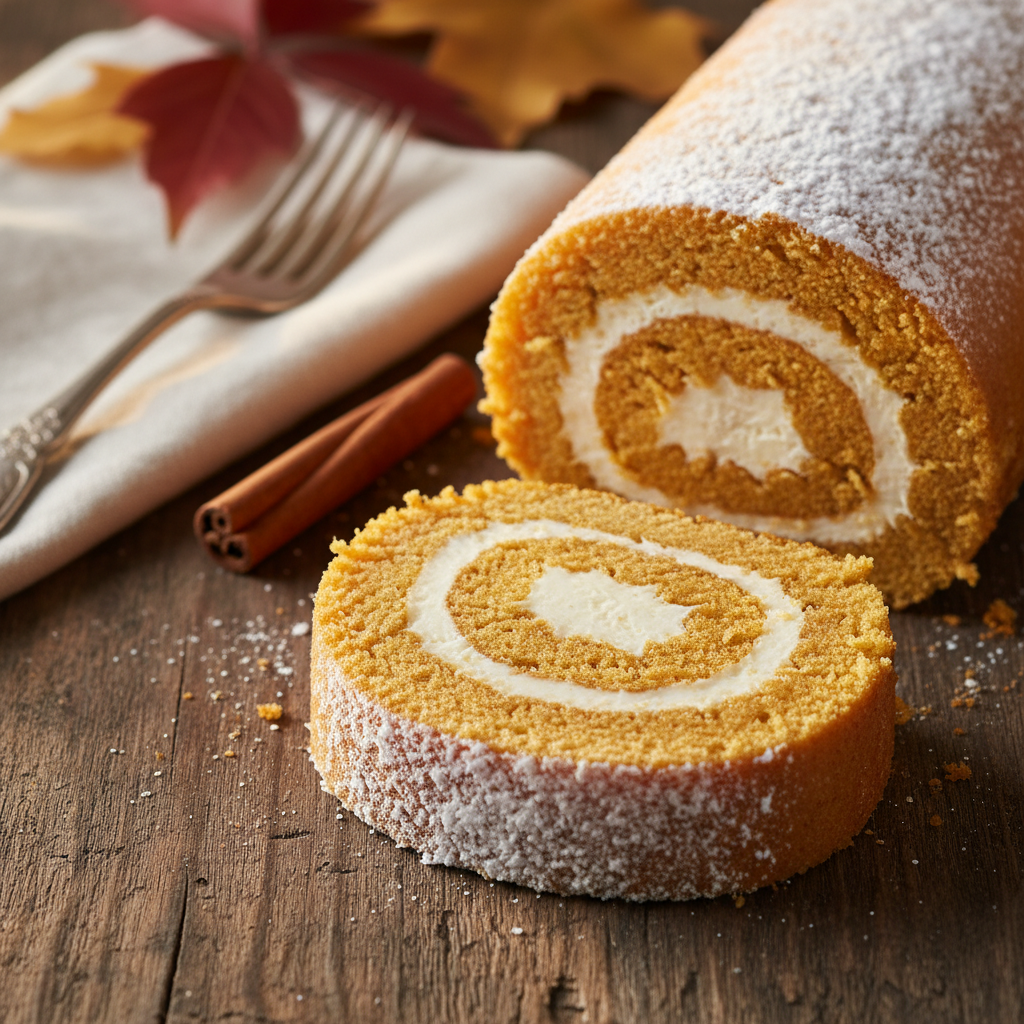
Embrace the essence of autumn with this classic Pumpkin Roll, featuring a moist, spiced pumpkin sponge cake spiraled around a luscious, tangy cream cheese filling. It is a show-stopping dessert that looks incredibly impressive but is surprisingly easy to master with our fail-proof rolling technique.
25 minutes
15 minutes
40 minutes (plus cooling time)
10-12 servings
Dessert
Baking
American
Vegetarian
There is something undeniably magical about the arrival of autumn. As the air turns crisp and the leaves begin to paint the landscape in hues of amber and gold, our cravings inevitably shift toward the warm, comforting spices of the season. Among the pantheon of fall desserts—past the ubiquitous pies and standard muffins—stands the majestic Pumpkin Roll. This Cozy Pumpkin Roll with Cream Cheese Filling is more than just a cake; it is a nostalgic centerpiece that embodies the very spirit of the holidays. The beauty of this dessert lies in its stunning presentation: a vibrant orange sponge cake, flecked with aromatic cinnamon, ginger, and cloves, wrapped in a mesmerizing spiral around a cloud of sweet, tangy cream cheese frosting.
For many home bakers, the pumpkin roll is a source of intimidation. The fear of the dreaded ‘crack’ during the rolling process often keeps this masterpiece off the table. However, this comprehensive guide is designed to dispel those fears. We have meticulously tested the ratios of flour to moisture and perfected the ‘hot roll’ technique to ensure your cake remains pliable and rolls beautifully every time. The texture of the cake is light yet sturdy enough to hold the filling, while the filling itself strikes a perfect balance—not too sweet, with a rich depth from the cream cheese that cuts through the spices of the sponge. Whether you are preparing a dessert table for Thanksgiving, hosting a cozy afternoon tea, or simply treating your family to a weekend delight, this pumpkin roll promises to be the star of the show. It stores beautifully, making it an excellent make-ahead option for the busy holiday season. Get ready to fill your kitchen with the intoxicating aroma of pumpkin spice and create a dessert that tastes even better than it looks.
History & Origins
The history of the pumpkin roll is a fascinating journey that intertwines European baking traditions with American agricultural abundance. The concept of a rolled sponge cake, known generally as a ‘roulade,’ traces its roots back to Central Europe. By the 19th century, these rolled cakes had gained popularity across the continent, with the ‘Swiss Roll’ becoming a staple in British bakeries—a sponge cake spread with jam or cream and rolled into a tight spiral. The transition from a traditional vanilla or chocolate sponge to a pumpkin-based batter is a distinctly American innovation, born out of the country’s love affair with the pumpkin, a native squash that has been a dietary staple since indigenous cultivation.
The modern Pumpkin Roll as we know it likely gained traction in the mid-20th century. As canned pumpkin puree became widely available thanks to companies like Libby’s, home bakers began experimenting with incorporating this moisture-rich ingredient into various baked goods. The 1950s and 60s saw a boom in ‘convenience’ cooking and distinctively shaped desserts, and the pumpkin roll fit perfectly into this era of culinary experimentation. It merged the European technique of the roulade with the flavor profile of the American pumpkin pie. Over the decades, it has evolved from a novelty to a holiday tradition, often appearing alongside pies on Thanksgiving tables. The inclusion of cream cheese frosting is a relatively modern twist, likely popularized in the 1970s or 80s when carrot cake with cream cheese frosting became a vogue pairing, solidifying the marriage of spiced cakes and tangy, creamy fillings as a culinary standard.
Why This Recipe Works
This recipe succeeds where others fail due to a specific balance of moisture, structure, and technique. First, the sponge cake relies on eggs as the primary leavening agent, assisted by baking soda. We whip the eggs and sugar until they are pale and thick; this incorporates air, creating a flexible structure that can bend without breaking. Unlike a standard butter cake which would crumble, this sponge is elastic. Secondly, the ratio of flour to pumpkin puree is crucial. Too much flour makes the cake tough and dry, leading to cracks, while too much pumpkin makes it dense and rubbery. We use a precise amount of pure pumpkin puree (not pie filling) to ensure the cake remains tender and moist.
The most critical ‘why it works’ factor, however, is the thermal memory technique. By rolling the cake in a linen towel while it is still hot from the oven, we train the cake’s protein structure to accept the spiral shape. As it cools in the rolled position, the cake sets in that shape. When we unroll it to add the filling, it retains the ‘memory’ of the curve, allowing us to re-roll it with the filling effortlessly. Finally, the filling uses a high ratio of cream cheese to butter, ensuring it is stable enough to hold the swirl but soft enough to melt in your mouth.
Why You’ll Love This Recipe
- ✓Fail-proof ‘hot roll’ technique prevents cracking.
- ✓Perfect balance of warm spices and tangy cream cheese.
- ✓Can be made ahead and frozen for stress-free hosting.
- ✓Uses simple pantry staples and canned pumpkin.
- ✓Visually stunning spiral looks professional.
Equipment You’ll Need
- ✓10×15 inch Jelly Roll Pan
- ✓Parchment Paper
- ✓Clean Kitchen Towel (thin, linen type)
- ✓Electric Hand Mixer or Stand Mixer
- ✓Sifter or Fine Mesh Sieve
- ✓Rubber Spatula
- ✓Wire Cooling Rack
- ✓Offset Spatula
Ingredients
- ✓3/4 cup All-Purpose Flour
- ✓1/2 teaspoon Baking Powder
- ✓1/2 teaspoon Baking Soda
- ✓1/2 teaspoon Ground Cinnamon
- ✓1/2 teaspoon Ground Cloves
- ✓1/4 teaspoon Salt
- ✓3 large Eggs
- ✓1 cup Granulated Sugar
- ✓2/3 cup Pure Pumpkin Puree (not pumpkin pie filling)
- ✓1 cup Walnuts (optional, chopped)
- ✓8 oz Cream Cheese (softened)
- ✓1 cup Powdered Sugar (sifted)
- ✓6 tablespoons Unsalted Butter (softened)
- ✓1 teaspoon Vanilla Extract
- ✓Extra Powdered Sugar (for dusting towel)
Instructions
- 1. Preheat your oven to 375°F (190°C). Grease a 10×15 inch jelly roll pan and line it with parchment paper. Grease and flour the paper to ensure easy release.
- 2. In a small bowl, whisk together the flour, baking powder, baking soda, cinnamon, cloves, and salt. Set aside.
- 3. In a large mixing bowl, beat the eggs and granulated sugar on high speed until the mixture is thick and pale yellow (about 2-3 minutes).
- 4. Beat in the pumpkin puree until well combined. Gradually fold in the dry flour mixture using a rubber spatula, being careful not to deflate the eggs too much. Spread the batter evenly into the prepared pan. If using walnuts, sprinkle them over the top now.
- 5. Bake for 13-15 minutes, or until the top of the cake springs back when lightly touched.
- 6. While the cake is baking, lay a thin, clean kitchen towel on a flat surface and generously dust it with powdered sugar. This prevents sticking.
- 7. Immediately upon removing the cake from the oven, turn it out onto the prepared towel. Carefully peel off the parchment paper.
- 8. Starting at the narrow end, roll the warm cake and the towel up together into a tight log. It is crucial to do this while the cake is hot.
- 9. Place the rolled cake (in the towel) on a wire rack and let it cool completely to room temperature. This usually takes about an hour.
- 10. While the cake cools, make the filling. Beat the softened cream cheese, softened butter, sifted powdered sugar, and vanilla extract until smooth and fluffy.
- 11. Once the cake is cool, carefully unroll it. It will be curved; do not force it flat.
- 12. Spread the cream cheese filling evenly over the cake, leaving a small border at the edges.
- 13. Re-roll the cake (without the towel this time). Wrap the roll tightly in plastic wrap and refrigerate for at least one hour to set the shape and filling.
- 14. Before serving, dust with extra powdered sugar and slice with a sharp knife.
Expert Cooking Tips
- ✓Do not overbake the cake; a dry cake is more likely to crack when rolling.
- ✓Use a generous amount of powdered sugar on your towel to prevent the cake from sticking to the fabric.
- ✓Ensure your cream cheese and butter are truly at room temperature to avoid a lumpy filling.
- ✓Roll the cake immediately after it comes out of the oven; time is of the essence for the ‘memory’ of the sponge.
- ✓When slicing, wipe your knife clean between cuts to keep the spiral layers distinct and neat.
- ✓Use pure pumpkin puree, not pumpkin pie filling which has added sugars and spices.
Substitutions and Variations
For those with dietary restrictions or missing ingredients, there are several substitutions available. If you are gluten-free, a high-quality 1:1 gluten-free all-purpose flour blend works surprisingly well in this recipe because the eggs provide much of the structure. To reduce refined sugar, you can use coconut sugar in the cake, though it will darken the color. For the filling, mascarpone cheese can be substituted for cream cheese for a richer, less tangy flavor. If you do not have pumpkin spice individual ingredients (cloves, cinnamon), you can substitute 1.5 teaspoons of pre-made Pumpkin Pie Spice blend. For a nut-free version, simply omit the walnuts; they are purely for texture. If you are out of butter for the filling, you can use a high-quality margarine, though the flavor profile will change slightly.
Common Mistakes to Avoid
The most common mistake is letting the cake cool before rolling it. If the cake cools flat, the proteins set in a flat alignment; trying to roll it afterwards will cause it to snap and crack. Another frequent error is overfilling the cake. While the cream cheese frosting is delicious, adding too much will cause it to squish out the sides and make the roll slippery and difficult to slice. Using a thick, terry-cloth towel instead of a thin linen or flour sack towel can also be problematic, as thick towels can create a loose roll or leave lint on the cake. Finally, failing to grease the parchment paper is a pitfall; even though parchment is non-stick, the sticky nature of sponge cake requires that extra insurance of grease and flour.
Serving Suggestions
This Cozy Pumpkin Roll is a versatile dessert that shines on its own but can be elevated with a few simple additions. Serve chilled slices on a rustic ceramic plate. A dollop of freshly whipped cream on the side, sprinkled with a pinch of cinnamon, complements the filling perfectly. For a gourmet touch, drizzle a warm salted caramel sauce over the slice just before serving; the salt cuts the sweetness of the powdered sugar. It pairs exceptionally well with hot beverages—try it with a dark roast coffee to balance the sugar, or a chai tea latte to enhance the spice profile. For a festive holiday platter, garnish the serving tray with candied pecans and dried cranberries.
Storage and Reheating Tips
The pumpkin roll is an excellent candidate for making ahead. Once filled and rolled, it should be wrapped tightly in plastic wrap. It can be stored in the refrigerator for up to 5 days. The flavor actually improves after 24 hours as the spices meld with the moisture of the cake. For longer storage, wrap the plastic-wrapped roll in a layer of aluminum foil and freeze it for up to 3 months. Thaw the frozen roll overnight in the refrigerator before serving. Do not freeze the cake with powdered sugar on top; dust it fresh right before serving to ensure it looks snowy and appealing rather than dissolved.
Nutrition Facts (Estimated)
| Serving Size | 1 slice |
| Calories | 340 |
| Fat | 16g |
| Saturated Fat | 9g |
| Unsaturated Fat | 6g |
| Trans Fat | 0g |
| Cholesterol | 65mg |
| Sodium | 210mg |
| Carbohydrates | 44g |
| Fiber | 2g |
| Sugar | 28g |
| Protein | 5g |
Frequently Asked Questions
Why did my pumpkin roll crack?
Cracking usually happens if the cake was overbaked (making it dry) or if it wasn’t rolled while it was still hot. The heat makes the sponge flexible.
Can I use fresh pumpkin instead of canned?
Yes, but you must roast and puree a sugar pumpkin (not a carving pumpkin) and strain it well. Fresh pumpkin has more water content, which can make the cake soggy if not strained.
Can I make this recipe vegan?
It is difficult to make this specific sponge cake vegan because the eggs provide the essential structure for rolling. You would need a specialized vegan sponge recipe.
How do I fix a cracked roll?
Don’t panic! Press the crack together gently. Once you frost it with the filling and roll it back up, the filling acts as glue. You can also cover the outside with ganache or extra frosting to hide imperfections.
Can I use a different filling?
Absolutely. While cream cheese is traditional, you can use a vanilla buttercream, a mascarpone whipped cream, or even a chocolate ganache filling.
Do I have to use a jelly roll pan?
Yes, a 10×15 inch pan is standard. Using a standard 9×13 baking dish will result in a cake that is too thick to roll without breaking.
Why does the towel stick to the cake?
This happens if there wasn’t enough powdered sugar on the towel. Be very generous with the dusting sugar before turning the cake out.
Can I leave the pumpkin roll out at room temperature?
Because of the cream cheese filling, it should not be left out for more than 2 hours. It is best kept refrigerated.
Conclusion
Mastering the Cozy Pumpkin Roll is a rite of passage for the home baker, but as you can see, it is far less daunting than it appears. With the right timing and a bit of confidence during the rolling process, you can produce a bakery-quality dessert right in your own kitchen. The contrast of the vibrant orange swirl against the stark white filling makes it a stunning addition to any table, while the comforting flavors of cinnamon, nutmeg, and sweet cream cheese invoke the warmest feelings of the season. We hope this guide empowers you to grab your whisk and towel and whip up a fall treat that will become a cherished tradition for years to come. Happy baking!