Fresh Lemon Blueberry Layer Cake With Whipped Cream Frosting Recipe
Fresh Lemon Blueberry Layer Cake With Whipped Cream Frosting Recipe
This stunning Fresh Lemon Blueberry Layer Cake features tender, zesty lemon sponges studded with juicy blueberries and enveloped in a cloud-like stabilized whipped cream frosting. It is the ultimate celebration dessert that balances bright citrus notes with creamy sweetness.
45 minutes
35 minutes
1 hour 20 minutes
12-14 servings
Dessert
Baking
American
Vegetarian
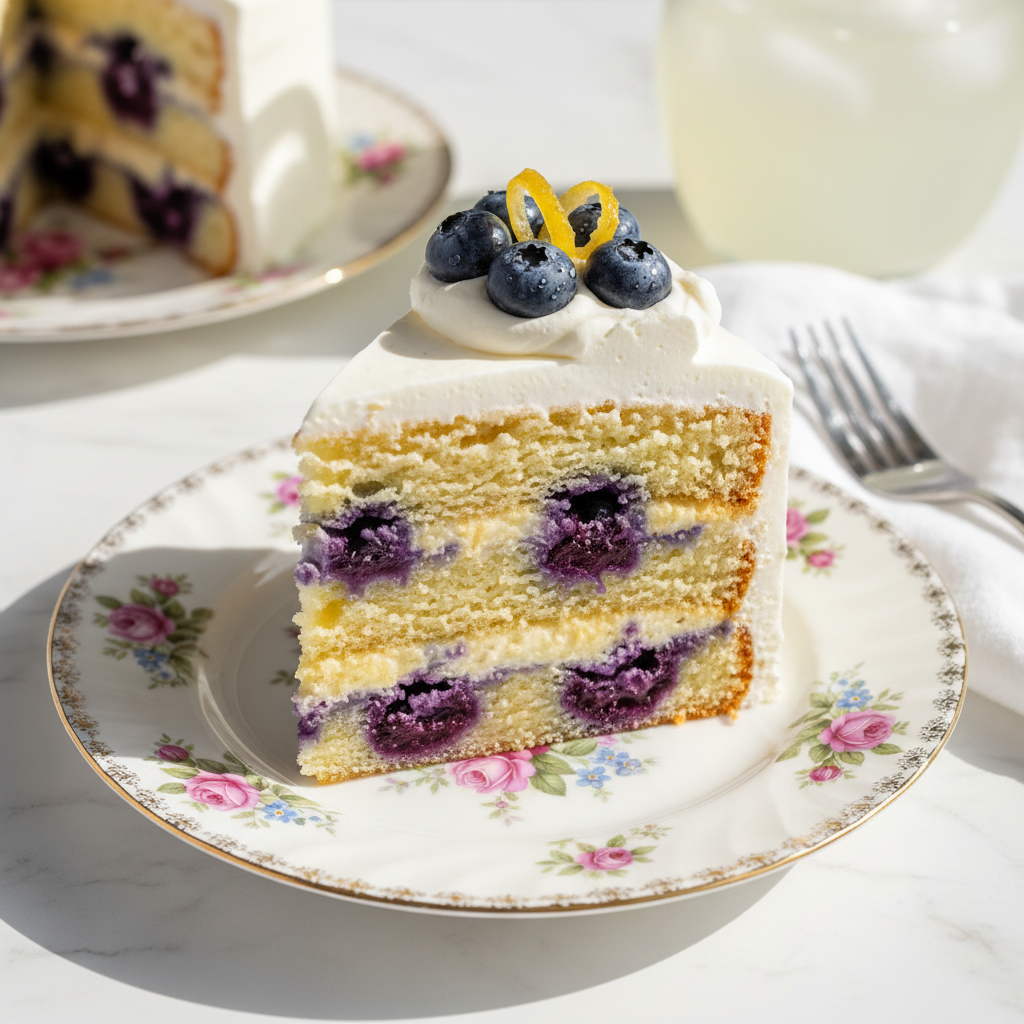
There is something undeniably magical about the combination of bright, zesty lemon and sweet, bursting blueberries. It is a flavor pairing that screams of spring sunshine and long summer afternoons. This Fresh Lemon Blueberry Layer Cake is not just a dessert; it is an experience. Imagine slicing into three towering layers of incredibly moist, tender crumb, speckled with vibrant violet pockets of fruit. The aroma alone—fresh lemon zest rubbing against sugar—is enough to lift your spirits instantly.
What sets this cake apart from the dense, heavy cakes often found in bakeries is its texture. We aim for a crumb that is light enough to melt in your mouth but sturdy enough to hold the structure of a layer cake. The lemon flavor is infused three ways: through the zest rubbed into the sugar, fresh lemon juice in the batter, and a subtle lemon syrup brushed onto the warm layers. This triple-threat approach ensures that the citrus notes don’t get lost during baking.
And then, there is the frosting. While buttercream has its place, it can often be too heavy and cloyingly sweet for a delicate fruit cake. Instead, we use a stabilized whipped cream frosting. By incorporating a touch of mascarpone cheese, we achieve a frosting that tastes like pure, sweetened cream but has the structural integrity to hold up between layers. It is airy, sophisticated, and the perfect foil to the tart berries. Whether you are baking for a birthday, a bridal shower, or simply because you crave something beautiful, this cake promises to deliver joy in every forkful.
History & Origins
The concept of the layer cake is a relatively modern innovation in the grand timeline of culinary history. While cakes have existed since ancient times, often as modified breads sweetened with honey and nuts, the light, airy texture we associate with modern cakes only became possible with the invention of chemical leaveners like baking soda and baking powder in the mid-19th century. Before this, bakers relied on beaten eggs and yeast, resulting in denser, bread-like confections.
The ‘Victorian Sponge’ or sandwich cake, popularized in Britain during Queen Victoria’s reign, laid the groundwork for the multi-layered cakes we adore today. However, the specific marriage of lemon and blueberry is deeply rooted in North American baking traditions. Blueberries are native to North America and have been a staple ingredient for Indigenous peoples for centuries. As settlers arrived and baking techniques evolved, these native berries found their way into muffins, cobblers, and eventually, cakes.
Lemon, while an Old World fruit, became a symbol of freshness and preservation in early American kitchens. The mid-20th century saw a boom in citrus-flavored desserts, particularly in the Southern United States, where lemon cakes became a staple of church potlucks and Sunday dinners. The fusion of these two distinct profiles—the floral, tart lemon and the earthy, sweet blueberry—gained massive popularity in the late 1990s and early 2000s as the ‘farm-to-table’ movement encouraged the use of fresh, seasonal produce over canned pie fillings. Today, this combination is considered a modern classic, representing the best of fresh, seasonal baking.
Why This Recipe Works
This recipe succeeds where many others fail due to a few critical technical details. First and foremost is the ‘reverse creaming’ method (or a modified version thereof) and the treatment of the sugar. By rubbing the fresh lemon zest into the granulated sugar before adding any wet ingredients, we release the essential oils in the zest, ensuring the lemon flavor permeates every gram of the batter rather than just sitting on top of it.
Secondly, the issue of sinking berries is addressed scientifically. Blueberries are heavy and dense compared to cake batter. In this recipe, we toss the fresh berries in a light coating of flour before folding them in. This creates friction between the berry and the batter, suspending the fruit evenly throughout the cake rather than allowing it to plummet to the bottom of the pan. We also use a batter that is thick enough to support the fruit, thanks to the inclusion of sour cream or Greek yogurt, which adds acidity to tenderize the gluten while providing the necessary viscosity.
Finally, the frosting uses mascarpone cheese as a stabilizer. Regular whipped cream is notorious for weeping or deflating after a few hours. Mascarpone has a high fat content and a dense structure that, when whipped with heavy cream, creates a frosting that is stable at room temperature for longer periods and holds sharp piping lines, all without the gritty texture or extreme sweetness of powdered sugar-heavy American buttercream.
Why You’ll Love This Recipe
- ✓Triple lemon flavor infusion using zest, juice, and syrup.
- ✓Stabilized whipped cream frosting that holds its shape perfectly.
- ✓Moist, tender crumb thanks to the addition of sour cream.
- ✓Fresh blueberries suspended evenly throughout the layers.
- ✓Perfect balance of tart and sweet, ideal for spring and summer.
Equipment You’ll Need
- ✓Three 8-inch round cake pans
- ✓Stand mixer with paddle and whisk attachments
- ✓Large mixing bowls
- ✓Microplane or zester
- ✓Rubber spatula
- ✓Offset spatula
- ✓Cake turntable (optional)
- ✓Wire cooling racks
- ✓Parchment paper
Ingredients
- ✓3 cups (360g) cake flour, sifted
- ✓1 tbsp baking powder
- ✓1/2 tsp baking soda
- ✓1/2 tsp salt
- ✓1 cup (226g) unsalted butter, room temperature
- ✓1 3/4 cups (350g) granulated sugar
- ✓Zest of 3 large lemons
- ✓4 large eggs, room temperature
- ✓1 tsp pure vanilla extract
- ✓1/2 cup (120ml) fresh lemon juice
- ✓1/2 cup (120g) sour cream or full-fat Greek yogurt, room temperature
- ✓1/2 cup (120ml) whole milk, room temperature
- ✓2 1/2 cups (375g) fresh blueberries, washed and dried thoroughly
- ✓1 tbsp all-purpose flour (for coating berries)
- ✓2 cups (480ml) heavy whipping cream, cold
- ✓8 oz (226g) mascarpone cheese, cold
- ✓1 cup (120g) powdered sugar, sifted
- ✓1 tsp vanilla bean paste
Instructions
- Preheat your oven to 350°F (175°C). Grease three 8-inch round cake pans with butter, line the bottoms with parchment paper, and grease the paper. Dust with flour and tap out excess.
- In a medium bowl, whisk together the sifted cake flour, baking powder, baking soda, and salt. Set aside.
- In the bowl of a stand mixer, combine the granulated sugar and lemon zest. Rub the zest into the sugar with your fingertips until moist and fragrant. Add the room temperature butter and beat on medium-high speed for 3-4 minutes until pale and fluffy.
- Add the eggs one at a time, beating well after each addition and scraping down the sides of the bowl. Mix in the vanilla extract.
- In a small jug, whisk together the lemon juice, sour cream, and milk.
- Reduce the mixer speed to low. Add the dry ingredients in three batches, alternating with the wet ingredients in two batches, starting and ending with the dry ingredients. Mix only until just combined. Do not overmix.
- Toss the fresh blueberries with 1 tablespoon of flour in a small bowl. Gently fold them into the batter using a rubber spatula.
- Divide the batter evenly among the three prepared pans. Smooth the tops with an offset spatula.
- Bake for 30-35 minutes, or until a toothpick inserted into the center comes out clean or with a few moist crumbs. The cakes should spring back when lightly touched.
- Allow the cakes to cool in the pans for 10 minutes, then run a knife around the edges and invert them onto wire racks to cool completely.
- To make the frosting: In a chilled mixing bowl, whip the cold mascarpone cheese and powdered sugar until smooth (about 1 minute).
- Slowly stream in the cold heavy cream and vanilla bean paste while the mixer is running on low. Gradually increase speed to high and whip until stiff peaks form. Be careful not to over-whip or it will turn to butter.
- To assemble: Place one cake layer on a serving plate or cake stand. Spread a generous layer of whipped cream frosting over the top. Repeat with the second layer. Top with the final cake layer.
- Cover the top and sides of the cake with the remaining frosting. Garnish with fresh blueberries, lemon slices, and edible flowers if desired.
- Refrigerate the cake for at least 30 minutes before slicing to allow the frosting to set.
Expert Cooking Tips
- ✓Ensure all cold ingredients (butter, eggs, sour cream, milk) are at room temperature to prevent the batter from curdling.
- ✓Do not skip coating the blueberries in flour; this is crucial to prevent them from sinking to the bottom.
- ✓Use cake flour instead of all-purpose flour for a significantly lighter and more tender crumb.
- ✓Wash and completely dry the blueberries. Any excess water can create soggy pockets in the cake.
- ✓Chill the mixing bowl and whisk attachment before making the whipped cream to achieve the best volume.
- ✓If the cake tops are domed, level them with a serrated knife before assembling for a professional look.
- ✓Use fresh lemon juice, not bottled, for the bright, authentic citrus flavor.
Substitutions and Variations
If you cannot find cake flour, you can make a substitute by measuring 1 cup of all-purpose flour, removing 2 tablespoons, and replacing them with 2 tablespoons of cornstarch. Sift this mixture twice before using. For the sour cream, full-fat Greek yogurt is an excellent 1:1 substitute that maintains the moisture and acidity. If mascarpone cheese is unavailable for the frosting, you can use full-fat cream cheese, though the flavor will be slightly tangier, more like a cheesecake frosting. Frozen blueberries can be used if fresh are out of season; however, do not thaw them before adding to the batter, as this will cause the color to bleed and turn the batter gray. Rinse frozen berries quickly in cold water until the water runs clear, pat dry, toss in flour, and add immediately. For a dairy-free cake, use plant-based butter and a high-quality almond or soy milk mixed with a teaspoon of vinegar, though the whipped cream frosting is difficult to replicate without dairy.
Common Mistakes to Avoid
The most common mistake is overmixing the batter after adding the flour. This develops the gluten too much and results in a dense, rubbery cake rather than a tender one. Stop mixing as soon as the flour streaks disappear. Another pitfall is trying to frost the cake while the layers are still slightly warm. This will cause the whipped cream frosting to melt and slide right off the cake. Ensure the cakes are completely cool to the touch. Additionally, failing to rub the zest into the sugar is a missed opportunity for flavor; simply stirring it in won’t release the oils effectively. Lastly, be careful when whipping the frosting; mascarpone and cream can go from smooth stiff peaks to curdled and grainy in seconds if over-beaten.
Serving Suggestions
This cake is a showstopper on its own, but it pairs beautifully with a few thoughtful additions. Serve chilled slices with a side of lemon curd for an extra punch of tartness, or a drizzle of warm blueberry compote. A scoop of vanilla bean ice cream is a classic accompaniment. For beverages, this cake pairs elegantly with a chilled glass of Prosecco, an Earl Grey tea with lemon, or a cold brew coffee which cuts through the creaminess. It is perfect for Easter brunch, Mother’s Day, or summer garden parties.
Storage and Reheating Tips
Because of the whipped cream and mascarpone frosting, this cake must be stored in the refrigerator. It can be left out at room temperature for about 1-2 hours for serving, but should be chilled otherwise. Store the cake in an airtight cake carrier or cover the cut sections with plastic wrap to prevent them from drying out. The cake will keep well in the fridge for up to 3 days. The sponge layers can be baked ahead and frozen (unfrosted) for up to 1 month; wrap them tightly in plastic wrap and then foil. Thaw in the refrigerator overnight before frosting. We do not recommend freezing the fully assembled cake as the whipped cream texture may suffer upon thawing.
Nutrition Facts (Estimated)
| Serving Size | 1 Slice |
| Calories | 580 |
| Fat | 32g |
| Saturated Fat | 19g |
| Unsaturated Fat | 11g |
| Trans Fat | 0g |
| Cholesterol | 115mg |
| Sodium | 310mg |
| Carbohydrates | 68g |
| Fiber | 2g |
| Sugar | 38g |
| Protein | 6g |
Frequently Asked Questions
Can I make this cake ahead of time?
Yes, you can bake the cake layers a day in advance, wrap them tightly in plastic wrap, and store them at room temperature. Make the frosting and assemble the cake on the day you plan to serve it for the freshest taste.
Why did my blueberries sink to the bottom?
This usually happens if the batter is too thin or if the berries weren’t coated in flour. The flour coating creates friction that helps hold the berries in place while the batter sets.
Can I use Meyer lemons?
Absolutely! Meyer lemons are sweeter and more floral than standard lemons. If you use them, the cake will have a slightly more delicate, less tart flavor profile.
My frosting is runny, what went wrong?
This likely means the cream or mascarpone wasn’t cold enough, or it wasn’t whipped long enough. Conversely, if it looks curdled, it was over-whipped. Ensure ingredients are cold and stop whipping as soon as stiff peaks form.
Can I bake this as a sheet cake instead?
Yes, this recipe fits well in a 9×13 inch pan. You will need to adjust the baking time, likely increasing it to 40-50 minutes. Check for doneness with a toothpick.
How do I get flat cake layers?
You can use cake strips soaked in water wrapped around the pans to promote even baking. Alternatively, simply slice the domed tops off with a serrated knife once the cakes are cooled.
Is the mascarpone necessary?
For this specific frosting, yes. It acts as a stabilizer. If you omit it, you will just have regular whipped cream, which will deflate and won’t support the weight of the layers well.
Can I use frozen blueberries?
Yes, but use them straight from the freezer. Do not thaw them, and toss them in flour just like fresh berries. Note that they might slightly discolor the batter around the berry.
Conclusion
This Fresh Lemon Blueberry Layer Cake is more than just a sweet treat; it is a celebration of seasonal flavors and baking craftsmanship. While it requires a bit of time and attention to detail, the result is a bakery-quality dessert that you can proudly claim as your own. The interplay of the zesty lemon sponge, the burst of juicy blueberries, and the luxurious, creamy frosting creates a harmony of textures and flavors that is truly unforgettable. Whether you are an experienced baker or looking to try your hand at your first layer cake, this recipe is designed to guide you to success. So preheat your oven, grab those lemons, and get ready to bake a masterpiece that will have your friends and family asking for seconds!