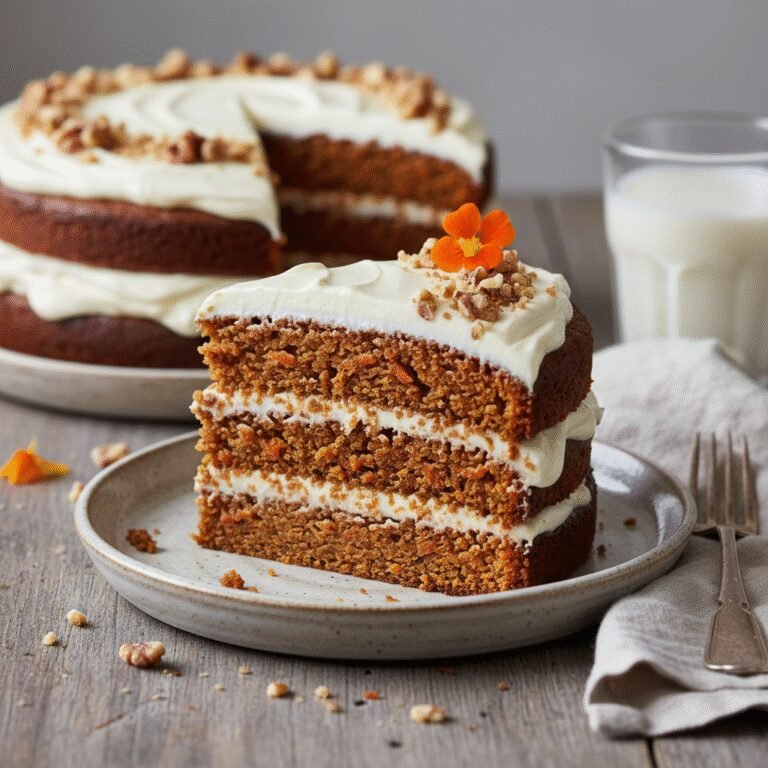
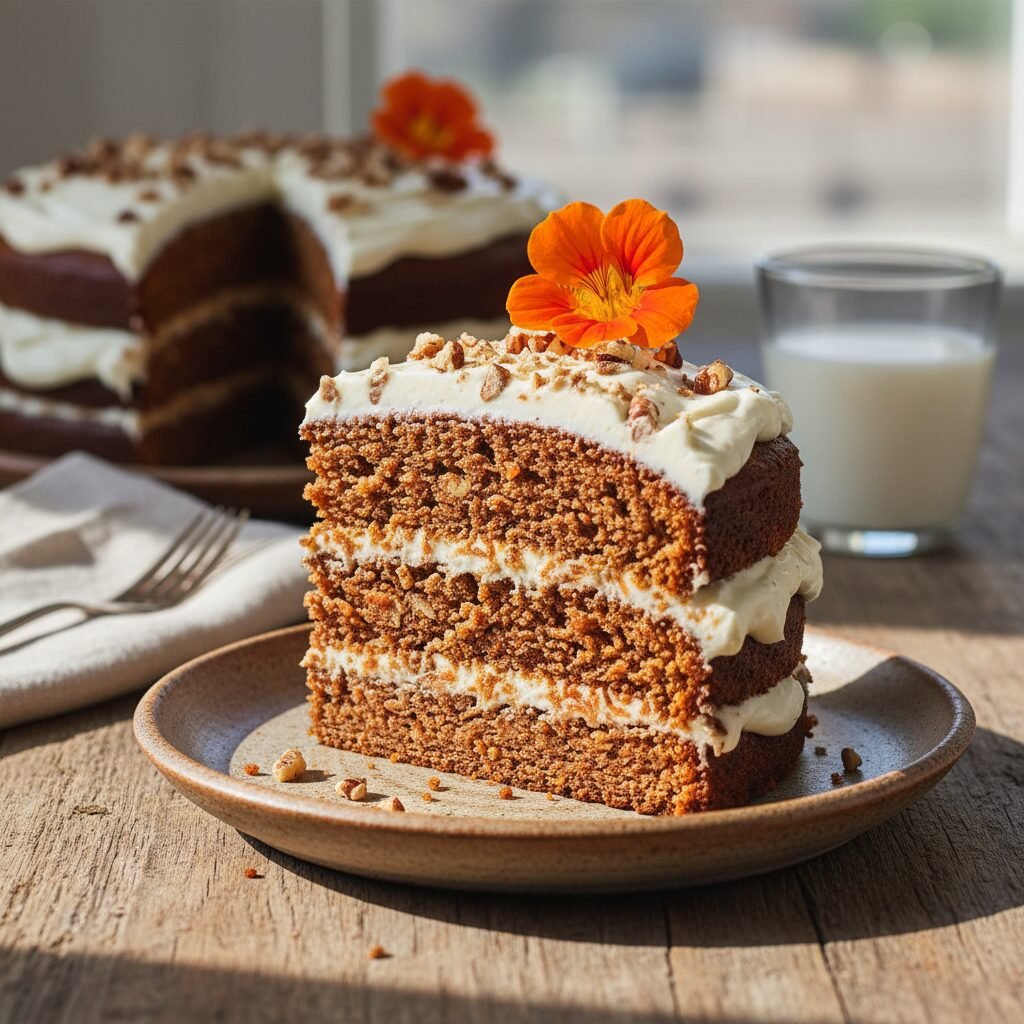
The Ultimate Moist Vegan Carrot Cake with Tangy Cream Cheese Frosting
Moist Vegan Carrot Cake With Vegan Cream Cheese Frosting Recipe
Discover the secret to the most decadent, moist, and perfectly spiced vegan carrot cake you will ever taste. Paired with a velvety, dairy-free cream cheese frosting, this easy-to-make dessert rivals any traditional bakery classic.
25 minutes
35 minutes
1 hour 15 minutes
12 servings
Dessert
Baking
American
Vegan
If there is one dessert that bridges the gap between comfort food and sophisticated baking, it is the classic carrot cake. But for those of us living a plant-based lifestyle, finding a recipe that replicates that quintessential dense-yet-fluffy texture without eggs or dairy can sometimes feel like a culinary quest. This Moist Vegan Carrot Cake recipe is the end of that search. It is everything a carrot cake should be: deeply spiced with cinnamon, nutmeg, and ginger, incredibly moist thanks to a specific blend of oil and brown sugar, and studded with just the right amount of texture from fresh carrots and walnuts.
What truly sets this cake apart is the balance of flavors. The natural sweetness of the carrots is tempered by the warmth of the spices, creating a flavor profile that feels like a warm hug on a crisp autumn day, yet is light enough for a spring brunch. And let’s talk about the frosting. A carrot cake is only as good as its topping, and this vegan cream cheese frosting is a game-changer. It captures that signature tanginess that cuts through the richness of the spiced sponge, achieving a creamy, luscious consistency that holds its shape perfectly. Whether you are baking for a birthday, a holiday gathering, or just a Tuesday night craving, this cake promises to impress vegans and omnivores alike. It’s not just ‘good for a vegan cake’—it’s simply one of the best carrot cakes you’ll ever eat.
History & Origins
The origins of carrot cake are somewhat debated, but food historians generally agree that it traces its lineage back to medieval Europe. During the Middle Ages, sugar was a rare and expensive luxury, imported from distant lands and reserved for the wealthy. Commoners, looking for ways to sweeten their puddings and desserts, turned to vegetables with high natural sugar content. Carrots, which are sweeter than almost any other vegetable (second only to sugar beets), became the primary candidate. These early iterations were more like steamed carrot puddings than the airy cakes we know today.
The evolution from pudding to cake likely occurred over several centuries, but the modern carrot cake saw a significant resurgence during World War II. With strict rationing of sugar and other baking staples in the United Kingdom, the government promoted the use of carrots as a sweetener in cakes and biscuits. This necessity bred invention, keeping the concept of carrot-based sweets alive in the public consciousness.
However, the carrot cake’s explosion into American pop culture occurred in the 1960s and 1970s. As the ‘health food’ movement gained traction, carrot cake was paradoxically marketed as a ‘healthy’ dessert simply because it contained a vegetable. It became a staple in cafes and restaurants across the United States. It was during this era that the now-inseparable cream cheese frosting became the standard pairing, cementing the dish as an icon of American baking. Today, it stands as a testament to culinary ingenuity—transforming a humble root vegetable into a celebrated confection.
Why This Recipe Works
This recipe succeeds where many vegan cakes fail—in the texture department—due to a few key scientific principles of baking. First, we rely on oil rather than vegan butter for the batter. While butter adds flavor, it contains water which can lead to gluten development and a tougher crumb. Oil is 100% fat, which coats the flour proteins, inhibiting gluten formation and resulting in a tender, melt-in-your-mouth texture that stays moist for days.
Secondly, the moisture content is carefully regulated by the interaction between the brown sugar and the carrots. Brown sugar is hygroscopic, meaning it attracts and holds moisture, ensuring the cake doesn’t dry out. We also insist on freshly grated carrots; pre-shredded store-bought carrots are often dry and coated in starch, whereas grating them yourself releases essential juices that steam the cake from the inside out as it bakes.
Finally, the leavening structure is robust. Without eggs to provide lift, we utilize a dual-action approach with both baking powder and baking soda. The baking soda reacts with the acidity of the brown sugar and the optional addition of apple cider vinegar to create carbon dioxide bubbles, giving the cake a magnificent rise and a fluffy, open crumb that supports the weight of the mix-ins without becoming dense or gummy.
Why You’ll Love This Recipe
- ✓100% Vegan and Dairy-Free
- ✓Incredibly moist texture that lasts for days
- ✓Richly spiced with cinnamon, ginger, and nutmeg
- ✓Tangy, stable vegan cream cheese frosting
- ✓No obscure ingredients required
- ✓Perfect for birthdays and holidays
Equipment You’ll Need
- ✓Two 8-inch round cake pans
- ✓Large mixing bowl
- ✓Medium mixing bowl
- ✓Box grater or food processor
- ✓Whisk
- ✓Rubber spatula
- ✓Electric hand mixer or stand mixer
- ✓Wire cooling rack
- ✓Measuring cups and spoons
Ingredients
- ✓2 1/2 cups all-purpose flour
- ✓2 teaspoons baking powder
- ✓1 teaspoon baking soda
- ✓1 1/2 teaspoons ground cinnamon
- ✓1/2 teaspoon ground ginger
- ✓1/4 teaspoon ground nutmeg
- ✓1/2 teaspoon salt
- ✓3/4 cup unsweetened applesauce (room temperature)
- ✓1 cup granulated sugar
- ✓1/2 cup brown sugar, packed
- ✓2/3 cup neutral oil (canola, vegetable, or melted coconut oil)
- ✓1 teaspoon vanilla extract
- ✓1 teaspoon apple cider vinegar
- ✓3 cups freshly grated carrots (approx. 4-5 medium carrots)
- ✓3/4 cup chopped walnuts or pecans (optional)
- ✓1/2 cup raisins (optional)
- ✓1/2 cup vegan butter, softened (for frosting)
- ✓8 oz vegan cream cheese, slightly chilled (for frosting)
- ✓3-4 cups powdered sugar, sifted (for frosting)
- ✓1 teaspoon vanilla extract (for frosting)
- ✓1 teaspoon lemon juice (for frosting)
Instructions
- Preheat your oven to 350°F (175°C). Grease two 8-inch round cake pans with oil and line the bottoms with parchment paper for easy removal.
- Peel and grate the carrots using the medium holes of a box grater. Do not squeeze out the moisture. Set aside.
- In a medium mixing bowl, whisk together the flour, baking powder, baking soda, cinnamon, ginger, nutmeg, and salt until well combined and no lumps remain.
- In a large mixing bowl, whisk together the oil, granulated sugar, brown sugar, applesauce, vanilla extract, and apple cider vinegar until the mixture is smooth and slightly emulsified.
- Gradually add the dry ingredients into the wet ingredients. Use a spatula to mix until just combined—do not overmix, as this can make the cake tough.
- Gently fold in the grated carrots and, if using, the chopped nuts and raisins until evenly distributed throughout the batter.
- Divide the batter evenly between the two prepared cake pans. Tap the pans gently on the counter to release any large air bubbles.
- Bake for 30-35 minutes, or until a toothpick inserted into the center comes out clean or with just a few moist crumbs attached.
- Remove the cakes from the oven and let them cool in the pans for 10-15 minutes. Then, carefully invert them onto a wire rack to cool completely before frosting.
- While the cakes cool, prepare the frosting. In a large bowl using a hand mixer or stand mixer, beat the softened vegan butter until creamy (about 2 minutes).
- Add the slightly chilled vegan cream cheese and beat for another minute until combined. Do not overbeat at this stage or the mixture may become runny.
- Gradually add the powdered sugar, one cup at a time, beating on low speed until incorporated. Add the vanilla and lemon juice. Increase speed to medium-high and whip until fluffy and smooth.
- Once the cakes are completely cool, place one layer on a serving plate. Spread a generous layer of frosting over the top. Place the second layer on top and frost the top and sides of the cake.
- Garnish with extra chopped nuts or carrot curls if desired. Refrigerate for 30 minutes before slicing to set the frosting.
Expert Cooking Tips
- ✓Grate your own carrots: Store-bought shredded carrots are too dry and thick. Hand-grating ensures moisture and proper texture.
- ✓Room temperature ingredients: Ensure your applesauce is at room temperature to prevent the oil from seizing, but keep the vegan cream cheese slightly cool for better frosting stability.
- ✓Don’t overmix: When combining wet and dry ingredients, stop as soon as the flour disappears to keep the cake tender.
- ✓Weigh your flour: If possible, use a kitchen scale (approx. 125g per cup) or the spoon-and-level method to avoid a dense cake.
- ✓Cool completely: Vegan cakes can be more delicate when warm. Let them cool fully before frosting to prevent sliding layers.
- ✓Acid is key: The apple cider vinegar reacts with the baking soda for lift; don’t skip it!
- ✓Toasted nuts: For deeper flavor, lightly toast your walnuts or pecans in a dry pan before adding them to the batter.
Substitutions and Variations
This recipe is quite versatile if you need to make adjustments based on dietary needs or pantry staples. For the flour, you can substitute a high-quality 1:1 Gluten-Free Baking Flour blend to make this cake gluten-free; just look for a blend that contains xanthan gum. If you are avoiding refined sugars, coconut sugar can replace the brown sugar, though the flavor will be slightly more caramel-like. The applesauce acts as an egg replacer and adds moisture, but you can also use crushed pineapple (drained) or plain vegan yogurt in the same quantity. For the oil, melted coconut oil works well, but ensure all other ingredients are room temperature so it doesn’t solidify during mixing; otherwise, canola, grapeseed, or avocado oil are excellent neutral choices. If you have a nut allergy, simply omit the walnuts or replace them with pumpkin seeds (pepitas) for a similar crunch without the allergens. For the frosting, if you cannot find vegan cream cheese, a simple vegan buttercream made with vegetable shortening and vegan butter is a delicious alternative.
Common Mistakes to Avoid
The most common mistake people make with carrot cake is using pre-packaged shredded carrots. These are designed for salads, are often dry, and the strands are too thick to cook down properly, leading to a crunchy vegetable texture in your dessert. Always peel and grate fresh carrots. Another pitfall is over-mixing the batter. Once the flour hits the liquid, gluten begins to form. If you mix too vigorously, you will end up with a rubbery, dense loaf rather than a fluffy cake. Regarding the frosting, vegan cream cheese is notoriously softer than dairy cream cheese. A common mistake is overbeating it or using it when it’s too warm, which turns the frosting into a soup. Keep your vegan cream cheese chilled until the last moment and beat it just enough to combine. Finally, do not rush the cooling process. Frosting a warm cake will cause the fat in the frosting to melt, and your layers will slide apart.
Serving Suggestions
This cake is a showstopper on its own, but presentation can elevate it to the next level. Serve slices on dessert plates with a side of coconut whipped cream or a scoop of vanilla bean dairy-free ice cream. A hot cup of coffee or a chai latte pairs beautifully with the spices in the cake, making it an excellent choice for an afternoon ‘fika’ or brunch. For a festive touch, garnish the top of the cake with candied pecans, edible flowers, or cute marzipan carrots. If serving for a holiday dinner, a dusting of extra cinnamon or nutmeg on the plate adds a professional finishing touch.
Storage and Reheating Tips
Because of the cream cheese in the frosting and the high moisture content of the cake, this dessert must be stored in the refrigerator. Place the cake in an airtight cake carrier or cover it gently with plastic wrap once the frosting has set. It will keep fresh in the fridge for up to 5-6 days. In fact, many people find that the flavor improves on the second day as the spices have more time to meld. For long-term storage, this cake freezes beautifully. You can freeze individual slices wrapped tightly in plastic wrap and then foil for up to 3 months. Thaw slices in the refrigerator overnight or on the counter for an hour before eating. If freezing the whole cake, it is best to freeze the layers unfrosted, then thaw and frost fresh before serving.
Nutrition Facts (Estimated)
| Serving Size | 1 slice |
| Calories | 480 |
| Fat | 24g |
| Saturated Fat | 4g |
| Unsaturated Fat | 18g |
| Trans Fat | 0g |
| Cholesterol | 0mg |
| Sodium | 280mg |
| Carbohydrates | 58g |
| Fiber | 3g |
| Sugar | 32g |
| Protein | 4g |
Frequently Asked Questions
Can I make this into cupcakes instead of a layer cake?
Absolutely! This recipe yields approximately 20-24 cupcakes. Line a muffin tin with paper liners and fill them about 2/3 full. Bake at 350°F for 18-22 minutes, or until a toothpick comes out clean.
Why did my cake sink in the middle?
Sinking usually happens if the oven door was opened too early during baking, causing a temperature drop, or if the cake was underbaked. It can also result from too much leavening (baking soda/powder) or over-beating the batter.
Can I reduce the sugar in this recipe?
You can reduce the sugar by about 1/4 cup without drastically affecting the texture, but be aware that sugar provides moisture and structural stability, not just sweetness. Reducing it too much may result in a drier, denser cake.
My frosting is too runny, how can I fix it?
If your vegan cream cheese frosting is runny, try adding more sifted powdered sugar, 1/4 cup at a time. You can also place the bowl in the fridge for 20 minutes to firm up the fats before whipping again. Ensure your kitchen isn’t too hot.
Do I have to use walnuts?
No, walnuts are completely optional. You can leave them out entirely for a nut-free version, or substitute them with pecans, pistachios, or even shredded coconut.
Can I use whole wheat flour?
You can substitute up to 50% of the all-purpose flour with white whole wheat flour. Using 100% regular whole wheat flour will make the cake significantly denser and heavier, so a mix is recommended.
What is the best brand of vegan cream cheese for frosting?
Brands like Violife, Kite Hill, and Miyoko’s generally work well for baking and frostings. Look for one that is firm in the package rather than a soft spreadable tub if possible, as firm blocks hold their shape better.
Is the apple cider vinegar necessary?
Yes, it is highly recommended. The acid in the vinegar reacts with the baking soda to create carbon dioxide bubbles, which helps the cake rise and gives it a fluffy texture since there are no eggs to provide lift.
Conclusion
Baking without dairy or eggs doesn’t mean sacrificing flavor, texture, or the joy of a celebratory dessert. This Moist Vegan Carrot Cake is proof that plant-based ingredients can come together to create something truly magical. From the warm, aromatic spices to the satisfying crunch of walnuts and the creamy tang of the frosting, every bite is a delight. It’s a recipe that invites you to slow down, enjoy the process of grating and mixing, and share a slice of homemade happiness with the people you love. Whether you are a seasoned vegan baker or just dipping your toes into dairy-free desserts, this cake is a reliable, crowd-pleasing classic that deserves a permanent spot in your recipe box. Happy baking!