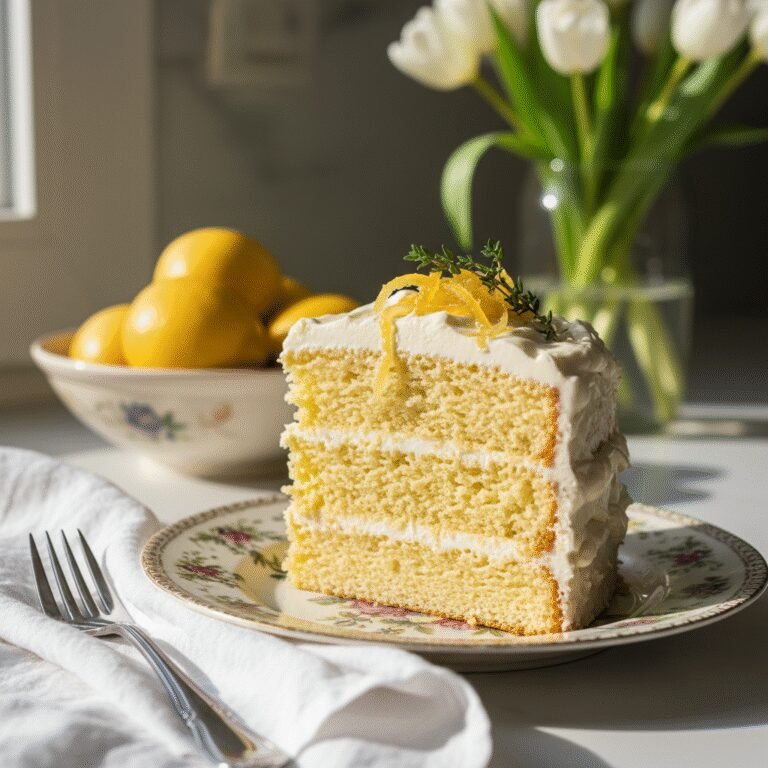
The Ultimate Moist Vegan Lemon Cake With Coconut Cream Frosting
Moist Vegan Lemon Cake With Coconut Cream Frosting Recipe
Discover the secret to the fluffiest, zestiest vegan lemon cake you’ve ever tasted. Topped with a cloud-like whipped coconut cream frosting, this dairy-free delight strikes the perfect balance between tart and sweet, making it an instant favorite for spring gatherings and summer picnics.
30 minutes
35 minutes
1 hour 5 minutes
12 slices
Dessert
Baking
American / Vegan
Vegan
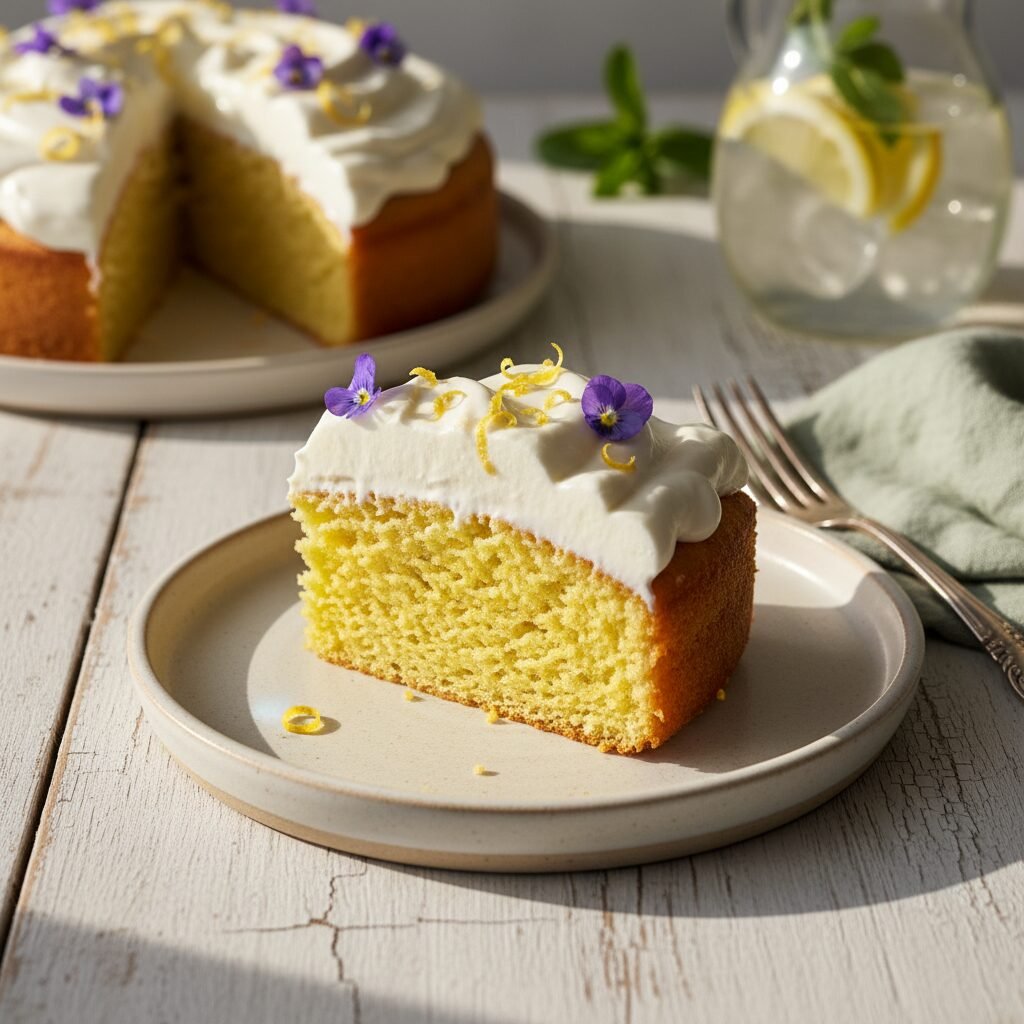
If you have been searching for the holy grail of vegan baking, look no further. There is a common misconception that egg-free and dairy-free cakes are destined to be dense, rubbery, or dry, but this Moist Vegan Lemon Cake With Coconut Cream Frosting shatters those myths entirely. Imagine sinking your fork into a crumb that is incredibly tender, light, and bursting with the sunshine-bright flavor of fresh lemons. This cake is a celebration of citrus, designed to lift your spirits and satisfy your sweet tooth without weighing you down. The magic lies in the chemistry of the ingredients—using the reaction between fresh lemon juice and plant-based milk to create a vegan ‘buttermilk’ that tenderizes the gluten, resulting in a texture that rivals any traditional butter-based sponge. But the cake is only half the story. The crowning glory is the luscious Coconut Cream Frosting. Unlike heavy buttercream that can sometimes feel overly greasy, this whipped topping is airy, subtly tropical, and melts in your mouth. It complements the sharp zest of the lemon perfectly, creating a harmony of flavors that feels sophisticated yet comforting. Whether you are a lifelong vegan, baking for a friend with allergies, or simply looking to reduce your dairy intake, this recipe is a showstopper. It is the kind of dessert that gets requested again and again, proving that plant-based baking requires absolutely no compromise on taste or texture.
History & Origins
The history of lemon cake is as rich and vibrant as the fruit itself. Lemons have been cultivated in the Mediterranean and Asia for thousands of years, prized not just for their culinary uses but for their medicinal properties. In medieval Europe, citrus fruits were a luxury item, often reserved for the wealthy. The concept of a ‘lemon cake’ likely evolved from earlier forms of fruit-studded breads and puddings. By the 18th and 19th centuries, as sugar became more accessible and chemical leavening agents like baking soda and powder were discovered, lighter sponge cakes began to emerge in Western culinary traditions. The classic ‘pound cake’—named for its pound of butter, sugar, eggs, and flour—often incorporated lemon zest to cut through the richness.
The evolution toward this specific Vegan Lemon Cake reflects a more modern culinary history: the rise of plant-based eating in the late 20th and early 21st centuries. Early vegan baking experiments in the 1970s and 80s often relied heavily on whole wheat flour and heavy sweeteners, resulting in the dense textures that gave vegan desserts a bad reputation. However, the ‘gastronomic revolution’ of the 2000s brought a scientific approach to egg-free baking. Bakers learned how to utilize vinegar or lemon juice to curdle soy or almond milk, mimicking the protein structure of buttermilk. The use of coconut cream as a whipped topping has roots in Southeast Asian cuisine but became a staple hack in Western vegan kitchens over the last decade as a superior alternative to hydrogenated oil-based toppings. This recipe stands on the shoulders of centuries of baking evolution, combining the classic European love for citrus sponges with modern, innovative plant-based techniques.
Why This Recipe Works
This recipe succeeds where many others fail because it relies on precise chemical reactions to replace the structural and emulsifying properties of eggs and butter. First, we create a vegan ‘buttermilk’ by mixing high-protein plant milk (like soy or almond) with fresh lemon juice. The acid curdles the milk, creating a thicker liquid that helps break down long gluten strands in the flour, ensuring a tender rather than chewy crumb. Secondly, we use oil instead of vegan butter for the cake batter. While butter contains water that evaporates during baking (potentially drying out the cake), oil is 100% fat and remains liquid at room temperature. This guarantees that the cake stays moist for days, not just hours.
Furthermore, the inclusion of both lemon zest and lemon extract ensures a multi-dimensional citrus flavor; the zest provides aromatic oils that perfume the cake, while the juice provides the tart acidity. For the frosting, chilling the coconut milk allows the fat to separate and solidify. When whipped, this fat traps air bubbles just like heavy dairy cream, creating a stable, billowy structure. We sweeten it with powdered sugar, which also contains a small amount of cornstarch to help stabilize the frosting further. The result is a cake that is scientifically formulated to be light, moist, and stable, without needing any animal products.
Why You’ll Love This Recipe
- ✓Incredibly moist crumb that stays soft for days.
- ✓Bright, natural lemon flavor using both zest and fresh juice.
- ✓Dairy-free whipped coconut cream frosting that is light and airy.
- ✓Simple pantry ingredients with no hard-to-find egg replacers.
- ✓Perfect balance of tart citrus and sweet creaminess.
- ✓100% Vegan and easily adaptable to be Gluten-Free.
Equipment You’ll Need
- ✓Two 8-inch round cake pans
- ✓Large mixing bowl
- ✓Medium mixing bowl
- ✓Whisk
- ✓Electric hand mixer or stand mixer
- ✓Rubber spatula
- ✓Microplane or zester
- ✓Cooling rack
- ✓Measuring cups and spoons
- ✓Parchment paper
Ingredients
- ✓2 ½ cups All-Purpose Flour (sifted)
- ✓1 ½ cups Granulated Sugar
- ✓1 ½ tsp Baking Powder
- ✓½ tsp Baking Soda
- ✓½ tsp Salt
- ✓1 ½ cups Unsweetened Soy Milk or Almond Milk (room temperature)
- ✓½ cup Fresh Lemon Juice (approx. 2-3 lemons)
- ✓2 tbsp Lemon Zest
- ✓½ cup Neutral Oil (Canola, Vegetable, or Grapeseed)
- ✓1 tsp Pure Vanilla Extract
- ✓2 cans (14oz each) Full-Fat Coconut Milk or Coconut Cream (chilled overnight)
- ✓½ cup Powdered Sugar (sifted)
- ✓1 tsp Lemon Extract (optional, for frosting)
Instructions
- Preheat your oven to 350°F (175°C). Grease two 8-inch round cake pans with a little oil and line the bottoms with parchment paper to ensure easy removal.
- In a small bowl or measuring cup, combine the room temperature soy milk with the fresh lemon juice. Stir gently and let it sit for about 5-10 minutes. The mixture will curdle and thicken, creating your vegan buttermilk.
- In a large mixing bowl, whisk together the dry ingredients: sifted flour, granulated sugar, baking powder, baking soda, and salt. Ensure there are no large lumps.
- Add the lemon zest, oil, and vanilla extract to the curdled milk mixture. Whisk until the wet ingredients are well combined.
- Pour the wet ingredients into the large bowl of dry ingredients. Using a whisk or rubber spatula, mix gently until just combined. Do not overmix; a few small lumps are okay. Overmixing will develop the gluten and make the cake tough.
- Divide the batter evenly between the two prepared cake pans. Tap the pans gently on the counter to release any large air bubbles.
- Bake in the center of the preheated oven for 30-35 minutes, or until a toothpick inserted into the center comes out clean or with just a few moist crumbs. The tops should be a pale golden color.
- Remove the cakes from the oven and let them cool in the pans for 10 minutes. Then, carefully run a knife around the edges and invert them onto a wire cooling rack to cool completely. The cakes must be 100% cool before frosting.
- While the cakes cool, prepare the frosting. Open the chilled cans of coconut milk carefully. Scoop out the hardened solid cream at the top into a chilled mixing bowl. Discard the liquid water at the bottom or save it for smoothies.
- Using an electric hand mixer, whip the coconut cream solids on high speed for 2-3 minutes until creamy and smooth.
- Gradually add the sifted powdered sugar and lemon extract (if using) while continuing to whip until the mixture is light, fluffy, and holds soft peaks. If it gets too warm, place the bowl in the fridge for 10 minutes.
- Once the cakes are fully cooled, place one layer on a serving plate. Spread a generous layer of coconut cream frosting over the top. Place the second cake layer on top and frost the top and sides with the remaining frosting.
- Garnish with extra lemon zest, lemon slices, or edible flowers if desired. Refrigerate the cake for at least 30 minutes before slicing to help the frosting set.
Expert Cooking Tips
- ✓Chill your coconut milk cans in the coldest part of your fridge for at least 24 hours before making the frosting to separate the fat from the water.
- ✓Use room temperature plant milk for the batter; if it is too cold, it might seize up the oil slightly, though this is less critical than with butter.
- ✓Do not skip the lemon zest; the oils in the skin contain the majority of the citrus aroma which survives the baking process better than the juice.
- ✓Sift your flour and powdered sugar to avoid lumps in the batter and a gritty texture in the frosting.
- ✓If your coconut cream frosting is too soft, add a tablespoon of cornstarch or tapioca starch while whipping to help stabilize it.
- ✓Use a neutral-flavored oil so the lemon flavor shines through; olive oil can be used but will impart a distinct savory note.
- ✓Let the cake cool completely—even slightly warm cake will melt the coconut oil-based frosting instantly.
Substitutions and Variations
This recipe is quite versatile. If you need to make this Gluten-Free, swap the all-purpose flour for a high-quality 1:1 Gluten-Free Baking Flour blend that contains xanthan gum. The texture may be slightly denser but still delicious. For the sugar, you can use organic cane sugar or coconut sugar, though coconut sugar will turn the cake a darker brown color and add a caramel note. If you are allergic to nuts and cannot use almond milk, soy milk is actually the preferred option due to its higher protein content which curdles better, but oat milk works reasonably well too. For the oil, melted coconut oil can be used, but ensure all other ingredients are room temperature so it doesn’t solidify during mixing. In the frosting, if you cannot use coconut, a store-bought vegan whipped topping or a frosting made from vegan butter and powdered sugar creates a sturdier, albeit sweeter, alternative.
Common Mistakes to Avoid
The most common mistake is overmixing the batter. Once the wet and dry ingredients meet, stop mixing as soon as the flour streaks disappear. Overmixing activates the gluten and leads to a rubbery, dense cake. Another pitfall is not chilling the coconut milk long enough or trying to use ‘lite’ coconut milk. Lite milk does not have enough fat to whip up; you must use full-fat canned coconut milk or coconut cream. Additionally, opening the oven door too early can cause the cakes to sink in the middle due to a sudden drop in temperature. Wait until at least 25 minutes have passed before checking. Finally, frosting the cake while it is still warm is a disaster for coconut cream; the frosting will essentially turn back into liquid coconut milk and slide off the cake.
Serving Suggestions
This cake is stunning on its own, but it pairs beautifully with fresh berries. Serve a slice with a side of macerated strawberries or fresh blueberries to cut through the creaminess of the coconut. A sprig of fresh mint or edible flowers like pansies or nasturtiums makes for a beautiful presentation for spring holidays like Easter or Mother’s Day. Beverage-wise, this cake pairs excellently with a hot Earl Grey tea, which has bergamot citrus notes, or a cold glass of oat milk. For a summer twist, serve it with a glass of sparkling lemonade or an iced matcha latte.
Storage and Reheating Tips
Because of the coconut cream frosting, this cake must be stored in the refrigerator. It is best kept in an airtight cake carrier or container to prevent the cake from drying out and absorbing fridge odors. It will stay fresh for up to 4-5 days. The cold temperature will make the cake slightly firmer, so it is recommended to let the slice sit at room temperature for 10-15 minutes before eating to allow the crumb to soften up again. You can also freeze the unfrosted cake layers wrapped tightly in plastic wrap for up to 3 months. Thaw them in the fridge overnight before frosting.
Nutrition Facts (Estimated)
| Serving Size | 1 slice |
| Calories | 340 |
| Fat | 16g |
| Saturated Fat | 8g |
| Unsaturated Fat | 7g |
| Trans Fat | 0g |
| Cholesterol | 0mg |
| Sodium | 180mg |
| Carbohydrates | 45g |
| Fiber | 2g |
| Sugar | 22g |
| Protein | 4g |
Frequently Asked Questions
Can I use bottled lemon juice instead of fresh?
Technically yes, but fresh lemon juice provides a much brighter, cleaner flavor. Bottled juice often contains preservatives that can give a slightly metallic or artificial aftertaste.
Why did my coconut cream not whip up?
This usually happens if the can wasn’t chilled long enough or if the brand of coconut milk contains too much water and not enough fat. Ensure you only scoop the solid white part and leave the clear liquid behind.
Can I make this cake in a 9×13 pan?
Yes! You can bake this in a rectangular 9×13 inch pan. You may need to adjust the baking time slightly, checking it around the 25-30 minute mark.
Is this cake very coconutty?
The cake itself has no coconut flavor if you use neutral oil and soy milk. The frosting definitely has a coconut flavor, but the lemon zest and sugar help mask it. If you hate coconut, use a vegan buttercream instead.
Why is my cake gummy?
Gumminess is usually a sign of overmixing the batter or underbaking. Ensure your oven temperature is accurate using an oven thermometer.
Can I reduce the sugar?
Sugar provides structure and moisture, not just sweetness. Reducing it significantly will affect the texture, making the cake denser and drier. You can reduce it by about 1/4 cup without major issues, but proceed with caution.
Can I use whole wheat flour?
Whole wheat flour will make the cake much denser and nuttier. If you want to add some whole grain, try using 50% whole wheat pastry flour and 50% all-purpose flour.
How do I make the frosting stiffer for piping?
Add a stabilizer like ‘Whip It’ or a tablespoon of cornstarch. Also, ensure the frosting is very cold. You can also add a small amount of vegan butter to the coconut cream to firm it up.
Conclusion
This Moist Vegan Lemon Cake With Coconut Cream Frosting is more than just a dessert; it is a testament to how delicious plant-based eating can be. It brings together the zest of summer and the comfort of a classic homemade cake in every bite. Whether you are an experienced baker or a novice in the kitchen, this recipe is forgiving and rewarding. The combination of the tender, citrus-infused sponge and the cool, creamy frosting is truly irresistible. We hope this cake becomes a staple in your recipe box, bringing joy and brightness to your table for years to come. Happy baking!