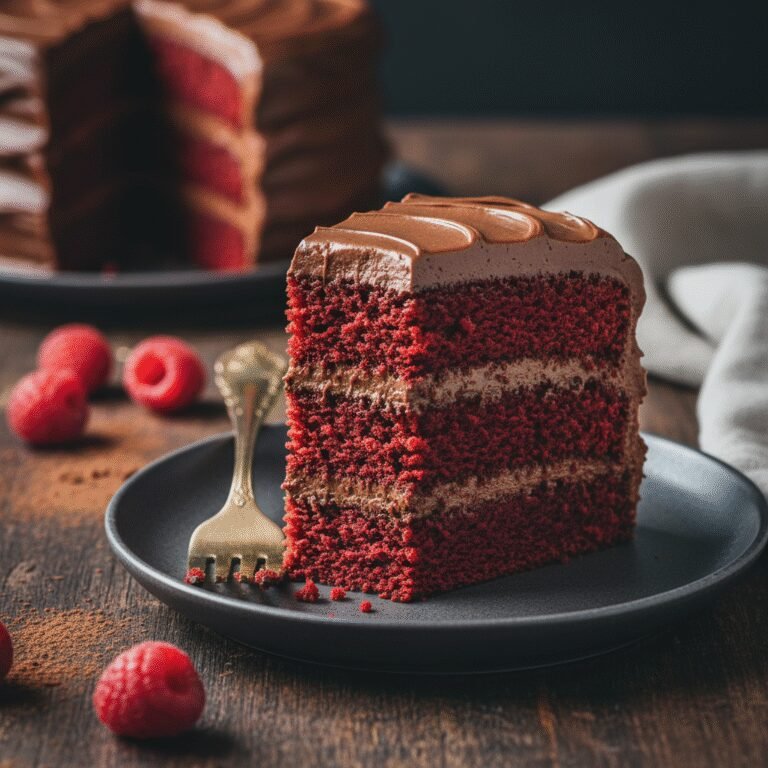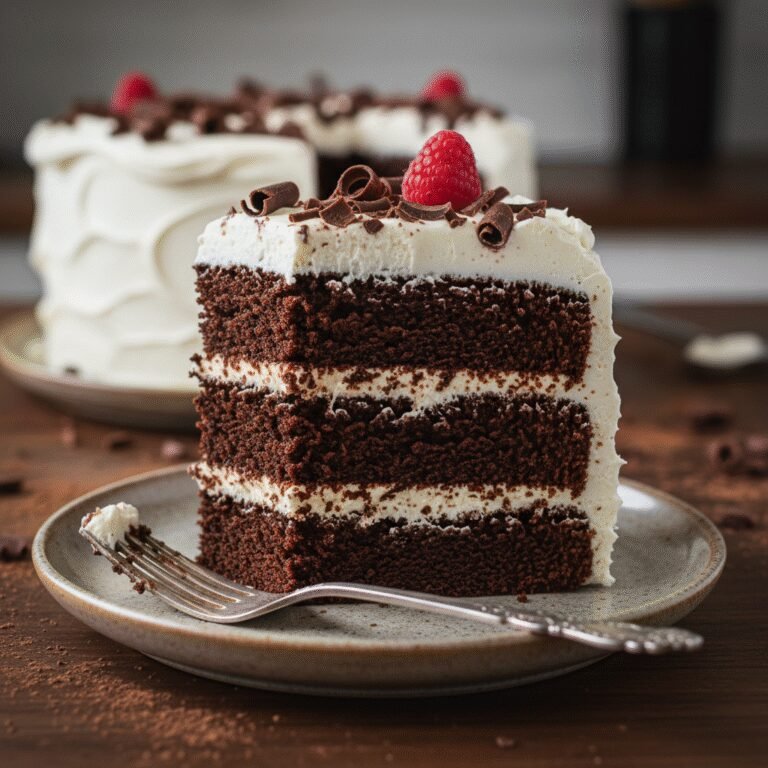
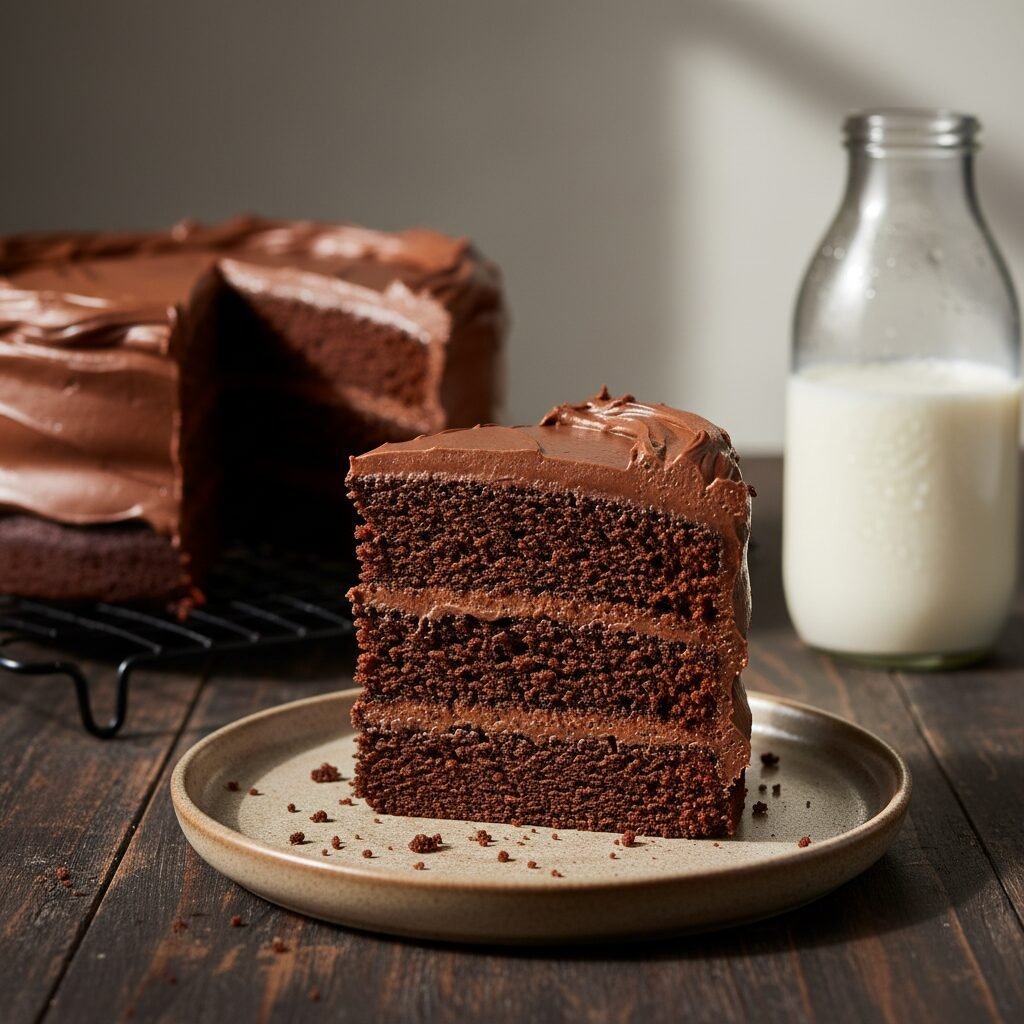
The Ultimate Moist Vegan Chocolate Cake With Creamy Vegan Buttercream
Moist Vegan Chocolate Cake With Vegan Buttercream Recipe
Discover the holy grail of plant-based baking with this incredibly moist vegan chocolate cake recipe. Paired with a velvety, rich vegan buttercream, this decadent dessert defies all expectations, proving you don’t need eggs or dairy to create a bakery-quality masterpiece right in your own kitchen.
30 minutes
35 minutes
1 hour 15 minutes
12-14 servings
Dessert
Baking
American
Vegan
If there is one misconception about vegan baking that I have fought to dispel for years, it is the idea that plant-based cakes are destined to be dry, crumbly, or lacking in richness. This Moist Vegan Chocolate Cake with Vegan Buttercream is the ultimate counterargument. It is, without exaggeration, one of the most decadent, fudgy, and deeply chocolatey cakes I have ever tasted—vegan or otherwise. The texture is luxuriously soft, melting on the tongue with a crumb that rivals the finest butter-based sponges.
What makes this recipe truly special is its simplicity. We aren’t using obscure egg replacers or hard-to-find gums. Instead, we rely on the magic of basic pantry staples to create a chemical reaction that lifts the cake while keeping it incredibly tender. The flavor profile is robust and sophisticated; the addition of hot coffee blooms the cocoa powder, intensifying the chocolate notes without imparting a distinct coffee taste. It creates a depth that sugar and flour alone simply cannot achieve.
Then there is the frosting. A good cake needs a crown, and this vegan chocolate buttercream is royalty. It is whipped to airy perfection, sweet but not cloying, with a silkiness that coats the palate. Whether you are baking for a birthday, a holiday, or just a Tuesday night craving, this cake is a showstopper. It creates a sense of nostalgia, reminding us of classic diner cakes, yet it feels modern and conscious. Get ready to impress even the most skeptical omnivores in your life, because after one bite, they won’t believe it’s vegan.
History & Origins
The history of vegan chocolate cake is surprisingly rooted in necessity rather than a specific dietary movement. Long before ‘plant-based’ became a buzzword, home bakers during the Great Depression developed what became known as ‘Wacky Cake’ or ‘Depression Cake.’ During this era (and later during World War II rationing), ingredients like butter, milk, and eggs were scarce and expensive. Ingenious cooks discovered that they could still produce a delicious cake by using vinegar and baking soda as the leavening agent, and oil as the fat source. This chemical reaction created the necessary lift and tenderness without animal products.
While the original Wacky Cake was often mixed right in the baking pan, modern vegan baking has elevated this humble origin story into an art form. Over the decades, as the vegan movement grew from a counter-culture niche in the 1960s and 70s to a mainstream lifestyle in the 21st century, the demand for high-quality dairy-free desserts exploded. Early commercial attempts were often dense or oddly textured, giving vegan baking a bad reputation. However, the culinary evolution of the 2010s brought a better understanding of food chemistry.
Today’s recipe pays homage to those resourceful bakers of the 1930s but incorporates modern techniques—like blooming cocoa with hot liquid and using high-quality plant-based butters—to create a dessert that stands on its own merit. It represents a culinary journey from scarcity to abundance, proving that limitations often breed the most delicious creativity.
Why This Recipe Works
This recipe succeeds where many others fail due to a precise balance of chemistry and fat selection. First and foremost, the moisture factor comes from using oil instead of butter in the cake batter. Butter is about 80% fat and 20% water, and while it adds flavor, it solidifies at room temperature. Oil, being 100% fat and liquid at room temperature, coats the flour proteins more effectively, preventing gluten over-development and ensuring the cake stays soft and moist for days, even after refrigeration.
Secondly, the leavening relies on the interaction between the acid (apple cider vinegar and the natural acidity of brown sugar/cocoa) and the base (baking soda). When these combine, they create carbon dioxide bubbles immediately. This is why the batter must be baked right away. This reaction provides a powerful lift that replaces the structure usually provided by eggs.
Finally, the ‘blooming’ technique is crucial. By pouring hot coffee over the cocoa powder, we dissolve the cocoa butter solids and release flavor compounds that are otherwise locked away. This results in a chocolate flavor that is three-dimensional and profound, rather than flat and sugary. The addition of a high-fat plant milk (like soy or oat) mixed with vinegar creates a vegan ‘buttermilk’ that adds tenderness to the crumb, breaking down tough gluten strands.
Why You’ll Love This Recipe
- ✓Incredibly moist and fudgy texture that stays soft for days.
- ✓Requires simple pantry ingredients—no flax eggs or weird gums.
- ✓Deep, intense chocolate flavor enhanced by hot coffee.
- ✓100% Vegan and Dairy-Free, suitable for those with egg or lactose allergies.
- ✓Versatile buttercream that pipes beautifully for decoration.
Equipment You’ll Need
- ✓Two 8-inch round cake pans
- ✓Large mixing bowl
- ✓Medium mixing bowl
- ✓Whisk
- ✓Electric hand mixer or stand mixer
- ✓Parchment paper
- ✓Wire cooling rack
- ✓Offset spatula
Ingredients
- ✓2 cups all-purpose flour
- ✓2 cups granulated sugar
- ✓3/4 cup unsweetened cocoa powder (high quality)
- ✓2 teaspoons baking soda
- ✓1 teaspoon baking powder
- ✓1 teaspoon salt
- ✓1 cup unsweetened almond milk or soy milk
- ✓1 tablespoon apple cider vinegar
- ✓1/2 cup vegetable oil or melted coconut oil
- ✓1 cup hot brewed coffee (or boiling water)
- ✓2 teaspoons pure vanilla extract
- ✓1 cup vegan butter sticks, slightly softened (for frosting)
- ✓3 cups powdered sugar (for frosting)
- ✓1/2 cup cocoa powder (for frosting)
- ✓2-3 tablespoons plant-based milk (for frosting)
Instructions
- Preheat your oven to 350°F (175°C). Grease two 8-inch round cake pans with a little oil and line the bottoms with parchment paper rounds. Dust the sides with cocoa powder to prevent sticking.
- Make the vegan buttermilk: In a measuring cup, combine the 1 cup of almond/soy milk with the 1 tablespoon of apple cider vinegar. Stir and let it sit for about 5-10 minutes until it curdles slightly.
- In a large mixing bowl, sift together the flour, sugar, 3/4 cup cocoa powder, baking soda, baking powder, and salt. Whisk well to ensure the raising agents are evenly distributed.
- Add the wet ingredients to the dry ingredients: Pour in the prepared vegan buttermilk, vegetable oil, and vanilla extract. Mix briefly.
- Slowly pour in the hot coffee while whisking. The batter will be very thin and liquidy—this is normal! Whisk gently until just combined and no large lumps of flour remain. Do not overmix.
- Divide the batter evenly between the two prepared cake pans. Tap the pans gently on the counter to release any large air bubbles.
- Bake for 30-35 minutes, or until a toothpick inserted into the center comes out clean or with just a few moist crumbs. Avoid opening the oven door for the first 25 minutes.
- Remove cakes from the oven and let them cool in the pans for 15 minutes. Then, carefully run a knife around the edges and invert them onto a wire rack to cool completely before frosting.
- Prepare the buttercream: In a large bowl using a hand mixer or stand mixer, beat the softened vegan butter until creamy and pale (about 3-4 minutes).
- Sift in the powdered sugar and 1/2 cup cocoa powder. Add vanilla and 1 tablespoon of plant milk. Start mixing on low speed, then increase to high and whip for 3-5 minutes until fluffy. Add more milk a teaspoon at a time if needed to reach desired consistency.
- Assemble: Place one cake layer on your serving stand. Spread a generous layer of frosting on top. Place the second cake layer on top. Frost the top and sides of the cake with the remaining buttercream.
Expert Cooking Tips
- ✓Ensure your baking soda is fresh; this cake relies heavily on it for lift.
- ✓Do not skip the parchment paper; vegan cakes can be more delicate and prone to sticking.
- ✓Use a kitchen scale to measure flour (240g total) for the most accurate texture.
- ✓Let the cakes cool completely—even chill them slightly—before frosting to prevent sliding.
- ✓If you don’t drink coffee, you can use hot water, but coffee enhances the chocolate flavor significantly.
- ✓Use vegan butter sticks rather than tub margarine for the frosting to ensure it holds its shape.
Substitutions and Variations
Baking is a science, but there is some room for flexibility here. For the flour, you can use a 1:1 Gluten-Free All-Purpose Baking Flour blend if you need this to be gluten-free; look for one containing xanthan gum. If you don’t have apple cider vinegar, white distilled vinegar or lemon juice works perfectly as a substitute to create the buttermilk. For the oil, any neutral oil like canola, grapeseed, or vegetable oil is ideal; melted coconut oil works too but may impart a slight coconut flavor. In the frosting, if you cannot find vegan butter sticks, high-quality vegetable shortening can be used, though you may want to add a pinch more salt and vanilla to boost the flavor. For the sugar, you can swap half the granulated sugar for light brown sugar in the cake batter for an even moister, caramel-like undertone.
Common Mistakes to Avoid
The most common mistake with this recipe is overmixing the batter. Once the liquid hits the flour, gluten begins to form. If you whisk too vigorously or for too long, the cake will turn out rubbery and dense rather than tender. Mix only until the dry streaks disappear. Another frequent error is using cold ingredients for the frosting; if your vegan butter is too cold, it won’t whip up fluffy, but if it’s melted, the frosting will be soupy. Aim for cool room temperature. Lastly, checking the cake too early by opening the oven door can cause the center to sink. Trust the timing and rely on your oven light until the minimum bake time has passed.
Serving Suggestions
This cake is rich and decadent, so it pairs beautifully with elements that cut through the sweetness. Serve a slice with a side of fresh raspberries or strawberries; the tartness of the fruit balances the deep chocolate. A dollop of unsweetened coconut whipped cream or a scoop of vegan vanilla bean ice cream is also a classic accompaniment. For a sophisticated finish, sprinkle flaky sea salt over the frosting or garnish with edible flowers and cacao nibs. It looks stunning on a white ceramic cake stand for birthdays or dinner parties.
Storage and Reheating Tips
Because this cake is oil-based, it stays moist for a surprisingly long time. Store the frosted cake in an airtight container (a cake dome is perfect) at room temperature for up to 2 days. For longer storage, keep it in the refrigerator for up to 5 days. If refrigerating, let the slices sit at room temperature for 20 minutes before eating to allow the buttercream to soften. You can also freeze the unfrosted cake layers. Wrap them tightly in plastic wrap and then foil; they will keep for up to 3 months. Thaw overnight in the fridge before frosting.
Nutrition Facts (Estimated)
| Serving Size | 1 slice |
| Calories | 480 |
| Fat | 24g |
| Saturated Fat | 6g |
| Unsaturated Fat | 16g |
| Trans Fat | 0g |
| Cholesterol | 0mg |
| Sodium | 320mg |
| Carbohydrates | 62g |
| Fiber | 4g |
| Sugar | 35g |
| Protein | 5g |
Frequently Asked Questions
Can I make this into cupcakes instead?
Absolutely! This recipe yields about 24 cupcakes. Bake them at 350°F for 18-22 minutes.
Why is my batter so runny?
Don’t panic! This batter is supposed to be very thin and liquid, almost like hot chocolate. This ensures the moisture is distributed evenly and results in a soft crumb.
Can I use whole wheat flour?
I don’t recommend using 100% whole wheat flour as it will make the cake dense. You can try swapping 50% of the all-purpose flour for white whole wheat flour for a slightly healthier twist without ruining the texture.
What if I don’t have a stand mixer for the frosting?
A hand mixer works perfectly fine. If you don’t have either, you can mix it by hand with a wooden spoon and a whisk, but be prepared for a serious arm workout to get it fluffy!
Does the cake taste like vinegar?
Not at all. The vinegar reacts completely with the baking soda during the baking process. The acid is neutralized, leaving behind only lift and tenderness.
Can I reduce the sugar?
Sugar provides moisture and structure, not just sweetness. Reducing it by more than 1/4 cup may affect the texture, making the cake drier and less tender.
Why did my cake sink in the middle?
This usually happens if the oven door was opened too early, or if the cake was underbaked. It can also happen if there was too much leavening agent measured.
Is cocoa powder vegan?
Yes, pure cocoa powder is vegan. However, always check the label on ‘cocoa mixes’ which often contain milk powder. Stick to unsweetened baking cocoa.
Conclusion
There you have it—the secret to the perfect Moist Vegan Chocolate Cake. This recipe is a testament to the fact that you don’t need animal products to create something truly indulgent and comforting. Whether you are a seasoned vegan baker or just dipping your toes into plant-based cooking, this cake is foolproof and guaranteed to satisfy your deepest chocolate cravings. I hope this becomes a staple in your recipe box just as it has in mine. Happy baking, and don’t forget to lick the spoon!