Traditional Portuguese Orange Olive Oil Cake: A Moist & Aromatic Citrus Delight
Traditional Portuguese Orange Olive Oil Cake Recipe
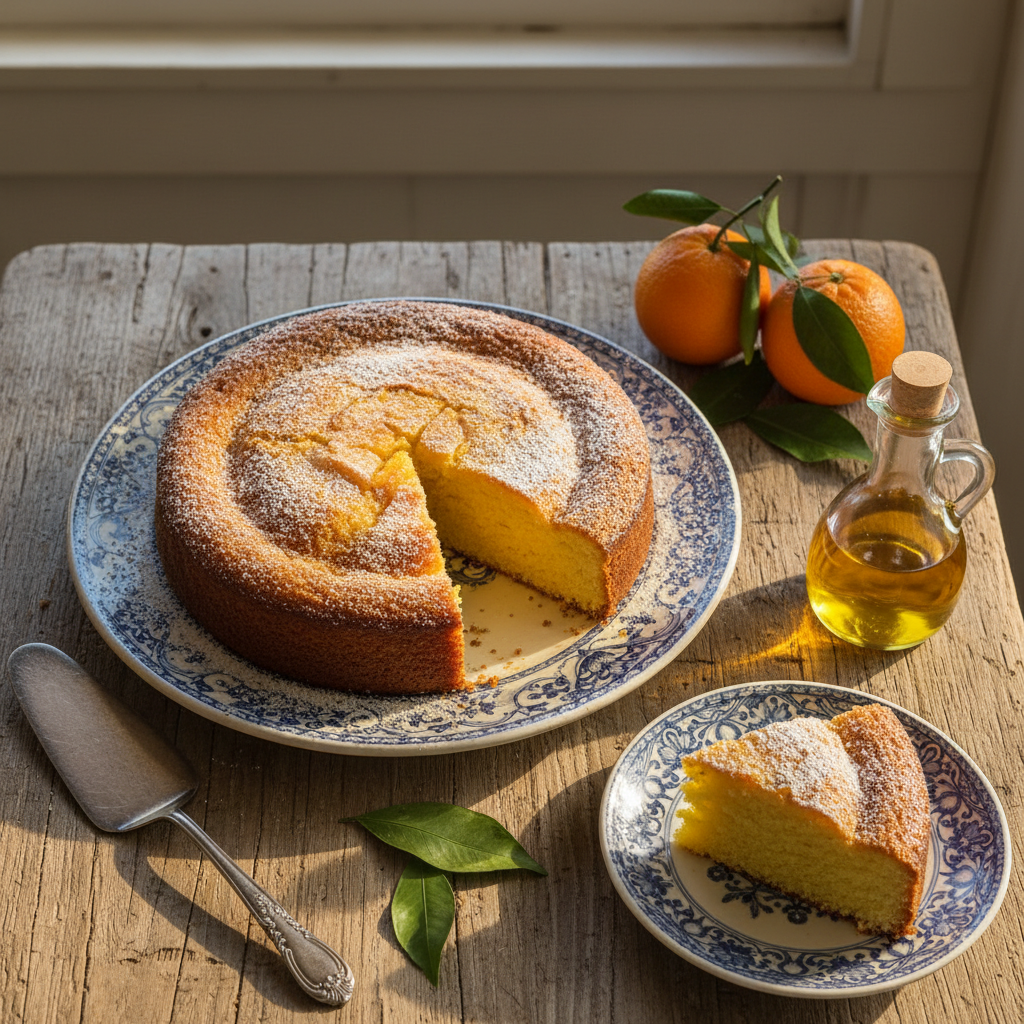
Experience the sunshine of Portugal with this incredibly moist and fragrant Orange Olive Oil Cake. Made with fresh citrus zest, fruity extra virgin olive oil, and no butter, this rustic dessert is the perfect balance of sweet, tender, and aromatic.
20 minutes
50 minutes
1 hour 10 minutes
10-12 slices
Dessert
Baking
Portuguese
Vegetarian
If there is one dessert that perfectly encapsulates the rustic elegance of Portuguese baking, it is the traditional ‘Bolo de Laranja com Azeite,’ or Orange Olive Oil Cake. Unlike the heavy, butter-laden confections often found in American bakeries, this cake relies on the liquid gold of the Mediterranean—extra virgin olive oil—to provide a crumb that is impossibly moist, tender, and long-lasting. The magic of this cake lies in its simplicity; it doesn’t require a stand mixer or fancy techniques, yet the result is a sophisticated dessert that tastes like it came straight from a Lisbon pastelaria.
The flavor profile is a vibrant celebration of citrus. By rubbing fresh orange zest directly into the sugar before mixing, we release the essential oils, infusing every grain with a bright, floral aroma that permeates the entire cake. The olive oil adds a fruity, grassy depth that cuts through the sweetness, creating a complex flavor that evolves on the palate. It is a cake that defies the usual stale-by-tomorrow rule of baking; in fact, thanks to the olive oil, it often tastes even better and becomes moister on the second or third day.
Whether you are serving it as a refined ending to a dinner party, a comforting companion to your morning coffee, or a sweet treat for an afternoon ‘lanche,’ this cake is a crowd-pleaser. It evokes the sunny orchards of the Algarve and the warm hospitality of a Portuguese grandmother’s kitchen. Prepare your senses for a baking experience that fills your home with the scent of warm citrus and sweet vanilla, resulting in a golden-brown masterpiece that is as beautiful as it is delicious.
History & Origins
The history of the Portuguese Orange Olive Oil Cake is deeply intertwined with the agricultural and cultural heritage of the Iberian Peninsula. Portugal has a long and storied relationship with both citrus fruits and olive trees. Sweet oranges were introduced to Portugal by Crusaders and traders returning from the East, specifically from China and India, in the 15th and 16th centuries. In fact, in many languages around the Mediterranean and the Middle East, the word for ‘orange’ is derived from ‘Portugal’ (such as the Greek ‘portokali’ or Turkish ‘portakal’), highlighting the nation’s pivotal role in popularizing the sweet fruit in Europe.
Olive oil, or ‘azeite,’ has been a staple of the region since the Roman Empire, prized not just for cooking savory dishes but as a vital fat source for baking in rural communities where butter was expensive or scarce. While French baking relies heavily on butter, Mediterranean baking often utilizes olive oil, which was readily available from local groves. This cake is a classic example of ‘cozinha de avó’ (grandmother’s cooking)—recipes born out of abundance and necessity. It reflects the agrarian lifestyle of regions like the Alentejo and the Algarve, where orange groves and olive orchards grow side by side.
Historically, cakes like these were often prepared for family gatherings, religious festivals, or the daily ritual of afternoon tea. Unlike the famous ‘doces conventuais’ (convent sweets) which are characterized by excessive egg yolks and sugar, this olive oil cake represents the rustic, home-style baking of the countryside. It is a testament to the Portuguese philosophy of food: taking high-quality, simple, local ingredients and allowing them to shine without unnecessary complication.
Why This Recipe Works
This recipe succeeds where many other fruit cakes fail due to the specific chemical properties of its two main stars: olive oil and fresh oranges. First, let’s talk about the fat. Butter contains water and milk solids, and it is solid at room temperature. Olive oil is 100% fat and remains liquid at room temperature. When used in baking, this liquid state coats the flour proteins (gluten) more effectively than butter, preventing them from forming a tough network. This results in a ‘short’ or tender crumb. Furthermore, because the oil stays liquid even after the cake cools, the cake retains a sensation of moistness that butter cakes lose once the butter resolidifies. This is why olive oil cakes have a superior shelf life.
Secondly, the method of incorporating the orange flavor is crucial. Many recipes simply stir in zest. In this recipe, we employ the technique of mechanical friction: rubbing the zest into the granulated sugar with your fingertips until the sugar resembles wet sand. Sugar is abrasive and acts as an exfoliant for the zest, rupturing the oil glands in the peel and releasing the potent orange oil directly into the sugar crystals. This ensures the flavor is evenly distributed and significantly more intense. Finally, the acidity from the orange juice reacts with the baking agents and the proteins in the eggs, helping to tenderize the crumb further and providing a gentle lift, resulting in a cake that is dense but never heavy.
Why You’ll Love This Recipe
- ✓Incredibly moist texture that stays fresh for days.
- ✓Dairy-free recipe suitable for lactose-intolerant guests.
- ✓No mixer required; easy one-bowl preparation.
- ✓Intense, natural citrus flavor from fresh zest and juice.
- ✓Uses heart-healthy extra virgin olive oil.
- ✓Beautiful, rustic presentation perfect for any occasion.
Equipment You’ll Need
- ✓9-inch Springform Pan or Round Cake Pan
- ✓Large Mixing Bowl
- ✓Medium Mixing Bowl
- ✓Whisk
- ✓Microplane or Zester
- ✓Citrus Juicer
- ✓Rubber Spatula
- ✓Measuring Cups and Spoons
- ✓Cooling Rack
Ingredients
- ✓2 cups (250g) All-purpose flour
- ✓1 1/2 teaspoons Baking powder
- ✓1/2 teaspoon Baking soda
- ✓1/2 teaspoon Fine sea salt
- ✓1 1/4 cups (250g) Granulated sugar
- ✓2 tablespoons Freshly grated orange zest (approx. 2 medium oranges)
- ✓3 Large eggs, at room temperature
- ✓1 cup (240ml) Extra virgin olive oil (fruity, not too grassy)
- ✓1 cup (240ml) Freshly squeezed orange juice
- ✓1 teaspoon Pure vanilla extract
- ✓Optional: 1 tablespoon Grand Marnier or Orange Liqueur
- ✓Powdered sugar, for dusting
- ✓Thin orange slices, for garnish
Instructions
- Preheat your oven to 350°F (175°C). Grease a 9-inch springform pan generously with olive oil and line the bottom with parchment paper to ensure a clean release.
- In a medium bowl, whisk together the all-purpose flour, baking powder, baking soda, and salt until well combined and aerated. Set aside.
- In a large mixing bowl, combine the granulated sugar and the fresh orange zest. Using your clean fingertips, rub the zest into the sugar for about 1-2 minutes until the mixture is fragrant, slightly moist, and pale orange in color. This step is essential for maximum flavor.
- Crack the room-temperature eggs into the sugar-zest mixture. Using a whisk, beat vigorously for about 2-3 minutes until the mixture is pale, thickened, and falls in a ribbon when you lift the whisk.
- Slowly stream in the olive oil while whisking constantly to emulsify the mixture. It should look smooth and glossy.
- Whisk in the vanilla extract and the orange liqueur (if using).
- Add about one-third of the flour mixture to the wet ingredients, whisking gently until just combined. Follow this with half of the orange juice.
- Repeat the process: add another third of the flour, mix, add the remaining orange juice, mix, and finally add the remaining flour. Whisk only until no streaks of flour remain. Do not overmix.
- Pour the batter into the prepared pan. Tap the pan gently on the counter once or twice to release any large air bubbles.
- Bake in the center of the oven for 45 to 55 minutes. The cake should be golden brown on top, and a toothpick inserted into the center should come out clean or with just a few moist crumbs attached.
- Remove the cake from the oven and let it cool in the pan for 15 minutes. Run a thin knife around the edges to loosen it, then remove the sides of the springform pan.
- Transfer the cake to a wire rack to cool completely before slicing. The texture settles and improves as it cools.
- Once cool, dust generously with powdered sugar and garnish with fresh orange slices or candied peel before serving.
Expert Cooking Tips
- ✓Use Room Temperature Ingredients: Ensure your eggs and orange juice are at room temperature. This prevents the olive oil from seizing or clumping and ensures a smooth emulsion.
- ✓Choose the Right Oil: Use a high-quality Extra Virgin Olive Oil. Look for one described as ‘fruity’ or ‘buttery.’ Avoid oils that are intensely peppery or bitter, as those flavors will carry through to the cake.
- ✓Don’t Skimp on Zest: The zest contains the essential oils. When zesting, be careful to only grate the bright orange part and avoid the bitter white pith underneath.
- ✓Rub the Sugar: Do not skip the step of rubbing the zest into the sugar. It makes a noticeable difference in the aroma and flavor intensity.
- ✓Watch the Oven: Olive oil cakes can brown quickly. If the top is getting too dark before the center is cooked, tent the cake loosely with aluminum foil for the last 15 minutes of baking.
- ✓Let it Rest: This cake is delicious warm, but the flavor and texture actually improve if you let it sit for a few hours or even overnight.
- ✓Pan Prep: A springform pan is ideal for this delicate cake, but if using a standard cake pan, ensure the parchment paper covers the bottom to prevent sticking.
Substitutions and Variations
This recipe is quite versatile, allowing for several dietary and flavor adjustments. **Flour:** For a gluten-free version, substitute the all-purpose flour with a high-quality 1:1 gluten-free baking flour blend that contains xanthan gum. Almond flour can replace about 1/2 cup of the all-purpose flour if you want a nuttier, denser texture. **Sugar:** You can use organic cane sugar instead of white granulated sugar, though the cake will be slightly darker. Honey or maple syrup changes the liquid ratio and acidity, so they are not recommended as direct 1:1 swaps for this specific recipe. **Citrus:** While this is an orange cake, the base works beautifully with other citrus fruits. Try using blood oranges for a berry-like note and a pinkish hue, or a mix of lemon and Meyer lemon for a tart, refreshing twist. **Oil:** If you find the flavor of extra virgin olive oil too strong, you can use ‘light’ olive oil or a mix of 50% olive oil and 50% neutral vegetable oil (like grapeseed or sunflower), but you will lose some of the traditional Portuguese character.
Common Mistakes to Avoid
The most common mistake with olive oil cakes is **overmixing the batter**. Once the flour is added, you should mix only until combined. Overmixing develops gluten, which can turn this tender cake into something rubbery and tough. Another error is **using old baking powder**. Since this cake relies on the lift from the chemical leaveners, ensure your baking powder is fresh (less than 6 months old) or the cake will be dense and flat. **Undercooking the center** is also a risk because the batter is quite wet; trust the toothpick test rather than just looking at the golden crust. Finally, **using a bitter olive oil** can ruin the dessert. Taste your oil plain before baking; if it burns the back of your throat significantly, it might be too harsh for a dessert.
Serving Suggestions
This cake is elegantly simple and needs very little dressing up. A generous dusting of powdered sugar is the traditional finish. For a more dessert-forward presentation, serve slices with a dollop of lightly sweetened mascarpone cheese, crème fraîche, or Greek yogurt to add a creamy tang that contrasts with the sweet citrus. A drizzle of warm honey or an orange glaze (made with powdered sugar and orange juice) can add extra sweetness. In Portugal, it is often enjoyed with a strong ‘bica’ (espresso) in the mid-morning or a glass of Port wine in the evening. Fresh berries, particularly raspberries or strawberries, also make a lovely accompaniment on the plate.
Storage and Reheating Tips
One of the greatest assets of this Orange Olive Oil Cake is its storage capability. Because of the olive oil, it stays moist at room temperature for up to 4-5 days. Store it under a cake dome or wrapped tightly in plastic wrap on the counter; do not refrigerate it, as the cold environment will accelerate the staling process and alter the texture of the oil. If you need to keep it longer, the cake freezes exceptionally well. Wrap individual slices or the whole cake in plastic wrap, then a layer of foil, and freeze for up to 3 months. Thaw at room temperature for a few hours before serving. If the cake feels slightly firm after thawing, a quick 10-second zap in the microwave will restore its tender, warm crumb.
Nutrition Facts (Estimated)
| Serving Size | 1 Slice |
| Calories | 340 kcal |
| Fat | 16g |
| Saturated Fat | 2.5g |
| Unsaturated Fat | 13g |
| Trans Fat | 0g |
| Cholesterol | 55mg |
| Sodium | 180mg |
| Carbohydrates | 44g |
| Fiber | 1.5g |
| Sugar | 22g |
| Protein | 5g |
Frequently Asked Questions
Can I use store-bought orange juice?
While you can, fresh is significantly better. Store-bought juice is often pasteurized and lacks the bright, floral acidity of fresh juice. Since you need fresh oranges for the zest anyway, juicing them is highly recommended for the best flavor.
Why did my cake sink in the middle?
Sinking usually happens if the oven door was opened too early, causing a temperature drop before the structure set, or if the cake was underbaked. It can also be caused by over-leavening (too much baking powder/soda).
Does this cake taste like olives?
Not exactly. While it has a savory undertone and a fruity depth from the oil, the sugar and orange zest mask the ‘vegetal’ taste of the olives. It tastes rich and buttery, despite having no butter.
Can I reduce the sugar in this recipe?
You can reduce the sugar by about 1/4 cup without ruining the structure, but keep in mind that sugar provides moisture and tenderness, not just sweetness. Reducing it too much may result in a drier cake.
My batter looks curdled after adding the oil. Is it ruined?
No, it’s fine! Sometimes the emulsion breaks slightly if the eggs were cold. Just proceed with adding the flour; the dry ingredients will bring the batter back together into a smooth consistency.
Can I bake this in a Bundt pan?
Yes, a Bundt pan works well. However, be sure to grease every nook and cranny thoroughly with oil and flour (or baking spray) to prevent sticking. You may need to adjust the baking time slightly.
Is this cake dairy-free?
Yes, as written, this recipe is 100% dairy-free, making it perfect for those with lactose intolerance or milk allergies.
What is the best variety of orange to use?
Navel oranges or Valencia oranges are excellent choices. Navel oranges are sweet and seedless, while Valencias are very juicy. Blood oranges or Cara Cara oranges also work beautifully for a unique twist.
Conclusion
The Traditional Portuguese Orange Olive Oil Cake is more than just a dessert; it is a comforting slice of Mediterranean culture. Its golden crumb, infused with the bright zest of oranges and the richness of olive oil, offers a texture and flavor that feels both wholesome and indulgent. Whether you are an experienced baker or a novice in the kitchen, this forgiving recipe promises a stunning result that will have your family and friends asking for seconds. It’s the perfect way to bring a little bit of Portuguese sunshine into your kitchen, no matter the weather outside. Bake it for a special occasion, or simply to enjoy with your afternoon tea—it is a timeless classic that never goes out of style.