
Authentic French Opera Cake: A Masterpiece of Coffee and Chocolate
Traditional French Opera Cake Recipe
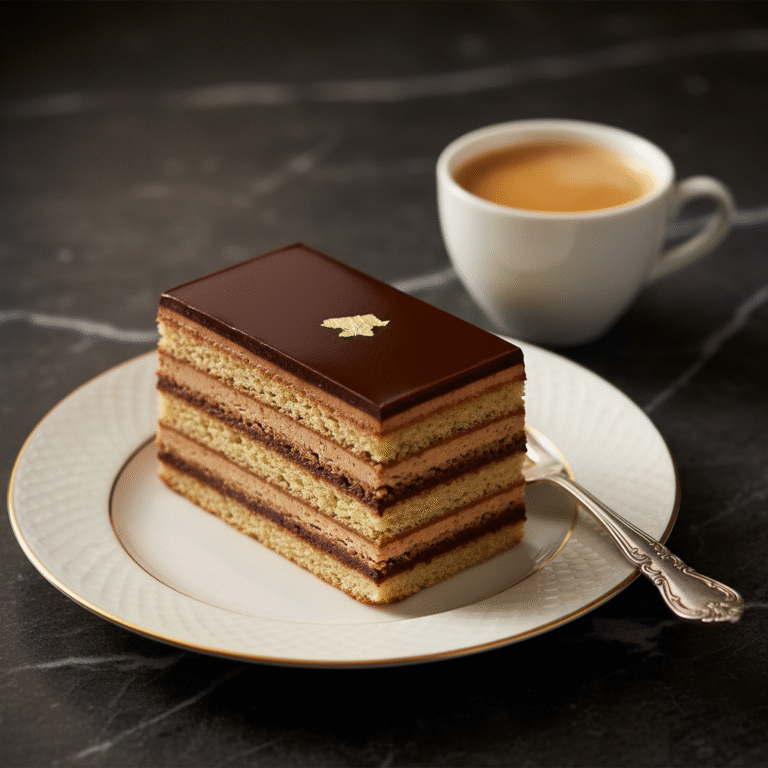
Experience the epitome of French patisserie with this authentic Opera Cake recipe. Featuring six distinct layers of almond sponge cake soaked in coffee syrup, silky coffee French buttercream, and rich chocolate ganache, it is finished with a glossy chocolate glaze that is sure to impress.
2 hours
45 minutes
4 hours (includes chilling)
12 servings
Dessert
Baking & Assembly
French
Vegetarian
Welcome to the ultimate baking project that defines elegance and sophistication: the traditional French Opera Cake (Gâteau Opéra). If you have ever walked past the window of a high-end Parisian patisserie and marveled at the sleek, shiny rectangles of chocolate and gold leaf, you know exactly the allure I am talking about. This is not just a cake; it is an architectural marvel of flavor and texture. While it may look intimidating with its precise layers and glossy finish, making an Opera Cake at home is entirely achievable with patience and the right technique. The beauty of this dessert lies in its balance. It is rich without being cloying, thanks to the intense coffee syrup that cuts through the fat of the buttercream and ganache. The almond sponge, known as Biscuit Joconde, provides a light, nutty structure that holds the moisture of the syrup perfectly without becoming soggy. Every forkful offers a harmonious blend of bitter coffee, dark chocolate, and sweet almond. It is the kind of dessert that demands to be savored slowly, perhaps with a shot of espresso or a glass of dessert wine. In this guide, I will walk you through every single component—from whipping the egg whites for the sponge to tempering the chocolate for that mirror-like glaze. We will demystify French buttercream and learn the secrets of a perfect ganache emulsion. Whether you are baking for a special birthday, an anniversary, or simply to challenge your culinary skills, this Opera Cake will be the crown jewel of your baking repertoire. Get ready to transport your kitchen to the streets of Paris.
History & Origins
The history of the Opera Cake is as rich and layered as the dessert itself, deeply rooting it in the pantheon of French culinary arts. While there are often debates in the food world regarding origins, the most widely accepted history credits the creation of the Gâteau Opéra to the legendary Parisian pastry shop, Maison Dalloyau. In 1955, Cyriaque Gavillon, a pastry chef at Dalloyau, sought to create a new kind of dessert. At the time, most cakes were round and obscured by heavy decorations that hid the flavors inside. Gavillon wanted to create a cake where the layers were visible and the flavors could be tasted in a single bite. He constructed a rectangular cake with clearly defined layers of almond sponge, coffee cream, and chocolate ganache. The name ‘Opera’ is attributed to Gavillon’s wife, Andrée. She remarked that the cake’s layers and its glossy surface resembled the stage of the Paris Opera House (Palais Garnier), and perhaps even the parquet flooring of the grand venue where the dancers performed. Another theory suggests it was named as a tribute to the Opera’s dancers who frequented the shop. Despite a rival claim by chef Gaston Lenôtre in the 1960s, the Dalloyau origin story remains the standard. The cake revolutionized modern pastry by moving away from heavy, masked cakes to sleek, minimalist aesthetics where the precision of the cut and the quality of the layers were the primary decoration. Today, it remains a standard test for pastry chefs worldwide, representing the perfect mastery of texture and flavor balance.
Why This Recipe Works
This recipe works because it adheres strictly to the traditional ratios and techniques that make the Opera Cake iconic, while providing modern troubleshooting for the home baker. First, the Biscuit Joconde is the foundation; unlike a standard sponge, it uses almond flour and whole eggs beaten to a ribbon stage, folded with meringue. This creates a flexible yet absorbent cake that can hold the heavy syrup without disintegrating. Second, the coffee syrup is not just a flavoring agent; it is a structural component. By soaking the cake, we ensure the dessert melts in the mouth, dissolving the boundary between cake and cream. Third, we use a traditional French Buttercream based on a pâte à bombe (egg yolks whipped with hot sugar syrup). This yields a texture that is infinitely smoother and richer than American buttercream, providing a creamy counterpoint to the bitter coffee and dark chocolate. Finally, the assembly technique focuses on chilling between layers. This ensures distinct, sharp lines when you slice the cake, giving it that professional, patisserie-style appearance. We also use a high-quality chocolate glaze with a touch of oil or butter for shine, ensuring it doesn’t crack when cut. The combination of these specific elements results in a cake that is structurally sound yet texturally delicate.
Why You’ll Love This Recipe
- ✓Features six stunning, visible layers of almond sponge, buttercream, and ganache.
- ✓Uses authentic Biscuit Joconde for a moist, nutty base.
- ✓Rich French Buttercream infused with strong espresso.
- ✓Deep, dark chocolate ganache provides a bitter counterpoint to the sweet cream.
- ✓Finished with a professional-grade, glossy chocolate glaze.
- ✓Perfect for freezing and slicing for clean, sharp edges.
Equipment You’ll Need
- ✓3 Half-sheet pans (13×18 inch) or silicone baking mats
- ✓Stand mixer with whisk attachment
- ✓Digital kitchen scale
- ✓Offset spatula
- ✓Candy thermometer
- ✓Parchment paper
- ✓Pastry brush
- ✓Chef’s knife
- ✓Saucepan
Ingredients
- ✓FOR THE BISCUIT JOCONDE: 6 large egg whites, 2 tbsp granulated sugar, 2 cups almond flour, 2 cups powdered sugar, 6 large eggs, 1/2 cup all-purpose flour, 3 tbsp unsalted butter (melted).
- ✓FOR THE COFFEE SYRUP: 1/2 cup water, 1/3 cup granulated sugar, 1.5 tbsp instant espresso powder (or very strong brewed coffee).
- ✓FOR THE COFFEE BUTTERCREAM: 2 tbsp instant espresso powder, 1 tbsp boiling water, 1 cup granulated sugar, 1/4 cup water, 1 large egg, 1 large egg yolk, 1 cup (2 sticks) unsalted butter (softened).
- ✓FOR THE CHOCOLATE GANACHE: 8 oz bittersweet chocolate (finely chopped), 1/2 cup heavy cream, 1 tbsp unsalted butter.
- ✓FOR THE GLAZE: 5 oz dark chocolate, 2 tbsp neutral oil (like vegetable or grapeseed) or cocoa butter.
Instructions
- 1. PREPARE THE JOCONDE: Preheat oven to 425°F (220°C). Line two 13×18 inch baking pans with parchment paper. Whip egg whites in a clean bowl until foamy, add granulated sugar, and whip to stiff glossy peaks. Set aside.
- 2. In a stand mixer, beat almond flour, powdered sugar, and whole eggs on medium-high for 3-5 minutes until voluminous and pale. Fold in the all-purpose flour. Gently fold in the egg white meringue in two batches. Finally, fold in the melted butter.
- 3. Divide batter evenly between the two pans, spreading thinly and evenly with an offset spatula. Bake for 5-7 minutes until light golden and springy. Let cool completely.
- 4. MAKE THE SYRUP: Combine water and sugar in a saucepan. Bring to a boil until sugar dissolves. Remove from heat and stir in espresso powder. Let cool.
- 5. MAKE THE BUTTERCREAM: Dissolve espresso in boiling water. In a saucepan, heat sugar and water to 240°F (soft ball stage). While syrup heats, whip egg and yolk in a mixer until pale. Slowly pour hot syrup down the side of the bowl into eggs while whipping. Whip until cool. Add softened butter one tablespoon at a time until creamy. Mix in dissolved coffee.
- 6. MAKE THE GANACHE: Heat heavy cream until simmering. Pour over chopped chocolate. Let sit for 1 minute, then stir until smooth. Stir in butter.
- 7. ASSEMBLY: Cut each sheet of cake in half to get four layers (you will only use three, or you can piece together scraps for the middle layer).
- 8. Melt a small amount of chocolate and brush it on one side of the bottom cake layer. Let set (this prevents sticking). Flip this layer over onto a board (chocolate side down).
- 9. Brush the cake generously with coffee syrup. Spread half of the coffee buttercream evenly over the layer.
- 10. Top with the second layer of cake. Brush generously with syrup. Spread the chocolate ganache evenly over this layer. Chill for 20 minutes to set.
- 11. Top with the third layer of cake. Brush with remaining syrup. Spread the remaining buttercream over the top, smoothing it perfectly flat with an offset spatula. Chill the cake thoroughly (at least 1 hour).
- 12. GLAZE: Melt the dark chocolate and oil together until smooth. Pour over the chilled cake, tilting to cover evenly. Refrigerate until set.
- 13. SERVING: Using a hot, dry knife, trim the rough edges to reveal the clean layers. Cut into rectangular slices.
Expert Cooking Tips
- ✓Weigh your ingredients: Precision is key in French pastry, so use a digital scale for the flour, sugar, and eggs.
- ✓Room temperature butter: Ensure your butter for the buttercream is soft but not melted, or the emulsion will break.
- ✓Don’t skimp on syrup: The sponge may seem dry initially; it relies on the syrup for moisture. Use it all.
- ✓Chill between steps: If the buttercream is too soft while spreading, pop the cake in the fridge for 10 minutes.
- ✓Hot knife for slicing: To get those razor-sharp edges, dip your knife in hot water and wipe it dry before every single cut.
- ✓Sift almond flour: To avoid lumps in your sponge, always sift the almond flour and powdered sugar together.
- ✓Watch the syrup temp: For the buttercream, if the sugar syrup is too hot or too cold, the texture will suffer. Use a thermometer.
Substitutions and Variations
While traditional Opera Cake requires specific ingredients, there are some substitutions you can make if necessary. For the almond flour in the Joconde sponge, hazelnut flour is a classic and delicious alternative that pairs beautifully with coffee and chocolate. If you have a nut allergy, you can use very finely ground sunflower seeds or pumpkin seeds, though the flavor profile will change significantly. For the coffee extract or espresso powder, you can use a high-quality coffee liqueur like Kahlúa or Tia Maria for an alcoholic kick, though you may need to reduce the sugar in the syrup slightly. If you cannot find bittersweet chocolate, semi-sweet is acceptable, but avoid milk chocolate as it will make the cake overly sweet and soft. In the buttercream, if you are intimidated by the pâte à bombe method, you can use a Swiss Meringue Buttercream base flavored with coffee, though it will be lighter and less rich than the traditional French version. For the glaze, cocoa butter can be used instead of neutral oil for a firmer set.
Common Mistakes to Avoid
The most common mistake when making Opera Cake is rushing the cooling process. If you apply buttercream to a warm cake, it will melt and ruin the layers. Similarly, if you pour the glaze over a room-temperature cake, it won’t set shiny and smooth; the cake must be cold. Another pitfall is under-soaking the sponge. The Joconde is a dry sponge by nature and needs the syrup to become palatable. If you are afraid of making it soggy, you will likely end up with a dry cake. Be generous with the brush. Regarding the buttercream, a common issue is the mixture ‘breaking’ or looking curdled when adding the butter. This usually happens if the butter or the egg base are at different temperatures. Keep whipping! It almost always comes back together. If not, gently heat the bowl over a water bath for a few seconds and whip again. Finally, messy cuts can ruin the visual appeal. Do not saw the knife back and forth; use a long chef’s knife and press down in one motion, cleaning the blade after every cut.
Serving Suggestions
Opera Cake is a rich, intense dessert, so it is best served in small, rectangular slices. It is traditionally served chilled but allowed to sit at room temperature for about 10-15 minutes before eating to allow the buttercream to soften slightly for the best texture and flavor release. Pair this cake with a beverage that can stand up to the chocolate and coffee flavors. A shot of hot espresso is the classic pairing, mirroring the flavors inside the cake. For wine lovers, a glass of Banyuls, Port, or a sweet Muscat works wonderfully. If serving at a dinner party, a small dollop of unsweetened crème fraîche on the side can help cut through the richness. Presentation is key; serve on a clean white plate to let the dark layers pop, perhaps with a single gold leaf flake on top for that authentic Parisian touch.
Storage and Reheating Tips
Opera Cake is actually one of the few cakes that tastes better the next day, as the syrup has time to fully distribute through the sponge. Store the finished cake in the refrigerator, preferably in an airtight container or a cake box, for up to 4 days. The cut edges can dry out, so press a piece of plastic wrap directly against the cut side if storing slices. This cake also freezes exceptionally well. You can freeze the whole assembled cake (before glazing) or the finished cake. To freeze, wrap tightly in plastic wrap and then aluminum foil. It can be stored in the freezer for up to one month. Thaw overnight in the refrigerator before serving. If you have frozen it without the glaze, apply the glaze after the cake has thawed in the fridge but is still cold.
Nutrition Facts (Estimated)
| Serving Size | 1 slice |
| Calories | 580 |
| Fat | 38g |
| Saturated Fat | 22g |
| Unsaturated Fat | 14g |
| Trans Fat | 1g |
| Cholesterol | 165mg |
| Sodium | 120mg |
| Carbohydrates | 52g |
| Fiber | 3g |
| Sugar | 45g |
| Protein | 8g |
Frequently Asked Questions
Can I make Opera Cake in advance?
Yes, absolutely. In fact, it is recommended. Making it a day ahead allows the syrup to soak in and the layers to firm up, making slicing much easier and cleaner.
Why is my buttercream curdled?
Buttercream usually curdles due to temperature differences between the butter and the egg base. Keep whipping on high speed; it usually comes back together. If the butter was too cold, warm the bowl slightly with a hair dryer or warm towel while mixing.
Can I make this cake alcohol-free?
Yes, the traditional recipe uses coffee extract or strong espresso, not alcohol. Some variations use coffee liqueur, but this recipe is alcohol-free as written.
Do I really need a candy thermometer?
For the French buttercream, yes. The sugar syrup needs to reach exactly 240°F (115°C) to properly cook the eggs and create the right structure. Guessing is risky.
What is the difference between Joconde and Genoise?
Joconde sponge contains almond flour (or other nut flours) and uses whole eggs plus whipped egg whites, making it flexible and flavorful. Genoise relies solely on eggs for leavening and usually contains no nuts, making it drier and airier.
Why did my glaze crack?
Glaze cracks if the layer is too thick or if the cake was moved or bent after glazing. Using a little oil or butter in the glaze helps keep it flexible even when chilled.
How do I get the layers so even?
Weigh your batter to ensure each pan has the exact same amount. When assembling, spread fillings with a large offset spatula and chill between layers to firm them up before adding the next.
Can I use regular flour instead of almond flour?
No, almond flour is essential for the texture and flavor of the Joconde biscuit. Using only wheat flour would result in a tough, rubbery sponge that doesn’t absorb syrup well.
Conclusion
Mastering the French Opera Cake is a badge of honor for any home baker. It is a labor of love that requires time, precision, and patience, but the result is nothing short of spectacular. The interplay of the coffee-soaked almond sponge, the creamy richness of the buttercream, and the snap of the chocolate glaze creates a symphony of textures and flavors that is truly timeless. Whether you are celebrating a major milestone or simply treating yourself to a weekend baking project, this cake promises a sophisticated and delicious reward. Remember, the key is in the details—chill your layers, temper your chocolate, and slice with confidence. Bon appétit!