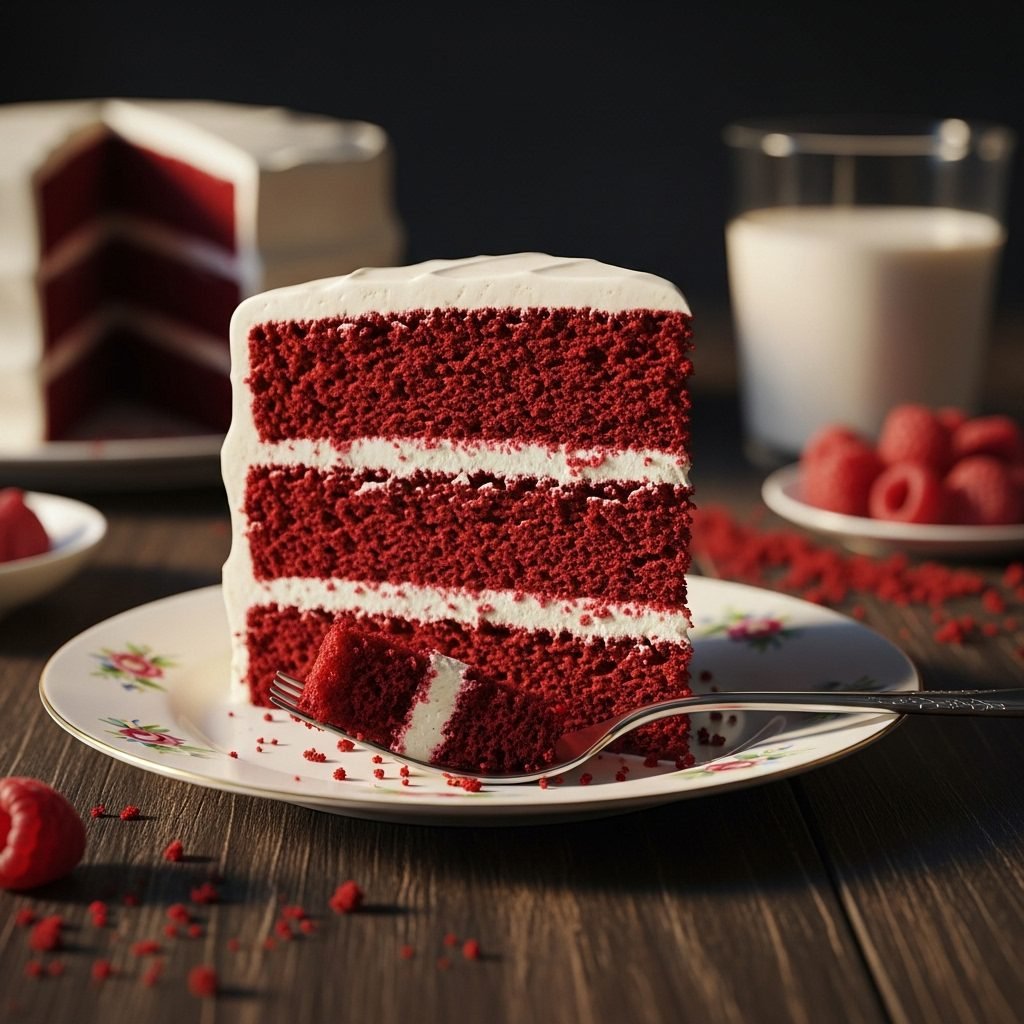
The Ultimate Moist Vegan Red Velvet Cake With Tangy Cream Cheese Frosting
Moist Vegan Red Velvet Cake With Vegan Cream Cheese Frosting Recipe
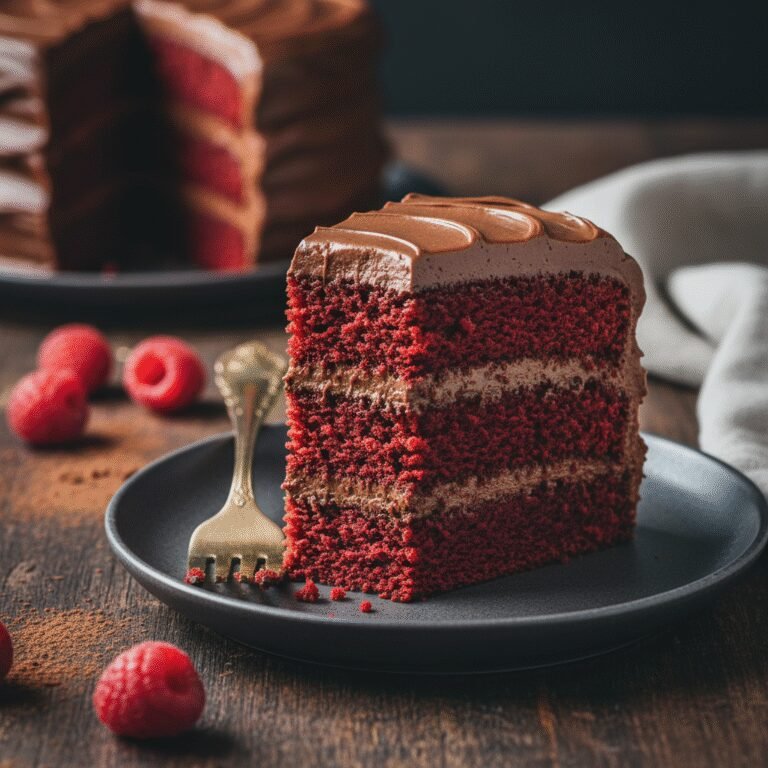
Discover the velvety texture and vibrant crimson hue of the best Vegan Red Velvet Cake you will ever taste. This recipe combines a tender, cocoa-infused crumb with a rich, tangy dairy-free cream cheese frosting that creates a dessert centerpiece perfect for any celebration.
25 minutes
30 minutes
1 hour 15 minutes (includes cooling)
12 servings (One 2-layer 8-inch cake)
Dessert
Baking
American
Vegan
There is something undeniably magical about Red Velvet Cake. It is the drama queen of the dessert world, demanding attention with its shocking red interior and contrasting snow-white frosting. But for years, vegan bakers have struggled to replicate that specific ‘velvet’ texture—a crumb that is tight yet tender, moist but fluffy, and possessing that enigmatic flavor profile that hovers somewhere between vanilla and chocolate. Well, the search ends here. This Moist Vegan Red Velvet Cake is not just a ‘good alternative’; it stands toe-to-toe with any traditional dairy-laden recipe and, dare I say, wins on texture every single time.
The secret to this cake’s allure lies in the balance. It is not simply a chocolate cake dyed red, nor is it a vanilla cake masquerading in costume. It features a distinct, mild cocoa flavor that is amplified by the tang of vegan buttermilk and a splash of vinegar. When you take a bite, you are greeted with a plush mouthfeel that melts away, followed by the rich, sweet, and slightly tangy explosion of the vegan cream cheese frosting. This frosting is a masterpiece in itself—thick, pipeable, and devoid of that waxy aftertaste found in some dairy-free alternatives.
Whether you are baking for a romantic Valentine’s Day dinner, a festive Christmas spread, or a birthday party where guests have mixed dietary needs, this cake is the universal crowd-pleaser. It defies the dry, crumbly stereotype often associated with egg-free baking. Instead, we rely on the science of chemical reactions between acids and bases to create lift and tenderness. Prepare to impress even the most skeptical omnivores with a slice of this scarlet perfection.
History & Origins
The history of Red Velvet Cake is as colorful and layered as the cake itself, filled with culinary myths, marketing genius, and chemical reactions. While many believe the cake originated at the Waldorf Astoria Hotel in New York City during the 1920s (where it was known as the Waldorf-Astoria Cake), the true origins are likely rooted in the Victorian era’s ‘Velvet Cakes.’ These cakes were named for their smooth texture, achieved by using almond flour, cocoa, or cornstarch to break down the protein in flour, resulting in a finer crumb.
The ‘Red’ in the name originally wasn’t from food dye. In the early 20th century, cocoa powder was not Dutch-processed (alkalized) as it commonly is today. It was rich in anthocyanins. When this raw cocoa powder reacted with acidic ingredients like buttermilk and vinegar, it turned a reddish-brown hue. This chemical blush gave the cake its name. However, during the Great Depression and World War II, rationing made baking supplies scarce. To boost sales and keep the cake visually appealing during hard times, the Adams Extract company in Texas began selling red food coloring with tear-off recipe cards for ‘Red Velvet Cake.’ This marketing move is largely responsible for the modern iteration of the cake, which relies on dye for that neon-bright color.
The cake experienced a massive resurgence in American pop culture following the 1989 film ‘Steel Magnolias,’ where an armadillo-shaped groom’s cake brought Red Velvet back into the spotlight. Since then, it has become a staple of Southern US cuisine. In the vegan world, the evolution has been fascinating. Early vegan adaptations struggled with the ‘buttermilk’ aspect, but with the advent of high-quality plant milks and better understanding of acid-base baking science, we can now replicate that historic reaction without a drop of dairy.
Why This Recipe Works
This recipe succeeds where many vegan cakes fail because it prioritizes moisture retention and structural integrity through specific ingredient chemistry. First, we utilize the ‘reverse creaming’ or liquid-fat method. Instead of creaming butter and sugar, we use a neutral oil. Butter contains water (about 15-20%), which evaporates during baking, sometimes leading to a drier crumb. Oil is 100% fat and remains liquid at room temperature, ensuring the cake stays incredibly moist and soft for days.
Secondly, the ‘Vegan Buttermilk’ is crucial. By curdling high-protein soy milk with apple cider vinegar, we create a thick, acidic liquid. This acid does two things: it tenderizes the gluten strands in the flour to prevent toughness, and it reacts vigorously with the baking soda. This reaction creates carbon dioxide bubbles, providing the lift that eggs would typically supply. This is why the cake is light and fluffy despite having no eggs.
Finally, the flavor balance is meticulously calculated. We use a specific amount of cocoa powder—enough to provide that signature earthy undertone, but not enough to weigh down the batter or turn it into a fudge cake. The addition of a small amount of cornstarch in the flour mix mimics cake flour, further softening the crumb. The result is a cake that is structurally sound enough to layer but soft enough to melt in your mouth.
Why You’ll Love This Recipe
- ✓100% Egg-Free and Dairy-Free
- ✓Incredibly moist crumb that stays soft for days
- ✓Authentic tangy flavor profile using vegan buttermilk
- ✓Sturdy enough for layer cakes and intricate decorating
- ✓Vibrant, show-stopping red color
- ✓Simple one-bowl batter method
Equipment You’ll Need
- ✓Two 8-inch round cake pans
- ✓Stand mixer or electric hand mixer
- ✓Large mixing bowl
- ✓Whisk
- ✓Rubber spatula
- ✓Measuring cups and spoons
- ✓Kitchen scale (highly recommended)
- ✓Wire cooling rack
- ✓Offset spatula
Ingredients
- ✓2 1/2 cups (315g) All-Purpose Flour
- ✓1 1/2 cups (300g) Granulated Sugar
- ✓1 tbsp Cocoa Powder (regular, not Dutch-process)
- ✓1 tsp Baking Soda
- ✓1/2 tsp Salt
- ✓1 1/2 cups (360ml) Unsweetened Soy Milk (or Almond Milk)
- ✓2 tsp Apple Cider Vinegar (for the milk)
- ✓1/2 cup (112g) Vegan Butter, melted
- ✓1/4 cup (60ml) Neutral Vegetable Oil (Canola or Grapeseed)
- ✓1 tsp Apple Cider Vinegar (for the batter reaction)
- ✓2 tsp Pure Vanilla Extract
- ✓1-2 tsp Red Gel Food Coloring (ensure it is vegan)
- ✓For the Frosting: 1 cup (225g) Vegan Butter, slightly cold
- ✓For the Frosting: 8 oz (225g) Vegan Cream Cheese, cold
- ✓For the Frosting: 4-5 cups (480g-600g) Powdered Sugar, sifted
- ✓For the Frosting: 1 tsp Vanilla Extract
Instructions
- Preheat your oven to 350°F (175°C). Grease two 8-inch round cake pans with oil and line the bottoms with parchment paper. This is crucial for easy removal.
- Prepare the vegan buttermilk: In a measuring cup, combine the soy milk with 2 teaspoons of apple cider vinegar. Whisk and let it sit for 5-10 minutes until it curdles and thickens.
- In a large mixing bowl, sift together the flour, sugar, cocoa powder, baking soda, and salt. Whisk well to ensure the cocoa and raising agents are evenly distributed.
- In a separate medium bowl, whisk together the prepared vegan buttermilk, melted vegan butter, vegetable oil, the second teaspoon of apple cider vinegar, vanilla extract, and red food coloring. Whisk until the mixture is a uniform bright red.
- Pour the wet ingredients into the dry ingredients. Using a whisk or hand mixer on low speed, mix until just combined. Do not overmix! Stop as soon as the flour streaks disappear. Overmixing will activate the gluten and make the cake chewy rather than tender.
- Divide the batter evenly between the two prepared cake pans. Tap the pans gently on the counter twice to release any large air bubbles.
- Bake for 28-32 minutes, or until a toothpick inserted into the center comes out clean or with just a few moist crumbs attached. Do not open the oven door before the 25-minute mark to prevent sinking.
- Remove from the oven and let the cakes cool in the pans for 15 minutes. Then, carefully invert them onto a wire rack to cool completely before frosting. If the cakes are even slightly warm, the frosting will melt.
- Make the frosting: In a stand mixer or large bowl, beat the vegan butter and vegan cream cheese together until smooth and creamy (about 2-3 minutes). Do not overbeat or the cream cheese may become runny.
- Gradually add the sifted powdered sugar, one cup at a time, mixing on low speed. Once incorporated, add the vanilla extract and whip on medium-high for 1-2 minutes until fluffy and white.
- Assemble the cake: Place one cake layer on your serving plate. Spread a generous layer of frosting on top. Place the second cake layer on top. Frost the top and sides of the cake with the remaining frosting.
Expert Cooking Tips
- ✓Weigh your flour! The most common reason for a dry cake is packing too much flour into the cup. Use a scale for 315g.
- ✓Room temperature ingredients are generally best, but for vegan buttercream, keep the fats slightly cold to maintain stability.
- ✓Use ‘Gel’ food coloring rather than liquid drops. Gel is more concentrated, so you use less liquid, which maintains the batter’s chemistry.
- ✓Soy milk creates the best vegan buttermilk because of its high protein content. Almond milk works, but the curdling is less pronounced.
- ✓Don’t skip the parchment paper. Vegan cakes can be more delicate when warm, and parchment guarantees a clean release.
- ✓If your frosting feels too soft, refrigerate it for 20 minutes before piping or spreading.
- ✓Level your cakes with a serrated knife if they dome significantly, though this recipe creates fairly flat tops.
Substitutions and Variations
If you are gluten-free, you can substitute the all-purpose flour with a high-quality 1:1 Gluten-Free Baking Flour blend (one that contains xanthan gum). The texture may be slightly denser, but still delicious. For the oil, you can use melted coconut oil, but ensure all other ingredients are room temperature so the oil doesn’t solidify instantly. If you want to avoid food dye entirely, you can use beet powder or a beet puree reduction. However, be warned: natural beet coloring often browns during baking due to oxidation, so the cake will be a brownish-red rather than vibrant scarlet. For the frosting, if you cannot find vegan cream cheese, a standard vegan vanilla buttercream made with shortening and vegan butter is a sturdy alternative.
Common Mistakes to Avoid
The biggest mistake people make with Red Velvet is using Dutch-process cocoa. This recipe relies on the acidity of natural cocoa powder to react with the baking soda. Dutch cocoa is alkalized (neutralized) and won’t provide the same lift or flavor profile. Another common error is over-beating the vegan cream cheese frosting. Plant-based cream cheese often has a higher water content and different stabilizers than dairy cheese; if you beat it too long or at too high a speed, the structure breaks down and it becomes soupy. Finally, ensure your oven is fully preheated. Putting the cake in a cold oven will result in a dense, gummy layer at the bottom.
Serving Suggestions
This cake is a showstopper on its own, but it looks stunning when garnished with fresh red berries (raspberries or strawberries) to contrast the white frosting. For a bakery-style finish, save the crumbs from leveling the cakes and sprinkle them in a ring around the top edge. Serve this cake with a hot cup of dark roast coffee or an oat milk latte; the bitterness of the coffee cuts through the sweetness of the frosting perfectly. It is ideal for birthdays, Valentine’s Day, Juneteenth celebrations, or Christmas dessert tables.
Storage and Reheating Tips
Because of the cream cheese in the frosting, this cake should be stored in the refrigerator. It will keep in an airtight container or cake keeper for up to 5 days. However, cold cake can seem dry because the fats solidify. For the best eating experience, remove the slice from the fridge and let it sit at room temperature for 20-30 minutes before eating. This allows the crumb to soften and the frosting to become creamy again. You can also freeze the unfrosted cake layers. Wrap them tightly in plastic wrap, then foil, and freeze for up to 3 months. Thaw in the fridge overnight before frosting.
Nutrition Facts (Estimated)
| Serving Size | 1 slice |
| Calories | 480 |
| Fat | 26g |
| Saturated Fat | 6g |
| Unsaturated Fat | 18g |
| Trans Fat | 0g |
| Cholesterol | 0mg |
| Sodium | 310mg |
| Carbohydrates | 62g |
| Fiber | 2g |
| Sugar | 38g |
| Protein | 4g |
Frequently Asked Questions
Can I make this recipe into cupcakes?
Yes! This recipe makes approximately 20-24 standard cupcakes. Bake them at 350°F for 18-22 minutes. Watch them closely and test with a toothpick.
Why did my cake turn brown instead of red?
This usually happens if you didn’t use enough food coloring or if you used a natural coloring agent like beets which oxidizes. Also, using too much baking soda (which is alkaline) can darken the cocoa.
My vegan cream cheese frosting is runny. How do I fix it?
Add more sifted powdered sugar, 1/4 cup at a time. You can also add 1 tablespoon of cornstarch to help absorb moisture. Chill the frosting for 30 minutes to firm up the fats.
Can I use vinegar other than Apple Cider Vinegar?
Yes, white distilled vinegar works perfectly fine. It has a sharper taste, but you won’t notice it in the baked cake. Lemon juice is another alternative for curdling the milk.
Do I really need to sift the dry ingredients?
For Red Velvet, yes. Cocoa powder tends to clump, and you don’t want biting into a bitter ball of dry cocoa. Sifting ensures a uniform, velvety texture.
Is this cake very sweet?
The cake itself is moderately sweet, balanced by the cocoa and tang. The frosting is quite sweet, as is traditional for American cream cheese frosting. You can reduce sugar in the cake by 1/4 cup if you prefer.
What brand of vegan butter do you recommend?
Stick butter is always better than tub margarine for baking. Brands like Miyoko’s, Country Crock Plant Butter, or Earth Balance sticks work well.
Can I bake this in a 9×13 pan?
Absolutely. It will take slightly longer to bake, likely around 35-40 minutes. Check the center for doneness.
Conclusion
Baking a vegan cake that rivals the traditional version is a triumph, and this Moist Vegan Red Velvet Cake is the ultimate victory. It captures everything we love about the classic—the striking color, the hint of chocolate, the tang, and the decadence—without using any animal products. It is a testament to how delicious and accessible plant-based baking can be. So, grab your whisk, preheat your oven, and get ready to fall in love with this velvety, crimson delight. Don’t forget to share your creations and tag us; we love seeing your beautiful bakes!