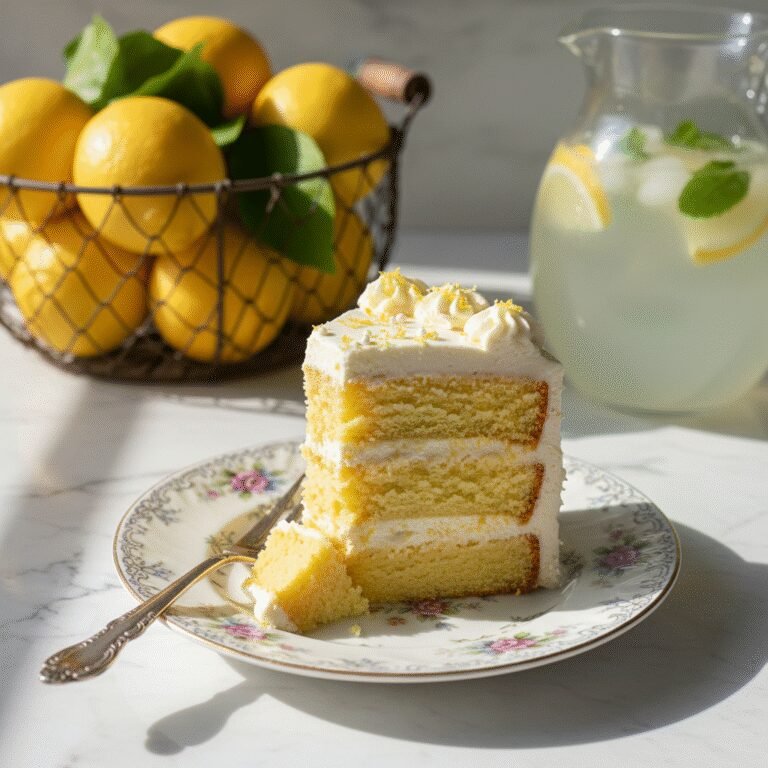
The Ultimate Moist Vegan Lemon Cake with Zesty Glaze
Moist Vegan Lemon Cake Recipe
Experience the perfect balance of bright citrus zest and a tender, melt-in-your-mouth crumb with this foolproof vegan lemon cake. Drizzled with a sweet and tangy glaze, this dairy-free delight proves you don’t need eggs or butter to achieve bakery-style perfection.
15 minutes
45 minutes
1 hour 15 minutes (includes cooling)
1 Loaf (8-10 slices)
Dessert
Baking
American / European
Vegan
There is something undeniably cheerful about a lemon cake. It is the culinary equivalent of a burst of sunshine on a cloudy day, promising brightness and zest with every forkful. For many home bakers, however, the transition to vegan baking brings with it a fear of dry, crumbly, or dense sponges that lack the tender crumb of their egg-laden counterparts. This recipe is here to shatter those misconceptions once and for all. We are talking about a cake so moist, so fluffy, and so profoundly lemony that no one will believe it is entirely plant-based. The secret lies in the balance of acidity and fat, creating a texture that rivals even the most butter-heavy pound cakes. Whether you are hosting a summer garden party, looking for a comforting afternoon tea treat, or simply craving a slice of something sweet and tart, this cake delivers on all fronts. The aroma alone—wafting through your kitchen as the lemon zest releases its oils into the batter—is enough to lift your spirits. We have meticulously tested the ratios of flour to liquid and sugar to acid to ensure that you get a consistent rise and a velvety mouthfeel every single time. Forget the dry vegan cakes of the past; this is the new gold standard for citrus baking.
History & Origins
The history of lemon cake is as rich and layered as the dessert itself, tracing its roots back to ancient times when citrus fruits were first traded across the Mediterranean and Asia. While lemons were initially used primarily for medicinal purposes and savory cooking, they eventually found their way into sweet confections as sugar became more accessible in Europe. The concept of a ‘pound cake’—typically a pound each of flour, sugar, butter, and eggs—originated in Northern Europe in the early 1700s and became the canvas upon which lemon zest and juice were painted. However, the history of *vegan* baking is a fascinating chapter of culinary ingenuity born out of necessity. During the Great Depression and World War II, rationing of dairy and eggs forced home cooks to get creative. This era gave birth to the ‘Wacky Cake’ or ‘Depression Cake,’ which relied on the chemical reaction between vinegar and baking soda to provide lift in the absence of eggs. While those early recipes were often chocolate-based to mask the lack of richness, the technique laid the groundwork for modern plant-based baking. In recent decades, as the vegan movement has transitioned from a niche lifestyle to a global phenomenon, pastry chefs and food scientists have refined these methods. We have moved beyond simple vinegar substitutions to understanding how plant-based milks curdle to form buttermilk and how different fats affect crumb structure. This Moist Vegan Lemon Cake is the culmination of centuries of baking evolution, combining the classic European love for citrus tea cakes with the innovative, compassionate spirit of modern vegan cuisine.
Why This Recipe Works
This recipe succeeds where many vegan cakes fail because it is built on a solid understanding of food chemistry. First and foremost, the moisture factor is addressed by using oil rather than vegan butter. While butter contains water and milk solids, oil is 100% fat and remains liquid at room temperature. This ensures that the cake stays incredibly moist and tender for days, whereas butter-based cakes can firm up and dry out as they sit. Secondly, we utilize a ‘vegan buttermilk’ technique. By mixing fresh lemon juice with soy or almond milk and letting it sit, the milk curdles, thickening the liquid and increasing its acidity. This acidity is crucial—not just for flavor, but because it reacts vigorously with the baking soda. This reaction creates carbon dioxide bubbles that expand during baking, giving the cake a significant lift and an airy, open crumb structure that mimics the binding and lifting properties of eggs. Furthermore, the inclusion of both lemon juice and a generous amount of lemon zest ensures a multi-dimensional citrus profile; the juice provides the tart, acidic punch, while the zest contains the essential oils that provide the deep, aromatic lemon fragrance that lingers on the palate. Finally, we use a specific ratio of sugar to flour which helps to tenderize the gluten strands, preventing the cake from becoming tough or rubbery, a common pitfall in egg-free baking.
Why You’ll Love This Recipe
- ✓Completely Egg-Free and Dairy-Free
- ✓Requires only one bowl for easy cleanup
- ✓Stays moist for up to 4 days
- ✓Bursting with fresh lemon flavor
- ✓Perfect balance of sweet and tart
- ✓Kid-friendly and nut-free options available
Equipment You’ll Need
- ✓9×5 inch Loaf Pan
- ✓Large Mixing Bowl
- ✓Whisk
- ✓Microplane or Zester
- ✓Measuring Cups and Spoons
- ✓Rubber Spatula
- ✓Wire Cooling Rack
- ✓Parchment Paper
Ingredients
- ✓1 1/4 cups Unsweetened Soy Milk (or Almond Milk)
- ✓1/3 cup Fresh Lemon Juice (divided)
- ✓2 1/2 cups All-Purpose Flour
- ✓1 1/2 tsp Baking Powder
- ✓1/2 tsp Baking Soda
- ✓1/2 tsp Salt
- ✓1 1/4 cups Granulated Sugar
- ✓2/3 cup Neutral Oil (Canola, Vegetable, or Grapeseed)
- ✓2 tbsp Lemon Zest (approx. 2 lemons)
- ✓1 tsp Pure Vanilla Extract
- ✓1 cup Powdered Sugar (for glaze)
Instructions
- Preheat your oven to 350°F (175°C). Grease a 9×5 inch loaf pan with a little oil and line it with parchment paper, leaving an overhang on the sides for easy removal.
- In a liquid measuring cup, combine the soy milk with 2 tablespoons of the lemon juice. Stir gently and set aside for 5-10 minutes to curdle into vegan buttermilk.
- In a large mixing bowl, whisk together the flour, baking powder, baking soda, and salt until well combined and no lumps remain.
- In a separate medium bowl, whisk together the granulated sugar, oil, lemon zest, vanilla extract, and the prepared vegan buttermilk mixture.
- Pour the wet ingredients into the dry ingredients. Using a rubber spatula, gently fold the batter together. Do not overmix; stir just until the flour streaks disappear to ensure a tender crumb.
- Pour the batter into the prepared loaf pan and smooth the top with the spatula.
- Bake for 45-55 minutes, or until a toothpick inserted into the center comes out clean or with just a few moist crumbs attached. The top should be golden and cracked down the center.
- Remove from the oven and let the cake cool in the pan for 15 minutes. Then, use the parchment paper handles to lift the cake out onto a wire rack to cool completely.
- While the cake cools, prepare the glaze. Whisk together the powdered sugar and the remaining lemon juice (start with 1 tablespoon and add more as needed) until you reach a thick but pourable consistency.
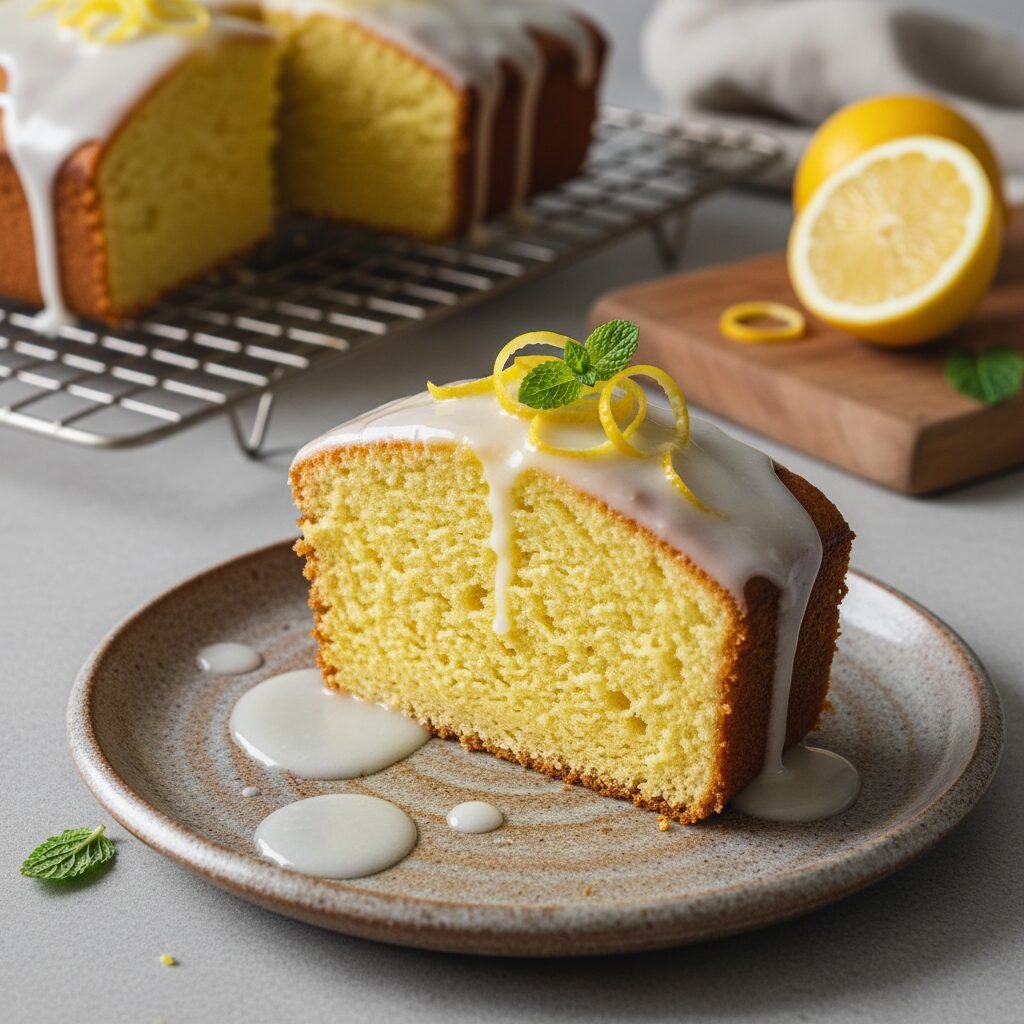
- Once the cake is entirely cool, drizzle the glaze generously over the top. Let the glaze set for 10 minutes before slicing and serving.
Expert Cooking Tips
- ✓Use fresh lemons only; bottled lemon juice lacks the zest and flavor complexity required for this cake.
- ✓Do not overmix the batter. Overmixing develops gluten and will result in a rubbery, dense cake.
- ✓Room temperature ingredients mix better. Let your soy milk sit out for 20 minutes before baking.
- ✓Rub the lemon zest into the granulated sugar with your fingers before mixing; this releases the lemon oils for a more potent flavor.
- ✓Check your oven temperature with an oven thermometer to ensure accurate baking.
- ✓If the top is browning too quickly but the center is raw, tent the pan loosely with aluminum foil.
- ✓Wait for the cake to cool completely before glazing, otherwise the glaze will melt and soak into the cake rather than sitting on top.
Substitutions and Variations
This recipe is quite versatile if you need to make swaps based on dietary needs or pantry availability. For the flour, you can substitute a high-quality 1:1 Gluten-Free All-Purpose Flour blend if you are gluten-intolerant; look for a blend that contains xanthan gum for the best structure. If you want to reduce refined sugar, you can use organic cane sugar or coconut sugar, though coconut sugar will turn the cake a darker brown color and add a caramel note. For the oil, melted coconut oil works well, but it will impart a slight coconut flavor unless you use refined coconut oil. You can also use light olive oil for a more sophisticated, savory undertone. If you are out of soy milk, almond milk, oat milk, or cashew milk work perfectly fine for the buttermilk mixture, though soy milk tends to curdle the best due to its higher protein content. Lastly, if you don’t have lemons, this recipe works beautifully with oranges or grapefruits for a different citrus twist.
Common Mistakes to Avoid
The most common mistake with vegan baking is measuring flour incorrectly. Scooping the flour directly with the measuring cup packs it down, leading to too much flour and a dry cake. Always use the ‘spoon and level’ method or a kitchen scale for precision. Another frequent error is rushing the cooling process. Vegan cakes can be more fragile when hot because they lack the structural protein of eggs. If you try to remove the cake from the pan too early, it may fall apart. Let it set in the pan for the full 15 minutes. Additionally, skipping the zest is a major flavor mistake; the juice provides acid, but the zest provides the actual lemon flavor. Finally, opening the oven door too often during baking can cause the temperature to drop and the cake to sink in the middle, so keep the door closed until the minimum bake time has passed.
Serving Suggestions
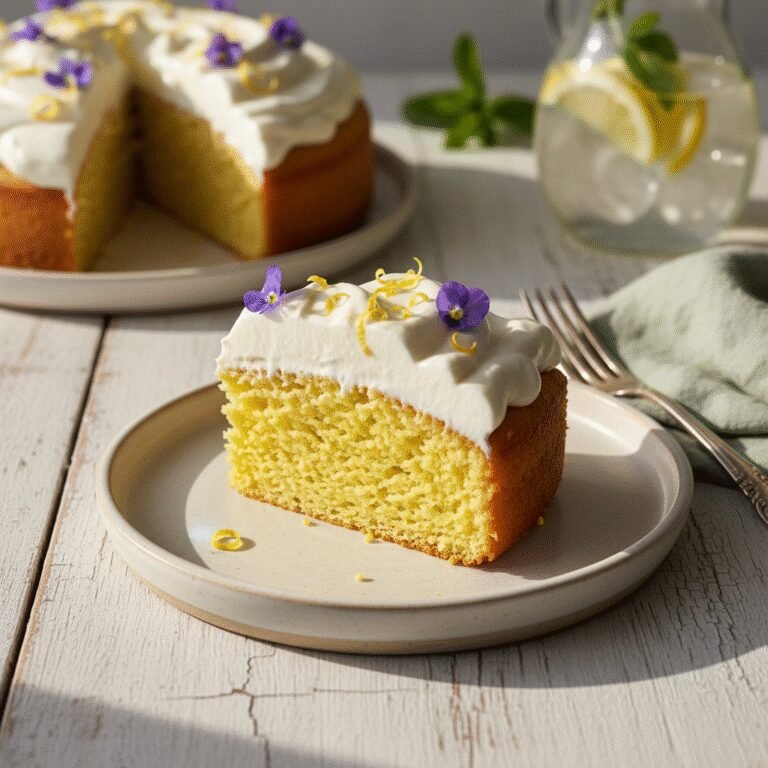
This moist vegan lemon cake is versatile enough for breakfast, brunch, or dessert. Serve it simply with a cup of Earl Grey tea or coffee for a delightful afternoon snack. For a more decadent dessert, serve a slice with a dollop of coconut whipped cream and a handful of fresh berries like raspberries or blueberries, which complement the tart lemon flavor perfectly. In the summer, it pairs wonderfully with a scoop of vegan vanilla bean ice cream or a refreshing lemon sorbet. You can also garnish the cake with edible flowers, such as pansies or candied lemon slices, to make it a show-stopping centerpiece for a spring celebration or Easter brunch.
Storage and Reheating Tips
Because this cake uses oil, it stays moist for a surprisingly long time. Store the cake in an airtight container at room temperature for up to 3 days. If you live in a particularly hot or humid climate, you may want to store it in the refrigerator to prevent the glaze from melting, where it will keep for up to 5-6 days. However, bring it back to room temperature before serving for the best texture. This cake also freezes beautifully. To freeze, wrap individual slices or the entire unglazed loaf tightly in plastic wrap, then a layer of aluminum foil. It can be frozen for up to 3 months. Thaw overnight in the refrigerator or on the counter for a few hours. Glaze the cake after thawing if freezing the whole loaf.
Nutrition Facts (Estimated)
| Serving Size | 1 slice |
| Calories | 320 |
| Fat | 14g |
| Saturated Fat | 1g |
| Unsaturated Fat | 12g |
| Trans Fat | 0g |
| Cholesterol | 0mg |
| Sodium | 180mg |
| Carbohydrates | 46g |
| Fiber | 1g |
| Sugar | 24g |
| Protein | 4g |
Frequently Asked Questions
Can I make this recipe gluten-free?
Yes, absolutely. Simply swap the all-purpose flour for a reputable 1:1 Gluten-Free Baking Flour blend. Ensure the blend contains xanthan gum, which helps mimic the structure of gluten.
Why did my cake sink in the middle?
Sinking usually happens if the cake wasn’t baked long enough or if the oven door was opened too early, causing a temperature drop. It can also happen if too much leavening (baking powder/soda) was used.
Can I use olive oil instead of vegetable oil?
Yes, you can use olive oil. However, keep in mind that extra virgin olive oil has a strong flavor that will come through in the cake. Use a ‘light’ or ‘mild’ olive oil if you want a neutral taste.
Can I make this into cupcakes instead of a loaf?
Definitely! This batter makes about 12 standard cupcakes. Bake them at 350°F (175°C) for 18-22 minutes. Check for doneness with a toothpick.
My glaze is too runny, how do I fix it?
If your glaze is too thin, simply whisk in more powdered sugar, a tablespoon at a time, until it reaches your desired consistency. If it’s too thick, add a tiny splash of lemon juice.
Do I have to use soy milk?
No, you can use almost any plant-based milk. Almond, oat, and cashew milk work well. We prefer soy because it curdles the best to make buttermilk, but the recipe works with others.
Can I reduce the sugar in this recipe?
You can reduce the sugar by about 1/4 cup without significantly affecting the texture, but reducing it further might make the cake less tender and moist, as sugar helps hold moisture.
Why is my cake gummy?
A gummy texture is usually the result of overmixing the batter (developing too much gluten) or underbaking the cake. Ensure you fold the wet and dry ingredients gently.
Conclusion
There you have it—the only vegan lemon cake recipe you will ever need. It is a testament to the fact that plant-based baking does not require compromise on flavor or texture. With its bright, sunny disposition and incredibly moist crumb, this cake is bound to become a staple in your kitchen rotation. Whether you are a seasoned vegan baker or just dipping your toes into egg-free cooking, this recipe is forgiving, rewarding, and utterly delicious. So, grab those lemons, preheat your oven, and get ready to fill your home with the irresistible scent of citrus. Don’t forget to share a slice with friends and family; they likely won’t believe it’s vegan until you tell them!