Ultimate Fresh Strawberry Lemonade Cake With Fresh Berries
Fresh Strawberry Lemonade Cake With Fresh Berries Recipe
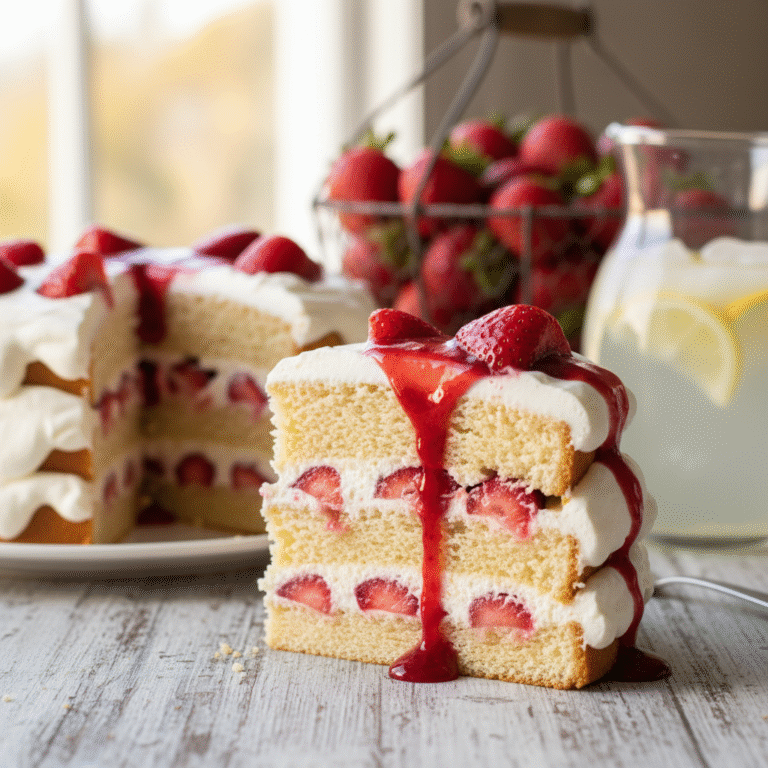
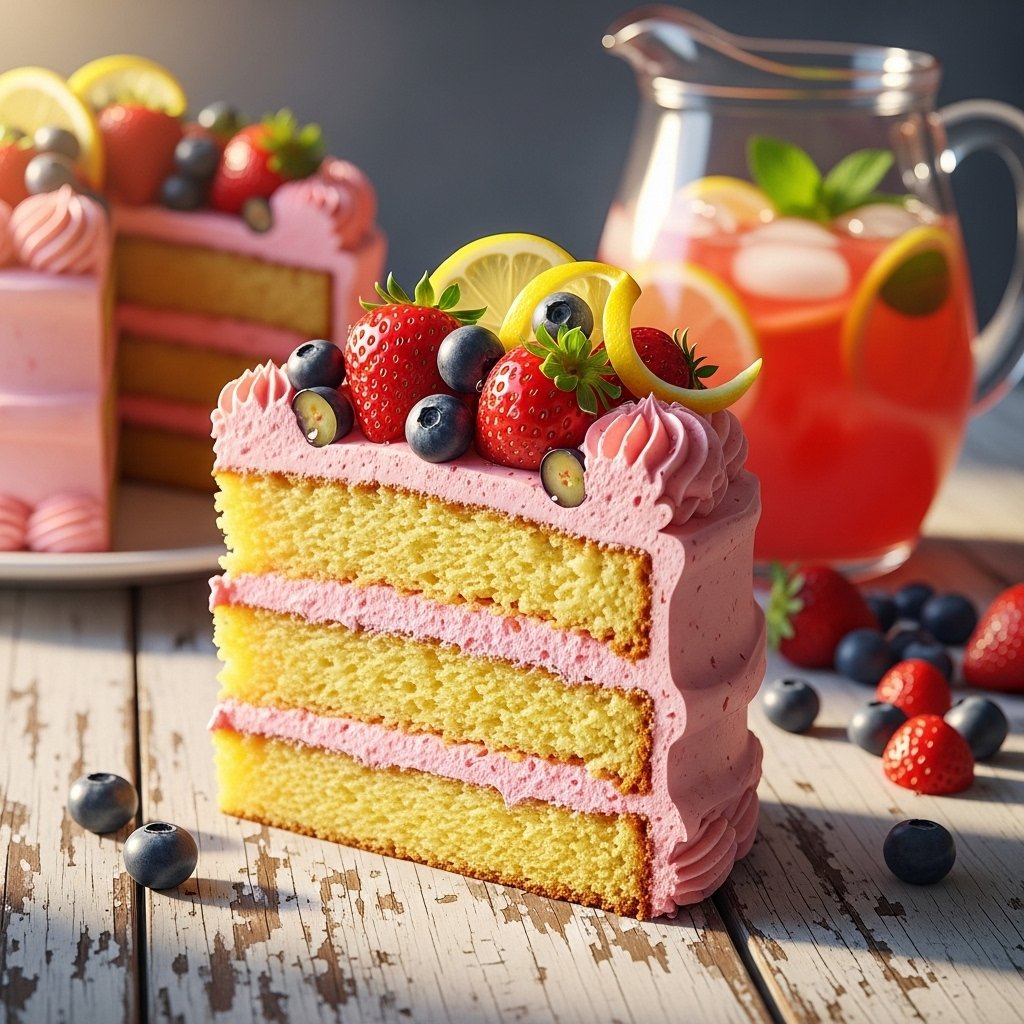
This vibrant Fresh Strawberry Lemonade Cake is the epitome of summer baking, featuring moist lemon-infused layers and a lush fresh strawberry buttercream. Bursting with sweet-tart flavors and topped with juicy berries, it is the perfect centerpiece for any sunny celebration or backyard gathering.
45 minutes
30 minutes
1 hour 45 minutes
12-14 servings
Dessert
Baking
American
Vegetarian
Imagine the quintessential taste of summer captured in a single, glorious dessert. That is exactly what this Fresh Strawberry Lemonade Cake represents—a harmonious blend of zesty, bright citrus and the sweet, floral notes of ripe strawberries. As a food blogger who lives for seasonal produce, I believe there is nothing quite as satisfying as baking with fruit that is at its peak. This cake is not just a treat for the palate; it is a celebration of sunshine and warm breezes. The base is a tender, melt-in-your-mouth lemon cake that avoids the artificial tang of extracts in favor of fresh zest and juice, providing a clean, authentic flavor profile.
What truly elevates this dessert, however, is the strawberry component. We aren’t relying on gelatin packets or artificial flavorings here. Instead, we use a reduction of fresh strawberry purée to infuse the buttercream with a concentrated berry flavor and a natural, stunning pink hue. The result is a frosting that tastes exactly like a fresh strawberry, creamy and rich, perfectly cutting through the acidity of the lemon layers.
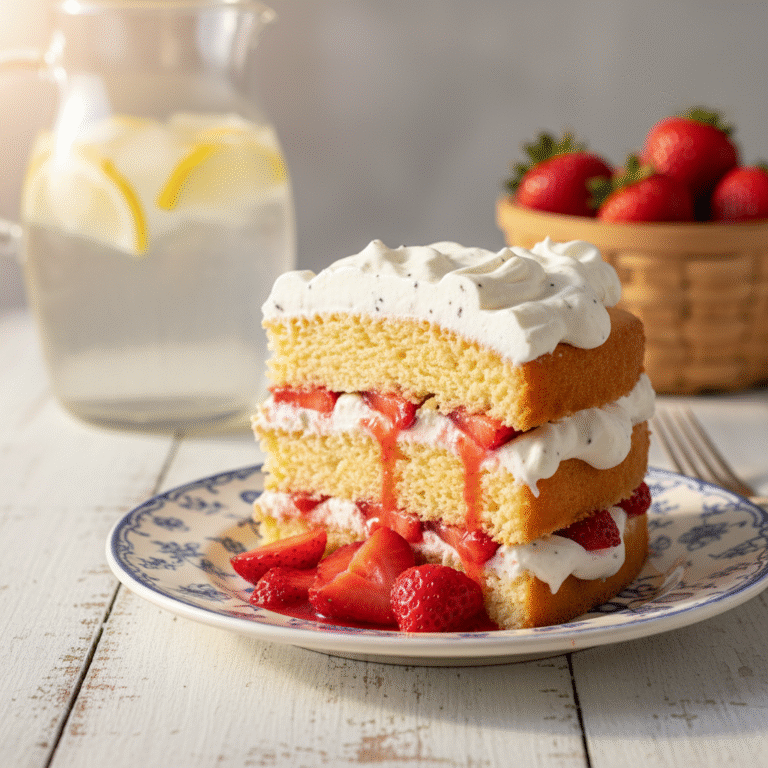
This cake is designed to be a showstopper. Whether you are hosting a bridal shower, a birthday party, or simply craving a slice of happiness on a Sunday afternoon, the visual appeal of fresh berries piled high on top makes it instant Pinterest gold. The texture is a delicate balance—dense enough to hold the layers but light enough to feel refreshing. Every bite offers a burst of lemonade nostalgia mixed with the sophistication of a bakery-style layer cake. It is a labor of love that pays off in every single crumb, promising to become your new go-to recipe for fruit-forward baking.
History & Origins
The concept of fruit-flavored cakes has deep roots in culinary history, evolving significantly over the centuries. While the ancient Romans and Greeks utilized fruit in sweetened breads, the modern layer cake as we know it began to take shape in the mid-19th century with the improvement of chemical leaveners like baking powder. During the Victorian era, ‘sponge’ cakes flavored with citrus zest became popular accompaniments to afternoon tea, valued for their light texture and delicate flavor.
The specific marriage of strawberry and lemon, however, is a more distinctly American evolution, likely inspired by the popularity of pink lemonade. Pink lemonade itself has a murky history, with folklore ranging from accidental drops of cinnamon candies to the water used to wash pink circus tights (a less appetizing myth!). Regardless of its origin, the flavor combination became a staple of American summers. In the mid-20th century, with the rise of convenience foods, ‘poke cakes’ and gelatin-based strawberry cakes became household standards in the United States. These recipes often relied on boxed mixes and strawberry gelatin to achieve their flavor and color.
In recent decades, the ‘farm-to-table’ movement and a renewed interest in scratch baking have pushed bakers to move away from artificial additives. This recipe represents the modern era of cake baking, where the focus has shifted back to authentic ingredients. It honors the tradition of the Southern ‘lemonade cake’—often a glaze-soaked bundt cake—but elevates it into a sophisticated layer cake format. By utilizing techniques like fruit reduction, which concentrates flavor without compromising structure, we are writing the next chapter in the history of fruit cakes: one that prioritizes the integrity of the ingredient and the purity of the taste.
Why This Recipe Works
This recipe succeeds where many others fail because it addresses the two biggest challenges in fruit baking: moisture control and flavor concentration. Adding fresh fruit directly to cake batter or frosting often introduces too much water, leading to a dense, gummy cake or a split, runny buttercream. To solve this, we use a reduction technique for the strawberries. By pureeing the fruit and simmering it down on the stovetop, we evaporate the excess water while concentrating the strawberry flavor and color. This ‘strawberry jam’ essence packs a punch without destabilizing the butter and sugar structure of the frosting.
Secondly, the lemon flavor in the cake is maximized by rubbing the lemon zest into the granulated sugar before mixing. The friction releases the essential oils in the zest, infusing the sugar crystals with aromatic citrus notes that permeate the entire batter more effectively than simply stirring the zest in at the end. We also use a combination of butter and oil in the cake batter; butter provides the classic flavor, while the oil ensures the cake remains moist and tender for days, even when refrigerated. Finally, the addition of buttermilk interacts with the baking soda to create a tender crumb and a slight tang that mirrors the acidity of the lemon and strawberry, creating a cohesive flavor experience from the first bite to the last.
Why You’ll Love This Recipe
- ✓Uses fresh strawberry reduction for intense, natural flavor.
- ✓Lemon zest infused sugar creates a bright, aromatic cake base.
- ✓Moist crumb texture thanks to a blend of butter, oil, and buttermilk.
- ✓No artificial colors or flavorings—100% natural pink hue.
- ✓Perfect balance of sweet and tart, reminiscent of summer lemonade.
- ✓Stunning presentation with fresh berries requires no professional decorating skills.
Equipment You’ll Need
- ✓Three 8-inch round cake pans
- ✓Stand mixer with paddle attachment
- ✓Food processor or blender
- ✓Small saucepan
- ✓Microplane zester
- ✓Rubber spatula
- ✓Wire cooling rack
- ✓Offset spatula
- ✓Bench scraper (optional for smoothing)
Ingredients
- ✓3 cups cake flour, sifted
- ✓2 1/2 tsp baking powder
- ✓1/2 tsp baking soda
- ✓1 tsp salt
- ✓1 cup unsalted butter, room temperature
- ✓1/4 cup vegetable oil
- ✓1 3/4 cups granulated sugar
- ✓Zest of 3 large lemons
- ✓4 large eggs, room temperature
- ✓1 tsp pure vanilla extract
- ✓1/4 cup fresh lemon juice
- ✓1 cup buttermilk, room temperature
- ✓2 cups fresh strawberries (hulled and pureed for frosting)
- ✓1 1/2 cups unsalted butter (for frosting), slightly cold
- ✓5-6 cups powdered sugar
- ✓Pinch of salt (for frosting)
- ✓Fresh strawberries, blueberries, and raspberries for garnish
- ✓Lemon slices for garnish
Instructions
- 1. Prepare the Strawberry Reduction: Place the fresh strawberries in a food processor and puree until smooth. Pour into a small saucepan over medium-low heat. Simmer, stirring occasionally, until the puree has reduced by half and is thick (about 15-20 minutes). You should have about 1/2 to 2/3 cup. Set aside to cool completely.
- 2. Preheat and Prep: Preheat your oven to 350°F (175°C). Grease three 8-inch round cake pans with butter, line the bottoms with parchment paper, and dust with flour. Shake out excess flour.
- 3. Infuse the Sugar: In the bowl of a stand mixer, combine the granulated sugar and lemon zest. Rub the zest into the sugar with your fingertips until the sugar is moist, yellow, and fragrant.
- 4. Mix Wet Ingredients: Add the room temperature butter and vegetable oil to the lemon sugar. Beat on medium-high speed for about 3-5 minutes until the mixture is pale and fluffy. Add eggs one at a time, beating well after each addition. Scrape down the sides of the bowl. Stir in vanilla extract and lemon juice.
- 5. Combine Dry Ingredients: In a medium bowl, whisk together the sifted cake flour, baking powder, baking soda, and salt.
- 6. Make the Batter: With the mixer on low speed, add the dry ingredients in three additions, alternating with the buttermilk (begin and end with dry ingredients). Mix only until just combined to avoid overworking the gluten.
- 7. Bake: Divide the batter evenly among the three prepared pans. Bake for 25-30 minutes, or until a toothpick inserted into the center comes out clean or with just a few moist crumbs. Do not overbake.
- 8. Cool: Allow the cakes to cool in the pans for 10 minutes, then turn them out onto a wire rack to cool completely before frosting.
- 9. Make the Frosting: In a clean mixer bowl, beat the 1 1/2 cups of butter on medium speed until creamy. Gradually add 3 cups of powdered sugar and mix on low until combined. Add the cooled strawberry reduction and a pinch of salt. Mix until incorporated. Gradually add the remaining powdered sugar until you reach your desired consistency. Whip on high for 2 minutes to make it fluffy.
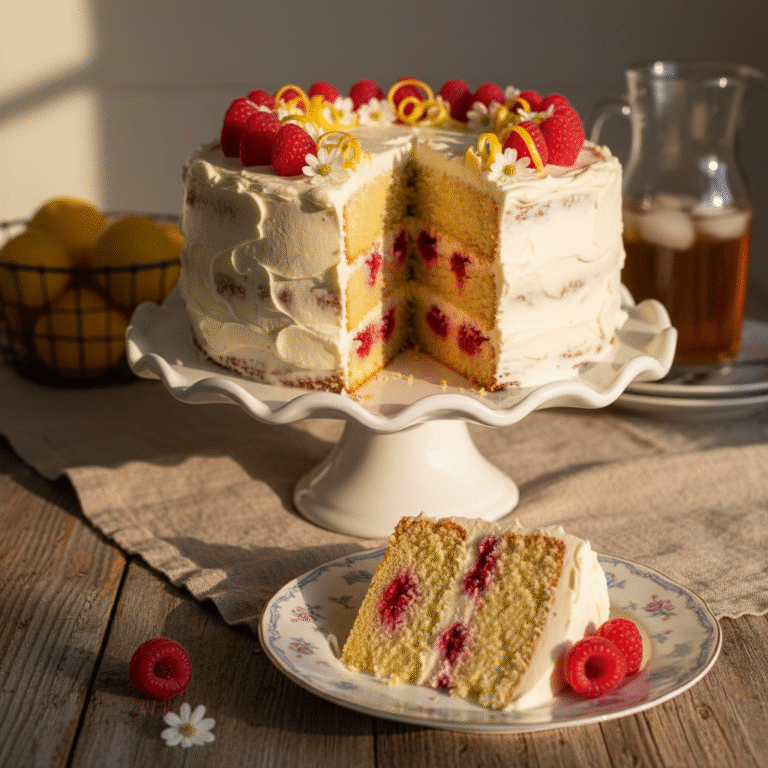
- 10. Assemble: Place one cake layer on a serving plate or cake stand. Spread a generous layer of strawberry frosting over the top. Repeat with the second layer. Top with the final cake layer. Frost the top and sides of the cake with the remaining frosting.
- 11. Garnish: Decorate the top of the cake generously with fresh whole strawberries, raspberries, blueberries, and thin twists of lemon slices. Serve immediately or chill lightly to set.
Expert Cooking Tips
- ✓Room Temperature Ingredients: Ensure your butter, eggs, and buttermilk are at room temperature. This creates an emulsion that traps air, resulting in a fluffier cake.
- ✓Don’t Skip the Reduction: Using raw puree in frosting will make it runny. You must boil off the water to get a stable buttercream with intense flavor.
- ✓Weigh Your Flour: If possible, use a kitchen scale. If using cups, spoon the flour into the cup and level it off rather than scooping, which packs the flour and leads to a dry cake.
- ✓Cool Completely: Never frost a warm cake. The butter in the frosting will melt, causing the layers to slide and the frosting to become greasy.
- ✓Zest Before Juicing: It is much harder to zest a lemon after it has been juiced. Always zest first!
- ✓Chill the Crumb Coat: If you want a professional finish, apply a thin layer of frosting (crumb coat) and chill for 20 minutes before applying the final thick layer of frosting.
Substitutions and Variations
If you cannot find cake flour, you can make a DIY version by measuring 1 cup of all-purpose flour, removing 2 tablespoons, and replacing them with 2 tablespoons of cornstarch. Sift this mixture twice before using. For the buttermilk, you can create a substitute by adding 1 tablespoon of white vinegar or lemon juice to a measuring cup and filling it to the 1-cup line with whole milk; let it sit for 5 minutes before using. If you prefer a different berry, raspberries work beautifully in place of strawberries for the reduction, though you may want to strain the seeds for a smoother texture. For a gluten-free version, substitute the cake flour with a high-quality 1:1 gluten-free baking flour blend that contains xanthan gum. If you want to reduce the sugar, you can reduce the sugar in the cake by about 1/4 cup, but reducing it further may affect the texture and moisture.
Common Mistakes to Avoid
The most common mistake with this recipe is rushing the cooling process for the strawberry reduction. If the reduction is even slightly warm when added to the butter, it will melt the butter and break the frosting, resulting in a soupy mess that cannot be piped or spread. Another frequent error is overmixing the batter after adding the flour. Once the flour hits the liquid, gluten begins to form. Overmixing leads to a tough, rubbery cake rather than a tender one. Stop mixing as soon as the white streaks of flour disappear. Finally, ensure your baking powder is fresh; expired leavening agents are a leading cause of dense, flat cakes that fail to rise properly.
Serving Suggestions
This cake is a visual masterpiece that deserves to be the center of attention. Serve it on a white ceramic cake stand to let the pink frosting and bright berries pop. It pairs beautifully with a glass of cold prosecco, iced tea, or, naturally, a glass of fresh homemade lemonade. For a dessert table, accompany it with lemon bars and vanilla bean macarons. If serving at a warm outdoor event, keep the cake chilled until about 30 minutes before serving to ensure the buttercream maintains its structure while allowing the cake layers to soften slightly for the best texture.
Storage and Reheating Tips
Store the frosted cake in the refrigerator, preferably in a cake carrier or under a large overturned bowl to protect it from fridge odors. It will stay fresh for up to 4 days. However, cake is best eaten at room temperature, so remove slices from the fridge about 20-30 minutes before eating. If you have leftover cake slices, you can freeze them. Wrap individual slices tightly in plastic wrap and then in aluminum foil. They can be frozen for up to 3 months. Thaw in the refrigerator overnight or on the counter for an hour. The fresh berries on top should be removed before freezing as they will become mushy upon thawing.
Nutrition Facts (Estimated)
| Serving Size | 1 slice |
| Calories | 580 |
| Fat | 28g |
| Saturated Fat | 16g |
| Unsaturated Fat | 10g |
| Trans Fat | 0g |
| Cholesterol | 85mg |
| Sodium | 310mg |
| Carbohydrates | 78g |
| Fiber | 2g |
| Sugar | 45g |
| Protein | 6g |
Frequently Asked Questions
Can I use frozen strawberries for the reduction?
Yes, absolutely. Frozen strawberries actually work very well for the reduction because they break down quickly. Just ensure you simmer them long enough to evaporate the extra liquid that comes from the ice crystals.
Why did my cake sink in the middle?
Cakes usually sink because the oven door was opened too early, causing a temperature drop, or because the cake was underbaked. Ensure you don’t open the oven until at least 25 minutes have passed.
Can I make the cake layers ahead of time?
Yes. You can bake the layers, let them cool completely, wrap them tightly in plastic wrap, and freeze them for up to a month. Frosting frozen layers is actually easier as they are firmer and produce fewer crumbs.
My frosting is too soft, what do I do?
If your kitchen is warm or the reduction wasn’t reduced enough, the frosting might be soft. Place the bowl in the fridge for 15-20 minutes to firm up the butter, then whip it again. You can also add a bit more powdered sugar.
Can I make this as cupcakes?
Yes! This recipe will make approximately 24-30 standard cupcakes. Bake them at 350°F for 18-22 minutes.
Do I have to use the vegetable oil?
While you can use all butter, the vegetable oil keeps the cake moist for longer, especially when refrigerated. The combination gives the best flavor and texture.
Is the lemon flavor strong?
It is a balanced lemon flavor—distinct and bright, but not sour. The strawberry buttercream sweetens it perfectly.
Can I use store-bought strawberry jam instead of the reduction?
You can, but it will be much sweeter and less tangy. If you do, reduce the powdered sugar in the frosting to avoid it becoming cloyingly sweet.
Conclusion
There you have it—the ultimate guide to creating a Fresh Strawberry Lemonade Cake that tastes as joyful as a summer day feels. This recipe is more than just a set of instructions; it is an invitation to slow down, enjoy the process of baking, and share something truly special with the people you love. The effort you put into reducing the strawberries and rubbing the lemon zest into the sugar will be evident in every single bite. It’s a dessert that commands attention and satisfies the soul with its nostalgic, bright flavors. So, grab your lemons, pick up some fresh berries, and get ready to bake a masterpiece that will have everyone asking for the recipe. Happy baking!