The Ultimate Fresh Lemon Blueberry Layer Cake With Zesty Lemon Glaze
Fresh Lemon Blueberry Layer Cake With Lemon Glaze Recipe
This stunning Fresh Lemon Blueberry Layer Cake is the epitome of sunshine on a plate. Featuring fluffy, moist lemon cake layers studded with juicy, bursting blueberries and topped with a sweet-tart lemon glaze, it is the perfect dessert for spring gatherings, summer picnics, or whenever you need a bright, citrusy pick-me-up.
30 minutes
35 minutes
1 hour 45 minutes
12 servings
Dessert
Baking
American
Vegetarian
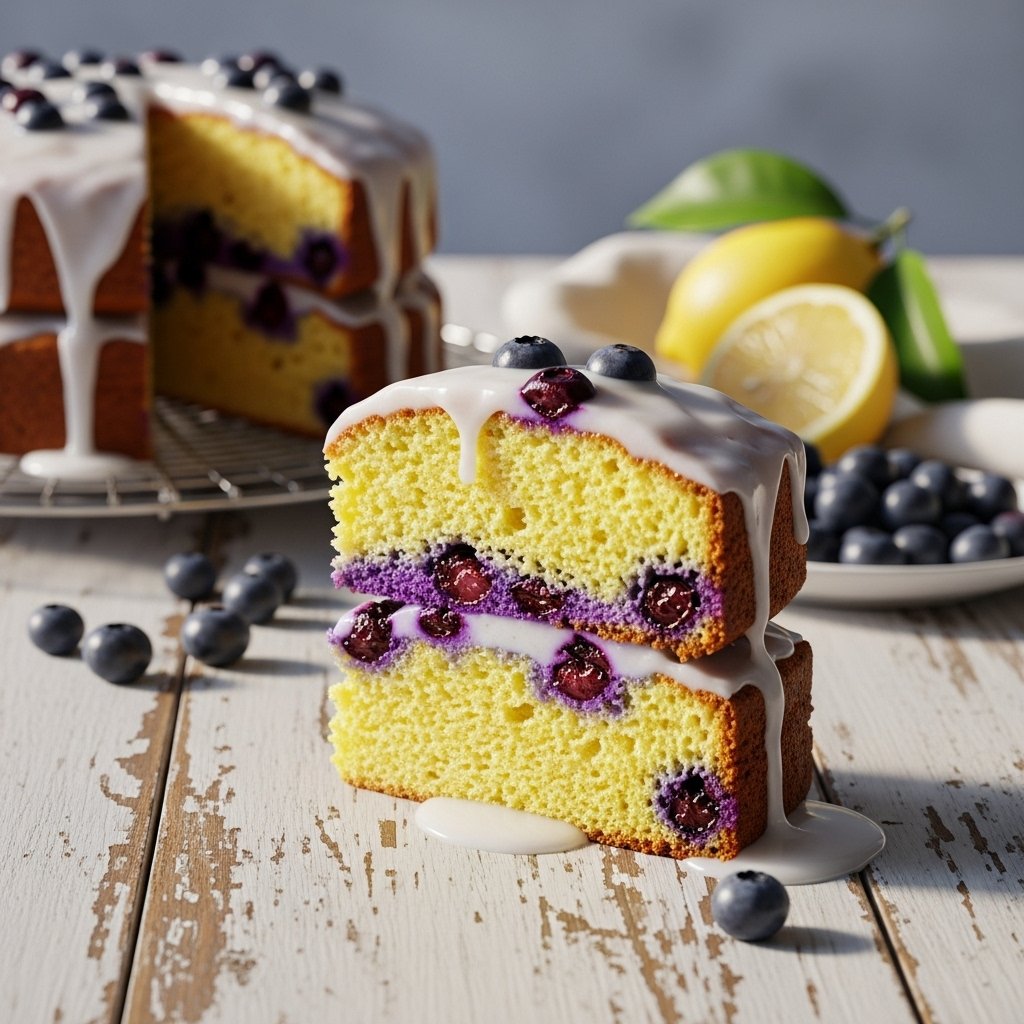
There is something undeniably magical about the combination of bright, zesty lemon and sweet, earthy blueberries. It is a flavor marriage that transcends seasons, though it feels particularly at home during the awakening of spring and the lazy heat of summer. This Fresh Lemon Blueberry Layer Cake is not just a dessert; it is an experience. Imagine slicing into a tall, majestic cake to reveal a beautiful crumb speckled with vibrant purple pockets of fruit, the aroma of fresh citrus zest immediately filling the room.
Unlike dense pound cakes or heavy muffins, this recipe focuses on achieving a texture that is light, airy, and velvety soft. We utilize the power of cake flour and buttermilk to break down gluten strands, ensuring that every bite melts in your mouth. The blueberries provide a textural contrast, bursting with juice that seeps slightly into the surrounding cake, creating pockets of intense flavor. To finish, we skip the heavy buttercream in favor of a simple, elegant lemon glaze. This glaze cascades down the sides of the cake, adding a concentrated punch of tartness that cuts through the sweetness of the sponge perfectly.
Whether you are an experienced baker looking for a showstopper centerpiece or a novice wanting to try your hand at a scratch-made layer cake, this recipe is designed to be foolproof. It captures the essence of homemade comfort while delivering bakery-quality results. Serve this at a bridal shower, an Easter brunch, or simply on a Tuesday afternoon when you crave a slice of joy. It is, quite simply, happiness in cake form.
History & Origins
The history of the layer cake is a fascinating journey through the evolution of baking technology and ingredients. While cakes have existed since ancient times, often as sweetened bread-like mixtures containing nuts and dried fruits, the light, fluffy layer cake we recognize today is a relatively modern invention. Its rise to prominence is directly linked to the development of chemical leaveners in the mid-19th century. Before baking powder and baking soda became commercially available, bakers had to rely on yeast or the arduous task of manually beating eggs to incorporate air for lift. The introduction of baking powder in the 1840s revolutionized home baking in the United States, allowing for the creation of ‘butter cakes’ that were higher, lighter, and faster to make.
As for the star ingredients, blueberries are native to North America and have been harvested by Indigenous peoples for centuries, long before European settlers arrived. They were originally used in stews, dried for winter, or mixed with honey. The domestication of highbush blueberries in the early 20th century by Elizabeth White and Frederick Coville made these berries widely available for commercial sale and home use. Lemons, while native to Asia, became a staple in American baking due to the expansion of rail transport from California and Florida citrus groves.
The pairing of lemon and blueberry likely gained massive popularity in the mid-20th century American kitchen, coinciding with the post-war boom of suburban baking culture. Recipes for blueberry muffins and lemon cakes were staples in community cookbooks. Combining them into a layer cake represents the quintessential American style of dessert: celebrating fresh, local produce (blueberries) with bright, bold flavors (lemon) in a format that encourages sharing and celebration.
Why This Recipe Works
This recipe succeeds where others fail because of a meticulous balance between acidity, fat, and flour protein content. First, we use **cake flour** instead of all-purpose flour. Cake flour has a lower protein content (usually around 7-9%), which inhibits gluten formation. Less gluten means a tender, fine crumb rather than a chewy, bread-like texture. This is crucial for a layer cake that needs to be sturdy enough to stack but soft enough to eat with a fork.
Secondly, the inclusion of **buttermilk** is scientifically essential. The acidity in the buttermilk reacts with the baking soda to create carbon dioxide bubbles, providing lift and fluffiness. Furthermore, acid tenderizes gluten, contributing to that melt-in-your-mouth texture. We also use both butter and oil; butter provides the classic rich flavor, while a touch of oil ensures the cake stays moist for days, as oil remains liquid at room temperature.
Finally, the technique for the blueberries prevents the dreaded ‘sinking fruit’ syndrome. By tossing the fresh berries in a light coating of flour before folding them into the batter, we create friction. This friction holds the berries in suspension within the batter as it bakes, ensuring an even distribution of fruit from top to bottom rather than a soggy layer of blue at the base of the pan. The glaze, made with fresh lemon juice, adds a final layer of brightness that penetrates the warm crust of the cake, locking in moisture and amplifying the citrus profile.
Why You’ll Love This Recipe
- ✓Incredibly moist texture due to the buttermilk and butter combination.
- ✓Bursting with fresh, juicy blueberries in every bite.
- ✓Bright, zesty flavor from fresh lemon zest and juice.
- ✓Elegant yet simple lemon glaze that eliminates the need for complex frosting.
- ✓Beautiful presentation perfect for holidays and summer parties.
- ✓Stays soft and delicious for days.
Equipment You’ll Need
- ✓Two 9-inch round cake pans
- ✓Stand mixer or electric hand mixer
- ✓Large mixing bowls
- ✓Whisk
- ✓Rubber spatula
- ✓Microplane or zester
- ✓Citrus juicer
- ✓Wire cooling rack
- ✓Parchment paper
Ingredients
- ✓3 cups Cake flour (sifted)
- ✓1 tablespoon Baking powder
- ✓1/2 teaspoon Baking soda
- ✓1/2 teaspoon Salt
- ✓1 cup Unsalted butter (room temperature)
- ✓1 3/4 cups Granulated white sugar
- ✓4 large Eggs (room temperature)
- ✓2 teaspoons Pure vanilla extract
- ✓1 tablespoon Fresh lemon zest (approx. 2 lemons)
- ✓1/4 cup Fresh lemon juice
- ✓1 cup Buttermilk (room temperature)
- ✓2 1/2 cups Fresh blueberries (washed and dried thoroughly)
- ✓1 tablespoon All-purpose flour (for coating berries)
- ✓2 cups Powdered sugar (for glaze)
- ✓3-4 tablespoons Fresh lemon juice (for glaze)
- ✓1 teaspoon Milk or heavy cream (optional, for glaze opacity)
Instructions
- Preheat your oven to 350°F (175°C). Grease two 9-inch round cake pans with butter or cooking spray, line the bottoms with parchment paper rounds, and grease the parchment. Dust lightly with flour and tap out excess.
- In a medium bowl, whisk together the sifted cake flour, baking powder, baking soda, and salt until well combined. Set aside.
- In the bowl of a stand mixer fitted with the paddle attachment (or using a hand mixer), beat the room temperature butter and granulated sugar on medium-high speed for about 3-5 minutes. The mixture should look pale, fluffy, and aerated.
- Add the eggs one at a time, beating well after each addition and scraping down the sides of the bowl to ensure even incorporation. Stir in the vanilla extract and fresh lemon zest.
- In a small liquid measuring cup, combine the 1/4 cup fresh lemon juice and the buttermilk. The mixture may curdle slightly; this is normal.
- Reduce the mixer speed to low. Add the flour mixture in three parts, alternating with the buttermilk mixture in two parts, beginning and ending with the flour (Flour -> Milk -> Flour -> Milk -> Flour). Mix only until just combined; do not overmix.
- In a small bowl, toss the fresh blueberries with 1 tablespoon of all-purpose flour until they are lightly coated. This prevents them from sinking to the bottom of the cake.
- Gently fold the coated blueberries into the batter using a rubber spatula. Be careful not to crush the berries, or the batter will turn gray/purple.
- Divide the batter evenly between the two prepared cake pans. Smooth the tops with an offset spatula.
- Bake for 30-35 minutes, or until a toothpick inserted into the center comes out clean or with just a few moist crumbs. The tops should be golden brown and spring back when lightly touched.
- Remove from the oven and let the cakes cool in the pans for 10-15 minutes. Then, carefully run a knife around the edges and invert them onto a wire rack to cool completely.
- While the cakes cool, prepare the glaze. Whisk together the powdered sugar and 3-4 tablespoons of lemon juice until smooth. Add more juice for a thinner glaze or more sugar for a thicker one. Add a splash of milk if you want a whiter, more opaque glaze.
- Once the cakes are completely cool, place one layer on a serving plate. Drizzle with a little glaze. Place the second layer on top. Pour the remaining glaze over the center of the cake, using a spoon or spatula to gently guide it over the edges for a dripping effect.
- Garnish with extra fresh blueberries and lemon slices if desired. Allow the glaze to set for 15 minutes before slicing.
Expert Cooking Tips
- ✓Room Temperature Ingredients: Ensure your butter, eggs, and buttermilk are at room temperature. This allows them to emulsify properly, creating a smoother batter and a better rise.
- ✓Don’t Overmix: Once you add the flour, mix gently. Overworking the batter develops gluten, which results in a dense, tough cake rather than a fluffy one.
- ✓Dry Berries: After washing your blueberries, make sure they are completely dry before tossing them in flour. Excess water can add too much moisture to the batter and cause streaks.
- ✓Zest First: Zest your lemons before juicing them. It is much harder to grate the skin of a squishy, juiced lemon.
- ✓Cool Completely: Do not glaze the cake while it is warm. The glaze will simply melt and slide off, leaving you with a sticky mess instead of a beautiful topping.
- ✓Weighing Flour: If possible, use a kitchen scale to measure your flour. If using cups, spoon the flour into the cup and level it off; do not scoop directly, which packs the flour and leads to a dry cake.
Substitutions and Variations
If you cannot find **cake flour**, you can make a DIY version: measure 1 cup of all-purpose flour, remove 2 tablespoons, and replace them with 2 tablespoons of cornstarch. Sift together twice. If you don’t have **buttermilk**, add 1 tablespoon of white vinegar or lemon juice to a cup of whole milk and let it sit for 5-10 minutes until it thickens. You can use **frozen blueberries** instead of fresh; do not thaw them before adding to the batter, as this will cause them to bleed excessively. Toss them in flour just like the fresh ones and add a few minutes to the baking time. For a **dairy-free** version, substitute the butter with a high-quality plant-based butter stick and the buttermilk with almond milk mixed with vinegar. For the glaze, simply use lemon juice and powdered sugar without any milk.
Common Mistakes to Avoid
The most common mistake is **opening the oven door too early**. This causes a sudden drop in temperature which can make the cake collapse in the center. Wait until at least 25 minutes have passed before checking. Another issue is **using old baking powder**. If your leavener is expired, the cake won’t rise. Test your baking powder by putting a teaspoon in hot water; if it bubbles vigorously, it’s good. **Over-creaming the butter and sugar** can also be detrimental; while you want it fluffy, beating it for too long can heat up the butter and cause the structure to fail. Finally, **ignoring the flour coating step** for the berries is a major error that leads to a bottom-heavy, soggy cake layer.
Serving Suggestions
This cake is beautiful on its own, but it pairs wonderfully with a dollop of lightly sweetened whipped cream or a scoop of vanilla bean ice cream. For a brunch setting, serve it alongside a hot cup of Earl Grey tea or a fresh lemonade. If you want to dress it up for a party, garnish the top with candied lemon peel, edible flowers (like pansies or violets), and a sprig of fresh mint to contrast with the yellow glaze and blue berries.
Storage and Reheating Tips
This cake stores surprisingly well. It can be kept at room temperature in an airtight cake carrier for up to 3 days. The acidity in the lemon helps preserve freshness. If you live in a very hot or humid climate, store it in the refrigerator for up to 5 days, but allow it to come to room temperature before serving for the best texture. You can also freeze the baked cake layers (un-glazed). Wrap each cooled layer tightly in plastic wrap, then in aluminum foil, and freeze for up to 3 months. Thaw in the refrigerator overnight before assembling and glazing.
Nutrition Facts (Estimated)
| Serving Size | 1 slice |
| Calories | 420 |
| Fat | 18g |
| Saturated Fat | 10g |
| Unsaturated Fat | 7g |
| Trans Fat | 0g |
| Cholesterol | 65mg |
| Sodium | 210mg |
| Carbohydrates | 62g |
| Fiber | 2g |
| Sugar | 38g |
| Protein | 5g |
Frequently Asked Questions
Can I use frozen blueberries for this recipe?
Yes, you can. Do not thaw them before using, as this releases too much liquid. Toss them in flour while frozen and fold them in at the very last second. Note that frozen berries may streak the batter slightly more than fresh ones.
Why did my cake sink in the middle?
Cakes usually sink because the oven door was opened too early, the oven wasn’t hot enough, or there was too much leavening (baking powder/soda) used. Ensure your oven is calibrated and resist the urge to peek.
Can I bake this in a 9×13 pan instead?
Absolutely. This recipe converts well to a sheet cake. Bake in a greased 9×13 inch pan for roughly 35-45 minutes. Keep an eye on it and test with a toothpick.
Can I make this recipe into cupcakes?
Yes! This batter makes delicious cupcakes. Line a muffin tin with papers and fill 2/3 full. Bake at 350°F for 18-22 minutes. It should yield about 24 cupcakes.
My glaze is too runny, how do I fix it?
If the glaze is too thin, simply whisk in more powdered sugar, a tablespoon at a time, until it reaches your desired consistency. If it’s too thick, add lemon juice drop by drop.
Can I use a different citrus fruit?
Yes, this recipe works wonderfully with oranges or limes. Orange blueberry is a sweeter combination, while lime blueberry offers a unique, tart twist.
Why is my cake dry?
Dry cake is usually the result of over-baking or over-measuring flour. Always spoon and level your flour or use a scale. Also, ensure you didn’t overmix the batter after adding the flour.
Do I have to use the glaze?
No, the cake is delicious plain, or you could opt for a cream cheese frosting or a lemon buttercream if you prefer a more traditional frosted cake look.
Conclusion
This Fresh Lemon Blueberry Layer Cake is more than just a recipe; it’s a celebration of fresh flavors and the joy of baking from scratch. The combination of the tender, buttery crumb, the pop of sweet blueberries, and the zing of the lemon glaze creates a harmony that is hard to beat. Whether you are baking for a special occasion or just to treat your family, this cake promises to deliver smiles and empty plates. Don’t be intimidated by the steps—take your time, enjoy the process, and get ready to taste the best lemon blueberry cake you’ve ever had. We’d love to hear how it turned out for you, so please leave a comment and a rating below!