Zesty & Moist: The Ultimate Fresh Coconut Lime Cake Recipe
Fresh Coconut Lime Cake Recipe
Escape to the tropics with this incredibly moist Fresh Coconut Lime Cake. Bursting with the bright zest of fresh limes and the creamy richness of coconut milk, this dessert strikes the perfect balance between sweet and tart, making it the ultimate showstopper for any summer gathering.
25 minutes
35 minutes
1 hour 15 minutes
12-14 servings
Dessert
Baking
American / Tropical
Vegetarian
There is something undeniably magical about the combination of coconut and lime. It is a flavor pairing that instantly transports you to a sun-drenched beach, with the sound of waves crashing in the distance and a gentle breeze rustling through palm fronds. This Fresh Coconut Lime Cake is the culinary embodiment of that vacation vibe. Unlike many fruit-flavored cakes that rely on artificial extracts, this recipe harnesses the power of fresh ingredients to deliver a punchy, authentic flavor profile that is both refreshing and indulgent.
The base of the cake is a marvel of baking science—a dense yet tender crumb that owes its moisture to a generous pour of full-fat coconut milk and high-quality butter. It is not airy like a sponge cake, nor is it heavy like a pound cake; it sits happily in the middle, sturdy enough to hold up layers of frosting but soft enough to melt in your mouth. The lime isn’t just a background note here; it is a co-star. We use both the zest and the juice to infuse the batter with aromatic citrus oils that cut through the sweetness of the coconut.
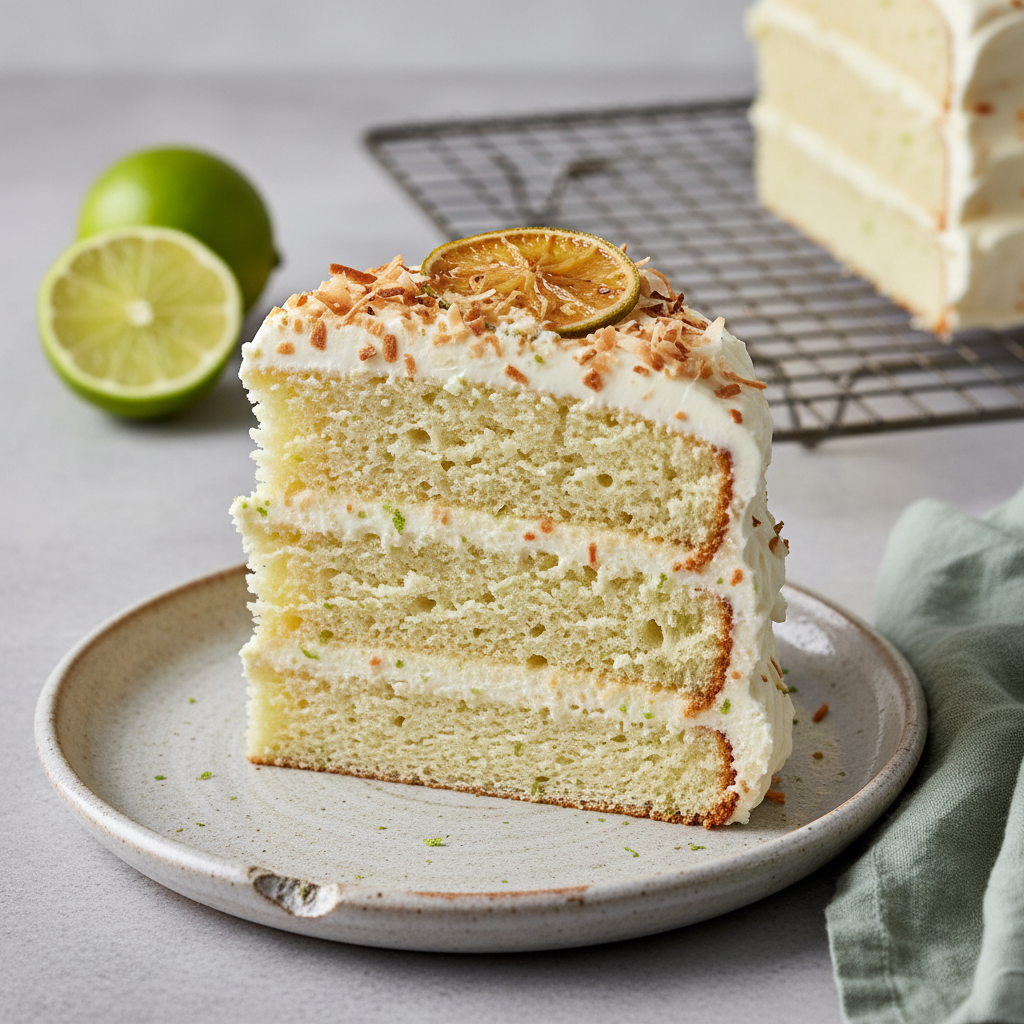
Covering this tropical masterpiece is a luxurious lime-infused cream cheese frosting. The tang of the cream cheese mirrors the tartness of the lime, creating a harmony of flavors that prevents the cake from becoming cloyingly sweet. Finished with a shower of toasted coconut flakes, the texture becomes a delightful interplay of creamy, fluffy, and crunchy. Whether you are hosting a backyard barbecue, a bridal shower, or simply craving a slice of sunshine on a rainy day, this cake promises to deliver joy in every bite. It is a celebration of fresh flavors, a testament to the beauty of homemade baking, and a recipe that is guaranteed to become a requested favorite in your repertoire.
History & Origins
The history of the coconut cake is deeply rooted in the American South, a region known for its hospitality and its decadent desserts. In the early 19th century, coconuts were a rare and exotic luxury in the United States, often imported from the Caribbean to port cities like Charleston and New Orleans. Because fresh coconut was difficult to crack and grate by hand, cakes featuring the ingredient were reserved for high-status events and special occasions. The ‘Southern Coconut Cake’ eventually became a staple of church potlucks and holiday tables, symbolizing abundance and culinary skill.
Simultaneously, the use of limes in desserts has a rich history in tropical climates, most notably with the Key Lime Pie of the Florida Keys. The distinct tartness of the lime was found to be an excellent preservative and flavor enhancer in the heat of the tropics. The marriage of these two distinct traditions—the rich, creamy Southern coconut cake and the zesty, acid-forward Caribbean lime desserts—likely occurred as trade routes expanded and culinary boundaries blurred in the 20th century.
This specific iteration, the Coconut Lime Cake, represents a modern fusion of these historical heavyweights. It takes the structural integrity of the classic American butter cake and infuses it with the bright, island-inspired flavors that gained popularity during the tiki culture boom of the mid-20th century. Today, it stands as a testament to the evolution of American baking, where traditional techniques meet global flavor profiles to create something timeless yet excitingly fresh. It honors the labor-intensive coconut grating of the past while embracing modern conveniences like canned coconut milk to bring this historic flavor profile to home kitchens everywhere.
Why This Recipe Works
This recipe succeeds where others fail because it meticulously balances moisture, acidity, and structure. The primary challenge with coconut cakes is that they can often be dry or bland. To combat this, we utilize full-fat canned coconut milk instead of regular cow’s milk. Coconut milk has a higher fat content and a thicker consistency, which tenderizes the gluten strands in the flour, resulting in a significantly softer crumb that stays moist for days. Furthermore, the natural oils in the coconut milk amplify the coconut flavor without the chemical aftertaste of artificial extracts.
The inclusion of fresh lime juice and zest serves a dual purpose. Flavor-wise, the acidity provides a necessary counterpoint to the sugar and fat, brightening the palate and preventing flavor fatigue. Chemically, the acid in the lime juice reacts with the baking powder and baking soda (if used), aiding in the leavening process to ensure the cake rises beautifully despite the heavy batter.
Finally, the choice of a cream cheese-based frosting over a standard American buttercream is crucial. American buttercream is primarily butter and powdered sugar, which can be overwhelmingly sweet. Cream cheese introduces a tangy, savory element that complements the lime and bridges the gap between the sweet cake and the toasted coconut topping. The result is a cohesive dessert where every component—texture, flavor, and sweetness—works in perfect harmony.
Why You’ll Love This Recipe
- ✓Incredible Moisture: Full-fat coconut milk ensures a tender, melt-in-your-mouth crumb.
- ✓Real Citrus Flavor: Uses fresh lime zest and juice for a bright, authentic taste.
- ✓Perfect Balance: The tangy cream cheese frosting cuts through the sweetness perfectly.
- ✓Visual Stunner: The toasted coconut and lime zest garnish make for a bakery-quality presentation.
- ✓Make-Ahead Friendly: The flavors meld and improve after sitting for a day.
- ✓Versatile: Can be made as a layer cake, a sheet cake, or cupcakes.
Equipment You’ll Need
- ✓Two 9-inch round cake pans
- ✓Electric stand mixer or hand mixer
- ✓Large mixing bowls
- ✓Microplane or citrus zester
- ✓Rubber spatula
- ✓Wire cooling rack
- ✓Measuring cups and spoons
- ✓Offset spatula for frosting
Ingredients
- ✓3 cups All-purpose flour
- ✓1 tbsp Baking powder
- ✓1/2 tsp Salt
- ✓1 cup Unsalted butter, softened to room temperature
- ✓2 cups Granulated sugar
- ✓4 large Eggs, room temperature
- ✓1 tsp Pure vanilla extract
- ✓1 tsp Coconut extract (optional)
- ✓1 cup Full-fat canned coconut milk (shake well before opening)
- ✓1/4 cup Fresh lime juice
- ✓2 tbsp Fresh lime zest (about 2-3 limes)
- ✓1 cup Shredded sweetened coconut
- ✓8 oz Cream cheese, softened
- ✓1/2 cup Unsalted butter (for frosting), softened
- ✓4 cups Powdered sugar
- ✓1 tbsp Lime juice (for frosting)
- ✓1 cup Toasted coconut flakes (for garnish)
- ✓Lime slices (for garnish)
Instructions
- 1. Preheat your oven to 350°F (175°C). Grease two 9-inch round cake pans with butter and dust with flour, or line the bottoms with parchment paper for easy release.
- 2. In a medium bowl, whisk together the flour, baking powder, and salt until well combined. Set this dry mixture aside.
- 3. In the bowl of a stand mixer fitted with the paddle attachment (or a large bowl using a hand mixer), cream the softened butter and granulated sugar together on medium-high speed for about 3-5 minutes. The mixture should look pale, fluffy, and aerated.
- 4. Add the eggs one at a time, beating well after each addition. Scrape down the sides of the bowl to ensure everything is incorporated. Mix in the vanilla extract, coconut extract, and lime zest.
- 5. In a measuring cup, whisk together the coconut milk and fresh lime juice. (Note: The mixture may curdle slightly due to the acid; this is normal).
- 6. Reduce the mixer speed to low. Add the dry flour mixture in three parts, alternating with the coconut milk mixture in two parts, beginning and ending with the flour. Mix only until just combined to avoid overworking the gluten.
- 7. Gently fold in the 1 cup of shredded sweetened coconut using a rubber spatula.
- 8. Divide the batter evenly between the two prepared cake pans. Smooth the tops with a spatula.
- 9. Bake for 30-35 minutes, or until a toothpick inserted into the center comes out clean or with just a few moist crumbs. The tops should be golden brown.
- 10. Remove the cakes from the oven and let them cool in the pans for 10 minutes. Then, carefully invert them onto a wire rack to cool completely before frosting.
- 11. While the cakes cool, make the frosting. Beat the softened cream cheese and butter together until smooth and creamy. Gradually add the powdered sugar, one cup at a time, mixing on low speed. Add the lime juice and a pinch of salt, then whip on high speed for 2 minutes until fluffy.
- 12. Once the cakes are completely cool, place one layer on a serving plate. Spread a generous layer of frosting over the top. Place the second layer on top and frost the top and sides of the entire cake.
- 13. Press the toasted coconut flakes onto the sides or top of the cake. Garnish with fresh lime slices and extra zest if desired. Slice and serve!
Expert Cooking Tips
- ✓Room Temperature Ingredients: Ensure your butter, eggs, and cream cheese are at room temperature. This creates a smoother emulsion and a fluffier cake.
- ✓Don’t Overmix: Once you add the flour, mix gently. Overmixing develops gluten which can lead to a tough, rubbery cake.
- ✓Toasting Coconut: To toast coconut for the garnish, spread flakes on a baking sheet and bake at 325°F for 5-7 minutes, stirring halfway, until golden brown. Watch closely as it burns easily.
- ✓Zesting Tip: Zest your limes before you juice them. It is much harder to zest a squeezed lime!
- ✓Cool Completely: Never frost a warm cake. The butter in the frosting will melt, causing the layers to slide and the frosting to become soupy.
- ✓Shake the Coconut Milk: Canned coconut milk separates into solid cream and liquid water. Shake the can vigorously before opening to mix them back together.
Substitutions and Variations
This recipe is quite adaptable to various dietary needs or pantry limitations. For the flour, you can substitute a high-quality 1:1 Gluten-Free All-Purpose Flour blend if you are baking for someone with gluten sensitivity; just be sure the blend contains xanthan gum. If you cannot find canned coconut milk, you can use whole milk or buttermilk, though the coconut flavor will be less pronounced (you may want to increase the coconut extract). For a dairy-free version, swap the butter for a high-quality vegan butter block and ensure your coconut milk is strictly plant-based. The eggs can be replaced with flax eggs or a commercial egg replacer, though the cake may be slightly denser. If you don’t have limes, lemons work beautifully as a substitute, turning this into a Lemon Coconut Cake. Lastly, for the frosting, if you find cream cheese too heavy, a standard Swiss Meringue Buttercream flavored with lime zest is a lighter, sophisticated alternative.
Common Mistakes to Avoid
The most common mistake with this cake is using ‘cream of coconut’ (like Coco Lopez) instead of ‘canned coconut milk’. Cream of coconut is heavily sweetened and used for cocktails; using it here will throw off the sugar balance and texture. Another frequent error is opening the oven door too often. This releases heat and can cause the cake to collapse in the center; trust your timer and the oven light. Regarding the frosting, adding the powdered sugar too quickly can result in a grainy texture or a cloud of sugar in your kitchen—add it slowly. Finally, ensure your baking powder is fresh. If it has been sitting in the pantry for over a year, test it in hot water to see if it fizzes; if not, buy a new tin to ensure your cake rises properly.
Serving Suggestions
This Fresh Coconut Lime Cake is a showstopper that deserves center stage. Serve it on a white ceramic cake stand to let the golden toasted coconut and bright green lime zest pop visually. It pairs beautifully with a hot cup of Earl Grey tea, which has citrus notes of bergamot that complement the lime. For a summer dessert spread, serve thin slices alongside a scoop of mango sorbet or fresh tropical fruit salad containing pineapple and papaya. If you are serving this at an evening dinner party, a glass of crisp sparkling wine or a Moscato d’Asti cuts through the richness of the cream cheese frosting delightfully.
Storage and Reheating Tips
Because of the cream cheese in the frosting, this cake should be stored in the refrigerator. It can be left out at room temperature for up to 2 hours for serving, but any leftovers should be covered in a cake dome or plastic wrap and chilled. It will stay fresh in the fridge for up to 5 days. In fact, many find the flavor improves on the second day as the moisture redistributes. For freezing, you can freeze individual slices wrapped tightly in plastic wrap and then foil for up to 3 months. Thaw overnight in the refrigerator before eating. You can also freeze the unfrosted cake layers wrapped in plastic wrap for up to a month if you want to prep ahead.
Nutrition Facts (Estimated)
| Serving Size | 1 slice |
| Calories | 580 |
| Fat | 32g |
| Saturated Fat | 20g |
| Unsaturated Fat | 10g |
| Trans Fat | 0.5g |
| Cholesterol | 85mg |
| Sodium | 310mg |
| Carbohydrates | 68g |
| Fiber | 2g |
| Sugar | 42g |
| Protein | 6g |
Frequently Asked Questions
Can I use shredded coconut from the baking aisle inside the batter?
Yes, sweetened shredded coconut is recommended for the batter as it adds moisture and sweetness. Unsweetened works too but will result in a less sweet cake.
Can I make this cake in a 9×13 pan instead of rounds?
Absolutely. Pour the batter into a greased 9×13 inch pan and bake for roughly 35-45 minutes. Check for doneness with a toothpick starting at the 35-minute mark.
Why did my cake sink in the middle?
Sinking usually happens if the oven door was opened too early, if the cake was underbaked, or if there was too much leavening agent (baking powder). Ensure your oven temperature is accurate.
Can I use bottled lime juice?
While you *can*, fresh lime juice is highly recommended. Bottled juice often has preservatives that alter the flavor, making it more acidic and less floral than fresh limes.
How do I make this into cupcakes?
Line a muffin tin with cupcake liners and fill them 2/3 full. Bake at 350°F for 18-22 minutes. This recipe yields approximately 24 cupcakes.
My frosting is too runny, what should I do?
If the frosting is too soft, your butter or cream cheese may have been too warm. Chill the bowl in the fridge for 20 minutes, then whip again. You can also add a bit more powdered sugar to stiffen it.
Is coconut extract necessary?
It is not strictly necessary if you use high-quality coconut milk and plenty of shredded coconut, but it does help boost the coconut aroma significantly.
Can I use light coconut milk?
Light coconut milk has more water and less fat. Using it may result in a drier, less tender cake. Full-fat canned coconut milk is best for the rich texture intended in this recipe.
Conclusion
Baking this Fresh Coconut Lime Cake is more than just following a recipe; it is about creating a moment of joy and indulgence for yourself and your loved ones. The bright, zesty flavors are a perfect antidote to the mundane, offering a slice of tropical paradise right in your own kitchen. Whether you are an experienced baker or a novice looking to impress, this recipe is forgiving, reliable, and utterly delicious. So grab your limes, crack open that coconut milk, and get ready to bake a dessert that will be talked about long after the last crumb is gone. Happy baking!