
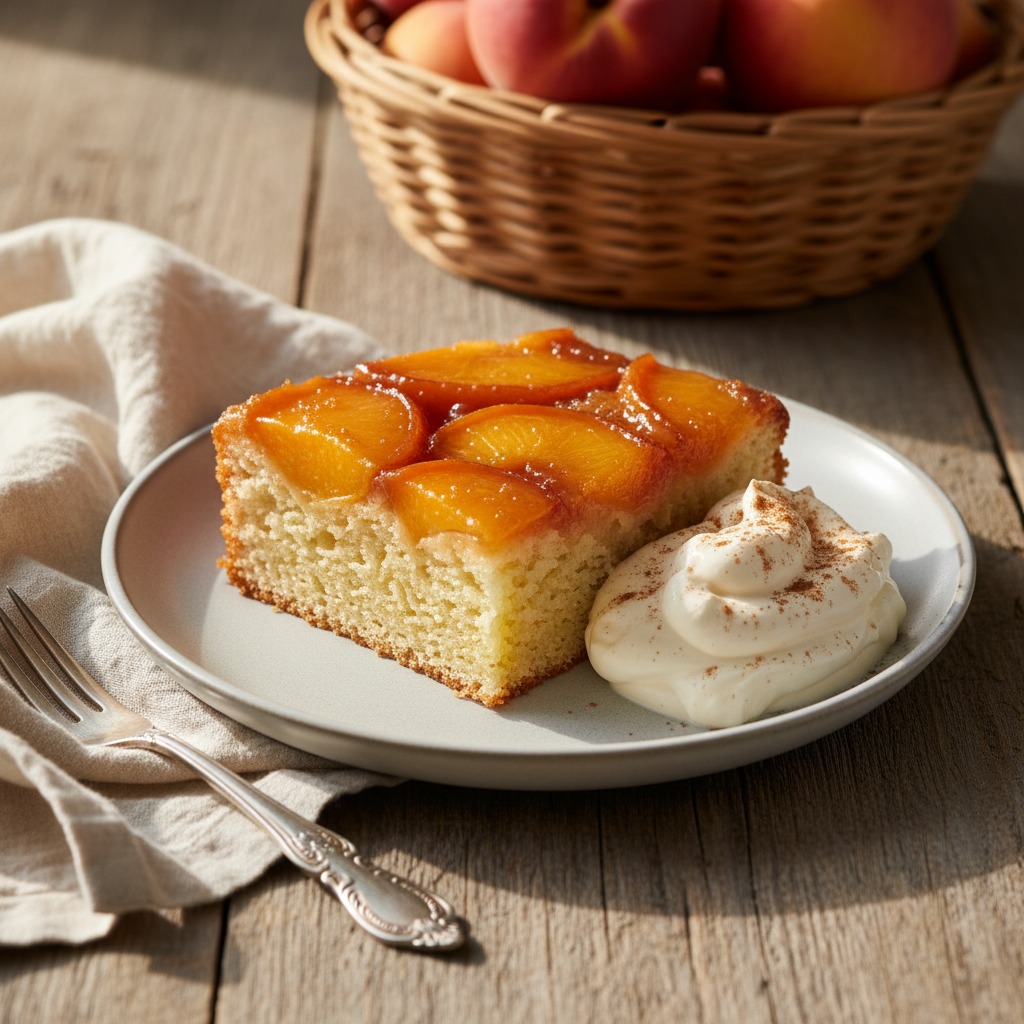
Golden Summer Fresh Peach Upside Down Cake With Cream Cheese Frosting
Fresh Peach Upside Down Cake With Cream Cheese Frosting Recipe
Celebrate peak stone fruit season with this luscious Fresh Peach Upside Down Cake, featuring a caramelized brown sugar peach topping and a moist vanilla crumb. Finished with a tangy, whipped cream cheese frosting dollop, this dessert is the ultimate balance of sweet, sticky, and creamy.
25 minutes
45 minutes
1 hour 25 minutes
8 servings
Dessert
Baking
American
Vegetarian
There is a fleeting moment in late summer when peaches are so ripe they practically burst at the slightest touch, their skins blushing with hues of sunset orange and deep crimson. This Fresh Peach Upside Down Cake is my love letter to that specific moment in time. Unlike a traditional layer cake where the fruit is hidden inside, or a cobbler where the presentation is delightfully messy, an upside-down cake offers a stunning visual payoff with relatively minimal effort. The magic happens at the bottom of the pan—or rather, what eventually becomes the top. Slices of fresh, juicy peaches are nestled into a bubbling bed of butter and brown sugar, creating a sticky, toffee-like glaze that infuses the fruit as it bakes.
But what truly elevates this recipe from a standard tea cake to a show-stopping dessert is the addition of the Cream Cheese Frosting. Now, you might be thinking, ‘Why cover up that beautiful fruit?’ The secret lies in the application. We aren’t masking the caramelized peaches; rather, we serve the cake with a generous, swooping dollop of tangy, lightly sweetened whipped cream cheese frosting that melts slightly against the warm crumb. The contrast is impeccable: the deep, molasses notes of the brown sugar glaze, the bright acidity of the peaches, the tender vanilla cake, and finally, the cool, creamy tang of the frosting. It is a symphony of textures and temperatures that screams summer comfort. Whether you are hosting a backyard barbecue or looking for a cozy Sunday baking project, this cake captures the essence of sunshine on a plate.
History & Origins
The concept of the upside-down cake is deeply rooted in the history of American home baking, specifically tied to the evolution of cookware. Long before modern non-stick springform pans, early settlers and pioneers cooked almost exclusively in cast-iron skillets over open fires or on wood-burning stoves. These ‘skillet cakes’ were practical; lining the bottom of the pan with fruit and sugar prevented the batter from burning and sticking to the harsh heat source, effectively creating a built-in glaze. Apples and cherries were common early iterations, utilizing whatever seasonal produce was available in the orchard.
However, the upside-down cake as we recognize it today exploded in popularity during the 1920s. The catalyst was the commercial availability of canned pineapple and the aggressive marketing campaigns by the Hawaiian Pineapple Company (now Dole). They sponsored a recipe contest in 1925 that received thousands of submissions for pineapple upside-down cake, cementing the style in the American culinary canon. While pineapple remains the most iconic version, Southern bakers have long adapted the technique to showcase their prized local crops, particularly Georgia and South Carolina peaches. The peach version brings a softer, more floral profile compared to the sharp acidity of pineapple. Over decades, the recipe has shifted from a rustic skillet bread to a refined dessert, often enriched with vanilla bean and served with whipped cream or, in this modern twist, a luxurious cream cheese pairing that nods to the classic peaches-and-cream flavor combination.
Why This Recipe Works
This recipe succeeds because it carefully manages moisture and caramelization, two factors that can often ruin a fruit-based cake. Fresh peaches contain a significant amount of water. If you simply folded them into the batter, you might end up with a soggy, dense crumb. By placing them at the bottom of the pan in a layer of butter and sugar, we are essentially poaching the fruit in its own juices and caramel as the cake bakes. This high-heat environment draws out the moisture, which then mingles with the brown sugar to create a thick, flavorful syrup that seeps back into the cake’s surface after flipping, keeping it incredibly moist without being mushy.
Furthermore, the batter itself is engineered to be sturdy enough to support the heavy fruit topping but tender enough to melt in your mouth. We use a combination of butter for flavor and sour cream (or buttermilk) for acidity and tenderness. The acidity in the sour cream also helps activate the baking soda, ensuring a good rise despite the weight of the fruit. Finally, the cream cheese frosting provides the necessary counterpoint to the sweetness. The brown sugar glaze is intensely sweet; without the tangy, slightly savory element of the cream cheese, the dessert could become cloying. The frosting acts as a palate cleanser, cutting through the richness and highlighting the floral notes of the peach.
Why You’ll Love This Recipe
- ✓Uses fresh, seasonal peaches for superior flavor
- ✓No fancy decoration skills required—the pan does the work
- ✓Moist, tender crumb enriched with sour cream
- ✓Perfect balance of sweet caramel and tangy cream cheese
- ✓Can be made in a cast-iron skillet or a standard cake pan
Equipment You’ll Need
- ✓9-inch round cake pan or cast-iron skillet
- ✓Electric hand mixer or stand mixer
- ✓Mixing bowls
- ✓Rubber spatula
- ✓Measuring cups and spoons
- ✓Wire cooling rack
- ✓Peeler (optional)
Ingredients
- ✓3-4 medium fresh peaches, pitted and sliced into 1/2 inch wedges
- ✓1/4 cup unsalted butter, melted (for topping)
- ✓1/2 cup packed light brown sugar (for topping)
- ✓1 1/2 cups all-purpose flour
- ✓1 1/2 tsp baking powder
- ✓1/4 tsp salt
- ✓1/2 cup unsalted butter, softened (for cake)
- ✓3/4 cup granulated sugar
- ✓2 large eggs, room temperature
- ✓1 tsp vanilla extract
- ✓1/2 cup sour cream or full-fat Greek yogurt
- ✓4 oz cream cheese, softened (for frosting)
- ✓2 tbsp unsalted butter, softened (for frosting)
- ✓1 cup powdered sugar
- ✓1-2 tbsp heavy cream or milk
Instructions
- Preheat your oven to 350°F (175°C). Grease the sides of a 9-inch round cake pan or cast-iron skillet generously.
- Pour the 1/4 cup melted butter into the bottom of the pan, tilting it to coat the bottom evenly. Sprinkle the brown sugar evenly over the melted butter.
- Arrange the peach slices in a concentric circle or pattern of your choice on top of the brown sugar mixture. Fit them snugly, as they will shrink slightly during baking.
- In a medium bowl, whisk together the flour, baking powder, and salt. Set aside.
- In a large bowl using a hand mixer or stand mixer, beat the 1/2 cup softened butter and granulated sugar together on medium-high speed until light and fluffy (about 3-4 minutes).
- Add the eggs one at a time, beating well after each addition. Scrape down the sides of the bowl. Mix in the vanilla extract.
- Reduce mixer speed to low. Add half of the flour mixture, mixing just until combined. Add the sour cream, mix briefly, then add the remaining flour mixture. Do not overmix.
- Gently spoon the batter over the arranged peaches, using a spatula to spread it carefully so you don’t disturb the fruit design.
- Bake for 40-50 minutes, or until a toothpick inserted into the center comes out clean and the top is golden brown.
- Remove from the oven and let the cake cool in the pan for exactly 10-15 minutes. This allows the structure to set but keeps the caramel warm enough to release.
- Run a knife around the edge of the pan to loosen the cake. Place a serving platter upside down over the pan and carefully flip both over to release the cake. If any fruit sticks to the pan, simply place it back on the cake.
- While the cake cools slightly, make the frosting. Beat the cream cheese and 2 tbsp butter together until smooth. Gradually add powdered sugar and heavy cream, whipping until light and fluffy.
- Serve the cake warm or at room temperature with a generous dollop of the cream cheese frosting on top or on the side.
Expert Cooking Tips
- ✓Use firm-ripe peaches; overly soft peaches may turn to mush while baking.
- ✓Don’t skip the cooling time in the pan. If you flip too soon, the cake may break; too late, and the caramel will harden and stick.
- ✓Room temperature ingredients (eggs, butter, sour cream) are crucial for a smooth, emulsified batter.
- ✓If using a springform pan, wrap the bottom in foil to prevent caramel leakage.
- ✓To peel or not to peel? Unpeeled peaches add lovely color and texture, but peeling yields a smoother bite. It’s up to you!
- ✓Arrange peaches tightly; they shrink as they release water.
Substitutions and Variations
This recipe is quite versatile regarding the fruit and dairy components. If peaches are out of season or unavailable, nectarines are a direct 1:1 substitution and don’t require peeling. Apricots or plums also work beautifully, adding a tart contrast to the sweet glaze. For the batter, if you don’t have sour cream, full-fat Greek yogurt or buttermilk are excellent alternatives that maintain the required acidity and moisture. In terms of flour, a gluten-free 1:1 baking flour blend usually works well for this density of cake, though the texture may be slightly more crumbly. If you are out of brown sugar for the topping, you can mix granulated sugar with a tablespoon of molasses, but avoid using plain white sugar as it won’t achieve the same depth of caramel flavor. For the frosting, mascarpone can replace cream cheese for a richer, less tangy Italian-inspired topping.
Common Mistakes to Avoid
The most common mistake with upside-down cakes is flipping the cake at the wrong time. If you flip it immediately out of the oven, the cake structure is too fragile and steam is still escaping, causing it to collapse or break apart. Conversely, if you wait until it’s completely cold, the brown sugar caramel will solidify like cement, gluing the fruit to the pan. The sweet spot is 10 to 15 minutes. Another frequent error is using under-ripe, hard peaches, which won’t soften enough during baking, or over-ripe ones that disintegrate. Aim for fruit that gives slightly to pressure but isn’t squishy. Finally, avoid overmixing the batter once the flour is added; overmixing develops gluten which leads to a tough, rubbery cake rather than a tender one.
Serving Suggestions
This cake is best served warm, shortly after it has been flipped and had a moment to set. The Cream Cheese Frosting is designed to be served as a dollop on top or on the side, rather than fully icing the cake like a birthday cake, which would hide the beautiful fruit pattern. For an extra touch of elegance, garnish with a sprig of fresh mint or thyme, which pairs wonderfully with peach. If you want to lean into the dessert vibe, a scoop of vanilla bean ice cream alongside the cream cheese whip creates a hot-cold contrast that is irresistible. A dusting of cinnamon or nutmeg over the frosting adds a nice aromatic finish.
Storage and Reheating Tips
Because this cake contains fresh fruit and a moist crumb, it is best consumed within 1-2 days. Store leftovers in an airtight container in the refrigerator to prevent the fruit from fermenting and the cream cheese frosting from spoiling. When ready to eat, it is highly recommended to reheat individual slices in the microwave for 15-20 seconds to revive the soft texture of the cake and loosen the caramel glaze. The frosting should be stored separately if possible, or added after reheating. This cake does not freeze particularly well due to the high moisture content of the fruit layer, which can become icy and soggy upon thawing.
Nutrition Facts (Estimated)
| Serving Size | 1 slice |
| Calories | 420 |
| Fat | 22g |
| Saturated Fat | 13g |
| Unsaturated Fat | 8g |
| Trans Fat | 0g |
| Cholesterol | 85mg |
| Sodium | 210mg |
| Carbohydrates | 54g |
| Fiber | 2g |
| Sugar | 38g |
| Protein | 5g |
Frequently Asked Questions
Can I use frozen peaches?
Yes, but you must thaw them completely and pat them very dry with paper towels before using. Frozen peaches release more water, which can make the caramel runny if not dried properly.
Can I use canned peaches?
Canned peaches can be used in a pinch. Ensure they are drained thoroughly and patted dry. Use peaches in juice rather than heavy syrup to avoid excessive sweetness.
Why did my cake stick to the pan?
Usually, this happens if the pan wasn’t greased well enough or if the cake cooled for too long, allowing the sugar to harden. If stuck, warm the bottom of the pan on a low burner for 1 minute to melt the caramel again.
My cake looks soggy in the middle, what happened?
The peaches may have been too juicy, or the cake was underbaked. If the top is browning too fast but the center is raw, tent foil over the cake and continue baking.
Can I make this in a Bundt pan?
It is not recommended. The fruit layer is difficult to arrange at the bottom of a Bundt pan and flipping it intact is very challenging due to the surface area and shape.
Do I have to use a stand mixer?
No, a hand mixer works perfectly fine. You can even mix by hand if you have strong arms, but creaming the butter and sugar thoroughly is essential for a light texture.
Is the frosting necessary?
The cake is delicious on its own, but the cream cheese frosting adds a creamy, tangy element that balances the sweetness of the caramelized fruit perfectly.
How do I know when the peaches are ripe enough?
They should have a sweet fragrance and give slightly when you press them gently. If they are rock hard, they need a few more days on the counter.
Conclusion
This Fresh Peach Upside Down Cake with Cream Cheese Frosting is more than just a dessert; it’s a celebration of summer’s bounty. It combines the rustic, nostalgic appeal of a skillet cake with the refined, creamy indulgence of a modern confection. Whether you are an experienced baker or a novice looking to impress, this recipe offers a high reward for your efforts. The sight of that golden, glistening fruit topping revealed after the flip is a moment of pure kitchen magic. So, grab those ripe peaches from the market, preheat your oven, and get ready to enjoy a slice of sunshine. Happy baking!


