Classic Fresh Peach Upside Down Cake with Brown Sugar Caramel
Fresh Peach Upside Down Cake Recipe
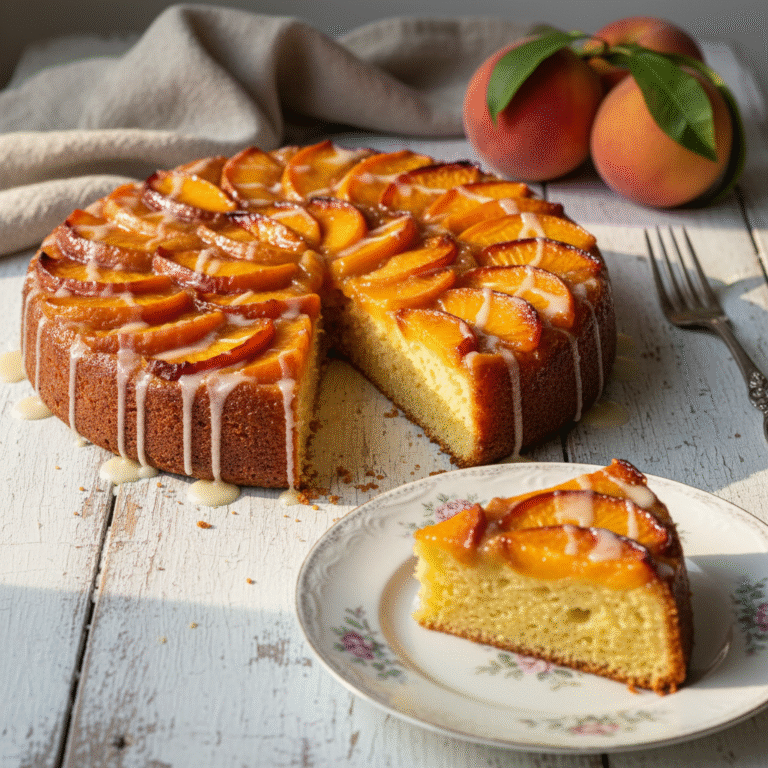
Capture the essence of summer with this stunning Fresh Peach Upside Down Cake. Featuring juicy, ripe peaches nestled in a rich brown sugar caramel atop a tender, buttery vanilla sponge, this dessert is as beautiful as it is delicious.
20 minutes
45 minutes
1 hour 15 minutes
8 servings
Dessert
Baking
American
Vegetarian
There is something undeniably magical about the arrival of stone fruit season. When fresh peaches are at their peak—fragrant, slightly yielding to the touch, and bursting with nectar—there is no better way to celebrate them than with a classic Fresh Peach Upside Down Cake. This recipe is the epitome of ‘summer on a plate,’ transforming humble ingredients into a show-stopping dessert that looks far more complicated to make than it actually is. The beauty of an upside-down cake lies in its rustic elegance; the fruit caramelizes at the bottom of the pan (which becomes the top), creating a stained-glass mosaic of gold and amber hues that requires no fancy frosting or piping skills. As the cake bakes, the juices from the peaches mingle with melted butter and brown sugar, creating a self-saucing caramel that seeps into the tender crumb of the vanilla sponge cake below. The result is a dessert that offers a perfect interplay of textures: the sticky, gooey fruit topping contrasts beautifully with the light, airy, and moist cake. Whether you are hosting a backyard barbecue, looking for a comforting weekend baking project, or simply want to utilize a surplus of farmers’ market peaches, this recipe delivers on all fronts. It evokes a sense of nostalgia, reminding us of grandmother’s kitchens and simpler times, while the addition of a hint of cinnamon and vanilla brings a modern depth of flavor. Served warm with a scoop of melting vanilla bean ice cream, this cake is not just a treat; it is an experience.
History & Origins
The concept of the upside-down cake is deeply rooted in the history of American baking, though its origins can be traced back even further to the practical cooking methods of the Middle Ages. Long before modern ovens with precise temperature controls existed, cakes were often cooked in cast-iron skillets over open fires or on stovetops. These were known as ‘skillet cakes’ or ‘spider cakes’ (named for the legged iron pots used). Cooks would line the bottom of the skillet with fruit and sugar, pour the batter on top, and cook it until set. When flipped, the fruit would be displayed on top, creating a natural decoration. The specific popularity of the ‘upside-down’ terminology exploded in the United States during the 1920s. While the Pineapple Upside-Down Cake is the most famous iteration—largely due to a contest sponsored by the Hawaiian Pineapple Company (now Dole) in 1925—housewives had been using seasonal fruits like apples, cherries, and peaches in similar manners for decades prior. The peach version became particularly beloved in the American South and Midwest, where peach orchards were abundant. Unlike the canned pineapple version which relied on pantry staples, the Fresh Peach Upside Down Cake was a celebration of the harvest, utilizing the fleeting window of ripe summer produce. Over the last century, the recipe has evolved from a cast-iron staple to a refined dessert baked in cake pans, but the core principle remains the same: letting the natural sweetness of the fruit shine through a caramelized glaze.
Why This Recipe Works
This recipe succeeds where others fail because it meticulously balances moisture content and structural integrity. Fresh peaches are composed largely of water, and a common pitfall in fruit-heavy cakes is a soggy, underbaked center. This recipe combats that issue in two ways. First, we utilize a ‘reverse creaming’ inspired technique for the batter, or a sufficiently sturdy butter-cream method, which ensures the crumb is dense enough to hold the weight of the fruit but light enough to remain fluffy. Second, the caramel layer is created directly in the pan before the batter is added. By melting the butter and brown sugar together first, we create a barrier that begins to caramelize the fruit immediately upon entering the oven, drawing out moisture and turning it into a thick syrup rather than a watery mess. The brown sugar adds a depth of molasses flavor that pairs significantly better with peaches than white sugar, enhancing the fruit’s natural floral notes. Furthermore, the inclusion of sour cream or whole milk in the batter provides the necessary acidity to tenderize the gluten, resulting in a soft, velvety crumb that absorbs the peach-caramel syrup without disintegrating. The ratio of fruit to cake is also calculated to ensure that every bite contains a perfect mix of gooey topping and buttery sponge.
Why You’ll Love This Recipe
- ✓Uses fresh, seasonal peaches for superior flavor
- ✓No fancy decoration skills required
- ✓Creates its own rich caramel sauce while baking
- ✓Perfect balance of moist crumb and gooey topping
- ✓Can be made in a cast-iron skillet or standard cake pan
- ✓Ideal for summer entertaining and potlucks
Equipment You’ll Need
- ✓9-inch round cake pan or 10-inch cast iron skillet
- ✓Electric hand mixer or stand mixer
- ✓Large mixing bowl
- ✓Medium mixing bowl
- ✓Whisk
- ✓Rubber spatula
- ✓Peeler (optional)
- ✓Sharp knife
- ✓Cutting board
- ✓Cooling rack
Ingredients
- ✓3-4 medium fresh peaches, pitted and sliced into 1/2 inch wedges (peeling is optional)
- ✓1/2 cup unsalted butter, melted (for topping)
- ✓3/4 cup packed light brown sugar (for topping)
- ✓1 1/2 cups all-purpose flour
- ✓1 1/2 teaspoons baking powder
- ✓1/4 teaspoon salt
- ✓1/2 teaspoon ground cinnamon
- ✓1/2 cup unsalted butter, softened to room temperature (for cake)
- ✓3/4 cup granulated white sugar
- ✓2 large eggs, room temperature
- ✓1 teaspoon pure vanilla extract
- ✓1/2 cup whole milk or sour cream, room temperature
Instructions
- 1. Preheat your oven to 350°F (175°C). Grease the sides of a 9-inch round cake pan or a 10-inch cast-iron skillet generously with butter or non-stick spray.
- 2. Prepare the topping: Pour the 1/2 cup of melted butter into the bottom of your prepared pan. Sprinkle the 3/4 cup of brown sugar evenly over the melted butter. It does not need to be perfectly smooth, as it will melt together in the oven.
- 3. Arrange the peach slices: Place the peach wedges in a circular pattern on top of the brown sugar and butter mixture. You can create concentric circles or a fan design. Fit as many slices as possible in a single layer, as they will shrink slightly during baking.
- 4. Whisk dry ingredients: In a medium bowl, whisk together the all-purpose flour, baking powder, salt, and cinnamon until well combined.
- 5. Cream butter and sugar: In a large bowl using an electric mixer, beat the softened 1/2 cup of butter and granulated sugar on medium-high speed until light, pale, and fluffy (about 3-4 minutes).
- 6. Add eggs and vanilla: Add the eggs one at a time, beating well after each addition. Scrape down the sides of the bowl. Stir in the vanilla extract.
- 7. Combine batter: Reduce the mixer speed to low. Add half of the flour mixture to the butter mixture, mixing just until combined. Add the milk (or sour cream), mix briefly, then add the remaining flour mixture. Mix until just combined and no streaks of flour remain. Do not overmix.
- 8. Assemble: Spoon the batter carefully over the arranged peaches. Use a rubber spatula to gently spread the batter into an even layer, being careful not to displace the fruit underneath.
- 9. Bake: Place the pan in the center of the preheated oven. Bake for 40-50 minutes, or until the top is golden brown and a toothpick inserted into the center comes out clean or with just a few moist crumbs.
- 10. Cool and Flip: Remove from the oven and let the cake cool in the pan for exactly 10-15 minutes. This allows the caramel to set slightly but remain liquid enough to release. Run a knife around the edge of the cake to loosen it. Place a serving plate upside down over the pan, and using oven mitts, quickly and confidently flip the pan and plate together. Lift the pan off to reveal the peaches.
- 11. Serve: Allow the cake to cool for at least 20 minutes before slicing to let the structure set. Serve warm or at room temperature.
Expert Cooking Tips
- ✓Choose peaches that are ripe but still firm; overly soft peaches may turn to mush during the baking process.
- ✓If your peaches are very fuzzy, peel them; if the skin is thin and smooth, leaving it on adds beautiful color and texture.
- ✓Room temperature ingredients are crucial for the cake batter to emulsify properly, resulting in a better rise.
- ✓Don’t skip the resting time after baking; flipping immediately can cause the hot cake to break, while waiting too long will cause the caramel to harden and stick to the pan.
- ✓Place a baking sheet on the rack below the cake in the oven to catch any potential caramel drips.
- ✓If using a springform pan, wrap the bottom securely in foil to prevent the butter and sugar leakage.
Substitutions and Variations
This recipe is highly versatile and can accommodate various dietary needs and pantry limitations. For the fruit, nectarines are a direct 1:1 substitution and do not require peeling. You can also use apricots, plums, or even canned peaches (ensure they are thoroughly drained and patted dry) if fresh ones aren’t in season. If you are out of brown sugar for the topping, you can use granulated sugar mixed with a tablespoon of molasses, though the flavor profile will change slightly. For the dairy, full-fat Greek yogurt or buttermilk can replace the sour cream/milk for a tangier crumb. To make this gluten-free, substitute the all-purpose flour with a high-quality 1:1 gluten-free baking flour blend that includes xanthan gum; almond flour alone will not provide enough structure to hold the fruit. If you need a dairy-free version, use a high-quality vegan butter block (not tub margarine) and unsweetened almond or oat milk.
Common Mistakes to Avoid
The most frequent error with upside-down cakes is flipping at the wrong time. If flipped immediately out of the oven, the cake structure is too fragile and may collapse, and the caramel is dangerously hot and runny. If left to cool completely, the caramel hardens like cement, causing the fruit to stick to the pan. Sticking to the 10-15 minute window is vital. Another mistake is using under-ripe, hard peaches, which won’t release enough juice or soften properly, leading to a crunchy topping. Conversely, over-mixing the batter after adding the flour will develop too much gluten, resulting in a tough, rubbery cake rather than a tender sponge. Finally, ensure your baking powder is fresh; since this is a heavy cake with fruit on top, it needs active leavening to rise properly.
Serving Suggestions
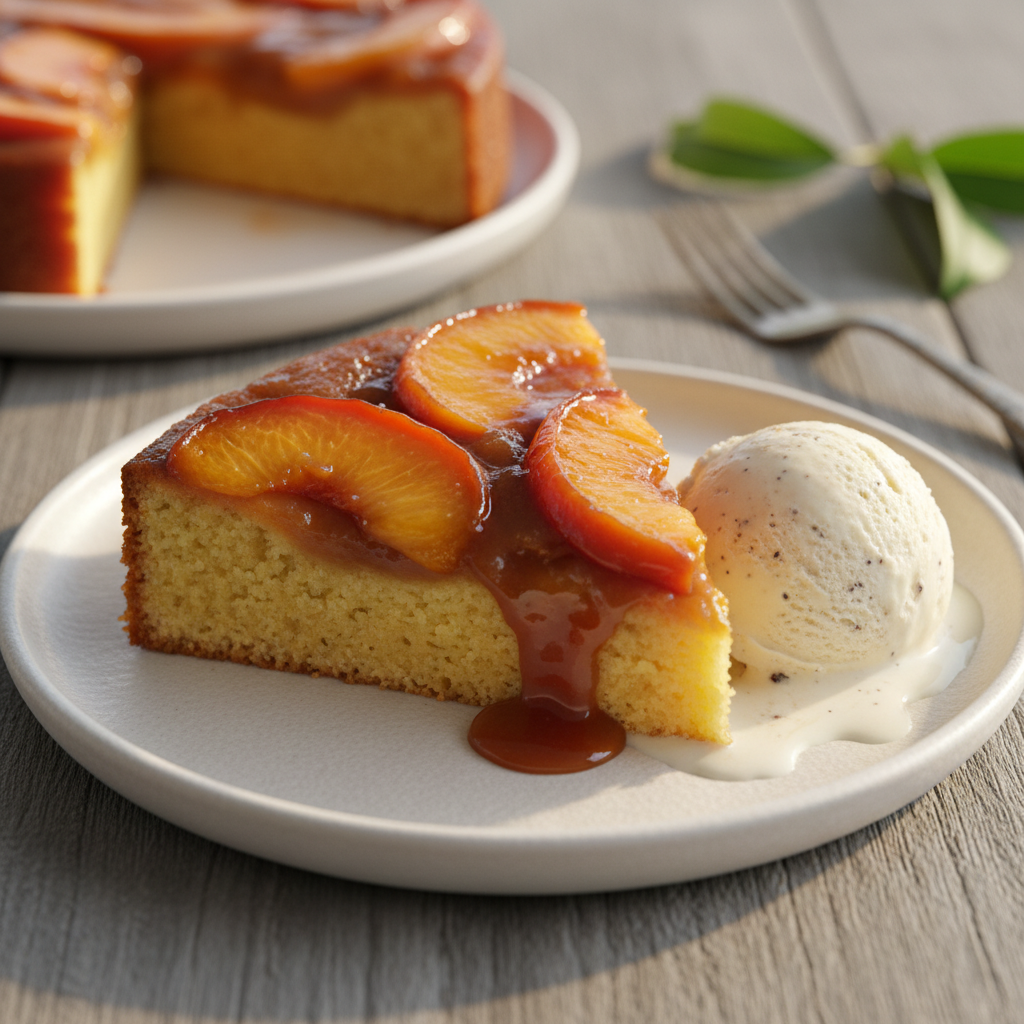
This cake is best served warm, ideally within a few hours of baking. A classic scoop of vanilla bean ice cream is the traditional accompaniment, as the cold cream melts into the warm, spiced caramel. For a lighter option, a dollop of unsweetened whipped cream or crème fraîche balances the sweetness of the brown sugar. You can also garnish with a light dusting of powdered sugar or a sprinkle of fresh thyme leaves for a gourmet, herbaceous touch. Pair it with a hot cup of coffee or a cold glass of iced tea for the perfect afternoon snack.
Storage and Reheating Tips
Because this cake contains fresh fruit, it is best stored in the refrigerator if it won’t be consumed within 24 hours. Cover the cake loosely with plastic wrap or store it in an airtight cake carrier. It will keep in the fridge for up to 3 days. To reheat, place individual slices in the microwave for 15-20 seconds to revive the soft texture and melt the caramel slightly. Freezing is possible but not ideal, as the peaches can become watery upon thawing; if you must freeze it, wrap individual slices tightly in plastic wrap and foil, freezing for up to 1 month.
Nutrition Facts (Estimated)
| Serving Size | 1 slice |
| Calories | 380 |
| Fat | 18g |
| Saturated Fat | 11g |
| Unsaturated Fat | 6g |
| Trans Fat | 0.5g |
| Cholesterol | 85mg |
| Sodium | 190mg |
| Carbohydrates | 52g |
| Fiber | 2g |
| Sugar | 28g |
| Protein | 5g |
Frequently Asked Questions
Can I use frozen peaches for this recipe?
Yes, but you must thaw them completely and pat them very dry with paper towels before using. Frozen peaches release more water, which can make the caramel runny if not dried properly.
Do I have to peel the peaches?
No, peeling is a matter of personal preference. The skins soften during baking and provide a nice color contrast. However, if the skin is very thick or fuzzy, peeling yields a better texture.
Why did my fruit stick to the pan when I flipped it?
This usually happens if the cake cooled for too long, causing the sugar to harden. If this happens, place the pan back on a warm burner (low heat) for 1-2 minutes to remelt the caramel, then try flipping again.
Can I make this cake ahead of time?
Upside-down cakes are best the day they are made. However, you can bake it the night before, leave it in the pan (do not flip), and reheat the bottom gently on the stove before flipping the next day, though the texture is best when fresh.
Can I use a glass baking dish?
Metal pans (aluminum or cast iron) are preferred because they conduct heat better and help caramelize the sugar. Glass heats slower and retains heat longer, which might risk overcooking the sugar or undercooking the center.
My cake is browning too fast but the center is raw. What do I do?
Tent the cake loosely with aluminum foil. This deflects the direct heat from the top, allowing the center to continue cooking without burning the crust.
Can I reduce the sugar in the recipe?
You can slightly reduce the sugar in the cake batter, but do not reduce the sugar in the topping. The brown sugar is essential for creating the caramel sauce and preserving the fruit.
Why did my cake sink in the middle?
This can happen if the oven door was opened too early during baking, or if there was too much liquid from the fruit. Ensure your baking powder is fresh and the cake is fully baked before removing.
Conclusion
The Fresh Peach Upside Down Cake is more than just a dessert; it is a celebration of seasonal abundance and the joy of home baking. With its stunning presentation and comforting flavors, it is sure to become a staple in your summer recipe rotation. The magic moment of flipping the pan to reveal the glistening, caramelized fruit never gets old and is guaranteed to impress your guests. So, head to your local market, grab the most fragrant peaches you can find, and preheat your oven. Sweet, sticky, and incredibly satisfying, this cake awaits.