The Ultimate Fresh Lemon Raspberry Cake with Zesty Cream Cheese Frosting
Fresh Lemon Raspberry Cake Recipe
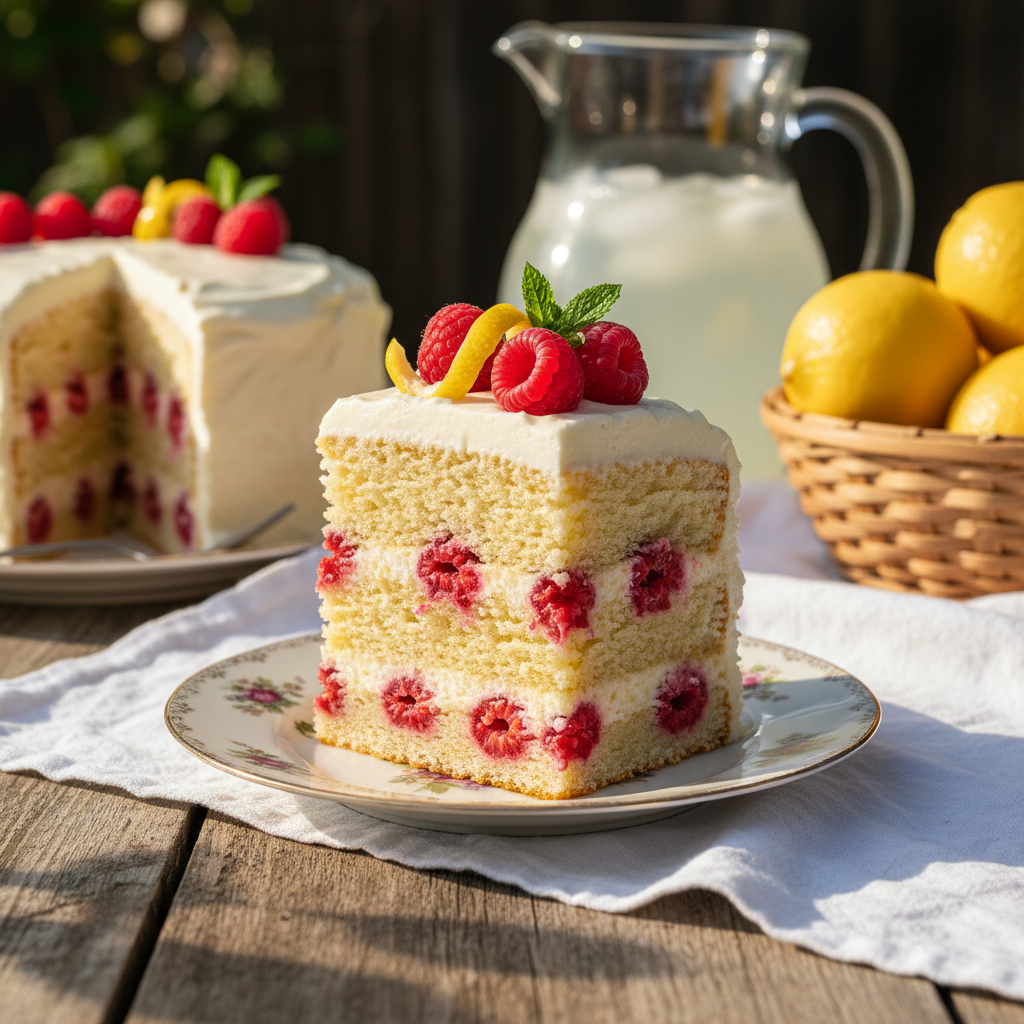
Bright, zesty, and bursting with summer flavors, this Fresh Lemon Raspberry Cake is the perfect balance of tart and sweet. With a tender, moist crumb studded with juicy raspberries and smothered in a luscious lemon cream cheese frosting, it is a showstopping dessert for any occasion.
30 minutes
35 minutes
1 hour 5 minutes
12 servings
Dessert
Baking
American
Vegetarian
There is something inherently joyful about the combination of bright, sunny lemons and sweet, ruby-red raspberries. It is a flavor marriage that screams of spring picnics, summer garden parties, and lazy Sunday brunches. This Fresh Lemon Raspberry Cake is not just a dessert; it is a celebration of fresh produce and vibrant flavors. The cake itself is engineered to be incredibly moist and tender, moving away from the dense, heavy pound cakes of the past into something lighter, fluffier, and far more elegant.
When you take that first bite, the initial sensation is the creamy, tangy richness of the lemon cream cheese frosting, followed immediately by the soft, buttery crumb of the vanilla-lemon sponge. Then, you hit a pocket of baked raspberry—warm, jammy, and slightly tart—which cuts through the sweetness perfectly. I have designed this recipe to be approachable for home bakers while delivering bakery-quality results. We use fresh lemon zest rubbed directly into the sugar to release the essential oils, ensuring that the citrus flavor permeates every single crumb, rather than just sitting on the surface. Whether you are baking for a birthday, a bridal shower, or simply because you crave something sweet and tart, this cake promises to be a centerpiece that vanishes from the plate in record time. It is the kind of recipe that gets requested over and over again, becoming a staple in your baking repertoire.
History & Origins
The lineage of the lemon raspberry cake can be traced back through the evolution of fruit-based sponge cakes in Europe and the citrus trade routes of the ancient world. Lemons, originally native to Asia, made their way to the Mediterranean and eventually the Americas, becoming a symbol of freshness and luxury in culinary arts. In the 18th and 19th centuries, pound cakes were the standard, often flavored with dried fruits or spices. However, as baking powder and finer milling processes for flour became available in the mid-19th century, cakes became lighter and airier, paving the way for the modern sponge.
Raspberries have their own storied past, with legends dating back to Greek mythology where they were said to have been white until the nursemaid of Zeus pricked her finger on a thorn, staining the berries red for eternity. Historically, the pairing of citrus and berries gained massive popularity in the Victorian era with the rise of afternoon tea culture. The Victorians loved their Victoria Sponges, and variations incorporating seasonal fruits became a way to showcase the harvest. In the United States, the lemon-raspberry combination saw a resurgence in the mid-20th century with the advent of better refrigeration and transportation, allowing fresh berries and citrus to be available simultaneously. Today, this flavor profile is a classic staple of American baking, representing the quintessential ‘bright’ dessert that bridges the gap between heavy winter comfort foods and the light, fresh fare of summer.
Why This Recipe Works
This recipe succeeds where many fruit cakes fail due to three specific scientific principles applied in the mixing process. First, we utilize the ‘rubbing in’ method for the lemon zest. By massaging the zest into the granulated sugar before adding any wet ingredients, the abrasive sugar crystals tear open the oil glands in the lemon skin, releasing potent citrus oils that infuse the entire batter with a depth of flavor that extracts alone cannot achieve.
Secondly, the issue of ‘sinking fruit’ is addressed. Raspberries are dense and moisture-heavy. In this recipe, we toss the fresh berries in a small amount of flour before folding them into the batter. This coating creates friction between the berry and the batter, holding the fruit in suspension while the cake structure sets in the oven, ensuring an even distribution of fruit rather than a soggy bottom layer.
Finally, the inclusion of both butter and sour cream (or Greek yogurt) creates the perfect texture. Butter provides the classic flavor and structure, while the acidity in the sour cream tenderizes the gluten strands in the flour, resulting in a soft, velvety crumb that stays moist for days. The acidity also reacts with the baking soda to give the cake a superior lift, counteracting the weight of the fruit.
Why You’ll Love This Recipe
- ✓Infused with real lemon zest for authentic citrus flavor.
- ✓Keeps moist for days thanks to the addition of sour cream.
- ✓Perfect balance of sweet cake and tart berries.
- ✓Stabilized whipped cream cheese frosting holds its shape.
- ✓Berries are suspended evenly throughout, not sunk to the bottom.
- ✓Ideal for layer cakes, sheet cakes, or cupcakes.
Equipment You’ll Need
- ✓Two 8-inch or 9-inch round cake pans
- ✓Stand mixer or electric hand mixer
- ✓Large mixing bowls
- ✓Microplane or fine zester
- ✓Rubber spatula
- ✓Wire cooling rack
- ✓Parchment paper
- ✓Offset spatula
Ingredients
- ✓2 1/2 cups All-purpose flour (spooned and leveled)
- ✓2 1/2 tsp Baking powder
- ✓1/2 tsp Baking soda
- ✓1/2 tsp Salt
- ✓3/4 cup Unsalted butter, softened to room temperature
- ✓1 2/3 cups Granulated sugar
- ✓3 tbsp Fresh lemon zest (about 3 lemons)
- ✓3 Large eggs, room temperature
- ✓2 tsp Pure vanilla extract
- ✓1/2 cup Sour cream or plain Greek yogurt, room temperature
- ✓1/2 cup Whole milk, room temperature
- ✓1/2 cup Fresh lemon juice
- ✓2 cups Fresh raspberries (washed and thoroughly dried)
- ✓1 tbsp All-purpose flour (for coating berries)
- ✓8 oz Full-fat cream cheese, brick style, softened (Frosting)
- ✓1/2 cup Unsalted butter, softened (Frosting)
- ✓4 cups Confectioners’ sugar (Frosting)
- ✓1 tbsp Fresh lemon juice (Frosting)
- ✓Pinch of salt (Frosting)
Instructions
- Preheat oven to 350°F (177°C). Grease two 8-inch or 9-inch round cake pans, line the bottoms with parchment paper, and grease the parchment. Dust with flour and tap out excess.
- In a medium bowl, whisk together the 2 1/2 cups flour, baking powder, baking soda, and salt. Set aside.
- In the bowl of a stand mixer, combine the granulated sugar and lemon zest. Rub the zest into the sugar with your fingers until the sugar is moist and fragrant. Add the softened butter and beat on medium-high speed until pale and fluffy (about 3-4 minutes).
- Add the eggs one at a time, beating well after each addition. Scrape down the sides of the bowl. Mix in the vanilla extract.
- In a small bowl or measuring cup, whisk together the sour cream, milk, and 1/2 cup lemon juice. The mixture may look slightly curdled; this is normal.
- With the mixer on low speed, add the dry ingredients alternating with the wet ingredients, starting and ending with the dry ingredients (3 additions of dry, 2 of wet). Mix only until just combined. Do not overmix.
- Toss the raspberries with the 1 tablespoon of flour in a small bowl. Gently fold the berries into the batter using a rubber spatula, being careful not to crush them.
- Divide the batter evenly between the prepared cake pans. Bake for 30-35 minutes, or until a toothpick inserted into the center comes out clean or with a few moist crumbs. Avoid opening the oven door too early.
- Remove cakes from the oven and allow them to cool completely in the pans set on a wire rack. They must be cool before frosting.
- To make the frosting: Beat the cream cheese and butter together on medium-high speed until smooth and creamy. Add the confectioners’ sugar, lemon juice, and salt. Beat on low speed for 30 seconds, then switch to high speed and beat for 2 minutes until fluffy.
- Assemble the cake: Place one layer on your serving stand. Spread a thick layer of frosting over the top. Place the second cake layer on top. Frost the top and sides of the cake. Garnish with extra raspberries and lemon slices if desired.
Expert Cooking Tips
- ✓Room temperature ingredients are non-negotiable. Cold eggs or dairy will cause the batter to curdle and affect the rise.
- ✓Measure flour correctly by spooning it into the measuring cup and leveling it off, rather than scooping directly from the bag, to avoid a dense cake.
- ✓Wash and dry the raspberries thoroughly. Any excess water on the berries can create soggy pockets in the cake.
- ✓Do not skip the parchment paper. This ensures your cakes release perfectly from the pans without breaking.
- ✓If the frosting is too soft to pipe or spread, refrigerate it for 20 minutes to firm up before assembling.
- ✓Use fresh lemon juice, not bottled. The flavor difference is significant in a recipe that relies on citrus brightness.
- ✓Rubbing the zest into the sugar is a professional technique that maximizes flavor extraction; don’t skip this step!
Substitutions and Variations
If you cannot find fresh raspberries, frozen raspberries can be used, but do not thaw them before adding to the batter, as they will bleed color into the cake; toss them in flour while still frozen and increase baking time by a few minutes. For a different berry profile, blueberries or blackberries work exceptionally well with the lemon base. If you don’t have sour cream, full-fat plain Greek yogurt is an excellent 1:1 substitute that maintains the moisture and acidity required. For a gluten-free version, use a high-quality 1:1 gluten-free baking flour blend that contains xanthan gum. If you prefer a less tangy frosting, you can swap the cream cheese frosting for a standard vanilla or lemon buttercream, or even a light whipped cream topping for a summer version.
Common Mistakes to Avoid
The most common mistake with this cake is overmixing the batter after adding the flour. Overmixing develops the gluten too much, resulting in a tough, rubbery cake rather than a tender crumb. Stop mixing as soon as the flour streaks disappear. Another pitfall is opening the oven door too early to check on the cake; this can cause the center to collapse due to the sudden drop in temperature. Wait until at least 25 minutes have passed. Finally, frosting the cake while it is still warm is a recipe for disaster; the butter in the frosting will melt, causing the layers to slide apart. Ensure the cakes are completely cool to the touch before assembly.
Serving Suggestions
This cake is a stunning centerpiece on its own, but it pairs beautifully with a variety of accompaniments. Serve slices with a dollop of extra whipped cream or a scoop of vanilla bean ice cream to cut through the tartness. A drizzle of raspberry coulis on the plate adds a professional touch and intensifies the berry flavor. Beverage-wise, this cake pairs elegantly with a hot Earl Grey tea, which has bergamot citrus notes that complement the lemon, or a glass of cold prosecco or sparkling rosé for a celebratory brunch. For a summer garden party, serve it alongside freshly brewed iced tea with lemon wedges.
Storage and Reheating Tips
Because of the cream cheese frosting and the fresh fruit content, this cake is best stored in the refrigerator. It can be kept at room temperature for up to 4 hours if the environment is cool (below 70°F). For longer storage, place the cake in an airtight cake carrier or cover loosely with plastic wrap and refrigerate for up to 4 days. Allow slices to come to room temperature for about 15-20 minutes before eating for the best texture and flavor. The cake layers can be baked ahead of time and frozen (unfrosted) for up to 3 months; wrap them tightly in plastic wrap and then foil. Thaw overnight in the refrigerator before frosting.
Nutrition Facts (Estimated)
| Serving Size | 1 slice |
| Calories | 480 |
| Fat | 24g |
| Saturated Fat | 14g |
| Unsaturated Fat | 8g |
| Trans Fat | 0g |
| Cholesterol | 85mg |
| Sodium | 210mg |
| Carbohydrates | 62g |
| Fiber | 3g |
| Sugar | 35g |
| Protein | 6g |
Frequently Asked Questions
Can I use frozen raspberries instead of fresh?
Yes, you can use frozen raspberries. Do not thaw them before adding to the batter, as this will make the batter too wet and cause the color to bleed. Toss them in flour while frozen and add a few minutes to the baking time.
Why did my berries sink to the bottom?
Berries sink if the batter is too thin or if the berries are too heavy and slick. Coating the berries in flour helps them grip the batter. Also, ensure your batter is thick enough by following the measurement instructions carefully.
Can I make this as cupcakes?
Absolutely! This recipe will make approximately 24 standard cupcakes. Bake them at 350°F for 18-22 minutes, or until a toothpick comes out clean.
Why is my cake dense?
Dense cake is usually caused by overmixing the batter or measuring too much flour. Use the spoon-and-level method for flour, and stop mixing as soon as the ingredients are combined.
Can I use bottled lemon juice?
While you technically can, it is highly discouraged for this recipe. Bottled lemon juice often contains preservatives that alter the flavor. Fresh lemon juice provides the bright, clean citrus taste that defines this cake.
How do I know when the cake is done?
The cake is done when the edges pull away slightly from the pan, the top springs back when gently pressed, and a toothpick inserted into the center comes out clean or with just a few moist crumbs attached.
Can I make a loaf cake instead of layers?
Yes, this batter fits into two 9×5 inch loaf pans. You will need to increase the baking time significantly, likely to 50-60 minutes. Check for doneness frequently after the 45-minute mark.
What if I don’t have a zester?
If you don’t have a microplane or zester, you can use the finest side of a box grater. Be very careful only to grate the yellow skin and avoid the white pith underneath, which is bitter.
Conclusion
This Fresh Lemon Raspberry Cake is truly the embodiment of sunshine on a plate. It captures the essence of seasonal baking by highlighting the natural brightness of lemons and the sweet allure of raspberries. Whether you are an experienced baker looking for a reliable crowd-pleaser or a novice wanting to try your hand at a layer cake, this recipe offers the perfect blend of simplicity and sophistication. The time spent rubbing the zest into the sugar and carefully folding in the berries pays off in every moist, flavorful bite. I hope this cake brings as much joy to your kitchen and your table as it has to mine. Happy baking!