The Ultimate Fresh Strawberry Shortcake Cake With Stabilized Whipped Cream
Fresh Strawberry Shortcake Cake With Whipped Cream Frosting Recipe
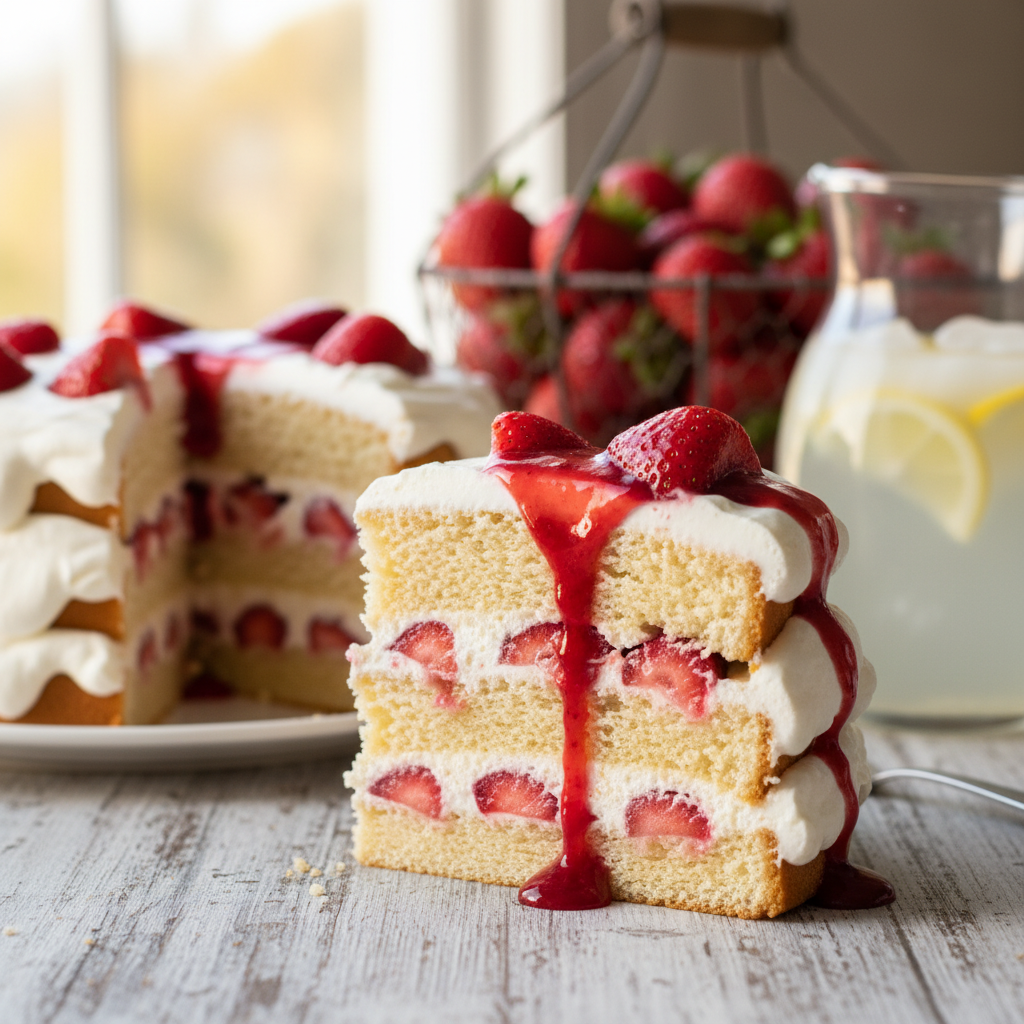
Capture the essence of summer with this stunning Fresh Strawberry Shortcake Cake. Featuring layers of tender vanilla cake, juicy macerated strawberries, and a cloud-like stabilized whipped cream frosting, this recipe reimagines the classic biscuit dessert into a show-stopping centerpiece perfect for any celebration.
45 minutes
30 minutes
2 hours 15 minutes
12 servings
Dessert
Baking
American
Vegetarian
There is something undeniably magical about the combination of sweet cream, fluffy cake, and ripe, red strawberries. It is a flavor profile that transcends trends, rooting itself deep in our culinary nostalgia. While the traditional biscuit-style shortcake holds a special place in history, this Fresh Strawberry Shortcake Cake takes those beloved elements and elevates them into a magnificent layered dessert. Imagine a cake crumb that is tender enough to melt in your mouth yet sturdy enough to hold the weight of juicy berries and luscious cream. This isn’t just a sponge cake with fruit thrown on top; it is a carefully architectural feat of flavor balance.
The beauty of this recipe lies in its freshness. Unlike heavy buttercreams that can overpower delicate fruit, the whipped cream frosting here is light, airy, and just sweet enough to complement the natural tartness of the berries. We use a special stabilization technique to ensure your frosting stays piled high without weeping or melting, making it perfect for warm-weather gatherings. Whether you are hosting a Fourth of July barbecue, a bridal shower, or simply craving a slice of sunshine on a plate, this cake delivers a rustic yet elegant presentation that promises to impress. It is the kind of dessert that beckons you to take a second slice, embodying the pure, unadulterated joy of seasonal baking.
History & Origins
The concept of ‘shortcake’ dates back much further than most realize, with its roots firmly planted in the culinary traditions of the United Kingdom. The term ‘short’ in baking refers to the addition of fat (like butter or lard) to a dough, which inhibits the formation of long gluten strands, resulting in a crumbly, tender texture. The earliest recipes for something resembling shortcake appear in an English cookbook from 1588, ‘The Good Huswifes Handmaid for the Kitchen.’ However, these early iterations were more akin to a sweetened scone or biscuit.
It wasn’t until the recipe crossed the Atlantic to the Americas that the strawberry became its inseparable soulmate. By the mid-19th century, ‘Strawberry Fever’ had taken over the United States. As the railroad system expanded, shipping fresh fruit became easier, and strawberries became a symbol of early summer luxury. In 1847, Eliza Leslie, a popular Philadelphia cookbook author, published a recipe for ‘Strawberry Cake’ in ‘The Lady’s Receipt-Book,’ which is often cited as the first written record of the modern strawberry shortcake.
The debate between ‘biscuit’ vs. ‘sponge cake’ bases has raged for decades, often divided by regional lines in the US, with the South favoring the biscuit and the North often leaning toward the sweetened cake. This specific recipe bridges that gap, offering the structural integrity and vanilla notes of a cake but retaining the lightness required to let the berries shine. It pays homage to the ‘Strawberry Shortcake Parties’ that were fashionable social events in the 1800s, bringing that communal joy of sharing seasonal fruit into the modern kitchen.
Why This Recipe Works
This recipe succeeds where many others fail due to three critical scientific factors: crumb density, moisture control, and foam stability. First, the cake base utilizes a ‘reverse creaming’ method or a modified sponge technique using cake flour and sour cream. Cake flour, with its lower protein content, ensures a tender crumb, while the sour cream introduces acidity that tenderizes the gluten and adds moisture without making the batter heavy. This creates a cake that is soft but dense enough not to turn into mush when it comes into contact with the berry juices.
Secondly, simply slicing strawberries and putting them in a cake often leads to a dry bite of fruit and a soggy cake layer. We employ ‘maceration’—tossing the sliced berries with sugar and lemon juice and letting them sit. This osmotic process draws out the strawberry juices to create a natural syrup. We then brush this syrup onto the cake layers before assembly, infusing the cake with strawberry flavor from the inside out, while the drained berries provide a concentrated burst of fruitiness.
Finally, the frosting. Standard whipped cream is unstable and will deflate within hours or melt instantly in a warm room. This recipe uses mascarpone cheese as a stabilizer. Unlike gelatin, which can give whipped cream a rubbery texture, mascarpone adds milk fat and structure, resulting in a frosting that is thick, pipeable, and holds its shape for days, all while maintaining that luxurious, melt-in-your-mouth mouthfeel that only heavy cream provides.
Why You’ll Love This Recipe
- ✓Stabilized whipped cream frosting that won’t melt or weep.
- ✓Tender, moist vanilla cake crumb specifically designed to absorb berry syrup.
- ✓Uses fresh, seasonal ingredients for maximum flavor impact.
- ✓Beautiful rustic presentation that requires no advanced decorating skills.
- ✓Perfect balance of sweet cake, tart berries, and creamy frosting.
Equipment You’ll Need
- ✓Three 8-inch round cake pans
- ✓Stand mixer or electric hand mixer
- ✓Large mixing bowls
- ✓Parchment paper
- ✓Wire cooling rack
- ✓Offset spatula
- ✓Piping bag with large round tip (optional)
- ✓Serrated knife
Ingredients
- ✓2 ½ cups cake flour, sifted
- ✓2 cups granulated sugar, divided
- ✓1 tbsp baking powder
- ✓1 tsp salt
- ✓¾ cup unsalted butter, room temperature, cut into cubes
- ✓1 cup whole milk, room temperature
- ✓½ cup full-fat sour cream, room temperature
- ✓4 large egg whites, room temperature
- ✓2 tbsp vanilla extract, divided
- ✓2 lbs fresh strawberries, hulled and sliced
- ✓1 tbsp fresh lemon juice
- ✓3 cups heavy whipping cream, cold
- ✓1 ½ cups powdered sugar
- ✓8 oz mascarpone cheese, cold
Instructions
- 1. PREPARE THE STRAWBERRIES: In a medium bowl, combine the sliced strawberries with 1/2 cup of granulated sugar and the lemon juice. Toss gently to coat. Let this sit at room temperature for at least 30 minutes to macerate. The berries will release their juices, creating a syrup.
- 2. PREHEAT AND PREP: Preheat your oven to 350°F (175°C). Grease three 8-inch round cake pans with butter, line the bottoms with parchment paper, and grease the paper and sides. Dust with flour and tap out excess.
- 3. MIX DRY INGREDIENTS: In the bowl of a stand mixer fitted with the paddle attachment, combine the sifted cake flour, remaining 1 1/2 cups granulated sugar, baking powder, and salt. Mix on low speed for 30 seconds to combine.
- 4. ADD BUTTER: Add the cubed, softened butter to the dry ingredients. Mix on low speed until the mixture resembles coarse sand and no large chunks of butter remain (this is the reverse creaming method).
- 5. ADD WET INGREDIENTS: In a separate jug, whisk together the milk, sour cream, egg whites, and 1 tablespoon of vanilla extract. With the mixer on low, slowly pour in half of the milk mixture. Increase speed to medium and beat for 2 minutes to build structure.
- 6. FINISH BATTER: Scrape down the sides of the bowl. Add the remaining milk mixture in two batches, mixing on low after each addition just until incorporated. Do not overmix.
- 7. BAKE: Divide the batter evenly among the three prepared pans. Bake for 25-30 minutes, or until a toothpick inserted into the center comes out clean or with just a few moist crumbs. The cakes should spring back when lightly touched.
- 8. COOL: Allow cakes to cool in the pans for 10 minutes, then run a knife around the edges and invert them onto a wire rack to cool completely.
- 9. MAKE THE FROSTING: Chill your mixer bowl and whisk attachment in the freezer for 10 minutes. Place the cold mascarpone cheese, remaining 1 tablespoon vanilla, and powdered sugar in the bowl. Beat on medium speed just until smooth (about 30 seconds). Slowly pour in the cold heavy cream while the mixer is running. Increase speed to high and whip until stiff peaks form. Watch closely to avoid turning it into butter.
- 10. ASSEMBLE: Strain the macerated strawberries over a bowl, reserving the syrup. Place the first cake layer on your serving stand. Brush generously with the strawberry syrup. Spread a layer of whipped cream frosting on top, then create a dam of frosting around the edge. Fill the center with half of the drained strawberries.
- 11. STACK: Top with the second cake layer. Repeat the process: brush with syrup, spread cream, add dam, and fill with remaining berries. Top with the final cake layer (bottom side up for a flat top).
- 12. FINISH: Cover the entire cake with the remaining whipped cream frosting. You can do a ‘naked’ style or fully cover it. Garnish with whole fresh strawberries on top. Refrigerate for at least 1 hour before slicing to allow layers to set.
Expert Cooking Tips
- ✓Room temperature ingredients (butter, milk, eggs) are non-negotiable for the cake batter; they emulsify properly to create a uniform crumb.
- ✓Do not skip the maceration step for the strawberries; the released syrup keeps the cake moist and intensifies the berry flavor.
- ✓When whipping the frosting, stop as soon as stiff peaks form. Mascarpone has a high fat content and can curdle if overbeaten.
- ✓If your strawberries are very tart, you may increase the sugar in the maceration step by 2 tablespoons.
- ✓Chill the cake for at least an hour before slicing; this allows the cream to firm up slightly and makes for cleaner cuts.
Substitutions and Variations
For a gluten-free version, substitute the cake flour with a high-quality 1:1 gluten-free baking flour blend that contains xanthan gum. If you cannot find mascarpone cheese, you can use full-fat block cream cheese, but soften it slightly before whipping to avoid lumps. Alternatively, you can stabilize the whipped cream using 1 teaspoon of unflavored gelatin dissolved in 1 tablespoon of water, added to the cream as it whips. For a lighter dairy option, you can use coconut cream for the frosting, though the flavor profile will shift to tropical. If fresh strawberries are out of season, you can use thawed frozen strawberries for the filling, but ensure they are thoroughly drained as they release significantly more liquid.
Common Mistakes to Avoid
The most common mistake is assembling the cake while the layers are still warm; this will cause the whipped cream to melt instantly and the layers to slide off. Ensure the cake is completely cool. Another error is over-mixing the batter after adding the wet ingredients, which leads to a tough, rubbery cake rather than a tender one. Regarding the frosting, using warm heavy cream or a warm bowl will prevent the cream from whipping to volume; keep everything ice cold. Finally, don’t use the strawberries without draining them first; excess liquid will make the frosting slide and the cake soggy.
Serving Suggestions
This cake is best served chilled. Remove it from the refrigerator about 15-20 minutes before serving to take the chill off the cake layers without melting the cream. Serve slices with a sprig of fresh mint for color and a side of extra macerated berries if you have them. A glass of cold prosecco or a hot cup of Earl Grey tea pairs beautifully with the floral vanilla and berry notes.
Storage and Reheating Tips
Because of the fresh whipped cream and fruit, this cake must be stored in the refrigerator. It is best eaten within 24 hours but will keep for up to 3 days in an airtight cake container. The strawberries will continue to release moisture, so the cake may become soggier by day 3. Freezing is not recommended for the fully assembled cake, as the fresh strawberries and whipped cream will ruin the texture upon thawing. However, the baked cake layers can be frozen (wrapped tightly) for up to a month before assembly.
Nutrition Facts (Estimated)
| Serving Size | 1 slice |
| Calories | 480 |
| Fat | 28g |
| Saturated Fat | 16g |
| Unsaturated Fat | 10g |
| Trans Fat | 0.5g |
| Cholesterol | 85mg |
| Sodium | 210mg |
| Carbohydrates | 52g |
| Fiber | 2g |
| Sugar | 32g |
| Protein | 6g |
Frequently Asked Questions
Can I make this cake ahead of time?
Yes, but with limits. You can bake the cake layers a day ahead and wrap them tightly in plastic wrap. The frosting is best made the day of assembly. Once assembled, the cake serves best within 24 hours.
Why did my whipped cream turn into butter?
This happens if you overbeat the cream. Once you see stiff peaks (where the cream stands up straight when you lift the whisk), stop immediately. Mascarpone speeds up the thickening process, so watch it closely.
Can I use all-purpose flour instead of cake flour?
You can, but the cake will be denser and slightly tougher. To make a DIY cake flour substitute, measure 1 cup of all-purpose flour, remove 2 tablespoons, and replace them with 2 tablespoons of cornstarch. Sift 3 times.
My strawberries are very sour, what should I do?
Increase the sugar in the maceration step. Taste your berries before using them. If they are extremely tart, you can also add a tablespoon of strawberry jam to the filling mixture.
How do I get flat cake layers?
Use ‘cake strips’ wrapped around the pans while baking to insulate the edges. Alternatively, simply use a serrated knife to trim off the domed tops of the cooled cakes before assembling (save the scraps for snacking!).
Can I use other fruits?
Absolutely! This recipe works beautifully with raspberries, blackberries, or peaches. Just adjust the sugar depending on the sweetness of the fruit.
Why do I need to use room temperature ingredients for the cake?
Room temperature ingredients emulsify (blend) together much better than cold ones. This traps air in the batter, which expands during baking to create a fluffy, light texture.
Is the mascarpone necessary?
It is highly recommended for stability. If you omit it, you must serve the cake immediately after assembly, or use a gelatin stabilizer, otherwise, the whipped cream may collapse under the weight of the cake layers.
Can I use store-bought whipped topping?
Technically yes, but the flavor will be significantly different. Store-bought toppings are often oil-based and overly sweet. Real whipped cream provides the authentic shortcake experience.
Conclusion
This Fresh Strawberry Shortcake Cake is more than just a dessert; it is a celebration of texture and seasonal flavor. By combining the structural elegance of a layer cake with the nostalgic, fresh elements of a classic shortcake, you create a treat that is both comforting and sophisticated. Whether you are an experienced baker or trying your hand at layer cakes for the first time, the stabilized frosting and forgiving crumb make this a recipe destined for success. Gather your ripest berries, whip up that cream, and enjoy a slice of pure summer bliss.