Cozy Pumpkin Roll Cake With Cream Cheese Frosting
Cozy Pumpkin Roll Cake With Cream Cheese With Cream Cheese Frosting Recipe
Embrace the essence of autumn with this classic Pumpkin Roll Cake. Featuring a moist, spiced pumpkin sponge swirled with a luscious, tangy cream cheese filling, it is the ultimate fall dessert that looks impressive but is surprisingly easy to master.
25 minutes
15 minutes
1 hour 40 minutes (includes cooling time)
10-12 servings
Dessert
Baking
American
Vegetarian
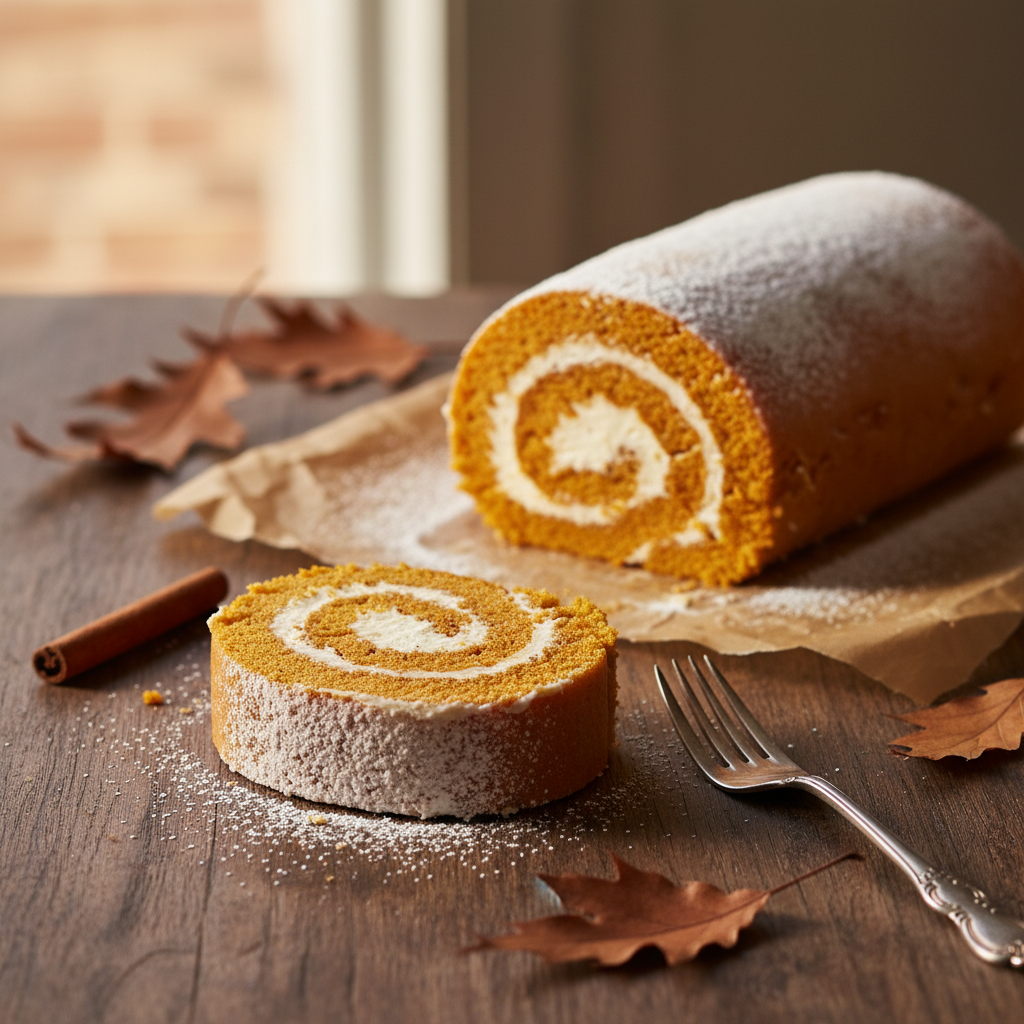
There is something undeniably magical about the transition into autumn. As the air turns crisp and the leaves begin to paint the landscape in hues of amber and gold, our cravings shift toward warmth, comfort, and spice. Enter the Cozy Pumpkin Roll Cake, a dessert that perfectly encapsulates the spirit of the season. This isn’t just a cake; it is a centerpiece, a conversation starter, and a slice of nostalgia all rolled into one. The beauty of this dessert lies in its stunning contrast: the deep orange, tender sponge cake spiraled around a stark white, velvety cream cheese frosting. It promises a textural delight with every bite—soft, airy cake meeting dense, creamy filling.
Many home bakers are intimidated by the prospect of making a roll cake, fearing the dreaded crack in the sponge. However, this recipe is designed to banish those fears. We utilize a specific blend of warming spices—cinnamon, ginger, cloves, and nutmeg—to create an aroma that fills your kitchen with the scent of a cozy bakery. The sweetness of the cake is perfectly balanced by the slight tang of the cream cheese, ensuring that it is never cloying, just delightfully rich. Whether you are hosting a Thanksgiving feast, a casual Sunday brunch, or simply treating yourself after a day of apple picking, this pumpkin roll is the definitive comfort bake. It pairs exquisitely with a hot cup of coffee or a chai latte, making it the ultimate companion for those chilly fall afternoons.
History & Origins
The concept of the rolled sponge cake, or ‘roulade’, has deep roots in European baking traditions, dating back to the 19th century. While often referred to as a ‘Swiss Roll’, its origins are likely Central European, possibly Austrian or Hungarian, rather than specifically Swiss. These early iterations were typically filled with jams or jellies. The transition from a jam-filled sponge to the creamy, pumpkin-spiced version we know and love in America is a testament to the evolution of modern baking and the industrialization of food ingredients.
In the United States, the popularity of pumpkin desserts skyrocketed with the availability of canned pumpkin puree in the early 20th century, which eliminated the laborious process of roasting and pureeing fresh pumpkins. By the mid-20th century, distinctively American variations of the roulade began to appear in community cookbooks and magazines, incorporating native ingredients like pumpkin and pecans. The pairing of pumpkin cake with cream cheese frosting is a relatively modern classic, likely gaining mass appeal in the 1970s and 80s as cream cheese frostings became the standard companion for carrot cakes and spice cakes. Today, the Pumpkin Roll has cemented its status as a Thanksgiving staple, rivaling the traditional pumpkin pie. It represents a fusion of Old World technique with New World flavors, symbolizing the comfort and abundance of the American harvest season.
Why This Recipe Works
This recipe succeeds where others fail because it meticulously addresses the structural integrity of the sponge cake, which is the most critical component of a roll. First, the ratio of eggs to flour is optimized to create a sponge that is flexible and airy, rather than dense and brittle. We use three large eggs to provide the necessary protein structure that allows the cake to bend without breaking. Furthermore, the inclusion of a small amount of oil ensures the cake remains moist for days, preventing the dryness that often leads to cracking.
Secondly, the method emphasizes ‘training’ the cake while it is still hot. By rolling the warm cake in a dusting of powdered sugar and a clean linen towel immediately after baking, we utilize the cake’s steam to keep it pliable. As it cools in this rolled shape, the sponge develops a ‘memory’ of the curve. When you unroll it to add the filling, it naturally wants to return to that spiral shape, making the final rolling process effortless and crack-free. Finally, the filling itself is stabilized with just enough butter and powdered sugar to hold its shape when sliced, yet it remains soft enough to spread easily without tearing the delicate crumb of the cake.
Why You’ll Love This Recipe
- ✓Foolproof rolling technique prevents cracking.
- ✓Perfect balance of warm spices and tangy cream cheese.
- ✓Can be made ahead and freezes beautifully.
- ✓Stunning spiral presentation ideal for holiday tables.
- ✓Soft, moist texture that stays fresh for days.
Equipment You’ll Need
- ✓10×15 inch Jelly Roll Pan
- ✓Parchment Paper
- ✓Electric Hand Mixer or Stand Mixer
- ✓Clean, lint-free kitchen towel
- ✓Sifter or fine-mesh sieve
- ✓Mixing bowls
- ✓Rubber spatula
- ✓Wire cooling rack
Ingredients
- ✓3/4 cup All-Purpose Flour
- ✓1/2 teaspoon Baking Powder
- ✓1/2 teaspoon Baking Soda
- ✓1 teaspoon Ground Cinnamon
- ✓1/2 teaspoon Ground Ginger
- ✓1/4 teaspoon Ground Cloves
- ✓1/4 teaspoon Salt
- ✓3 Large Eggs, room temperature
- ✓1 cup Granulated Sugar
- ✓2/3 cup Pure Pumpkin Puree (not pie filling)
- ✓1 teaspoon Pure Vanilla Extract (for cake)
- ✓1 cup Powdered Sugar (for dusting towel)
- ✓8 oz Cream Cheese, softened to room temperature
- ✓6 tablespoons Unsalted Butter, softened
- ✓1 teaspoon Pure Vanilla Extract (for filling)
- ✓1 cup Powdered Sugar (for filling)
Instructions
- Preheat your oven to 375°F (190°C). Grease a 10×15 inch jelly roll pan and line it with parchment paper, leaving a small overhang on the sides. Grease the parchment paper as well.
- In a medium bowl, whisk together the flour, baking powder, baking soda, cinnamon, ginger, cloves, and salt until well combined.
- In a large mixing bowl, beat the eggs and granulated sugar on medium-high speed for about 2-3 minutes until the mixture is thick and pale yellow.
- Mix in the pumpkin puree and 1 teaspoon of vanilla extract until fully incorporated.
- Gently fold the dry ingredients into the wet ingredients using a rubber spatula. Stir just until no flour streaks remain; do not overmix.
- Pour the batter into the prepared pan and spread it evenly into the corners using an offset spatula.
- Bake for 13-15 minutes. The cake is done when the top springs back when lightly touched.
- While the cake is baking, lay a clean, thin kitchen towel on the counter and generously dust it with the 1 cup of powdered sugar. This prevents sticking.
- As soon as the cake comes out of the oven, immediately invert it onto the sugared towel. Carefully peel off the parchment paper.
- Starting at one of the short ends, roll the warm cake up tightly with the towel inside. Place the rolled cake on a wire rack to cool completely (about 1 hour).
- While the cake cools, make the filling: Beat the softened cream cheese and butter until smooth and creamy.
- Add 1 cup of powdered sugar and 1 teaspoon of vanilla to the cheese mixture. Beat until fluffy and smooth.
- Once the cake is completely cool, carefully unroll it. Spread the cream cheese filling evenly over the cake, leaving a small border around the edges.
- Re-roll the cake (without the towel this time). Wrap tightly in plastic wrap and refrigerate for at least 1 hour to set before slicing.
- Dust with extra powdered sugar before serving, if desired.
Expert Cooking Tips
- ✓Ensure your eggs are at room temperature to achieve maximum volume when beating.
- ✓Do not overbake the sponge; a dry cake is much more likely to crack when rolled.
- ✓Generously dust your towel with powdered sugar; more is better to prevent the cake from fusing to the fabric.
- ✓Roll the cake immediately while it is hot; waiting even 5 minutes can cause the structure to set flat.
- ✓Cool the rolled cake completely before filling; if it’s warm, the filling will melt and ooze out.
- ✓Use pure pumpkin puree, not pumpkin pie filling which has added sugar and spices.
- ✓Slice with a serrated knife using a gentle sawing motion for clean cuts.
Substitutions and Variations
For a gluten-free version, substitute the all-purpose flour with a high-quality 1:1 gluten-free baking flour blend that contains xanthan gum. If you are looking to reduce refined sugar, you can use coconut sugar in the cake, though it will darken the color slightly. For the filling, a dairy-free alternative can be made using vegan cream cheese and vegan butter sticks; ensure they are firm types to maintain structure. If you don’t have individual spices, you can substitute the cinnamon, ginger, and cloves with 2 teaspoons of pre-mixed pumpkin pie spice. For a lighter filling, you can substitute half of the cream cheese with mascarpone for a more Italian-inspired flavor, or fold in some whipped cream for a mousse-like texture, though this will make the roll softer and harder to slice cleanly.
Common Mistakes to Avoid
The most common mistake is letting the cake cool before rolling it. The ‘memory’ of the roll must be established while the proteins are still pliable from the heat. Another frequent error is over-baking the sponge. Because the layer is thin, it cooks very quickly; watch it closely after the 12-minute mark. Under-whipping the eggs and sugar is another pitfall; you need to incorporate enough air to give the cake lift since it relies heavily on mechanical leavening alongside the chemical agents. Finally, trying to fill the cake while it is still slightly warm will result in a messy, flattened roll as the butter in the frosting melts. Patience during the cooling phase is key to a professional-looking result.
Serving Suggestions
This Cozy Pumpkin Roll Cake shines when served on a rustic wooden board or a long ceramic platter. Dust the top generously with powdered sugar right before serving to mimic fresh snow. For an elevated presentation, drizzle caramel sauce or melted white chocolate over the top. A side of candied pecans or walnuts adds a delightful crunch that contrasts with the soft cake. It pairs wonderfully with hot beverages like espresso, cappuccino, or a spiced apple cider. For a dessert table, serve slices alongside vanilla bean ice cream or a dollop of cinnamon-spiced whipped cream.
Storage and Reheating Tips
This cake stores exceptionally well, making it perfect for making ahead. Wrap the unsliced roll tightly in plastic wrap and store it in the refrigerator for up to 5 days. The flavors actually meld and improve after 24 hours. For longer storage, wrap the plastic-wrapped roll in a layer of aluminum foil and freeze for up to 3 months. Thaw the frozen roll overnight in the refrigerator before serving. If you have leftover slices, store them in an airtight container in the fridge, separating layers with wax paper to keep them from sticking together. Avoid leaving the cake out at room temperature for more than 2 hours due to the cream cheese filling.
Nutrition Facts (Estimated)
| Serving Size | 1 slice |
| Calories | 340 |
| Fat | 14g |
| Saturated Fat | 8g |
| Unsaturated Fat | 5g |
| Trans Fat | 0g |
| Cholesterol | 65mg |
| Sodium | 190mg |
| Carbohydrates | 48g |
| Fiber | 2g |
| Sugar | 32g |
| Protein | 5g |
Frequently Asked Questions
Why did my pumpkin roll crack?
Cracking usually happens if the cake was overbaked (becoming too dry) or if it wasn’t rolled immediately while hot. Rolling it while hot allows the flexible structure to set in a curve.
Can I make this recipe ahead of time?
Yes, absolutely. In fact, it slices better after chilling. You can make it 1-2 days in advance and keep it refrigerated until you are ready to serve.
Can I use fresh pumpkin instead of canned?
Yes, you can use fresh roasted pumpkin. However, fresh pumpkin often has a higher water content. Be sure to strain the puree through a cheesecloth to remove excess moisture before using.
Do I have to use a kitchen towel?
A kitchen towel is traditional and works best because it allows the cake to breathe while cooling. Parchment paper can be used, but it traps moisture which might make the exterior of the cake sticky.
How do I know when the cake is done?
The cake is done when the edges pull away slightly from the pan and the center springs back immediately when you press it gently with your finger.
Can I freeze the pumpkin roll?
Yes, the pumpkin roll freezes very well. Wrap it tightly in plastic wrap and then foil. Freeze for up to 3 months and thaw in the fridge overnight.
What size pan should I use?
A 10×15 inch jelly roll pan is the standard size for this recipe. Using a larger pan will result in a very thin cake that may burn, while a smaller pan will make it too thick to roll.
My filling is too runny, what can I do?
If the filling is runny, your butter or cream cheese might have been too warm, or the cake was not fully cooled. Refrigerate the filling for 20 minutes to firm up before spreading.
Conclusion
Mastering the Cozy Pumpkin Roll Cake is a rite of passage for the home baker that yields incredibly rewarding results. The combination of the spiced, airy sponge and the rich, tangy cream cheese frosting creates a harmony of flavors that defines the comfort of the fall season. With the tips and techniques outlined above, you can confidently approach this recipe knowing that the dreaded ‘crack’ is easily avoidable. Whether you are baking for a holiday gathering or simply to fill your home with the scent of cinnamon and cloves, this pumpkin roll is sure to become a cherished recipe in your collection. Happy baking, and enjoy every delicious swirl!