Authentic Spanish Almond Cake (Tarta de Santiago) Recipe
Traditional Spanish Almond Cake Recipe
Transport your taste buds to Galicia with this authentic Tarta de Santiago recipe. Naturally gluten-free and incredibly moist, this traditional Spanish almond cake uses just a handful of high-quality ingredients to create a dessert that is both rustic and elegant.
20 minutes
35 minutes
55 minutes
8-10 servings
Dessert
Baking
Spanish
Gluten-Free
If there is one dessert that perfectly captures the essence of Spanish baking, it is undoubtedly the Tarta de Santiago. Originating from the lush, green region of Galicia in northwestern Spain, specifically the pilgrimage city of Santiago de Compostela, this cake is a masterpiece of simplicity. Unlike many modern cakes that rely on towering layers of frosting or complex chemical leaveners, the Spanish Almond Cake relies on the humble almond to do the heavy lifting. The result is a texture that is dense yet surprisingly light on the palate, incredibly moist, and deeply aromatic. When you take your first bite, you are greeted with the rich, nutty flavor of ground almonds, perfectly balanced by the brightness of lemon zest and a whisper of cinnamon.
What makes this cake truly special is its ability to be both a humble afternoon snack and a show-stopping dinner party dessert. It pairs just as wonderfully with a morning café con leche as it does with a glass of sweet dessert wine after a heavy meal. For those with dietary restrictions, this cake is a hidden gem; it is naturally gluten-free, relying entirely on almond flour rather than wheat flour for its structure. The iconic Cross of Saint James dusted in powdered sugar on top is not just a decoration; it is a symbol of history, culture, and a baking tradition that has survived for centuries. In this post, we are going to dive deep into how you can recreate this protected cultural heritage product right in your own kitchen, ensuring you achieve that signature golden crust and tender crumb every single time.
History & Origins
The history of Tarta de Santiago is as rich and textured as the cake itself, deeply intertwined with the religious and culinary history of Spain. The origins of this almond cake can be traced back to the Middle Ages, a time when almonds were considered a luxury ingredient, often used as a form of currency or medicine. While the exact date of its invention remains a subject of debate among food historians, the first recorded mention of a similar almond sponge cake dates back to 1577 during a visit by Pedro de Porto to the University of Santiago. However, the first recipes explicitly calling it ‘Tarta de Santiago’ began appearing in confectionery notes in the 19th century.
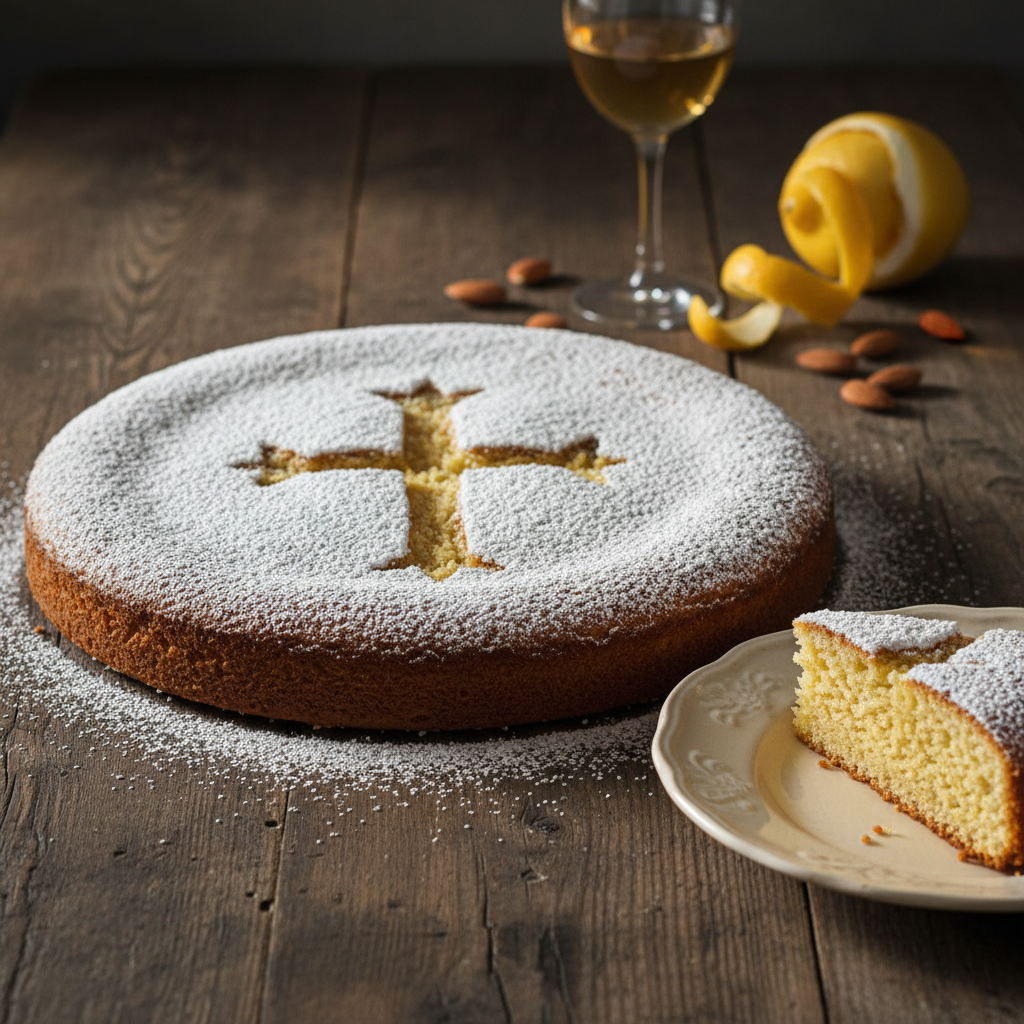
The cake is intrinsically linked to the Camino de Santiago (The Way of St. James), a famous pilgrimage route leading to the shrine of the apostle Saint James the Great in the cathedral of Santiago de Compostela. For centuries, weary pilgrims would arrive in the city and be greeted with this caloric, nutrient-dense cake to replenish their energy. The most distinctive feature of the cake, the Cross of Saint James (Cruz de Santiago) silhouetted in powdered sugar, was a later addition, popularized in 1924 by the ‘Casa Mora’ bakery in Santiago. This branding solidified the cake’s identity. In 2006, the European Union granted the Tarta de Santiago ‘Protected Geographical Indication’ (PGI) status. This means that to carry the authentic name within Europe, the cake must be made in the Autonomous Community of Galicia and contain at least 33% almonds by weight, ensuring the preservation of this culinary treasure.
Why This Recipe Works
This recipe works beautifully because it respects the fundamental chemistry of flourless baking. In standard cakes, wheat flour provides gluten, which creates a structural network that traps air and allows the cake to rise. In a Tarta de Santiago, we remove the flour entirely, which eliminates the risk of a tough or rubbery cake caused by overworking gluten. Instead, we rely on the protein structure of the eggs and the natural oils present in the almond flour.
The high ratio of almond flour to eggs ensures that the cake remains incredibly moist. Almonds are high in fat, and unlike butter which can solidify as it cools, the oils in almonds keep the crumb tender for days. Furthermore, the method of beating the eggs with sugar until they reach the ‘ribbon stage’ incorporates mechanical air into the batter. This provides the lift necessary to keep the cake from becoming a heavy brick, resulting in a texture that is dense but yielding. The addition of lemon zest and a pinch of salt is crucial; without them, the flavor of the almonds and sugar can be somewhat one-dimensional and cloying. The citrus oils cut through the richness of the nut fats, providing a bright top note that makes the deep almond flavor shine even brighter. By baking at a moderate temperature, we allow the center to set fully without scorching the high-sugar exterior, creating a perfect golden crust.
Why You’ll Love This Recipe
- ✓Naturally gluten-free and dairy-free options available.
- ✓Requires only 6 simple pantry staples.
- ✓Rich history dating back to the Middle Ages.
- ✓Stays moist for days due to high almond content.
- ✓Beautiful presentation with the St. James Cross stencil.
- ✓Perfect for novice bakers and experts alike.
Equipment You’ll Need
- ✓9-inch or 10-inch springform pan
- ✓Electric hand mixer or stand mixer
- ✓Large mixing bowl
- ✓Microplane or zester
- ✓Rubber spatula
- ✓St. James Cross stencil (printable)
- ✓Fine mesh sieve
Ingredients
- ✓2 1/2 cups (250g) almond flour or finely ground raw almonds
- ✓1 1/4 cups (250g) granulated sugar
- ✓5 large eggs, at room temperature
- ✓Zest of 1 large lemon
- ✓1/2 teaspoon ground cinnamon
- ✓1/4 teaspoon salt
- ✓Unsalted butter or oil for greasing the pan
- ✓Confectioners’ sugar (powdered sugar) for dusting
Instructions
- Preheat your oven to 350°F (175°C). Grease a 9-inch or 10-inch springform pan generously with butter or oil. You can also line the bottom with parchment paper for easier removal.
- In a large mixing bowl, combine the eggs and granulated sugar. Using an electric mixer, beat on high speed for about 3-5 minutes. The mixture should become pale yellow, thick, and increase significantly in volume (reaching the ribbon stage).
- Gently fold in the lemon zest, ground cinnamon, and salt using a rubber spatula. Be careful not to deflate the eggs too much.
- Gradually add the almond flour to the egg mixture. Fold it in gently but thoroughly until no dry streaks of almond flour remain. Ensure the nuts are evenly distributed throughout the batter.
- Pour the batter into the prepared springform pan. Smooth the top with your spatula to ensure an even bake.
- Bake in the center of the preheated oven for 30 to 40 minutes. The cake is done when the top is golden brown and a toothpick inserted into the center comes out clean or with just a few moist crumbs attached.
- Remove the cake from the oven and let it cool in the pan on a wire rack for 10 minutes. Then, run a thin knife around the edges to loosen it and remove the ring of the springform pan. Let it cool completely.
- Once fully cooled, place the St. James Cross stencil (or a stencil of your choice) in the center of the cake. Generously dust the top with confectioners’ sugar using a fine mesh sieve.
- Carefully lift the stencil straight up to reveal the design. Serve at room temperature.
Expert Cooking Tips
- ✓Use room temperature eggs to ensure they whip up to maximum volume.
- ✓If you can’t find almond flour, you can grind blanched or raw almonds in a food processor, but be careful not to turn them into almond butter.
- ✓Do not open the oven door for the first 25 minutes of baking to prevent the cake from sinking.
- ✓If the top is browning too quickly but the center is still jiggly, loosely cover the cake with aluminum foil.
- ✓Ensure the cake is completely cool before dusting with powdered sugar, otherwise, the sugar will melt into the cake.
Substitutions and Variations
While the traditional recipe is strict about its ingredients to maintain PGI status, home bakers can experiment. If you do not have lemons, orange zest provides a lovely, warmer citrus note that pairs well with cinnamon. For a more complex flavor, you can toast the almond flour lightly in a dry pan before mixing it into the batter; just let it cool completely first. If you are out of almond flour, you can substitute hazelnut flour for a ‘Tarta de Avellana’, though it will no longer be a Tarta de Santiago. For a dairy-free version, simply grease the pan with coconut oil or a neutral vegetable oil instead of butter. In terms of sweeteners, while granulated sugar provides the best structure, you can use caster sugar for a finer crumb. Avoid liquid sweeteners like honey or maple syrup as they will alter the moisture balance too drastically.
Common Mistakes to Avoid
The most common mistake with Tarta de Santiago is over-mixing the batter after adding the almond flour. The eggs provide the lift, and vigorous mixing will deflate the air bubbles you worked so hard to create, resulting in a dense, heavy puck. Another frequent error is under-baking. Because the cake is moist, it can be tricky to tell when it’s done. Rely on the toothpick test and the color; if it’s pale, it’s not ready. Also, using coarse almond meal instead of almond flour can result in a gritty texture; aim for ‘super fine’ almond flour if purchasing store-bought. Finally, do not skip the lemon zest. It might seem like a small addition, but without it, the cake lacks the aromatic dimension that distinguishes it from a plain nut cake.
Serving Suggestions
This cake is traditionally served at room temperature. It is the perfect companion to a strong cup of coffee, an espresso, or a café con leche, as the bitterness of the coffee cuts through the sweetness of the cake. In Galicia, it is also common to serve it with a glass of sweet dessert wine or a herbal liqueur like Orujo de Hierbas. For a more dessert-focused presentation, serve a slice with a dollop of unsweetened whipped cream and some fresh berries, such as raspberries or strawberries, to add a tart contrast. It also pairs beautifully with a scoop of vanilla bean ice cream.
Storage and Reheating Tips
Tarta de Santiago is one of those rare cakes that actually improves with age. The almond oils have time to distribute evenly, making the cake moister on the second day. Store the cake in an airtight container at room temperature for up to 4-5 days. There is no need to refrigerate it unless your kitchen is exceptionally hot and humid, as the refrigerator can dry out the texture. If you want to keep it longer, the cake freezes exceptionally well. Wrap individual slices or the whole cake tightly in plastic wrap, then a layer of foil, and freeze for up to 3 months. Thaw at room temperature before serving.
Nutrition Facts (Estimated)
| Serving Size | 1 slice |
| Calories | 380 |
| Fat | 24g |
| Saturated Fat | 2g |
| Unsaturated Fat | 21g |
| Trans Fat | 0g |
| Cholesterol | 95mg |
| Sodium | 25mg |
| Carbohydrates | 32g |
| Fiber | 4g |
| Sugar | 22g |
| Protein | 10g |
Frequently Asked Questions
Why is my Tarta de Santiago dry?
Dryness usually comes from overbaking or measuring the almond flour incorrectly. Spoon and level your flour rather than scooping the cup into the bag, which packs it down. Also, ensure you check the cake at the 30-minute mark.
Do I need baking powder?
No, the traditional recipe does not use chemical leaveners like baking powder or baking soda. The lift comes entirely from the air beaten into the eggs.
Can I use skin-on almonds?
Yes, you can. Traditional rustic versions often use unblanched almonds. It will result in a darker, speckled crumb and a slightly earthier flavor.
Where can I get the stencil?
You can easily find a ‘Cruz de Santiago’ stencil online to print and cut out on cardstock. Alternatively, kitchen supply stores specializing in Spanish cookware often sell metal ones.
Is this cake keto-friendly?
While it is gluten-free and high in fat, the traditional recipe uses a significant amount of sugar. To make it keto, you would need to substitute the sugar with a granulated erythritol or monk fruit blend.
Can I make this in a regular cake pan?
Yes, but it is harder to remove. If using a regular round pan, line the bottom and sides with parchment paper so you can lift the cake out after it cools.
Why did my cake sink in the middle?
This usually happens if the oven door was opened too early during baking, causing a sudden temperature drop, or if the eggs were under-whipped and couldn’t support the structure.
What is the texture supposed to be like?
It should be moist, slightly dense, and grainy from the nuts, similar to a frangipane, not fluffy like a sponge cake.
Conclusion
Baking a Tarta de Santiago is more than just following a recipe; it is a way to connect with a centuries-old Spanish tradition that celebrates the beauty of simple ingredients. Whether you are a gluten-free eater looking for a dessert that doesn’t taste like a compromise, or a history buff wanting to taste the flavors of the Camino de Santiago, this cake delivers on every front. Its rustic elegance makes it suitable for casual family gatherings and sophisticated dinner parties alike. We hope this guide helps you achieve the perfect almond cake. Don’t forget to print out your St. James Cross stencil for that authentic finishing touch!