Traditional Authentic Basbousa: The Ultimate Middle Eastern Semolina Cake
Traditional Middle Eastern Basbousa Semolina Cake Recipe
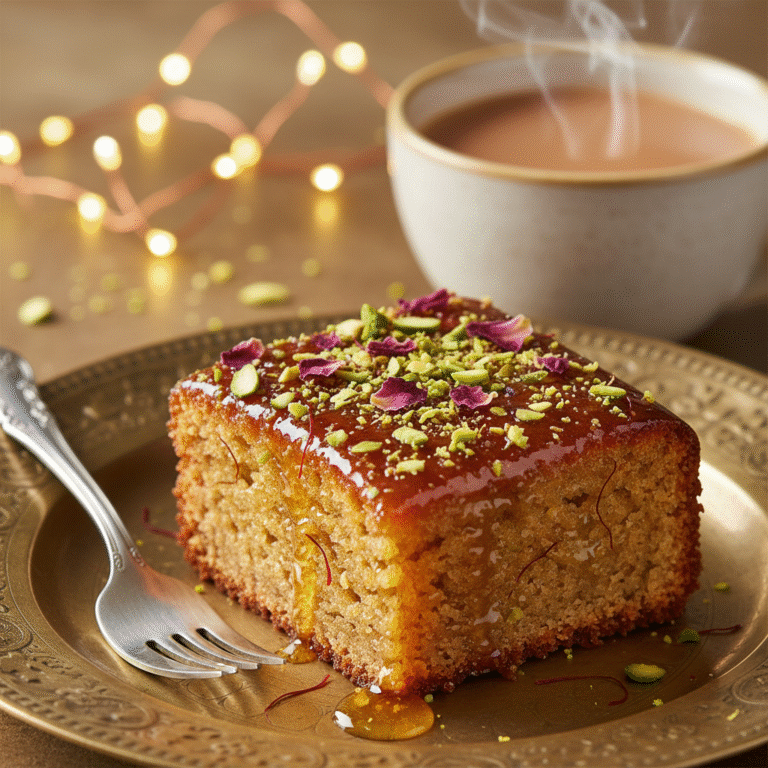
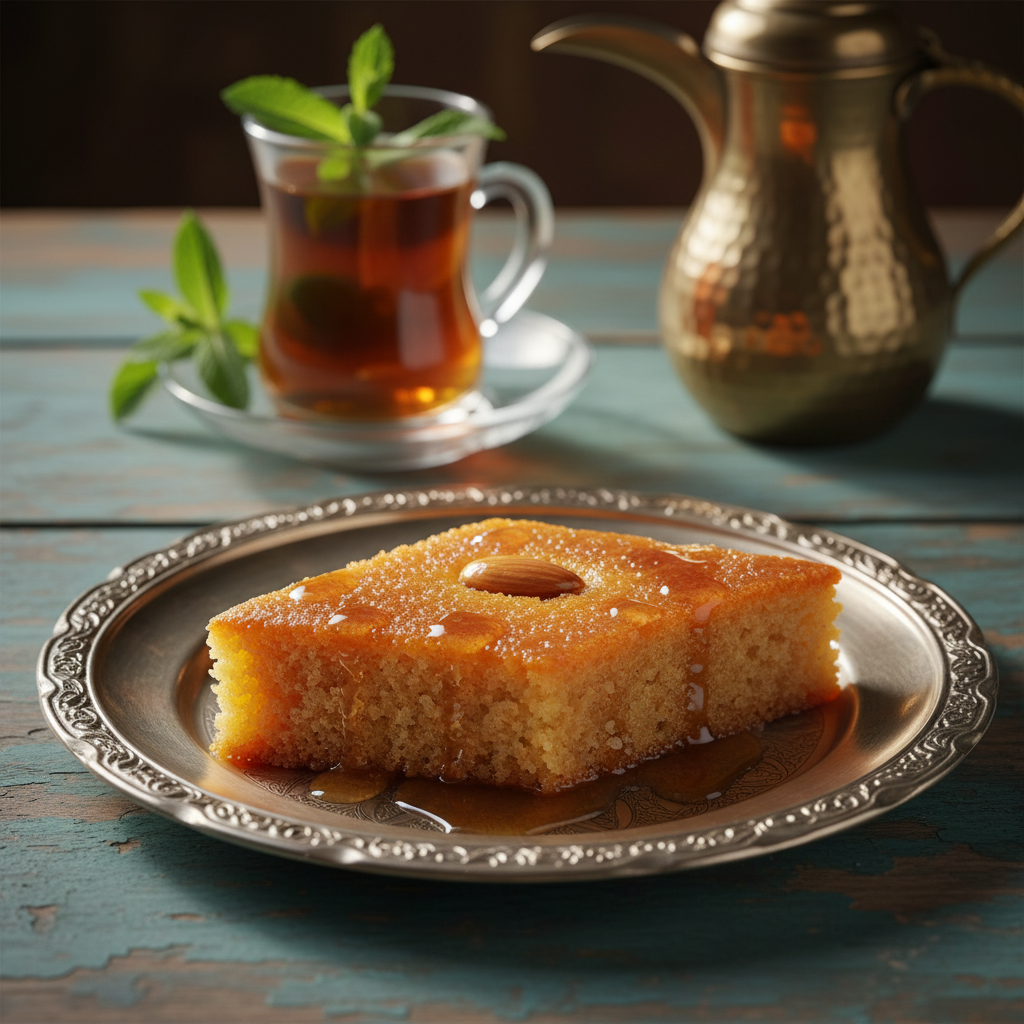
Moist, grainy, and soaked in aromatic rose-scented syrup, this authentic Basbousa recipe brings the magic of the Middle East to your kitchen. Perfectly golden and topped with crunchy almonds, this one-bowl semolina cake is the ultimate crowd-pleasing dessert.
15 minutes
35 minutes
50 minutes (plus resting)
15-20 squares
Dessert
Baking
Middle Eastern
Vegetarian
Basbousa is more than just a cake; it is a celebration of texture and tradition that has graced Middle Eastern tables for centuries. Unlike Western sponge cakes that rely on flour and eggs for lift, Basbousa relies on the unique, coarse texture of semolina wheat, which provides a delightful, sandy crumb that is incredibly satisfying to eat. The true magic of this dessert happens the moment it leaves the oven. While the cake is still piping hot, a cool, fragrant sugar syrup—infused with lemon and a hint of rose water or orange blossom water—is poured over the top. The semolina drinks up this liquid gold, transforming into a moist, sticky, and decadent treat that melts in your mouth. In Egypt, it is a staple of street food culture and family gatherings alike, often served with a dollop of fresh thick cream (qashta). The flavor profile is a sophisticated balance of nutty toasted semolina, rich buttery ghee, and floral sweetness. Whether you are hosting a dinner party or simply craving a sweet companion for your afternoon coffee, this recipe delivers an authentic taste of the Levant that is surprisingly easy to master at home. It is a dessert that actually improves with time, tasting even better the next day as the flavors meld and the syrup fully permeates every grain.
History & Origins
The history of Basbousa is as rich and layered as the cake itself, deeply rooted in the culinary traditions of the Ottoman Empire. While it is most famously associated with Egypt today, variations of this semolina cake are found throughout the Eastern Mediterranean and the Middle East, often under different names. In Turkey, a similar dish is known as ‘Revani,’ believed to have been named after the Ottoman poet Revani or to commemorate the conquest of Yerevan. In Lebanon and Syria, it is often called ‘Namoura,’ while in Palestine and Jordan, it is frequently referred to as ‘Hareesa.’ Despite the regional name changes, the core concept remains the same: a semolina-based batter sweetened with syrup. The Egyptian name ‘Basbousa’ is derived from the Arabic verb ‘bas,’ which means to mix flour with fat. This etymology perfectly describes the crucial step in the recipe where the semolina grains are coated in melted ghee before the liquid ingredients are added—a technique similar to the ‘creaming’ method or cutting fat into flour for pastry. Historically, this dish was a way to utilize semolina wheat, a staple crop in the region. Over centuries, it evolved from a simple peasant dish to a royal delicacy flavored with expensive ingredients like rose water, saffron, and high-quality clarified butter. Today, it stands as a symbol of hospitality and celebration across the Arab world.
Why This Recipe Works
This specific recipe works because it meticulously respects the science of semolina hydration and fat absorption. Many Basbousa recipes fail because they result in a cake that is either too dry and crumbly or a soggy, unappetizing mess. The secret to the perfect texture lies in the ‘sanding’ phase—coating the semolina grains with melted ghee before adding the yogurt. This creates a waterproof barrier around the gluten proteins, preventing the cake from becoming tough or rubbery, ensuring that characteristic ‘melt-in-your-mouth’ crumble. Furthermore, this recipe uses a combination of coarse and fine semolina (or just coarse), which is essential; using only fine flour or farina results in a dense, pudding-like texture that lacks the traditional bite. The ratio of sugar in the batter is kept moderate because the bulk of the sweetness comes from the syrup. Finally, the temperature contrast is non-negotiable: pouring cool or room-temperature syrup over the piping hot cake creates a vacuum effect, forcing the syrup deep into the center of the cake instantly. If both were hot, the cake would turn to mush; if both were cold, the syrup would simply pool on top. This recipe nails that scientific balance for a perfect result every time.
Why You’ll Love This Recipe
- ✓Authentic Texture: Uses coarse semolina for that classic sandy, melt-in-your-mouth crumb.
- ✓No Mixer Needed: A simple one-bowl recipe that requires no electric equipment.
- ✓Make-Ahead Friendly: Tastes even better the next day after the flavors have matured.
- ✓Eggless: A naturally egg-free dessert perfect for those with egg allergies.
- ✓Customizable: easy to adjust the aromatics with rose water, orange blossom, or vanilla.
- ✓Crowd Pleaser: Yields a large batch perfect for potlucks and holidays.
Equipment You’ll Need
- ✓9×13 inch baking pan or rectangular pyrex
- ✓Large mixing bowl
- ✓Medium saucepan (for syrup)
- ✓Whisk
- ✓Silicone spatula
- ✓Pastry brush
- ✓Knife or bench scraper
Ingredients
- ✓3 cups Coarse Semolina (must be coarse or a mix of coarse and fine)
- ✓1 cup Granulated Sugar (for the batter)
- ✓1 cup Unsweetened Desiccated Coconut (fine shred)
- ✓1 tsp Baking Powder
- ✓1 cup Ghee (clarified butter), melted and warm
- ✓1 cup Plain Whole Milk Yogurt (full fat is best)
- ✓1 tbsp Tahini (for greasing the pan)
- ✓20-25 Whole Blanched Almonds (for garnish)
- ✓— FOR THE SYRUP (SHARBAT) —
- ✓2 cups Granulated Sugar
- ✓1.5 cups Water
- ✓1 tbsp Fresh Lemon Juice
- ✓1 tsp Rose Water or Orange Blossom Water (optional)
Instructions
- 1. PREPARE THE SYRUP: In a saucepan, combine the 2 cups of sugar and 1.5 cups of water. Place over medium-high heat. Do not stir excessively to prevent crystallization. Bring to a boil.
- 2. SIMMER SYRUP: Once boiling, add the lemon juice and reduce heat to low. Let it simmer gently for 10 minutes until slightly thickened (it should be thinner than honey). Stir in the rose water or orange blossom water, remove from heat, and set aside to cool completely to room temperature.
- 3. PREP OVEN AND PAN: Preheat your oven to 375°F (190°C). Brush the bottom and sides of your 9×13 inch baking pan generously with the tablespoon of tahini. If you dislike tahini, you can use ghee, but tahini gives an authentic nutty bottom crust.
- 4. MIX DRY INGREDIENTS: In a large bowl, whisk together the coarse semolina, 1 cup sugar, desiccated coconut, and baking powder until well combined.
- 5. ADD THE FAT: Pour the melted warm ghee over the dry ingredients. Using your hands or a spatula, mix well until every grain of semolina is coated in the fat. This should look like wet sand. This step is crucial for the texture.
- 6. ADD YOGURT: Add the yogurt to the mixture. Mix gently just until combined. Do not overmix at this stage, or the cake will become tough and rubbery.
- 7. PAN THE BATTER: Transfer the batter to the prepared pan. Wet your hands slightly with water and press the batter down firmly and evenly into the pan. Smooth the surface.
- 8. SCORE AND GARNISH: Using a sharp knife, score the batter into diamond or square shapes (cutting about halfway deep). Place one blanched almond in the center of each square, pressing it down slightly.
- 9. BAKE: Bake in the preheated oven for 30 to 40 minutes. The edges should be dark golden brown, and the top should be a rich golden color. If the top is pale but edges are done, broil for 1-2 minutes, watching closely.
- 10. SOAK WITH SYRUP: Remove the cake from the oven. Immediately pour the cooled syrup over the hot cake. It will sizzle. Pour evenly over the entire surface. It may look like too much syrup, but the semolina will absorb it.
- 11. REST: Let the Basbousa cool completely in the pan for at least 2 hours before cutting along the scored lines. This allows the cake to set and the syrup to distribute evenly.
- 12. SERVE: Serve at room temperature, optionally with a side of clotted cream (ashta) or tea.
Expert Cooking Tips
- ✓Use Coarse Semolina: This is the most critical tip. Using flour or fine semolina will result in a dense cake. Look for bags labeled ‘Coarse Semolina’ or ‘Sooji’.
- ✓Don’t Skimp on Ghee: High-quality ghee provides the signature flavor. Butter contains water which can alter the texture, so clarified butter or ghee is superior.
- ✓The Temperature Rule: Remember the golden rule of soaking cakes—Hot Cake + Cool Syrup. This ensures absorption without sogginess.
- ✓Tahini Grease: Greasing the pan with tahini adds a subtle savory note that contrasts beautifully with the sweet syrup, and it prevents sticking better than butter.
- ✓Resting is Key: Do not try to cut or serve the Basbousa immediately. It needs time to drink the syrup and firm up. Cutting it hot will cause it to crumble apart.
- ✓Desiccated Coconut: Ensure your coconut is unsweetened and finely shredded. Large flakes will disrupt the texture of the slice.
Substitutions and Variations
While tradition dictates specific ingredients, there is room for adaptation. If you cannot find Ghee, you can clarify your own butter by melting it and skimming off the milk solids, or use high-quality unsalted butter (though the texture will be slightly softer). For the dairy component, plain whole milk yogurt is best, but sour cream or buttermilk can work in a pinch, adding a slightly tangier flavor. Vegan adaptations are possible by using a high-quality vegan butter block and a thick coconut yogurt or almond milk yogurt, though the binding properties may differ slightly. If you have a nut allergy, simply omit the almonds on top or replace them with pumpkin seeds. The coconut can be omitted if you prefer a plain semolina cake, but you may need to add an extra tablespoon of semolina to balance the dry volume. For the syrup, you can substitute honey for some of the sugar, but it will change the flavor profile significantly to be more like a Greek Melomakarona.
Common Mistakes to Avoid
The most common mistake is overmixing the batter after adding the yogurt. Once wet ingredients hit the flour, gluten development begins; overworking it yields a tough, rubbery cake rather than a crumbly one. Another frequent error is under-baking. Basbousa should be a deep golden brown, not pale yellow. If it is pale, it will be mushy after adding the syrup. A third mistake is the syrup temperature mismatch. If you pour hot syrup on a hot cake, you get pudding. If you pour cold syrup on a cold cake, it won’t absorb. Stick to the hot cake/cool syrup method. Finally, failing to cut the cake before baking (scoring) can make it difficult to get clean slices later, although scoring is primarily aesthetic and for almond placement.
Serving Suggestions
Basbousa is traditionally served at room temperature, making it an excellent make-ahead dessert for parties. It pairs exceptionally well with unsweetened beverages to cut through the sweetness. A cup of strong Turkish coffee, Arabic cardamom tea, or simple black tea is the perfect accompaniment. For an elevated presentation, serve each square with a dollop of ‘Ashta’ (Middle Eastern clotted cream), Mascarpone, or even a scoop of unsweetened whipped cream. A sprinkle of crushed pistachios or dried rose petals over the cream adds a pop of color and elegance. In the summer, it can be served alongside fresh figs or berries to add a fresh, acidic contrast to the dense, sugary cake.
Storage and Reheating Tips
Basbousa stores remarkably well and is one of those rare desserts that tastes better the next day. It can be kept in the baking pan, tightly covered with plastic wrap or foil, at room temperature for up to 3 days. If you live in a very hot or humid climate, it is safer to store it in the refrigerator for up to 1 week, but bring it to room temperature before serving for the best texture. Basbousa also freezes very well. To freeze, wrap individual squares tightly in plastic wrap and then place them in an airtight container or freezer bag. They can be frozen for up to 3 months. Thaw at room temperature for a few hours before enjoying.
Nutrition Facts (Estimated)
| Serving Size | 1 square |
| Calories | 280 |
| Fat | 12g |
| Saturated Fat | 7g |
| Unsaturated Fat | 4g |
| Trans Fat | 0g |
| Cholesterol | 25mg |
| Sodium | 45mg |
| Carbohydrates | 42g |
| Fiber | 1g |
| Sugar | 22g |
| Protein | 4g |
Frequently Asked Questions
Why is my Basbousa hard and dry?
This usually happens if the batter was overmixed (developing too much gluten) or if there wasn’t enough syrup poured over it. Ensure you use all the syrup prepared in the recipe; the cake will absorb it.
Can I use cornmeal or polenta instead of semolina?
No, cornmeal has a distinct corn flavor and a different absorption rate that does not work for this traditional dessert. You must use durum wheat semolina.
Why did my cake fall apart when I cut it?
You likely cut it while it was still too hot. Basbousa requires at least 2 hours of resting time for the semolina to absorb the syrup and for the structure to set.
What is the difference between Basbousa and Harissa/Namoura?
They are very similar and often used interchangeably. However, some regional variations of Harissa are thicker and denser, while Egyptian Basbousa is often lighter and contains coconut. Namoura is the Lebanese name for the same dish.
Do I have to use rose water?
No, it is optional. If you do not like floral flavors, you can substitute it with vanilla extract or simply use lemon zest in the syrup for a citrusy finish.
Can I reduce the sugar in the syrup?
You can reduce it slightly, but be careful. The syrup is not just for sweetness; it provides the necessary moisture and preservation for the cake. Reducing it too much will result in a dry cake.
Why do I need to grease with Tahini?
Tahini prevents sticking better than butter due to its oil content and adds a unique, savory nutty flavor that contrasts perfectly with the sweet syrup. It is the traditional method.
Is fine semolina okay to use?
If you only have fine semolina, the cake will be denser and more cake-like rather than grainy. It is edible and tasty, but not texturally authentic. A mix of coarse and fine is the best compromise if you can’t find pure coarse.
Can I make this vegan?
Yes, substitute the ghee for high-quality vegan butter or coconut oil, and use a thick plant-based yogurt. The texture might be slightly different but still delicious.
How do I know when the syrup is the right consistency?
The syrup should boil and then simmer for about 10 minutes. It should feel slightly sticky between your fingers when cooled, similar to a thin maple syrup, but not as thick as honey.
Conclusion
Mastering this Traditional Basbousa recipe unlocks a cornerstone of Middle Eastern hospitality. It is a dessert that speaks of history, family, and the simple pleasure of sharing sweet moments. The contrast between the crisp, tahini-infused bottom, the fluffy, syrup-soaked center, and the crunchy almond on top is a sensory delight that everyone should experience. Whether you call it Basbousa, Namoura, or Revani, this golden semolina cake is sure to become a cherished favorite in your baking repertoire. Don’t forget to pin this recipe for your next gathering!