Authentic Mexican Tres Leches Cake: The Ultimate Moist & Milky Dessert
Traditional Mexican Tres Leches Cake Recipe
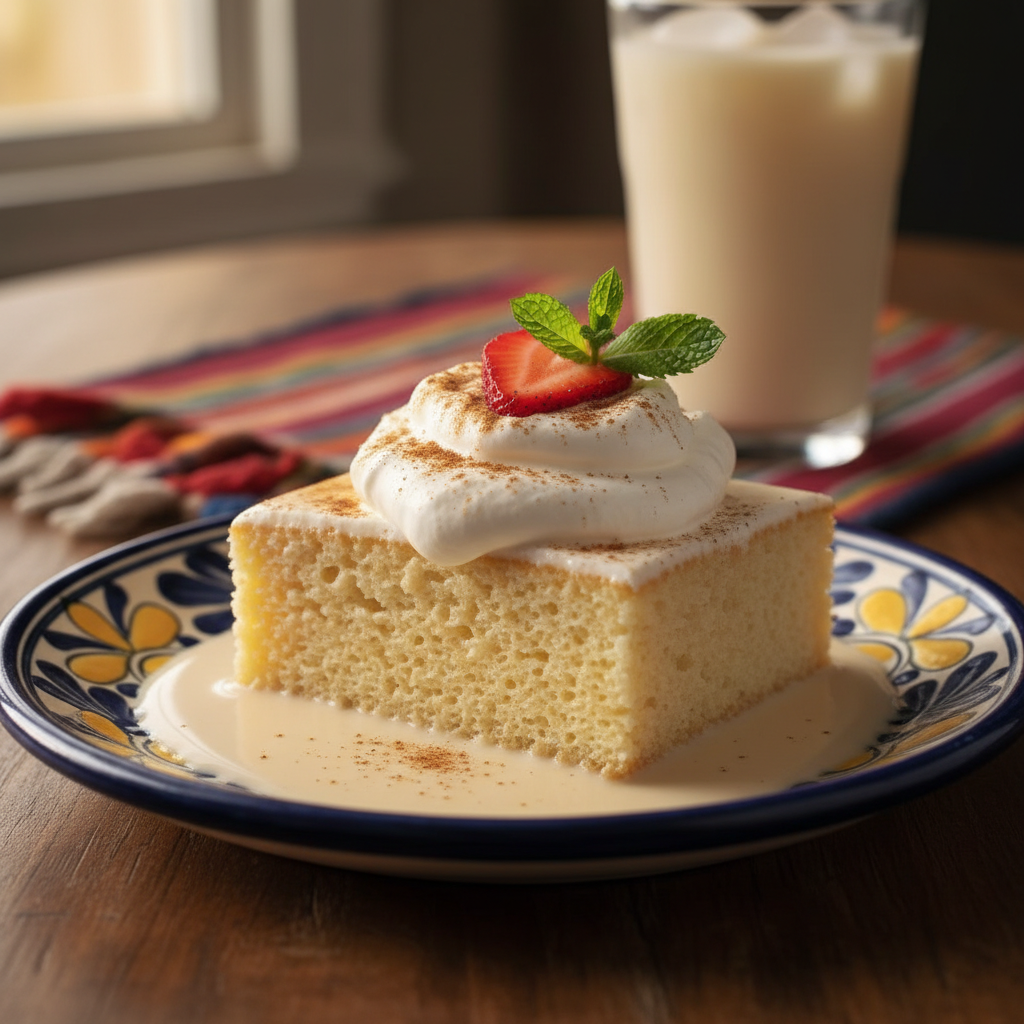
Experience the decadence of a classic Tres Leches Cake, a light sponge soaked in a sweet trio of milks and topped with fluffy whipped cream. This authentic recipe delivers the perfect balance of rich moisture and airy texture, making it a guaranteed crowd-pleaser for any celebration.
30 minutes
30 minutes
4 hours (includes cooling and soaking)
12 servings
Dessert
Baking
Mexican
Vegetarian
If there is one dessert that perfectly captures the essence of indulgence without being overly heavy, it is the Traditional Mexican Tres Leches Cake. This masterpiece of Latin American baking is a study in textures and subtle sweetness. Imagine a cake that defies the laws of physics: it is thoroughly soaked in liquid yet retains its structural integrity, never becoming mushy or dissolving into a mess. The magic lies in the sponge—a light, airy vessel created by whipping eggs to their maximum volume—which acts like a culinary sponge, eagerly drinking up the rich, creamy concoction of three milks.
The first bite is always a revelation. Cool, refreshing, and dripping with sweet milk, the cake melts in your mouth, followed immediately by the cloud-like lightness of fresh whipped cream and a hint of cinnamon or fresh berries. It is a dessert that feels nostalgic even if you are trying it for the first time. Whether served at a birthday party, a Cinco de Mayo celebration, or simply as a weekend treat, this cake commands attention. Unlike dense butter cakes or rich chocolate gateaus, the Tres Leches is surprisingly refreshing, largely due to the fact that it is served chilled. The combination of sweetened condensed milk, evaporated milk, and heavy cream creates a unique flavor profile that is creamy, caramel-like, and deeply satisfying. In this comprehensive guide, we will walk you through every step to ensure your sponge rises high and soaks up every drop of that delicious liquid gold.
History & Origins
The origins of Tres Leches Cake (Pastel de Tres Leches) are a subject of delicious debate and rich culinary history. While it is most famously associated with Mexico today, its roots likely span across Latin America and even trace back to Medieval Europe. The concept of soaking cakes in liquid is not new; it echoes the English trifle or the Italian tiramisu, as well as soaked cakes from the Iberian Peninsula that were brought to the Americas during the colonial era. In the 19th century, recipes for ‘ante’ (soaked desserts) were common in Mexico, often involving wine or custard.
However, the specific iteration of the ‘Three Milks’ cake gained massive popularity in the mid-20th century. Many food historians point to the industrialization of dairy and the proliferation of canned goods as the catalyst. Specifically, Nestlé is often credited with cementing the recipe in the cultural zeitgeist. In the 1940s, the company printed a recipe for Tres Leches on the labels of their sweetened condensed milk and evaporated milk cans sold across Latin America. This marketing genius helped standardize the recipe and spread its popularity from Mexico to Nicaragua, Cuba, Puerto Rico, and beyond. While Nicaragua also claims strong ties to the cake’s invention, it has undoubtedly become a staple of Mexican cuisine, evolving from a home-baking favorite to a dessert found in high-end restaurants worldwide. Today, it stands as a symbol of celebration and family, bridging generations with its sweet, milky legacy.
Why This Recipe Works
This specific recipe works because it adheres strictly to the science of a true sponge cake, which is critical for the ‘Tres Leches’ mechanism to function correctly. Many modern adaptations mistakenly use butter or oil in the base cake, creating a crumb structure that is too dense or oily to absorb the milk mixture effectively. Our recipe utilizes the ‘genoise’ style method, where eggs are separated and whipped to incorporate air. The egg whites provide the structure and lift, creating a porous network within the crumb.
When this dry, airy sponge is baked, it is thirsty. It yearns for moisture. This is why, when you pour the heavy three-milk syrup over it, the cake absorbs it like a dry sponge in water, rather than letting the liquid pool at the bottom or turn the cake into sludge. Furthermore, the ratio of the soaking liquid is balanced to ensure sweetness without cloying sugariness. We use a specific blend of sweetened condensed milk for density and sugar, evaporated milk for a cooked-milk richness, and heavy cream to cut the sweetness with pure fat. Finally, allowing the cake to rest overnight allows the flavors to meld and the liquid to distribute evenly, ensuring every single bite is as moist as the last. This patience is the secret ingredient that transforms a good cake into a great one.
Why You’ll Love This Recipe
- ✓Authentic sponge base absorbs liquid perfectly without disintegrating.
- ✓Perfect balance of sweetness using a traditional three-milk blend.
- ✓Served chilled for a refreshing, melt-in-your-mouth experience.
- ✓Can be made a day in advance, making it perfect for parties.
- ✓Versatile topping options from cinnamon dusting to fresh berries.
Equipment You’ll Need
- ✓9×13 inch baking pan
- ✓Stand mixer or electric hand mixer
- ✓Large mixing bowls
- ✓Rubber spatula
- ✓Whisk
- ✓Fork or skewer (for poking holes)
- ✓Measuring cups and spoons
Ingredients
- ✓1 cup all-purpose flour
- ✓1 1/2 teaspoons baking powder
- ✓1/4 teaspoon salt
- ✓5 large eggs, separated
- ✓1 cup granulated sugar, divided
- ✓1/3 cup whole milk
- ✓1 teaspoon vanilla extract
- ✓1 can (14 oz) sweetened condensed milk
- ✓1 can (12 oz) evaporated milk
- ✓1/2 cup heavy whipping cream (for the soak)
- ✓2 cups heavy whipping cream (for the topping)
- ✓2 tablespoons powdered sugar
- ✓Ground cinnamon, for garnish
- ✓Fresh strawberries or maraschino cherries, for garnish
Instructions
- Preheat your oven to 350°F (175°C). Grease and flour a 9×13 inch baking pan generously.
- In a medium bowl, sift together the all-purpose flour, baking powder, and salt. Set aside.
- Separate the eggs carefully. Place the egg yolks in a large bowl and the egg whites in the bowl of a stand mixer.
- Beat the egg yolks with 3/4 cup of granulated sugar on high speed until the yolks are pale yellow and thick. Stir in the milk and vanilla extract.
- Gently fold the flour mixture into the egg yolk mixture using a rubber spatula. Do not overmix; stir just until combined.
- In the stand mixer, beat the egg whites on high speed. Gradually pour in the remaining 1/4 cup of sugar as you beat. Continue whipping until stiff peaks form.
- Gently fold the egg whites into the batter. Do this in two batches to avoid deflating the air. Use a gentle under-and-over motion.
- Pour the batter into the prepared pan and smooth the top. Bake for 25-30 minutes, or until a toothpick inserted into the center comes out clean.
- Remove the cake from the oven and let it cool completely on a wire rack.
- While the cake cools, whisk together the sweetened condensed milk, evaporated milk, and 1/2 cup heavy cream in a small pitcher.
- Once the cake is cool, use a fork or skewer to poke holes all over the surface. Be thorough—pierce through to the bottom.
- Slowly pour the milk mixture over the entire cake. Try to distribute it evenly, focusing on the edges which tend to be drier.
- Cover the cake with plastic wrap and refrigerate for at least 1 hour, preferably overnight, to allow the mixture to soak in.
- Before serving, whip the remaining 2 cups of heavy cream with the powdered sugar until soft-to-stiff peaks form.
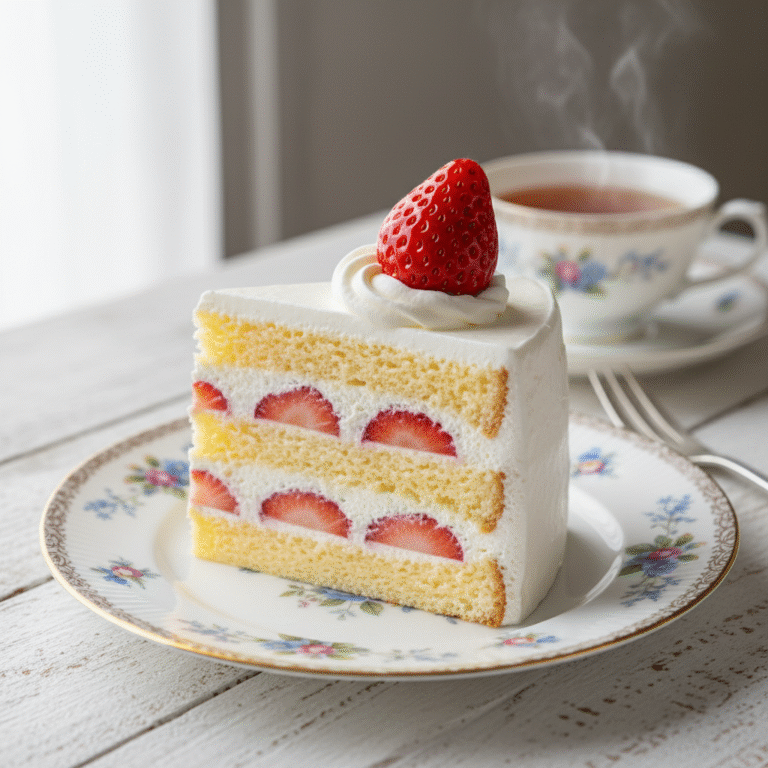
- Spread the whipped cream over the soaked cake. Dust with ground cinnamon and top with fresh fruit if desired.
- Slice into squares and serve chilled.
Expert Cooking Tips
- ✓Ensure your eggs are at room temperature before separating; this helps them whip to a greater volume.
- ✓Do not rush the folding process. Keeping the air in the egg whites is crucial for a sponge that can hold the liquid.
- ✓Let the cake cool fully before soaking. A hot cake can turn mushy if soaked immediately.
- ✓If the milk mixture pools on top, stop pouring, wait a few minutes for it to absorb, and then continue.
- ✓Use a serrated knife to cut the cake for clean slices through the whipped cream.
Substitutions and Variations
While the traditional recipe is best, there are several substitutions you can make based on dietary needs or pantry availability. For the flour, cake flour can be used instead of all-purpose for an even finer crumb, though all-purpose holds up better to the heavy soak. If you are lactose intolerant, this is a difficult recipe to adapt, but you can try using coconut milk (full fat), sweetened condensed coconut milk, and an oat-based whipping cream, though the flavor profile will shift towards tropical. For the topping, a stable meringue is a traditional alternative to whipped cream in some regions. If you don’t have heavy cream for the soak, you can substitute whole milk, though the result will be slightly less rich. Vanilla extract can be swapped for rum or brandy in the soaking liquid for a ‘borracho’ (drunken) style cake.
Common Mistakes to Avoid
The most common mistake is failing to beat the eggs sufficiently. The volume of this cake comes almost entirely from the air trapped in the eggs. If you don’t whip the whites to stiff peaks or the yolks until pale, the cake will be flat and dense. Another major error is rushing the soak. If you try to serve the cake immediately after pouring the milk, you will have a dry center and a puddle of milk at the bottom of the pan. The cake needs time to act as a wick and draw the moisture upward. Lastly, avoid over-baking the sponge. A dry sponge is good for soaking, but a burnt or tough sponge will taste bitter and have a rubbery texture even after soaking.
Serving Suggestions
Tres Leches is a rich dessert, so it pairs beautifully with acidic or bitter elements to cut through the sweetness and creaminess. Serve it with a strong cup of black coffee or an unsweetened espresso. Fresh berries, particularly strawberries, raspberries, or tart blackberries, are the classic accompaniment as their acidity balances the condensed milk. For a tropical twist, top with mango slices or toasted coconut flakes. In Mexico, it is often served simply with a dusting of cinnamon and a maraschino cherry in the center of each slice. It is best served straight from the refrigerator.
Storage and Reheating Tips
Because of the dairy content, this cake must be kept refrigerated. It cannot sit out on the counter for long periods, especially in warm weather. Cover the pan tightly with plastic wrap or transfer leftovers to an airtight container. The cake actually improves after the first 24 hours as the flavors meld. It will keep well in the refrigerator for up to 4 days. Freezing is generally not recommended for a fully assembled Tres Leches cake, as the texture of the soaked sponge and whipped cream can suffer upon thawing. However, you can freeze the baked sponge cake (unsoaked) for up to a month, then thaw and soak it a day before you plan to serve it.
Nutrition Facts (Estimated)
| Serving Size | 1 slice |
| Calories | 450 |
| Fat | 22g |
| Saturated Fat | 14g |
| Unsaturated Fat | 6g |
| Trans Fat | 0.5g |
| Cholesterol | 160mg |
| Sodium | 180mg |
| Carbohydrates | 54g |
| Fiber | 0.5g |
| Sugar | 38g |
| Protein | 9g |
Frequently Asked Questions
Why is my Tres Leches cake soggy?
A little sogginess is intentional, but if it is falling apart, you may have used too much liquid for the amount of flour, or the sponge structure wasn’t strong enough (likely due to under-whipped eggs).
Can I make this cake ahead of time?
Yes, in fact, it is recommended! Making it 24 hours in advance allows the milk soak to distribute perfectly throughout the cake.
Do I have to use all three milks?
For the authentic flavor and texture, yes. The combination of evaporated, condensed, and heavy cream creates the signature taste. Omitting one will change the consistency.
Can I use a boxed cake mix?
You can, specifically a yellow or white cake mix, but the texture will be different. Box mixes often contain oil/butter which makes them denser and less absorbent than a true scratch-made sponge.
How do I prevent the ‘eggy’ smell?
Ensure you use high-quality vanilla extract and beat the yolks thoroughly with sugar. The ‘eggy’ smell usually comes from under-cooked or under-flavored egg yolks.
Can I add alcohol to the recipe?
Absolutely. A splash of dark rum, brandy, or Kahlúa added to the milk mixture is a delicious and popular variation.
Why did my cake sink in the middle?
This usually happens if the oven door was opened too early during baking, or if the egg whites were over-beaten to the point of breaking before folding.
Is this cake gluten-free?
The traditional recipe is not, as it uses wheat flour. You can substitute a 1:1 gluten-free baking flour blend, but the sponge may be slightly more fragile.
Conclusion
Making a Traditional Mexican Tres Leches Cake is a labor of love that yields one of the most rewarding desserts imaginable. It is a celebration of dairy, sugar, and simple baking techniques coming together to create something greater than the sum of its parts. While it requires a bit of patience to let the soak do its magic, the result is a dessert that is beloved by adults and children alike. Whether you are honoring your heritage or exploring Mexican cuisine for the first time, this recipe is a surefire way to bring joy to your table. So, grab your mixer, separate those eggs, and get ready to enjoy the sweetest, milkest slice of cake you’ve ever had.