Authentic Italian Tiramisu: The Ultimate No-Bake Dessert Cake
Traditional Italian Tiramisu Cake Recipe
Experience the magic of Italy with this authentic Tiramisu recipe. Featuring layers of espresso-soaked ladyfingers and a rich, velvety mascarpone cream, this classic ‘pick-me-up’ dessert is the perfect finale to any dinner party.
45 minutes
10 minutes
4 hours 55 minutes (includes chilling)
9-12 servings
Dessert
No-Bake / Chilling
Italian
Vegetarian
There are few desserts in the culinary world as universally adored and instantly recognizable as Tiramisu. The name itself, translating roughly to ‘pick me up’ or ‘cheer me up’ in Italian, promises a burst of energy and happiness with every bite, and this traditional recipe delivers exactly that. This isn’t just a dessert; it is a textural masterpiece that balances the bold, robust bitterness of high-quality espresso with the delicate, sweet creaminess of mascarpone cheese. Unlike many modern adaptations that rely on heavy cream fillers or cream cheese, our approach honors the classic Italian method while ensuring a stable structure that slices like a dream.
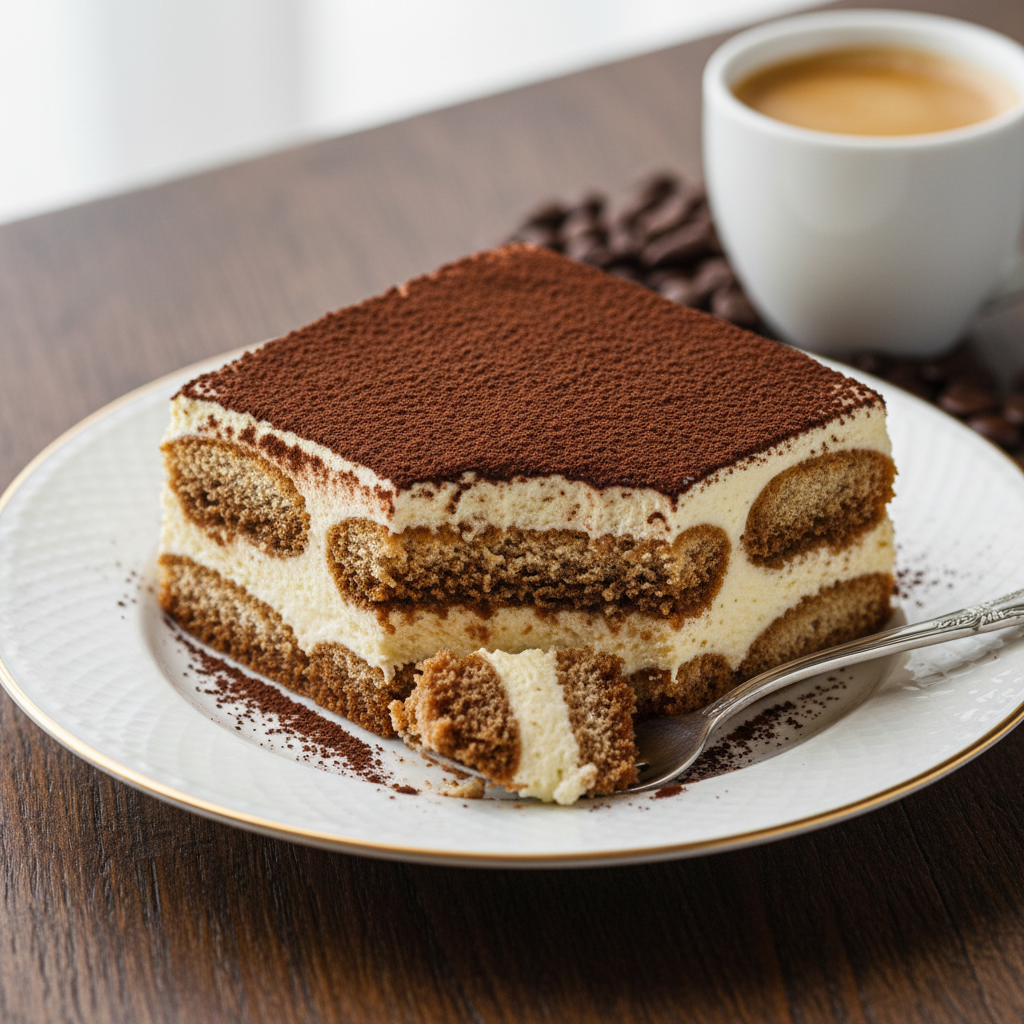
Imagine sinking your fork into a dusting of dark cocoa powder, cutting through a cloud-like layer of zabaglione-enriched cream, and reaching the sponge-like ladyfingers that have been perfectly kissed—not drowned—in strong coffee and Marsala wine. The result is a sophisticated harmony of flavors where no single element overpowers the other. The slight booziness of the Marsala cuts through the richness of the egg yolks, while the sugar provides just enough sweetness to counter the cocoa’s bite.
This recipe is designed for the home baker who wants restaurant-quality results. It requires patience, specifically the chilling time which allows the flavors to meld and the structure to set, but the actual hands-on time is surprisingly minimal. Whether you are hosting a festive holiday gathering, a romantic dinner date, or simply craving a slice of Italian luxury, this Tiramisu cake serves as the ultimate centerpiece. It is a celebration of simple, high-quality ingredients coming together to create something far greater than the sum of its parts.
History & Origins
While Tiramisu feels like an ancient dessert passed down through centuries of Italian nonnas, its documented history is surprisingly recent and somewhat controversial. The most widely accepted origin story traces the dish back to the 1960s or early 1970s in the Veneto region of Italy, specifically at the restaurant ‘Le Beccherie’ in Treviso. It is said that confectioner Roberto Linguanotto and the restaurant owner’s wife, Alba Campeol, developed the dessert as a revitalizing treat, drawing inspiration from ‘sbatudin,’ a simple rustic mixture of egg yolks and sugar beaten together to build energy.
However, the origins of Tiramisu are often disputed, with the neighboring region of Friuli-Venezia Giulia also laying claim to the invention. In 2017, the Italian Ministry of Agricultural, Food and Forestry Policies officially added Tiramisu to the list of traditional agri-food products of the Friuli-Venezia Giulia region, sparking a friendly (and sometimes heated) culinary rivalry between the two areas. Despite the official decrees, Treviso remains the spiritual home for many purists.
Folklore offers a more colorful, albeit likely apocryphal, history. Some legends suggest that a similar dessert was created in the 17th century in honor of the Grand Duke Cosimo III de’ Medici, or even more scandalously, that it was served in Venetian brothels to offer customers an energy boost before they returned to their wives. Regardless of whether it was born in a royal court, a brothel, or a mid-century restaurant kitchen, Tiramisu rapidly conquered the globe in the 1980s, becoming a staple on Italian-American menus and a symbol of Italian indulgence worldwide.
Why This Recipe Works
This recipe succeeds where others fail because it focuses on the structural integrity of the cream and the precise saturation of the ladyfingers. Many home recipes result in a soggy, soupy mess because the ladyfingers are dipped for too long or the cream lacks stability. Here, we utilize a ‘pate à bombe’ or sabayon method for the egg yolks. By whisking the yolks and sugar over a double boiler (bain-marie), we not only gently pasteurize the eggs for safety but also create a thick, airy, and stable emulsion. This warm foam dissolves the sugar completely, preventing any grittiness, and creates a sturdy base for the mascarpone.
Furthermore, we insist on using authentic Savoiardi biscuits (crisp ladyfingers) rather than soft sponge cake. The dry, sugary crust of the Savoiardi is engineered to absorb liquid while retaining texture. We also incorporate a specific ratio of heavy cream folded into the mascarpone mixture. While some purists use egg whites, whipped heavy cream offers a more reliable stability and a velvety mouthfeel that holds up better when sliced as a cake. The addition of sweet Marsala wine in both the coffee soak and the cream creates a flavor bridge that unites the bitter coffee and the sweet cheese, ensuring a complex flavor profile in every bite.
Why You’ll Love This Recipe
- ✓Uses the traditional Sabayon method for a safe, rich, and creamy texture.
- ✓Perfectly balanced sweetness that doesn’t overpower the espresso.
- ✓Stable enough to be sliced cleanly like a cake.
- ✓No baking required—perfect for keeping the kitchen cool.
- ✓Can be made up to two days in advance for stress-free entertaining.
Equipment You’ll Need
- ✓9×9 inch square baking dish or 8-inch springform pan
- ✓Stand mixer or electric hand mixer
- ✓Heat-proof mixing bowl (glass or metal)
- ✓Saucepan (for double boiler)
- ✓Rubber spatula
- ✓Shallow bowl (for dipping coffee)
- ✓Fine mesh sieve (for dusting cocoa)
Ingredients
- ✓6 large egg yolks
- ✓3/4 cup granulated white sugar
- ✓16 oz (450g) Mascarpone cheese, room temperature
- ✓1 cup heavy whipping cream, cold
- ✓1 1/2 cups strong espresso or very strong coffee, room temperature
- ✓1/4 cup Sweet Marsala wine (optional, can substitute dark rum)
- ✓2 packages (approx. 24-30) Savoiardi (Italian Ladyfingers)
- ✓2 tbsp Unsweetened cocoa powder, for dusting
- ✓1 tsp Vanilla extract
- ✓1 pinch Fine sea salt
Instructions
- Brew the espresso or strong coffee and pour it into a shallow bowl. Stir in 2 tablespoons of the Marsala wine (if using) and set aside to cool completely to room temperature.
- Prepare a double boiler: Fill a saucepan with about an inch of water and bring to a gentle simmer. Place a heat-proof bowl over the pot (ensure the bottom doesn’t touch the water).
- In the heat-proof bowl, whisk together the egg yolks and sugar. Whisk constantly over the simmering water for about 8-10 minutes. The mixture should become pale, thick, and double in volume (reaching 160°F/71°C). Remove from heat and let it cool slightly.
- While the yolks cool, whip the cold heavy cream and vanilla extract in a separate bowl until stiff peaks form. Be careful not to over-whip into butter.
- Add the room temperature mascarpone to the cooled egg yolk mixture. Whisk gently until smooth and combined. Do not over-mix or the mascarpone may curdle.
- Gently fold the whipped cream into the mascarpone/yolk mixture in two batches using a rubber spatula. Fold until no white streaks remain, keeping the mixture airy.
- Assemble the cake: Quickly dip each ladyfinger into the cooled coffee mixture. Dip for only 1-2 seconds per side—do not soak them! Arrange a layer of dipped ladyfingers in the bottom of your dish (you may need to break some to fit).
- Spread half of the mascarpone cream mixture evenly over the first layer of ladyfingers.
- Repeat the dipping process with the remaining ladyfingers to create a second layer on top of the cream.
- Top with the remaining mascarpone cream, smoothing the surface with a spatula or offset knife.
- Cover the dish with plastic wrap (not touching the surface) and refrigerate for at least 4 hours, preferably overnight. This is crucial for the cake to set.
- Just before serving, remove from the fridge and generously dust the top with unsweetened cocoa powder using a fine mesh sieve. Slice and serve cold.
Expert Cooking Tips
- ✓Room Temperature Mascarpone: Ensure your mascarpone is out of the fridge for 30 minutes before mixing. If it’s too cold, it will be lumpy; if it’s too warm, it might separate.
- ✓The Dip Technique: The most common mistake is over-soaking the ladyfingers. A quick ‘in-and-out’ is all you need. They will continue to absorb moisture from the cream as they sit.
- ✓Coffee Strength: Use the strongest coffee you can make. Espresso is ideal, but a very strong drip coffee or Moka pot brew works well. Weak coffee results in a bland dessert.
- ✓Chill Time: Do not rush the chilling process. 6 to 24 hours is the sweet spot. This allows the ladyfingers to soften into a cake-like texture and the cream to firm up for slicing.
- ✓Quality Cocoa: Since the cocoa powder is the first thing you taste, use a high-quality Dutch-processed cocoa for a smoother, less acidic flavor.
Substitutions and Variations
If you cannot find Mascarpone, you can try a mixture of cream cheese and heavy cream, though the flavor will be tangier and less authentic. For the alcohol, Sweet Marsala is traditional, but Dark Rum, Brandy, or coffee liqueur (like Kahlúa) are excellent alternatives. To make this alcohol-free, simply omit the booze and add a teaspoon of rum extract or just stick to the coffee. If you are worried about raw eggs (even though we cook them in this recipe), you can omit the yolks entirely and increase the heavy cream to 2 cups, sweetening it with powdered sugar, though this results in a lighter, less rich cream. Gluten-free ladyfingers can be purchased online or in specialty stores to make this dish gluten-free.
Common Mistakes to Avoid
The biggest tragedy in Tiramisu making is a soggy bottom. This happens when the coffee is hot when dipping (it melts the cookie instantly) or when the ladyfingers are submerged for too long. Another common issue is a grainy cream, which occurs if the sugar isn’t fully dissolved in the yolks or if the mascarpone is over-beaten, causing it to separate into butter and whey. Always fold gently. Finally, don’t dust the cocoa powder until right before serving; if you do it the night before, the cocoa will absorb moisture and turn into a wet, dark paste rather than a fluffy dusting.
Serving Suggestions
Tiramisu is best served chilled, straight from the refrigerator. Use a sharp knife dipped in hot water and wiped clean between cuts to get perfect, bakery-style squares. Serve it alongside a fresh shot of hot espresso or a small glass of dessert wine like Vin Santo. A garnish of chocolate shavings or a single chocolate-covered coffee bean on top of each slice adds a lovely professional touch.
Storage and Reheating Tips
Tiramisu actually tastes better on the second day as the flavors deepen. It can be stored in the refrigerator, tightly covered with plastic wrap, for up to 4 days. Do not freeze the assembled tiramisu as the texture of the cream and dairy will change significantly upon thawing, often becoming watery or grainy. If you have leftovers, keep them in an airtight container to prevent them from absorbing fridge odors.
Nutrition Facts (Estimated)
| Serving Size | 1 slice |
| Calories | 450 |
| Fat | 32g |
| Saturated Fat | 18g |
| Unsaturated Fat | 12g |
| Trans Fat | 0g |
| Cholesterol | 190mg |
| Sodium | 120mg |
| Carbohydrates | 35g |
| Fiber | 1g |
| Sugar | 22g |
| Protein | 7g |
Frequently Asked Questions
Can I use regular cream cheese instead of Mascarpone?
Technically yes, but it will change the flavor profile significantly. Cream cheese is tangier and saltier. If you must substitute, whip the cream cheese with a little heavy cream and sugar to lighten the texture.
Is it safe to eat the eggs?
In this specific recipe, we use a ‘sabayon’ technique where the egg yolks and sugar are cooked over a double boiler to 160°F. This pasteurizes the eggs, making them safe to eat for most people.
Why is my Tiramisu runny?
Runny Tiramisu usually happens for three reasons: the mascarpone was over-mixed and separated, the egg whites (if using) weren’t stiff enough, or the ladyfingers were soaked too long in the coffee.
Can I make this decaf?
Absolutely. The caffeine content does not affect the structure of the dessert. Simply use a high-quality decaffeinated espresso roast.
Do I have to use alcohol?
No, the alcohol is traditional but optional. You can omit it entirely for a kid-friendly version, or use a drop of rum extract for flavor without the booze.
What are Savoiardi biscuits?
Savoiardi are crisp, dry Italian sponge cookies, often called ladyfingers. They are essential for Tiramisu because their dry texture absorbs the coffee without disintegrating immediately.
Can I make individual cups instead of a cake?
Yes! This recipe works perfectly for individual servings. simply break the ladyfingers to fit into glasses or mason jars and layer as directed.
How long does it need to set?
A minimum of 4 hours is required, but 8-12 hours (overnight) is ideal for the perfect sliceable texture.
Conclusion
Mastering the art of the Traditional Italian Tiramisu is a feather in the cap of any home cook. It is a dessert that commands respect yet requires no oven and surprisingly little technical skill—just attention to detail and patience. Once you experience the luxurious melt-in-your-mouth texture of homemade mascarpone cream against the bold backdrop of espresso, you will never go back to store-bought versions again. Whether for a special occasion or a weekend treat, this recipe brings a taste of the Italian sweet life, ‘La Dolce Vita,’ right into your kitchen. Buon appetito!