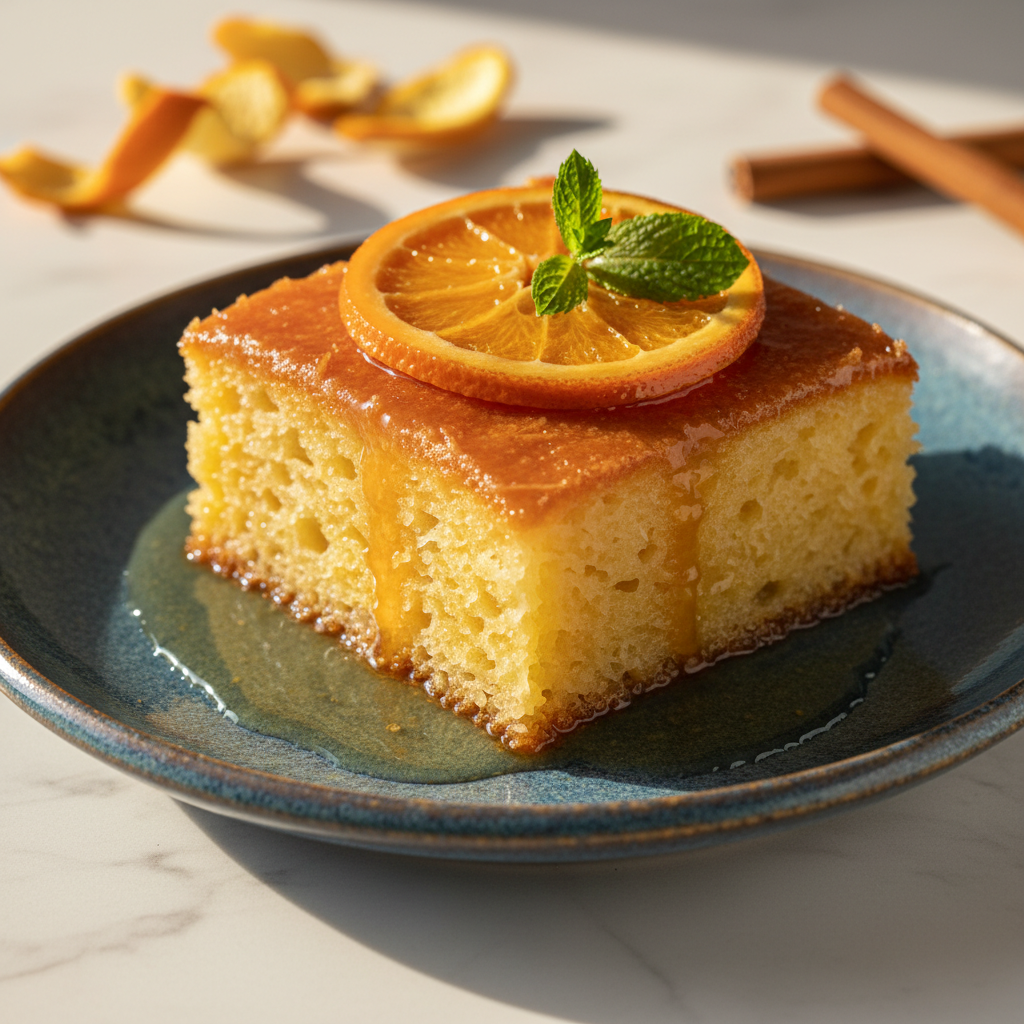
Authentic Greek Orange Phyllo Cake (Portokalopita)
Traditional Greek Orange Phyllo Cake Recipe
Discover the magic of Portokalopita, a traditional Greek dessert that transforms dried phyllo dough into a moist, custard-like orange cake soaked in aromatic syrup. It is the perfect balance of zesty citrus and sweet indulgence, offering a unique texture that melts in your mouth.
20 minutes
45 minutes
1 hour 5 minutes (plus cooling time)
12 servings
Dessert
Baking
Greek
Vegetarian
If you have ever worked with phyllo dough, you know the panic of trying to keep it from drying out. But Portokalopita, the magnificent Greek Orange Phyllo Cake, flips the script entirely. This recipe actually requires you to dry out the dough until it is brittle and crisp, shattering it into shards that act as the ‘flour’ for the cake. It is a brilliant example of zero-waste cooking turned into a culinary masterpiece. The result is unlike any sponge cake you have ever tasted. Instead of a uniform crumb, you get a dense, textured, custard-like consistency that is incredibly moist and aromatic.
The magic happens when the savory, tangy Greek yogurt custard binds the shredded phyllo sheets, which are then baked to golden perfection. But the journey doesn’t end at the oven. The defining characteristic of this dessert, like many Greek ‘Siropiasta’ (syrup-soaked) sweets, is the final drenching of cold, orange-infused syrup over the piping hot cake. The cake hisses and drinks up the liquid, becoming heavy, sticky, and utterly irresistible. The aroma that fills your kitchen—a heady mix of caramelized sugar, baked pastry, and bright citrus zest—is enough to transport you straight to a seaside taverna in Greece. Whether you are a seasoned baker or a novice looking for a showstopper, this Portokalopita recipe is foolproof if you follow the steps, resulting in a dessert that is refreshing yet comforting, and perfect for any season.
History & Origins
The history of Portokalopita is deeply rooted in the culinary traditions of Greece, specifically the regions abundant in citrus groves like Crete, the Peloponnese, and the islands. The name itself is a compound of ‘portokali’ (orange) and ‘pita’ (pie or cake). While phyllo dough is an ancient ingredient, likely originating from the kitchens of the Topkapi Palace in Istanbul during the Ottoman Empire, its application in this specific cake is a more rustic, home-style evolution.
Historically, Greek grandmothers (yiayias) were masters of frugality. Phyllo dough, which is laborious to make by hand, was never wasted. Leftover scraps from making spanakopita or baklava would be allowed to dry out rather than being thrown away. These dried scraps became the base for Portokalopita. It belongs to the family of ‘Siropiasta’, a category of desserts characterized by the use of syrup to preserve the sweet and add moisture, a technique essential in the warm Mediterranean climate before refrigeration was widespread.
Over time, what started as a way to use up leftovers evolved into a beloved classic in its own right. The inclusion of yogurt is a distinctly Greek touch, adding a necessary acidity to cut through the intense sweetness of the syrup. Today, Portokalopita is found in bakeries across Greece, often served alongside a strong Greek coffee. It represents the essence of Greek hospitality: taking simple, humble ingredients and transforming them into something generous and extraordinary to share with guests.
Why This Recipe Works
This recipe works because it masters the physics of hydration and texture. In standard baking, you avoid over-mixing to prevent gluten development, which leads to toughness. Here, we bypass that issue by drying the phyllo first. By deliberately drying the sheets, we remove their elasticity. When these brittle shards are introduced to the wet batter containing eggs, oil, and yogurt, they act like a sponge rather than a dough. They absorb the liquid, rehydrating into a structure that is fluffy yet dense, similar to a bread pudding but with a lighter, more intricate mouthfeel.
Furthermore, the use of Greek yogurt is chemically significant. The acidity in the yogurt reacts with the baking powder to create carbon dioxide bubbles, giving the dense batter the lift it needs to avoid becoming a solid brick. The fat content in the yogurt and oil ensures the cake remains tender. Finally, the ‘hot cake, cold syrup’ rule is the golden standard for Greek syrup desserts. Pouring cooled syrup over the hot cake creates a vacuum effect as the cake cools slightly, pulling the syrup deep into the center rather than letting it pool on top or turn the cake into mush. This ensures every bite is equally juicy and flavorful.
Why You’ll Love This Recipe
- ✓Uses dried leftover phyllo dough for a unique, zero-waste texture.
- ✓Infused with fresh orange zest and juice for a bright, aromatic flavor.
- ✓No electric mixer required; easy hand-mixed batter.
- ✓Can be made ahead of time—flavor improves after sitting.
- ✓Perfect balance of creamy custard texture and syrupy sweetness.
- ✓A crowd-pleasing dessert that serves a large group.
Equipment You’ll Need
- ✓9×13 inch baking dish
- ✓Large mixing bowl
- ✓Whisk
- ✓Saucepan
- ✓Zester or microplane
- ✓Large baking sheet (for drying phyllo)
Ingredients
- ✓1 lb (450g) Phyllo dough, thawed
- ✓3 large Oranges (zest of 3, juice of 1 for syrup)
- ✓1 cup (240ml) Vegetable oil (or mild olive oil)
- ✓1 cup (200g) Granulated sugar (for batter)
- ✓1 cup (240g) Greek yogurt (full fat or 2%)
- ✓5 large Eggs, room temperature
- ✓1 tbsp Baking powder
- ✓1 tsp Vanilla extract
- ✓FOR THE SYRUP:
- ✓1.5 cups (300g) Granulated sugar
- ✓1.5 cups (360ml) Water
- ✓1 cup (240ml) Fresh orange juice
- ✓1 Cinnamon stick
Instructions
- 1. PREPARE THE PHYLLO: Preheat your oven to 200°F (100°C). Unroll the phyllo dough and separate the sheets. Lay them loosely on large baking sheets or simply scrunch them up lightly. Bake for about 15-20 minutes until they are completely dry and brittle. Alternatively, leave them out on the counter overnight to dry. Once dry, crush the phyllo with your hands into small, confetti-like flakes. Transfer to a bowl and set aside.
- 2. MAKE THE SYRUP: While the phyllo is drying or cooling, prepare the syrup. In a saucepan, combine 1.5 cups sugar, water, fresh orange juice, and the cinnamon stick. Bring to a boil, then reduce heat and simmer for 5-8 minutes until the sugar is fully dissolved and the syrup thickens slightly. Remove from heat and let it cool completely. (Crucial: Syrup must be cool when poured over the hot cake).
- 3. PREP OVEN & PAN: Increase the oven temperature to 350°F (175°C). Grease a 9×13 inch baking dish with a little oil or butter.
- 4. MAKE THE BATTER: In a large mixing bowl, whisk together the eggs and 1 cup of sugar until frothy and pale. Add the vegetable oil, Greek yogurt, orange zest, baking powder, and vanilla extract. Whisk vigorously until the mixture is smooth and well combined.
- 5. COMBINE: Gradually add the crushed phyllo dough into the wet batter, a few handfuls at a time. Fold it in with a spatula, ensuring all the phyllo is coated in the custard mixture. Do not dump it all in at once, or it may clump.
- 6. BAKE: Pour the batter into the prepared baking dish and spread it evenly. Bake in the center of the oven for 40-45 minutes, or until the cake is golden brown and puffed up, and a toothpick inserted into the center comes out clean.
- 7. SOAK: Immediately upon removing the cake from the oven, ladle the cold syrup slowly over the piping hot cake. Ensure you cover the edges and corners. Let the cake stand for at least 1 hour before slicing to allow the syrup to absorb completely.
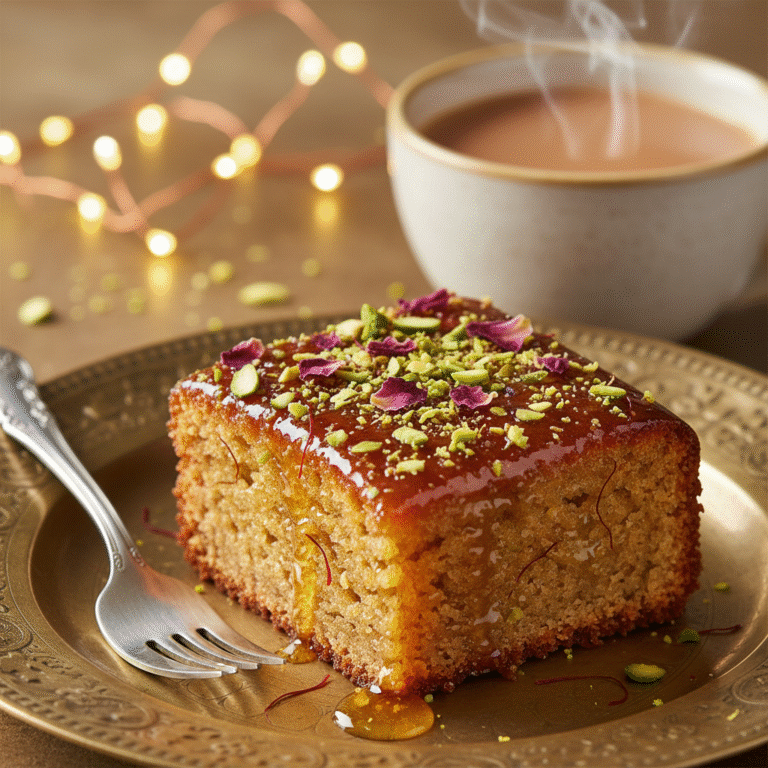
- 8. SERVE: Slice into squares and serve, optionally garnished with extra orange slices.
Expert Cooking Tips
- ✓Dry the phyllo completely; if it is still soft, the cake will be mushy.
- ✓Use room temperature eggs and yogurt to ensure a smooth emulsion in the batter.
- ✓Do not skip the zest; the essential oils in the zest provide the primary orange flavor, while the juice in the syrup provides the acidity.
- ✓Pour the syrup slowly to allow the cake to absorb it evenly without flooding.
- ✓If your top browns too quickly while baking, loosely cover it with aluminum foil for the last 10 minutes.
- ✓Let the cake rest! It tastes significantly better after sitting for a few hours or even the next day.
Substitutions and Variations
This recipe is quite adaptable, though the core structure relies on specific interactions. For the oil, you can substitute a mild extra virgin olive oil for a more authentic, savory undertone, or melted butter for a richer taste, though vegetable oil yields the moistest crumb. If you want to reduce refined sugar, you can use a monk fruit sweetener for the syrup, but be aware the texture of the syrup may change. For the citrus, blood oranges or tangerines make a fantastic variation, offering a deeper color and slightly more floral flavor. If you cannot find Greek yogurt, sour cream is an excellent 1:1 substitute due to its similar fat and acidity profile. Unfortunately, there is no direct substitute for wheat-based phyllo dough that replicates the texture perfectly, but some gluten-free phyllo brands exist in specialty markets.
Common Mistakes to Avoid
The most common mistake is not drying the phyllo dough enough. If the sheets are even slightly damp or flexible, they will clump together in the batter and create raw, doughy pockets inside the cake. Another major error is the temperature mismatch between the cake and syrup. If you pour hot syrup over a hot cake, the cake will collapse and become soggy. If you pour cold syrup over a cold cake, the syrup won’t absorb and will just sit on top. It must be cold syrup on hot cake. Lastly, avoid over-whisking the eggs once the phyllo is added; just fold gently to keep some air in the batter.
Serving Suggestions
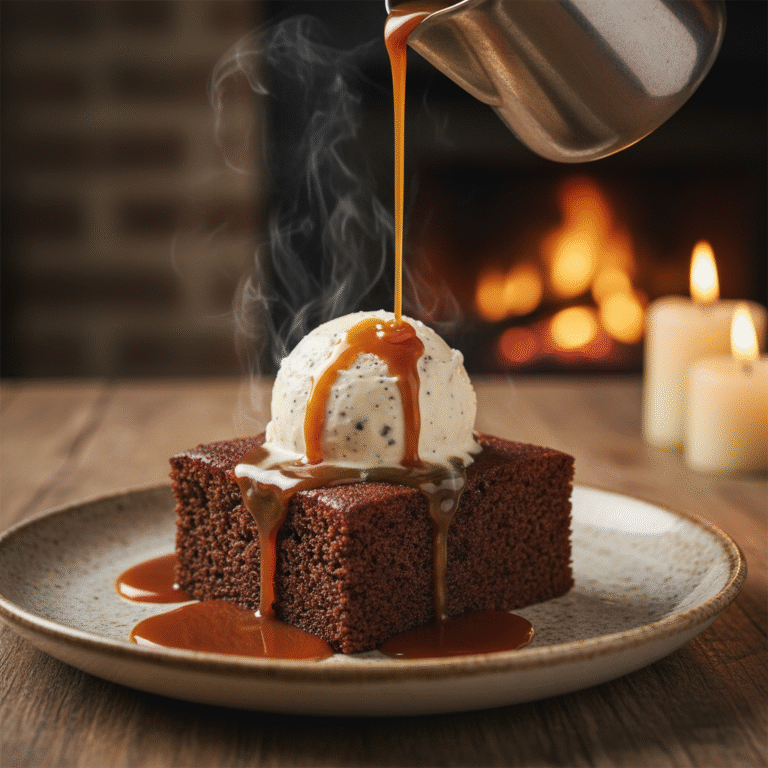
Portokalopita is rich and sweet, so it pairs beautifully with something to cut the intensity. A dollop of unsweetened whipped cream or a scoop of vanilla bean ice cream is traditional. For a breakfast twist, serve a square with a side of plain Greek yogurt and a sprinkle of pistachios. It is exceptionally good with a cup of strong, unsweetened coffee or espresso to balance the sugar. In the summer, serve it chilled from the fridge for a refreshing treat; in the winter, serve it at room temperature.
Storage and Reheating Tips
Because this cake contains dairy (yogurt and eggs) and is soaked in syrup, it is best stored in the refrigerator, especially in warm climates. It can be left at room temperature for up to 24 hours if covered well. In the fridge, it will keep for up to 5 days. The texture actually becomes fudgier and denser when cold, which many people prefer. To freeze, wrap individual slices tightly in plastic wrap and then foil. Thaw in the refrigerator overnight before serving. Do not heat the cake in the microwave as it may melt the syrup structure and become rubbery.
Nutrition Facts (Estimated)
| Serving Size | 1 slice |
| Calories | 380 |
| Fat | 16g |
| Saturated Fat | 3g |
| Unsaturated Fat | 12g |
| Trans Fat | 0g |
| Cholesterol | 85mg |
| Sodium | 180mg |
| Carbohydrates | 52g |
| Fiber | 1g |
| Sugar | 32g |
| Protein | 7g |
Frequently Asked Questions
Why is my Portokalopita bitter?
Bitterness usually comes from the white pith of the orange. When zesting, be careful to only grate the bright orange outer layer and stop before you hit the white part. Also, ensure you remove the cinnamon stick from the syrup after boiling.
Can I use fresh phyllo instead of drying it?
No, using fresh, soft phyllo will result in a clumpy, raw-tasting batter. The drying process is essential for the phyllo to absorb the custard mixture properly and create the cake-like structure.
My cake looks too wet in the middle, what happened?
It might need a few more minutes in the oven. Every oven is different. If the top is browning but the center jiggles, cover with foil and bake for another 10-15 minutes. Also, ensure you didn’t add too much liquid to the batter.
Can I reduce the sugar in the syrup?
You can reduce it slightly (maybe by 1/4 cup), but the syrup is essential for the preservation and texture of the cake. Reducing it too much will make the cake dry and less preserved.
Do I need a stand mixer for this?
Not at all. A simple hand whisk and a large bowl are perfectly sufficient. In fact, hand mixing prevents over-beating the eggs.
Can I use store-bought orange juice?
Technically yes, but fresh squeezed orange juice makes a world of difference in flavor. Store-bought juice often has a flatter, more processed taste that can make the cake too cloying.
Why did my cake collapse?
Cakes often collapse if they are removed from the oven too early or if the oven door was opened frequently during baking. It can also happen if the syrup was poured too quickly and heavily in one spot.
Is this cake gluten-free?
Traditional phyllo dough is made from wheat flour, so this recipe is not gluten-free. You would need to find a specifically certified gluten-free phyllo dough to make it safe for Celiacs.
Conclusion
Portokalopita is more than just a cake; it is a testament to the ingenuity of Greek cuisine—turning humble scraps into a golden, syrup-soaked delight. The burst of citrus combined with the creamy, custard-like texture makes it a unique dessert that stands out on any table. Whether you are hosting a dinner party or simply craving a sweet slice of the Mediterranean, this Traditional Greek Orange Phyllo Cake is sure to impress. Don’t be intimidated by the phyllo; embrace the mess, enjoy the aroma, and get ready to fall in love with your new favorite dessert. Kali Orexi!