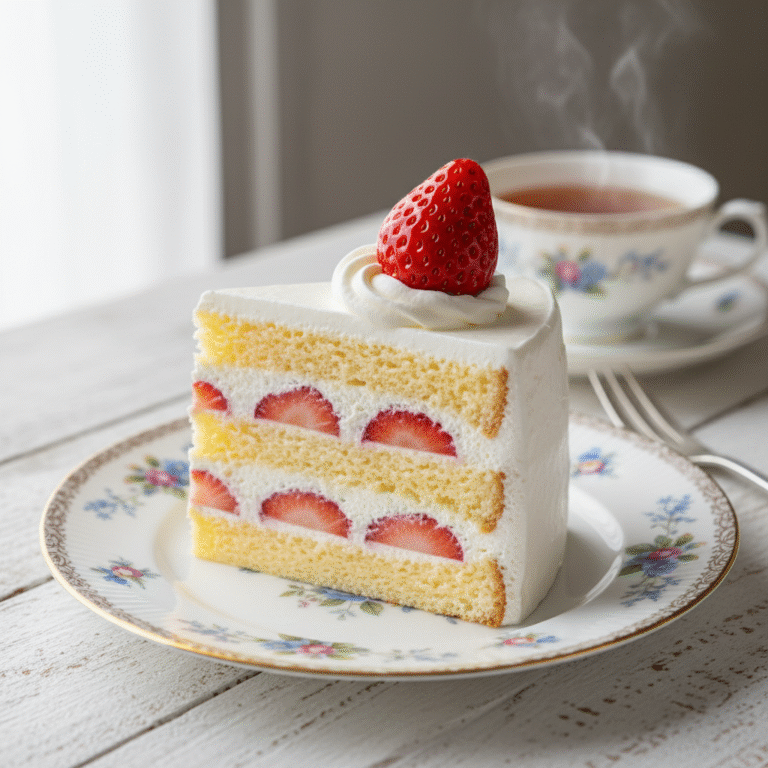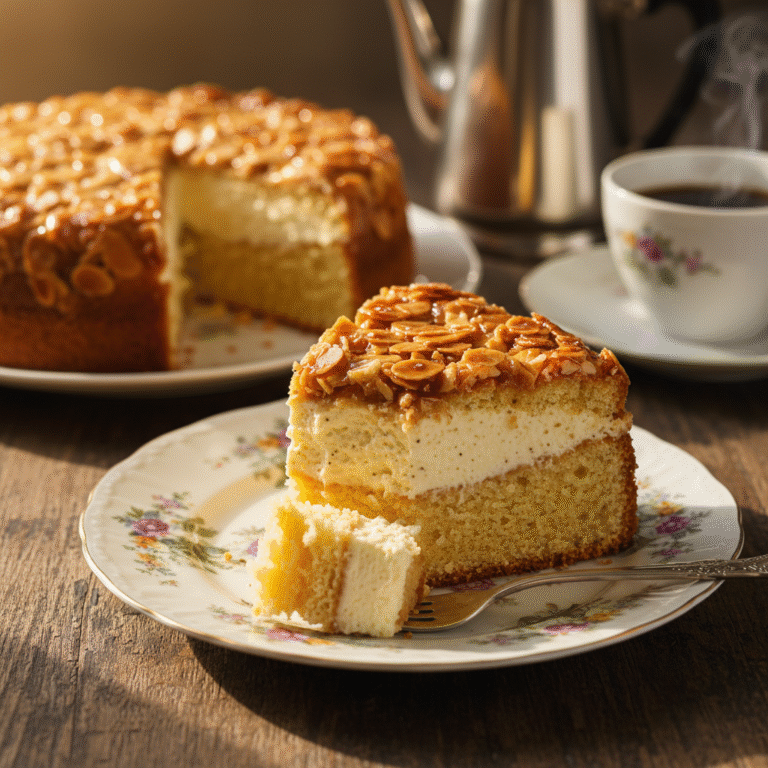

The Ultimate Traditional British Victoria Sponge Cake Recipe
Traditional British Victoria Sponge Cake Recipe
Discover the secret to the lightest, airiest British classic: the Victoria Sponge. This fool-proof recipe delivers perfect golden layers sandwiched with luscious strawberry jam and whipped cream, making it the undisputed queen of teatime treats.
20 minutes
25 minutes
45 minutes
8-10 slices
Dessert
Baking
British
Vegetarian
There are few things in the baking world as iconic, elegant, and deceptively simple as the traditional British Victoria Sponge Cake. Often referred to as a Victoria Sandwich, this cake is the absolute cornerstone of the British baking repertoire and the crown jewel of any proper afternoon tea. Unlike the heavy, butter-dense pound cakes of the past, a true Victoria Sponge is a marvel of texture—light, airy, and pillowy soft, yet sturdy enough to hold a generous filling of sweet strawberry conserve and rich, chantilly cream.
For many American home bakers, the concept of a ‘sponge’ can be confusing, often conflated with chiffon or angel food cakes. However, the British sponge relies on the ‘creaming method’—beating butter and sugar until pale and fluffy—to create a crumb that is tender and moist with a distinctively buttery flavor. It is not just a cake; it is a canvas for high-quality ingredients. Because the ingredient list is so short, the quality of your butter, the freshness of your eggs, and the flavor of your vanilla extract truly shine through.
In this comprehensive guide, we are going back to basics to master the perfect rise. We will explore the traditional ‘weigh-the-eggs’ method, which ensures your ratio of flour, sugar, and butter is mathematically perfect every single time. Whether you are hosting a bridal shower, a garden party, or simply craving a slice of nostalgia with your morning coffee, this recipe promises a bake that is golden-brown on the outside, feather-light on the inside, and absolutely unforgettable.
History & Origins
The Victoria Sponge Cake is steeped in royal history and 19th-century innovation. As the name suggests, it was a favorite of Queen Victoria herself. The cake’s origins are closely tied to the invention of baking powder by English food manufacturer Alfred Bird in 1843. Before this culinary breakthrough, cakes were leavened with yeast, resulting in a denser, bread-like texture, or required laborious beating of eggs to trap air. The introduction of baking powder allowed for the creation of the ‘sponge’—a cake that rose higher and had a significantly lighter texture than its predecessors.
The custom of ‘Afternoon Tea’ is widely credited to Anna Russell, the Duchess of Bedford and one of Queen Victoria’s ladies-in-waiting. In the 1840s, dinner was served late, around 8:00 PM, leaving a long gap between lunch and the evening meal. The Duchess found herself suffering from a ‘sinking feeling’ in the late afternoon and requested tea and light snacks in her boudoir. This private habit soon evolved into a fashionable social event among the aristocracy. Queen Victoria adopted the practice enthusiastically, and the simple sponge cake—sandwiched with jam—became a staple of these gatherings.
Interestingly, the original version was strictly jam-filled; the addition of fresh cream or buttercream is a more modern, 20th-century evolution. In the strict rules of the Women’s Institute (a British community organization famous for baking), a competition Victoria Sponge must only have raspberry jam and a dusting of caster sugar—no cream allowed! However, for our indulgent version, we are embracing the luxurious addition of whipped cream, which balances the sweetness of the jam perfectly.
Why This Recipe Works
This recipe works because it adheres to the golden rule of baking physics: the 1:1:1:1 ratio. By weighing the eggs in their shells and then matching that weight exactly with butter, sugar, and flour, you create a stabilized emulsion that guarantees a level bake and a tender crumb. Many recipes rely on volume measurements (cups), which can be notoriously inaccurate for baking. A cup of flour can vary in weight depending on how packed it is, leading to a dry or dense cake. By using weight (grams) and the egg-weight ratio, we eliminate the guesswork.
Furthermore, this recipe utilizes the ‘creaming method’ rather than the ‘all-in-one’ method. While throwing everything into a mixer at once is faster, taking the time to cream the butter and sugar incorporates millions of tiny air bubbles into the fat. These bubbles expand in the oven, aided by the baking powder, providing that classic, lofty rise. We also use distinctively British ‘Self-Raising Flour’ (or a homemade substitute), which ensures the leavening agent is evenly distributed throughout the dry ingredients. Finally, the addition of a splash of milk loosens the batter to a ‘dropping consistency,’ ensuring the cake remains moist even days after baking.
Why You’ll Love This Recipe
- ✓Uses the fool-proof ‘weigh the eggs’ method for perfect ratios.
- ✓Produces a crumb that is light, airy, and moist.
- ✓Classic filling of strawberry jam and whipped cream.
- ✓Perfect for afternoon tea, birthdays, or summer gatherings.
- ✓Ready in under an hour.
- ✓Highly photogenic and elegant presentation.
Equipment You’ll Need
- ✓Two 8-inch (20cm) round sandwich tins
- ✓Digital kitchen scale
- ✓Stand mixer or electric hand whisk
- ✓Large mixing bowl
- ✓Silicone spatula
- ✓Wire cooling rack
- ✓Sieve or sifter
- ✓Parchment paper
Ingredients
- ✓4 large eggs (weighed in shells, approx 225g total)
- ✓225g (1 cup + 2 tbsp) Unsalted butter, very soft room temperature
- ✓225g (1 cup + 2 tbsp) Caster sugar (superfine sugar)
- ✓225g (1 ¾ cups) Self-raising flour
- ✓2 tsp Baking powder
- ✓1-2 tbsp Whole milk (room temperature)
- ✓1 tsp Vanilla bean paste or high-quality extract
- ✓150g (½ cup) High-quality strawberry or raspberry jam
- ✓200ml (¾ cup) Double cream or heavy whipping cream
- ✓1 tbsp Icing sugar (powdered sugar) for dusting
- ✓Fresh strawberries for garnish (optional)
Instructions
- Preheat your oven to 180°C (350°F/Gas Mark 4). Grease two 8-inch round sandwich tins with butter and line the bottoms with parchment paper.
- Weigh your eggs in their shells. Note the weight (e.g., 225g). Measure out exactly that same weight for your butter, caster sugar, and self-raising flour.
- In a large mixing bowl or stand mixer fitted with the paddle attachment, beat the softened butter and caster sugar together. Beat on medium-high speed for at least 5 minutes until the mixture is very pale (almost white) and fluffy. Scrape down the sides of the bowl halfway through.
- In a small jug, whisk the eggs with the vanilla extract. With the mixer running on low speed, slowly add the beaten eggs a little at a time. Incorporating them slowly prevents the batter from curdling. If it looks like it’s splitting, add a tablespoon of the flour.
- Sift the self-raising flour and baking powder together. Gently fold this into the butter mixture using a large metal spoon or silicone spatula. Use a ‘figure-of-eight’ motion to cut through the mixture. Do not overmix, or you will knock out the air.
- Add the milk, one tablespoon at a time, and fold gently until the batter reaches a ‘dropping consistency’—meaning if you lift a spoonful, the batter drops off easily with a tap.
- Divide the mixture evenly between the two prepared tins. Smooth the tops gently with a spatula, creating a slight dip in the center to ensure a flat top after baking.
- Bake in the center of the oven for 20-25 minutes. The cakes are done when they are golden brown, shrinking slightly from the sides of the tin, and spring back when gently pressed with a fingertip.
- Remove from the oven and let them rest in the tins for 5 minutes. Then, turn them out onto a wire rack, peel off the parchment paper, and allow them to cool completely.
- While the cakes cool, whip the double cream with a teaspoon of icing sugar until it holds soft peaks. Be careful not to over-whip it into butter.
- To assemble, place one sponge layer upside down on a serving plate (flat side up). Spread a generous layer of jam over the sponge. Top the jam with the whipped cream.
- Place the second sponge on top, right side up. Dust generously with sifted icing sugar. Serve immediately with a pot of tea.
Expert Cooking Tips
- ✓Room temperature ingredients are non-negotiable. If your butter is hard or eggs are cold, the emulsion will break, resulting in a heavy cake.
- ✓Do not open the oven door before the 20-minute mark. The rush of cold air can cause the rising sponges to collapse.
- ✓If you cannot find Caster Sugar, you can make your own by pulsing regular granulated sugar in a food processor for a few seconds until fine.
- ✓Weighing ingredients is far superior to using cups for baking. If possible, use a digital scale for the ‘weigh the eggs’ method.
- ✓Ensure the cakes are 100% cool before filling. Even a hint of warmth will melt the cream and cause the jam to slide out.
Substitutions and Variations
If you are unable to find Self-Raising flour, you can make your own by adding 2 teaspoons of baking powder for every 1 cup (150g) of All-Purpose flour. Ensure you sift them together at least twice to distribute the leavening agent. For a dairy-free version, substitute the butter with a high-quality baking margarine (block, not tub) and use a plant-based whipping cream or simply stick to a jam-only filling. If you prefer buttercream over fresh cream, beat 100g butter with 200g icing sugar and a drop of vanilla until pale. While strawberry jam is traditional, raspberry jam provides a tart contrast that many prefer. For a lemon twist, fold the zest of one lemon into the batter and use lemon curd instead of jam.
Common Mistakes to Avoid
The most common mistake is over-mixing the flour. Once the flour hits the wet ingredients, gluten begins to form. If you beat it heavily, you will end up with a tough, rubbery cake instead of a tender sponge. Fold gently and stop as soon as the flour streaks disappear. Another error is using butter that is too soft or melted; it should hold a thumbprint but not be oily. Finally, baking at the wrong temperature can be disastrous. If your oven runs hot, the outside will burn before the inside is cooked. An oven thermometer is a cheap investment that saves many cakes.
Serving Suggestions
The Victoria Sponge is the centerpiece of a traditional British Afternoon Tea. Serve it on a tiered cake stand alongside cucumber sandwiches, scones with clotted cream, and a pot of Earl Grey or English Breakfast tea. For a summer variation, pile fresh strawberries and raspberries on top of the cream layer inside the cake, or garnish the top with edible flowers and fresh berries. It is best served on fine china plates with a cake fork.
Storage and Reheating Tips
Because this recipe uses fresh whipped cream, the assembled cake must be stored in the refrigerator if not eaten within 2 hours. It will keep in the fridge for up to 2 days, though the sponge may dry out slightly. Allow it to come to room temperature for 20 minutes before eating for the best flavor. If you fill it with buttercream instead of fresh cream, it can be stored in an airtight container at room temperature for up to 3 days. The unfilled sponge layers freeze beautifully. Wrap them individually in cling film and foil, and freeze for up to 3 months. Defrost fully at room temperature before filling.
Nutrition Facts (Estimated)
| Serving Size | 1 slice |
| Calories | 450 |
| Fat | 26g |
| Saturated Fat | 16g |
| Unsaturated Fat | 8g |
| Trans Fat | 1g |
| Cholesterol | 115mg |
| Sodium | 210mg |
| Carbohydrates | 50g |
| Fiber | 1g |
| Sugar | 28g |
| Protein | 5g |
Frequently Asked Questions
Why did my cake sink in the middle?
This usually happens for two reasons: either the oven door was opened too early, causing the structure to collapse before it set, or there was too much leavening agent (baking powder). Ensure you measure precisely and keep the door closed.
Can I make this cake ahead of time?
Yes, you can bake the sponges a day in advance. Wrap them tightly in cling film once cool and store at room temperature. Assemble with jam and cream on the day of serving for the freshest taste.
What is the difference between a sponge cake and a pound cake?
While the ratios are similar, a Victoria sponge typically uses a leavening agent (self-raising flour/baking powder) for a lighter lift, whereas a traditional pound cake relies solely on the air beaten into the eggs and butter, resulting in a denser, tighter crumb.
My batter curdled when adding eggs. Is it ruined?
Not at all! It just means the emulsion broke, usually because the eggs were too cold or added too fast. Add a tablespoon of your measured flour and beat vigorously for a few seconds to bring it back together.
Can I use salted butter?
Yes, you can. In fact, a little salt enhances the flavor. If you use salted butter, omit any additional pinch of salt the recipe might call for (though this recipe relies on the butter’s salt content).
How do I know when the cake is done?
The cake should be golden, pull away slightly from the sides of the tin, and spring back immediately when you gently press the center with your finger. A skewer inserted should come out clean.
Why is my sponge tough?
Toughness is almost always caused by over-mixing the flour. Fold the flour in manually with a spatula rather than using the electric mixer for the final step.
Can I double this recipe?
Yes, but you will need larger tins or more tins. If doubling for a tiered cake, ensure you adjust baking times as deeper batter takes longer to cook.
Conclusion
Mastering the Traditional British Victoria Sponge Cake is a rite of passage for any baker. It teaches the importance of precision, patience, and the beauty of high-quality ingredients. While it may seem simple compared to elaborate frosted confections, its perfection lies in its subtlety—the balance of sweet and savory, light and rich. Whether you stick to the purist’s jam-only version or go all out with fresh cream and berries, this cake is sure to bring a touch of royal elegance to your kitchen. So, put the kettle on, weigh out your eggs, and enjoy the most delightful slice of British history.