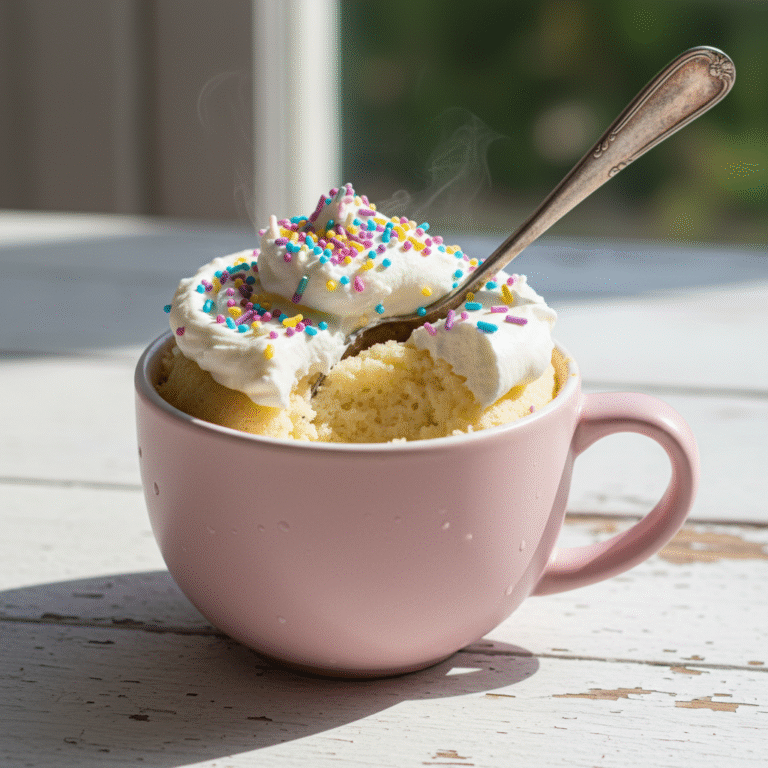
The Ultimate Fluffy 1-Minute Microwave Vanilla Mug Cake
Quick Microwave Vanilla Mug Cake Recipe
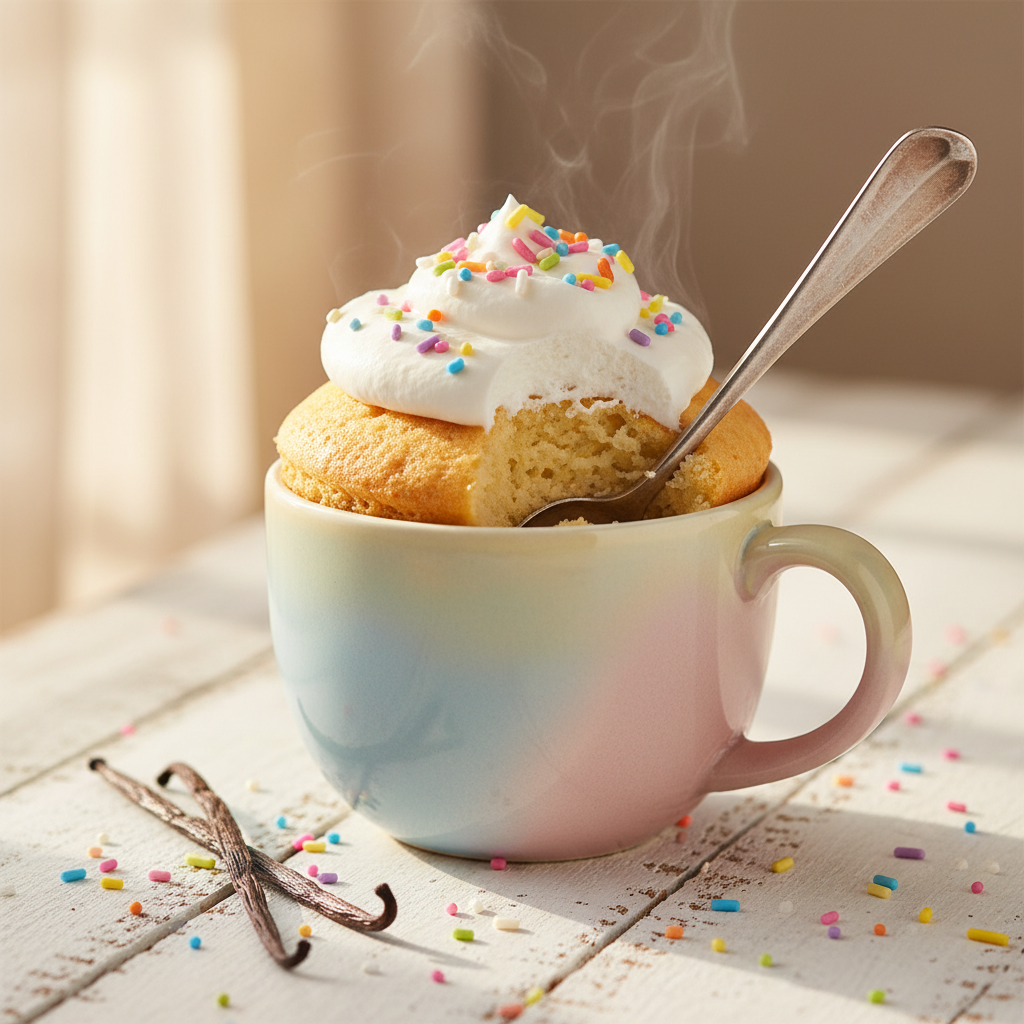
Satisfy your late-night sweet cravings instantly with this incredibly fluffy, moist, and delicious vanilla mug cake. Ready in less than 60 seconds using simple pantry staples, it’s the perfect single-serving dessert that tastes like it came straight from the oven.
2 minutes
1 minute
3 minutes
1 serving
Dessert
Microwave
American
Vegetarian
We have all been there: it is 9:00 PM, you are curled up on the couch watching your favorite show, and suddenly, a craving hits. You don’t just want something sweet; you want cake. A warm, tender, vanilla-scented slice of cake. But the thought of preheating the oven, dragging out the stand mixer, greasing pans, and waiting an hour for a whole cake to bake—only to be left with an entire cake you might not finish—is enough to make you settle for a stale cookie or a piece of chocolate. Enter the magic of the microwave mug cake. For years, mug cakes suffered from a bad reputation, often described as rubbery, dense, or oddly textured sponges that were more functional than flavorful. However, the culinary code has finally been cracked. This isn’t just a quick fix; it is a legitimate dessert experience.
This recipe represents the pinnacle of single-serving comfort food. It bypasses the common pitfalls of microwave baking by balancing the ratio of fat to flour and eliminating the egg, which is the usual culprit behind that dreaded rubbery texture in small-batch microwave treats. Instead, we focus on the interplay between baking powder and milk to create a lift that mimics the crumb of a traditional oven-baked yellow cake. The result is a dessert that is dangerous in its convenience but heavenly in its taste. It is warm, customizable, and portion-controlled, making it the ultimate hack for busy parents, college students in dorms, or anyone who believes that dessert should be instant and effortless. Prepare to change your mind about what a microwave can do.
History & Origins
The concept of the ‘cup cake’ actually predates the microwave by nearly two centuries, though not in the way we think of it today. In 1796, Amelia Simmons wrote ‘American Cookery,’ which contained a recipe for ‘a light cake to bake in small cups.’ At the time, this referred to the pottery cups used for baking in hearth ovens, and the term eventually evolved to denote the unit of measurement (cups) rather than the vessel itself. However, the modern iteration of the mug cake is a distinct byproduct of the microwave revolution and the internet age.
When microwave ovens became a household staple in the United States during the late 1970s and 1980s, manufacturers released cookbooks touting the appliance’s ability to cook everything from roasts to cakes. Early microwave cakes were often lackluster, suffering from uneven cooking and poor texture due to the way microwaves excite water molecules. It wasn’t until the mid-2000s and the rise of food blogging and Pinterest that the ‘mug cake’ went viral. It became a phenomenon of the digital age, catering to a culture that valued speed, visual appeal, and single-serving convenience. The trend exploded as recipe developers began applying food science to fix the texture issues, moving away from boxed mix adaptations to scratch-made batters specifically formulated for microwave radiation. Today, the mug cake is a recognized sub-genre of baking, celebrated globally as the quickest route from craving to consumption.
Why This Recipe Works
Microwaves cook food by emitting waves that cause water molecules to vibrate, generating heat. This happens incredibly fast, which is why traditional baking rules don’t always apply. In a standard oven, heat penetrates from the outside in, allowing gluten to develop slowly and eggs to coagulate gently. In a microwave, the rapid internal heating can cause eggs to scramble and gluten to toughen instantly, leading to a chewy, rubbery puck. This recipe works because it is egg-free. By removing the egg, we eliminate the primary source of toughness in such a small volume of batter.
Furthermore, we rely on oil (or melted butter) and milk to provide moisture and tenderness. Oil is actually superior to butter for texture in microwave cakes because it remains liquid at room temperature, ensuring the cake stays moist even as it cools. The lift comes entirely from baking powder, which reacts immediately with the liquid and the heat to puff the cake up before the structure sets. We also use a specific ratio of sugar to flour; sugar is hygroscopic, meaning it holds onto water, which prevents the cake from drying out during the intense burst of microwave energy. This precise chemical balance ensures a crumb that is surprisingly tender and fluffy, indistinguishable from a standard cupcake.
Why You’ll Love This Recipe
- ✓Ready in under 2 minutes from start to finish.
- ✓Egg-free recipe ensures a fluffy, non-rubbery texture.
- ✓Uses basic pantry ingredients you likely already have.
- ✓Perfect portion control for a single serving.
- ✓Highly customizable with mix-ins like chips or sprinkles.
- ✓Minimal cleanup—you mix and bake in the same mug.
Equipment You’ll Need
- ✓1 Microwave-safe mug (10-12 oz capacity)
- ✓Measuring spoons
- ✓Small whisk or fork
- ✓Microwave
Ingredients
- ✓4 tablespoons all-purpose flour
- ✓2 tablespoons granulated sugar
- ✓1/2 teaspoon baking powder
- ✓1 pinch salt
- ✓3 tablespoons milk (dairy or non-dairy)
- ✓1 tablespoon neutral oil (vegetable, canola) or melted butter
- ✓1/4 teaspoon pure vanilla extract
- ✓1 tablespoon rainbow sprinkles (optional, for ‘funfetti’ style)
Instructions
- Select a microwave-safe mug that holds at least 10-12 ounces to prevent overflowing.
- Add the dry ingredients (flour, sugar, baking powder, and salt) directly into the mug.
- Use a fork or small whisk to mix the dry ingredients thoroughly, ensuring there are no clumps of baking powder.
- Add the wet ingredients (milk, oil/melted butter, and vanilla extract) to the mug.
- Stir the batter vigorously with your fork, making sure to scrape the bottom edges of the mug so no pockets of dry flour remain. The batter should be smooth.
- If using sprinkles or chocolate chips, gently fold them in now.
- Place the mug in the center of the microwave.
- Microwave on high power for 60 to 90 seconds. Start with 60 seconds. The cake should rise and look set on top. It may still look slightly moist in the very center, which is fine as it continues to cook while resting.
- Carefully remove the mug from the microwave (the handle may be hot).
- Let the cake cool for 1-2 minutes before eating to allow the texture to stabilize and prevent tongue burns.
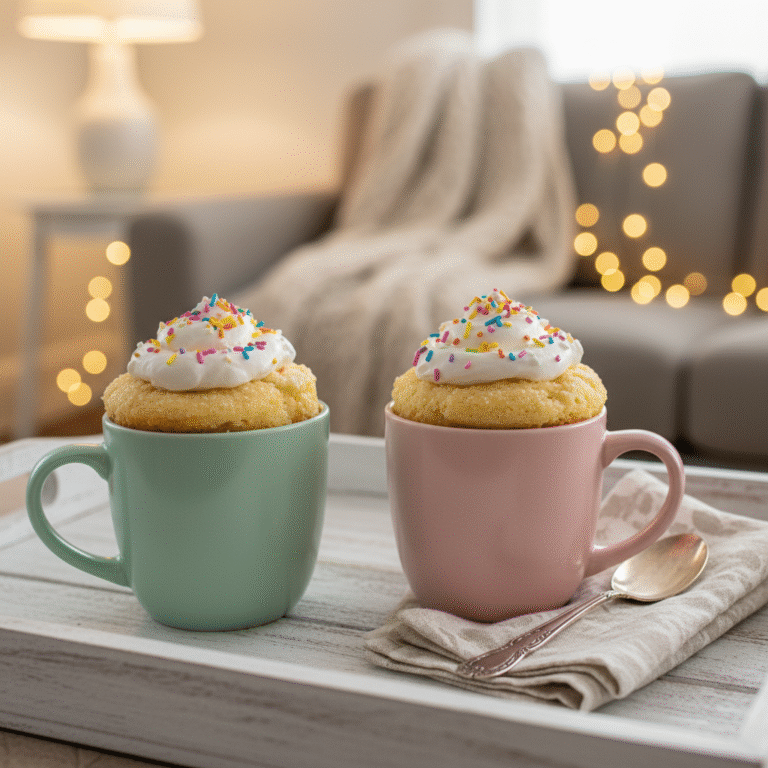
- Top with whipped cream or ice cream if desired and enjoy warm.
Expert Cooking Tips
- ✓Do not overmix the batter once the wet ingredients are added, or the gluten will overdevelop and create a tough texture.
- ✓Microwave wattages vary greatly; if yours is very powerful (1000W+), check the cake at 50-60 seconds.
- ✓Use a mug with straight sides for the most even baking; tapered mugs can cause the bottom to cook slower than the top.
- ✓Place a paper towel under the mug in the microwave just in case of any accidental overflows.
- ✓For a richer flavor, use melted butter, but for a moister texture, stick with vegetable oil.
- ✓Always mix the dry ingredients first to ensure the baking powder is evenly distributed.
Substitutions and Variations
This recipe is incredibly forgiving and adaptable to various dietary needs. For a **gluten-free** version, simply substitute the all-purpose flour with a high-quality 1:1 gluten-free baking flour blend that contains xanthan gum. If you are **vegan or dairy-free**, swap the cow’s milk for almond milk, oat milk, or soy milk—soy milk works particularly well due to its protein content. You can also replace the sugar with a granulated sweetener like erythritol or monk fruit for a **lower-sugar** option, though the texture may be slightly drier. If you don’t have vanilla extract, almond extract provides a lovely cherry-like flavor, or you can omit it entirely. You can also swap the oil for melted coconut oil, though this will impart a slight coconut flavor.
Common Mistakes to Avoid
The most common mistake people make with mug cakes is **overcooking**. Because microwaves cook so unevenly and quickly, even 10 extra seconds can turn a fluffy cake into a hard rock. Always err on the side of undercooking; you can always zap it for another 10 seconds, but you can’t un-cook it. Another frequent error is **using the wrong size mug**. If the mug is too small, the batter will rise rapidly and spill over the sides, creating a mess. Ensure your mug is only half full of batter before cooking. Finally, **forgetting the baking powder** or using old, inactive baking powder will result in a dense, gummy paste rather than a cake. Make sure your leavening agents are fresh.
Serving Suggestions
While this mug cake is delicious on its own, toppings elevate it to a gourmet experience. The classic choice is a scoop of vanilla bean ice cream placed right on top of the hot cake, allowing it to melt into a crème anglaise-like sauce. Fresh berries, such as raspberries or strawberries, add a tart contrast to the sweetness. A dollop of homemade whipped cream and a dusting of cinnamon is perfect for a cozy vibe. For chocolate lovers, a drizzle of hot fudge or caramel sauce is a must. You can even slice the cake out of the mug onto a plate and garnish it with mint for a nicer presentation.
Storage and Reheating Tips
Mug cakes are designed to be eaten immediately. Due to the nature of microwave cooking, they tend to stale and harden incredibly fast once they cool down completely. Storage is not recommended. However, if you absolutely must save it, cover the mug tightly with plastic wrap to trap moisture and keep it at room temperature for no more than 2-3 hours. Do not refrigerate, as this will dry it out instantly. To reheat, sprinkle a few drops of water on top and microwave for 10-15 seconds to soften it up again.
Nutrition Facts (Estimated)
| Serving Size | 1 mug cake |
| Calories | 380 |
| Fat | 16g |
| Saturated Fat | 2g |
| Unsaturated Fat | 13g |
| Trans Fat | 0g |
| Cholesterol | 5mg |
| Sodium | 210mg |
| Carbohydrates | 52g |
| Fiber | 1g |
| Sugar | 28g |
| Protein | 4g |
Frequently Asked Questions
Why is my mug cake rubbery?
Rubbery texture usually comes from two things: overmixing the batter (developing too much gluten) or overcooking. It can also happen if a recipe uses too much egg. This recipe is egg-free specifically to prevent that rubbery texture.
Can I bake this in an oven instead?
Technically yes, but it defeats the purpose of a quick mug cake. If you must, bake in an oven-safe ramekin at 350°F (175°C) for about 12-15 minutes.
Can I double this recipe?
Do not double the ingredients in a single mug, as it will not cook evenly and will overflow. If you want two cakes, mix them in separate mugs and cook them one at a time.
Can I use self-rising flour?
Yes! If you use self-rising flour, omit the baking powder and the salt from the recipe.
Why did my mug cake sink?
It is normal for mug cakes to deflate slightly after the heat stops. However, if it collapses completely, it might be undercooked or have too much liquid.
Can I add cocoa powder to make it chocolate?
Yes, replace 1 tablespoon of flour with 1 tablespoon of unsweetened cocoa powder and add an extra teaspoon of sugar.
Is it safe to eat if it looks wet?
Because there are no raw eggs in this recipe, it is perfectly safe to eat even if slightly undercooked or gooey in the center.
Can I use water instead of milk?
You can, but the cake will be less rich and flavorful. Milk adds necessary fat and sugar that aids in browning and texture.
Conclusion
The vanilla mug cake is the unsung hero of the dessert world. It bridges the gap between ‘I want cake’ and ‘I have zero energy.’ By mastering this simple recipe, you have a secret weapon against late-night hunger pangs and unexpected guests. It proves that you don’t need a fancy kitchen, expensive equipment, or hours of time to create something that feels like a hug in a mug. So, the next time you need a sweet treat, skip the store-bought cookies and spend 60 seconds making this fluffy cloud of vanilla perfection. You deserve it.