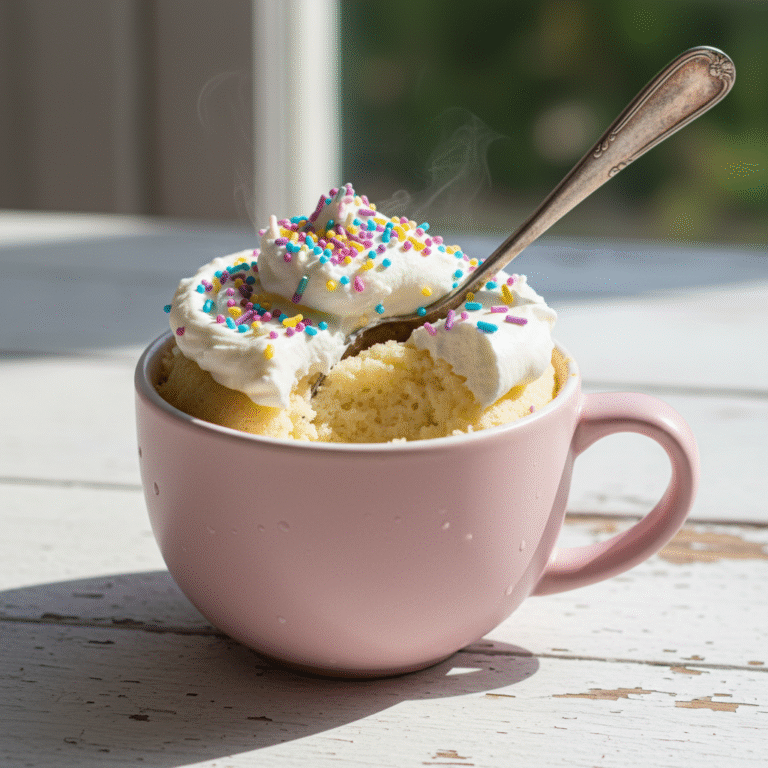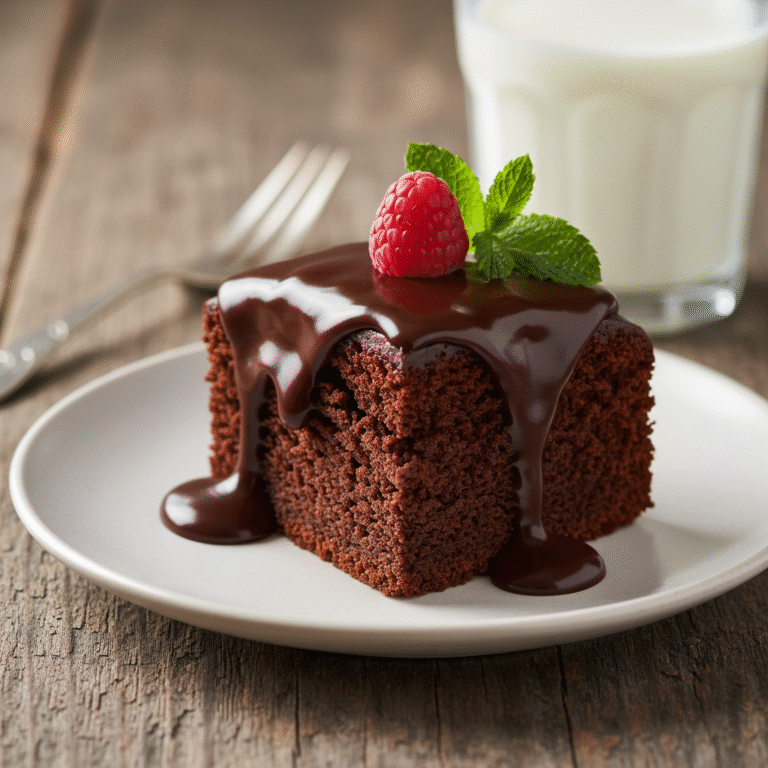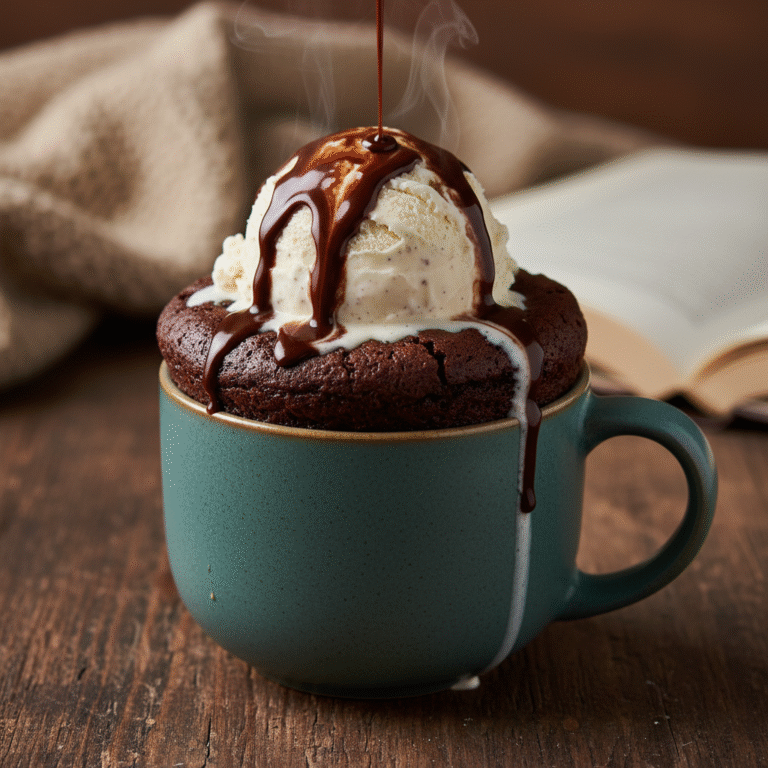
The Ultimate 5-Minute Eggless Chocolate Mug Cake
Quick Microwave Chocolate Mug Cake Without Egg Recipe
Satisfy your deepest chocolate cravings in less than five minutes with this incredibly moist, fudgy, and completely eggless chocolate mug cake. It is the perfect single-serving dessert that requires only pantry staples and a microwave, delivering a rich, brownie-like texture without the wait.
3 minutes
2 minutes
5 minutes
1 serving
Dessert
Microwave
American
Vegetarian
We have all been there: it is 9:00 PM on a Tuesday, the house is quiet, and suddenly, an undeniable, overpowering craving for chocolate strikes. You do not have the time, energy, or patience to preheat the oven, grease a cake pan, and wait an hour for a full-sized cake to bake. Enter the absolute hero of late-night snacking: the chocolate mug cake. But not just any mug cake. This specific recipe is the result of tireless testing to solve the most common problem with microwave desserts—the rubbery texture. By removing the egg, we eliminate the ingredient that often turns a delicate cake into a sponge in the harsh heat of a microwave. Instead, this recipe relies on a perfect balance of milk, oil, and leavening agents to create a crumb that is tender, moist, and dangerously close to a molten lava cake. It is rich, decadent, and deeply chocolaty, yet light enough that you won’t feel weighed down. Whether you are a college student in a dorm, a busy parent needing a quick treat, or just someone who loves chocolate without the hassle, this recipe is your new best friend. It comes together in one mug, meaning fewer dishes to wash, and cooks in under two minutes. Top it with a scoop of vanilla bean ice cream or a dollop of whipped cream, and you have a gourmet-level dessert experience right in the comfort of your kitchen.
History & Origins
The concept of the mug cake is a fascinating collision of culinary history and internet culture. While cakes have been baked in small vessels like ramekins or cups for centuries—dating back to the ‘cup cakes’ (cakes measured by cups) of the 18th century—the microwave mug cake is a distinctly modern invention. The microwave oven itself, introduced as the ‘Radarange’ in the 1940s by Percy Spencer, revolutionized how we viewed rapid cooking, but for decades, it was relegated to reheating leftovers or popping popcorn. It wasn’t until the early 2000s and the rise of food blogging and social media platforms like Pinterest that the ‘mug cake’ became a viral phenomenon. Early iterations were often dry or rubbery, largely because they simply scaled down traditional oven recipes without accounting for the way microwaves heat water molecules. The ‘eggless’ aspect of this recipe actually traces its roots back further to the Depression era and World War II, when ingredients like eggs and butter were rationed. ‘Wacky Cake’ or ‘Depression Cake’ became popular during these times, utilizing vinegar and baking soda for lift. This recipe borrows from that ingenuity, adapting those chemical reactions for the modern microwave age to ensure a soft texture. Today, the mug cake represents the ultimate convenience food, bridging the gap between homemade baking and instant gratification.
Why This Recipe Works
Microwaves cook food by emitting waves that excite water, fat, and sugar molecules, generating heat from within the food almost instantly. This is a violent and rapid process compared to the slow, outside-in heat of a conventional oven. In a standard cake recipe, eggs provide structure through protein coagulation. However, in a microwave, these proteins coagulate so quickly that they tighten up and squeeze out moisture before the starch has time to properly gelatinize, resulting in that dreaded tough, rubbery, omelet-like texture found in many mug cakes. By eliminating the egg, we remove this risk entirely. Instead, we rely on baking powder for lift and a higher ratio of liquid (milk) and fat (oil or melted butter) to keep the crumb tender. The oil coats the flour proteins, preventing excessive gluten formation which can also lead to toughness. Furthermore, the use of cocoa powder acts as a drying agent, so the extra liquid is necessary to rehydrate the cocoa and bloom the chocolate flavor. The result is a steaming, fluffy cake that rises beautifully and maintains a fudgy consistency that remains soft even as it cools, mimicking the texture of a steamed pudding rather than a dry baked good.
Why You’ll Love This Recipe
- ✓Ready in under 5 minutes from pantry to spoon.
- ✓Completely egg-free, preventing a rubbery texture.
- ✓Single-serving portion control for satisfying cravings.
- ✓Minimal cleanup required as it is mixed in the mug.
- ✓Highly customizable with mix-ins like nuts or caramel.
- ✓Uses standard pantry staples you likely already have.
Equipment You’ll Need
- ✓1 Microwave-safe mug (12-14 oz capacity)
- ✓Measuring spoons
- ✓Small whisk or fork
- ✓Microwave
Ingredients
- ✓4 tablespoons all-purpose flour
- ✓3 tablespoons granulated sugar
- ✓2 tablespoons unsweetened cocoa powder
- ✓1/2 teaspoon baking powder
- ✓1 pinch of salt
- ✓3 tablespoons milk (dairy or non-dairy)
- ✓1 tablespoon vegetable oil or melted butter
- ✓1/4 teaspoon vanilla extract
- ✓1 tablespoon chocolate chips (optional)
Instructions
- Select a microwave-safe mug that holds at least 12 ounces of liquid to prevent overflowing.
- In the mug, whisk together the dry ingredients: flour, sugar, cocoa powder, baking powder, and salt until well combined and no lumps remain.
- Add the wet ingredients: milk, oil (or melted butter), and vanilla extract.
- Stir briskly with a fork or small whisk until the batter is smooth and uniform. Ensure you scrape the bottom edges of the mug to incorporate all the flour.
- Sprinkle the chocolate chips on top of the batter if using. Do not push them down; they will sink slightly as it cooks.
- Place the mug in the microwave. Cook on high power for 60 to 90 seconds. The timing depends on your microwave wattage (see tips). The cake should rise and look set on top but may still look slightly shiny or moist in the center.
- Remove carefully from the microwave (the mug will be hot) and let it stand for 1-2 minutes. This resting time completes the cooking process and allows the texture to set.
- Serve warm, optionally topped with ice cream or whipped cream.
Expert Cooking Tips
- ✓Use a wide mug rather than a tall, narrow one to ensure even cooking.
- ✓Do not overfill the mug; the batter should not fill more than half the mug before cooking.
- ✓Start with 60 seconds if you have a high-wattage (1000W+) microwave.
- ✓Place a paper towel under the mug in the microwave to catch any potential spills.
- ✓If the cake looks dry, reduce the cooking time by 10-15 seconds next time.
- ✓Mix the dry ingredients first to prevent clumps of cocoa powder in the final cake.
- ✓Eat while warm for the best gooey texture.
Substitutions and Variations
This recipe is incredibly versatile and forgiving. For the flour, you can substitute a 1:1 gluten-free all-purpose flour blend if you are gluten-sensitive; almond flour alone will not work well as it lacks the structure needed. If you are vegan or dairy-free, simply use any plant-based milk like almond, soy, or oat milk, and ensure your chocolate chips are dairy-free. The vegetable oil can be replaced with melted coconut oil for a slight coconut flavor, or melted butter for a richer, more traditional cake taste. For sweeteners, brown sugar can be used instead of granulated sugar for a deeper, caramel-like flavor, though it may make the cake slightly denser. You can also use liquid sweeteners like maple syrup, but you may need to add an extra teaspoon of flour to balance the moisture. If you don’t have chocolate chips, chunks of a chocolate bar or even a teaspoon of Nutella dropped in the center work beautifully.
Common Mistakes to Avoid
The most common mistake with mug cakes is overcooking. Because microwaves cook so fast, even 10 extra seconds can turn a moist cake into a hard rock. Always err on the side of undercooking; you can always zap it for another 10 seconds, but you cannot un-cook it. Another frequent error is using a mug that is too small. The batter rises significantly due to the baking powder and microwave heat; if the mug is too small, you will end up with a mess on your microwave turntable. Not mixing the batter thoroughly is another pitfall; often, pockets of dry flour get stuck in the bottom corner of the mug. Make sure to dig your spoon or fork all the way to the bottom edge when mixing. Finally, omitting the oil or fat will result in a rubbery texture, as the fat is essential for tenderizing the gluten in the flour.
Serving Suggestions
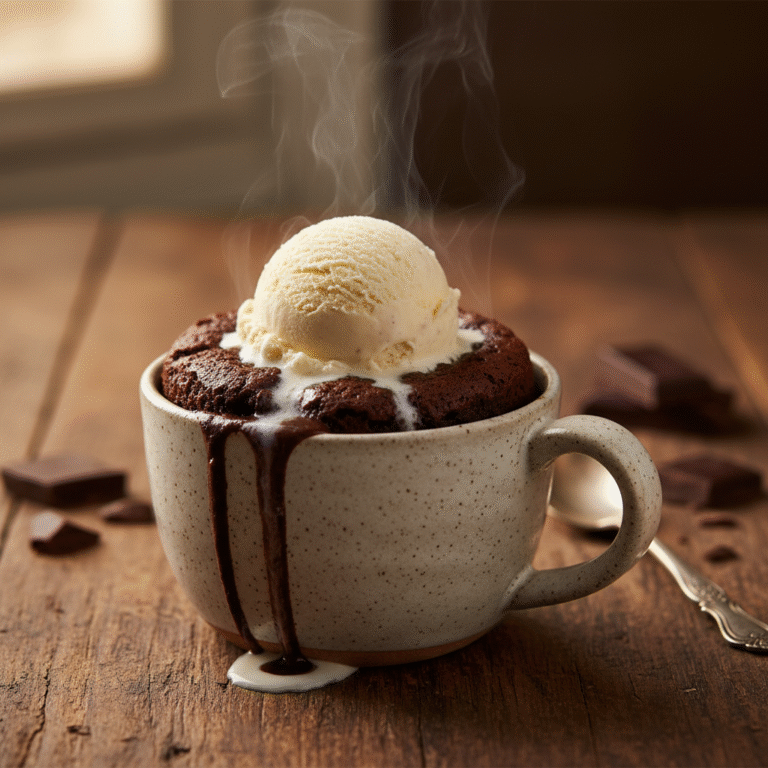
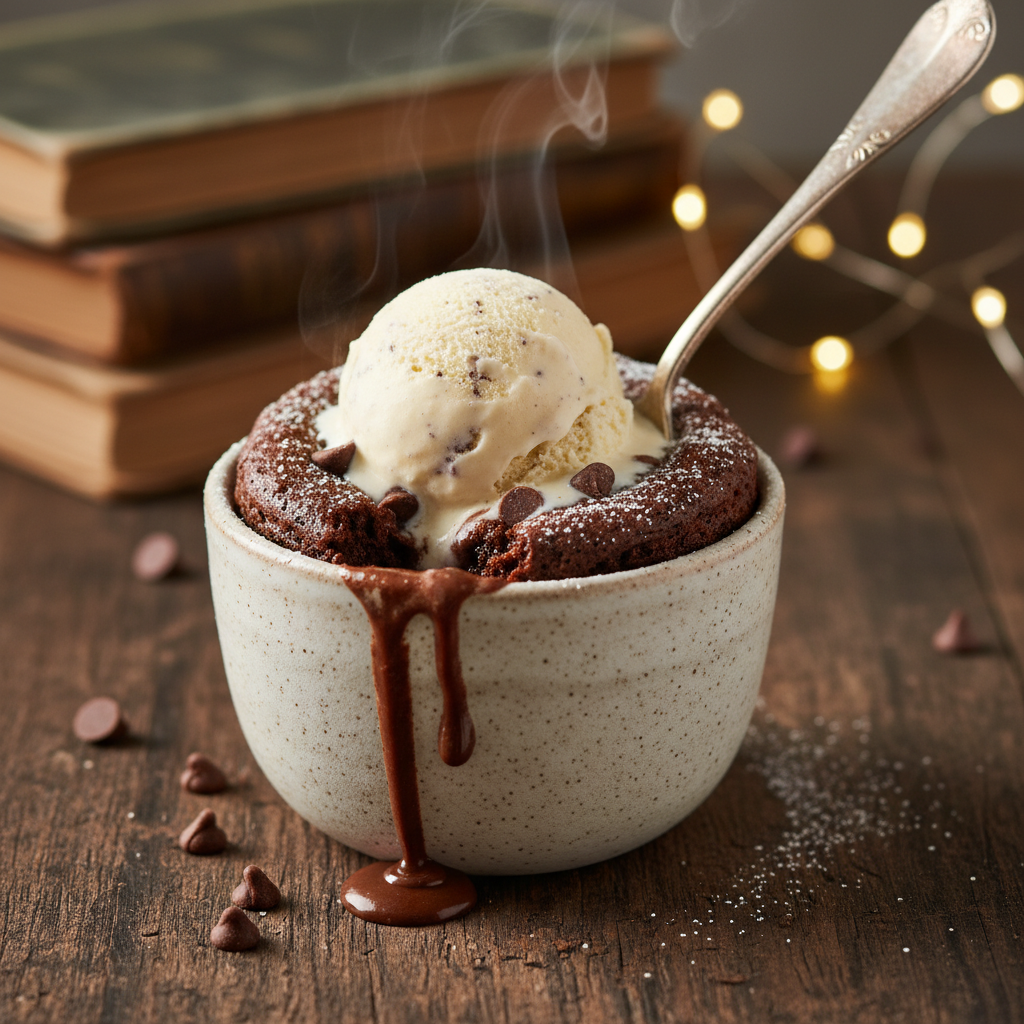
While delicious on its own, this mug cake shines with toppings. The classic pairing is a scoop of cold vanilla bean ice cream, which melts into the warm cake creating a creamy sauce. Fresh berries, particularly raspberries or strawberries, add a tart contrast to the rich chocolate. A dollop of homemade whipped cream and a dusting of cocoa powder can make it feel like a cafe treat. For a decadent twist, drizzle caramel sauce or hot fudge over the top. If you are enjoying this for a cozy breakfast (we won’t judge!), a spoonful of peanut butter or almond butter adds protein and flavor complexity. A glass of cold milk or a hot espresso is the perfect beverage accompaniment.
Storage and Reheating Tips
Mug cakes are best enjoyed immediately after making. The texture is at its peak when warm. However, if you cannot finish it, you can cover the mug tightly with plastic wrap and store it in the refrigerator for up to 24 hours. To reheat, remove the plastic wrap and microwave on high for 15-20 seconds. Note that the texture may become slightly drier upon reheating. We do not recommend freezing this mug cake, as the thawing and reheating process will likely ruin the texture. Since it takes only minutes to make, it is always better to make a fresh one than to store leftovers.
Nutrition Facts (Estimated)
| Serving Size | 1 mug cake |
| Calories | 380 |
| Fat | 18g |
| Saturated Fat | 3g |
| Unsaturated Fat | 14g |
| Trans Fat | 0g |
| Cholesterol | 5mg |
| Sodium | 210mg |
| Carbohydrates | 52g |
| Fiber | 3g |
| Sugar | 28g |
| Protein | 5g |
Frequently Asked Questions
Why is my mug cake rubbery?
Rubbery texture is usually caused by overcooking or overmixing the batter. Overmixing develops too much gluten, and overcooking dries out the moisture. Since this recipe is eggless, it is less prone to being rubbery, so check your cooking time.
Can I make this in an oven?
Technically yes, but it defeats the purpose of a quick mug cake. If you must, bake in an oven-safe ramekin at 350°F (175°C) for about 15-20 minutes.
Can I use self-rising flour?
Yes, if you use self-rising flour, omit the baking powder and salt from the recipe.
Is this recipe vegan?
It can easily be made vegan by using plant-based milk (like almond or oat) and ensuring your chocolate chips and sugar are certified vegan.
Can I reduce the sugar?
Yes, you can reduce the sugar to 2 tablespoons, but the cake will be less moist and more bread-like, as sugar contributes to the liquid structure.
Why did my cake overflow?
The mug was likely too small or filled too high. The batter should only fill the mug halfway to allow for the rapid rise that happens in a microwave.
Can I double the recipe?
Do not double the recipe in a single mug; it will not cook evenly. If you want two servings, make them in two separate mugs and cook them one at a time.
Can I use water instead of milk?
You can, but the cake will be less rich and flavorful. Milk adds fat and sugar that help with browning and tenderness.
What happens if I forget the oil?
Without oil or butter, the cake will be very dry, tough, and likely unpalatable. Fat is necessary for a tender crumb.
Conclusion
This Quick Microwave Chocolate Mug Cake Without Egg is truly a game-changer for dessert lovers everywhere. It proves that you do not need a fully stocked kitchen, hours of time, or even an oven to create something truly delicious and satisfying. By understanding the science of microwave baking and removing the egg, we have unlocked the secret to a moist, fudgy, single-serving cake that never fails. Whether you are treating yourself after a long day or whipping up a quick snack for the kids, this recipe delivers maximum flavor with minimum effort. Keep these pantry staples on hand, and you will never be more than five minutes away from chocolate heaven. Happy microwaving!