The Ultimate Moist Vegan Carrot Cake with Creamy Vegan Buttercream
Moist Vegan Carrot Cake With Vegan Buttercream Recipe
Discover the secret to the most incredibly moist, tender, and perfectly spiced vegan carrot cake you’ll ever taste. Topped with a luscious, tangy vegan buttercream frosting, this recipe rivals any traditional bakery version and is surprisingly easy to make.
25 minutes
35 minutes
60 minutes
12 servings
Dessert
Baking
American
Vegan
If there is one dessert that truly bridges the gap between comfort food and elegant baking, it is the classic carrot cake. For years, the challenge in the plant-based baking world has been replicating that distinctively dense yet fluffy texture that defines a perfect slice. Often, vegan cakes can turn out gummy or overly dry, but this recipe changes the game entirely. We are talking about a cake so moist, so rich in flavor, and so tender that no one will believe it is entirely free of eggs and dairy.
The magic lies in the balance of spices and the method of incorporating moisture. We use a blend of cinnamon, nutmeg, and fresh ginger to create a warm aromatic profile that hits the palate instantly. Unlike other recipes that rely heavily on applesauce which can sometimes make the crumb rubbery, this recipe utilizes a precise ratio of oil and brown sugar to ensure a melt-in-your-mouth consistency. The carrots are freshly grated—never pre-shredded—to release just the right amount of natural sweetness and moisture during the bake.
But let’s not forget the crowning glory: the vegan buttercream. Traditional cream cheese frosting is tangy and thick, and achieving that without dairy requires the right choice of vegan butter and a touch of lemon juice or apple cider vinegar to mimic that signature tang. Whether you are baking for a birthday, a holiday spread, or just a cozy weekend treat, this cake is a showstopper. It’s robust enough to hold up to stacking layers but delicate enough to enjoy as a simple sheet cake. Get ready to redefine your expectations of vegan desserts.
History & Origins
The origins of carrot cake are somewhat debated, but food historians generally agree that it likely evolved from medieval carrot puddings. During the Middle Ages in Europe, sugar was a rare and expensive luxury, often imported and heavily taxed. Carrots, however, were abundant and known to contain more natural sugar than any other vegetable besides sugar beets. Cooks would slow-cook carrots into sweet puddings to satisfy cravings for sweets without breaking the bank.
Fast forward to the 20th century, specifically during World War II, carrot cake saw a massive resurgence in the United Kingdom. Due to strict rationing of sugar and other baking staples, the British government promoted the use of carrots as a sweetener in cakes and biscuits. This necessity bred invention, solidifying the carrot’s place in the baking aisle.
The modern carrot cake as we know it—often layered and topped with cream cheese frosting—became an American staple in the 1960s and 70s. It was initially perceived as a ‘health food’ craze, likely due to the main ingredient being a vegetable, though the generous amounts of oil and sugar suggest otherwise! As the vegan movement has gained momentum over the last two decades, bakers have revisited this classic, finding that the fruit and vegetable content makes it one of the easiest cakes to adapt to a plant-based diet without sacrificing texture or flavor.
Why This Recipe Works
This recipe succeeds where others fail because of the science behind the moisture retention. Traditional cakes rely on eggs for structure and richness. In this vegan version, we substitute eggs with ‘flax eggs’ (ground flaxseed mixed with water) or a commercial egg replacer, which provides the necessary binding structure without drying out the crumb. However, the real secret is the reaction between the baking soda and the acidity in the brown sugar and a splash of apple cider vinegar. This chemical reaction creates carbon dioxide bubbles, giving the cake a significant lift and preventing it from becoming dense—a common pitfall in vegan baking.
Furthermore, using oil instead of vegan butter in the cake batter itself is crucial. Butter (dairy or vegan) is solid at room temperature, which can lead to a firmer cake. Oil remains liquid, meaning the cake stays incredibly soft and moist even after days in the fridge. The addition of crushed pineapple or applesauce is optional in some variations, but here we rely on the high water content of fresh carrots and the hygroscopic nature of brown sugar, which draws moisture from the air into the cake, ensuring it stays fresh longer.
Why You’ll Love This Recipe
- ✓100% Plant-Based & Dairy-Free
- ✓Incredibly moist crumb texture
- ✓Richly spiced with cinnamon and nutmeg
- ✓Sturdy enough for layer cakes
- ✓Freezer-friendly for meal prep
- ✓Perfect balance of sweet and tangy frosting
Equipment You’ll Need
- ✓Two 8-inch round cake pans
- ✓Large mixing bowl
- ✓Medium mixing bowl
- ✓Box grater or food processor
- ✓Electric hand mixer or stand mixer
- ✓Wire cooling rack
- ✓Whisk
- ✓Rubber spatula
- ✓Measuring cups and spoons
Ingredients
- ✓2 1/2 cups all-purpose flour
- ✓2 cups grated carrots (approx. 3-4 medium carrots)
- ✓1 1/2 cups light brown sugar, packed
- ✓1/2 cup granulated sugar
- ✓3/4 cup canola oil or melted coconut oil
- ✓1/2 cup unsweetened applesauce
- ✓1 cup unsweetened almond milk (room temp)
- ✓1 tbsp apple cider vinegar
- ✓2 tsp vanilla extract
- ✓2 tsp baking powder
- ✓1 tsp baking soda
- ✓1/2 tsp salt
- ✓2 tsp ground cinnamon
- ✓1/2 tsp ground ginger
- ✓1/4 tsp ground nutmeg
- ✓1 cup chopped walnuts or pecans (optional)
- ✓For the Frosting: 1 cup vegan butter sticks (slightly softened)
- ✓For the Frosting: 3-4 cups powdered sugar (sifted)
- ✓For the Frosting: 1 tsp vanilla extract
- ✓For the Frosting: 1 tbsp lemon juice (for tang)
Instructions
- Preheat your oven to 350°F (175°C). Grease two 8-inch round cake pans with oil and line the bottoms with parchment paper to ensure easy removal.
- In a small bowl or measuring cup, combine the almond milk and apple cider vinegar. Let it sit for about 5-10 minutes to curdle into a vegan ‘buttermilk’.
- Peel and grate the carrots using the medium holes of a box grater. Do not squeeze out the water; you want that moisture. Set aside.
- In a large mixing bowl, whisk together the flour, baking powder, baking soda, salt, cinnamon, ginger, and nutmeg until well combined and no lumps remain.
- In a separate medium bowl, whisk together the oil, brown sugar, granulated sugar, applesauce, and vanilla extract until smooth. Add the prepared vegan buttermilk mixture and whisk again.
- Pour the wet ingredients into the dry ingredients. Use a rubber spatula to gently fold the batter until just combined. Be careful not to overmix, or the gluten will overdevelop and make the cake tough.
- Fold in the grated carrots and the chopped nuts (if using) until evenly distributed throughout the batter.
- Divide the batter evenly between the two prepared cake pans. Tap the pans gently on the counter to release any large air bubbles.
- Bake in the preheated oven for 30-35 minutes, or until a toothpick inserted into the center comes out clean or with just a few moist crumbs.
- Remove the cakes from the oven and let them cool in the pans for 15 minutes. Then, carefully invert them onto a wire rack to cool completely before frosting. This is crucial—warm cake will melt the buttercream.
- While the cakes cool, prepare the frosting. In a large bowl using a hand mixer or stand mixer, beat the vegan butter until creamy and pale (about 2-3 minutes).
- Gradually add the powdered sugar, one cup at a time, beating on low speed until incorporated. Add the vanilla and lemon juice.
- Increase the speed to high and whip for another 3-4 minutes until the frosting is light, fluffy, and aerated. If it’s too soft, add more sugar; if too stiff, add a teaspoon of almond milk.
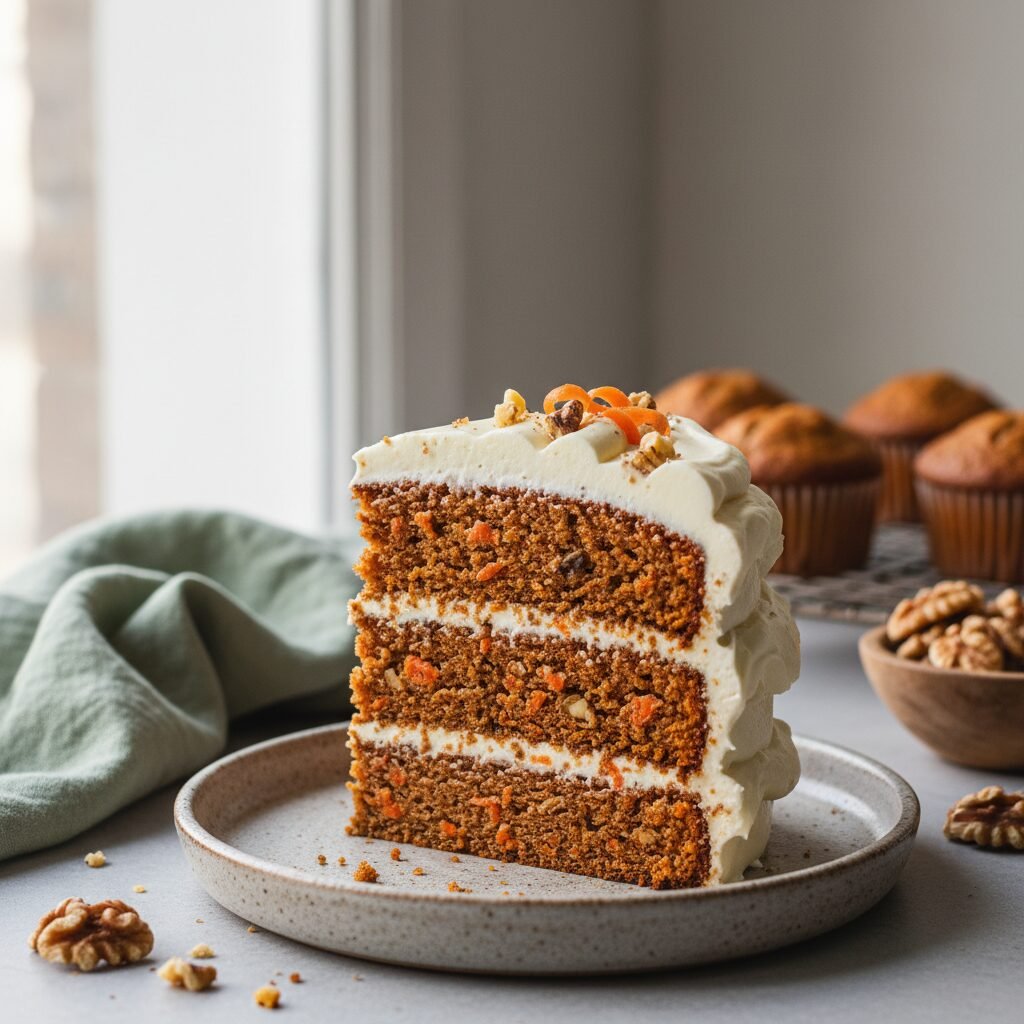
- Once the cakes are fully cooled, frost the top of one layer, stack the second layer on top, and cover the top and sides with the remaining buttercream. Garnish with extra nuts or carrot shreds if desired.
Expert Cooking Tips
- ✓Always grate your own carrots. Pre-shredded store-bought carrots are often dry and hard.
- ✓Room temperature ingredients are key. Ensure your almond milk and applesauce aren’t ice cold to prevent the oil from seizing.
- ✓Don’t overmix the batter. Stop mixing as soon as the flour streaks disappear to keep the cake tender.
- ✓Cool completely. Vegan cakes can be more fragile when warm. Let them cool fully to firm up before stacking.
- ✓Weigh your flour if possible. Using a kitchen scale (approx 125g per cup) prevents a dense, dry cake caused by packing too much flour into the cup.
Substitutions and Variations
This recipe is quite versatile, allowing for several dietary adjustments. If you need to make this gluten-free, substitute the all-purpose flour with a high-quality 1:1 gluten-free baking flour blend that contains xanthan gum. The texture may be slightly more delicate, so handle with care. For the oil, you can use melted coconut oil, vegetable oil, or grapeseed oil; olive oil works but may impart a stronger flavor. If you have a nut allergy, simply omit the walnuts or pecans, or swap them for pumpkin seeds or raisins for added texture. For the vegan buttermilk, soy milk is an excellent alternative to almond milk as it curdles very well due to its higher protein content. In the frosting, if you cannot find vegan butter sticks, high-quality vegan margarine can work, but you may need to add more powdered sugar to stabilize it as tub margarine has higher water content.
Common Mistakes to Avoid
The most common mistake in making carrot cake is using pre-shredded carrots from the grocery store. These carrots are often treated with preservatives and are dried out, which means they won’t release the moisture needed for the cake batter. Another frequent error is over-baking. Because this cake is dark due to the spices and brown sugar, it can be hard to tell when it’s done by color alone. Rely on the toothpick test. Additionally, rushing the cooling process is a recipe for disaster. Vegan buttercream is sensitive to heat; if your cake is even slightly warm, the fat in the frosting will separate and slide right off the cake. Finally, measuring flour by scooping the cup directly into the bag often packs the flour down, leading to a dry cake. Use the ‘spoon and level’ method or a scale.
Serving Suggestions
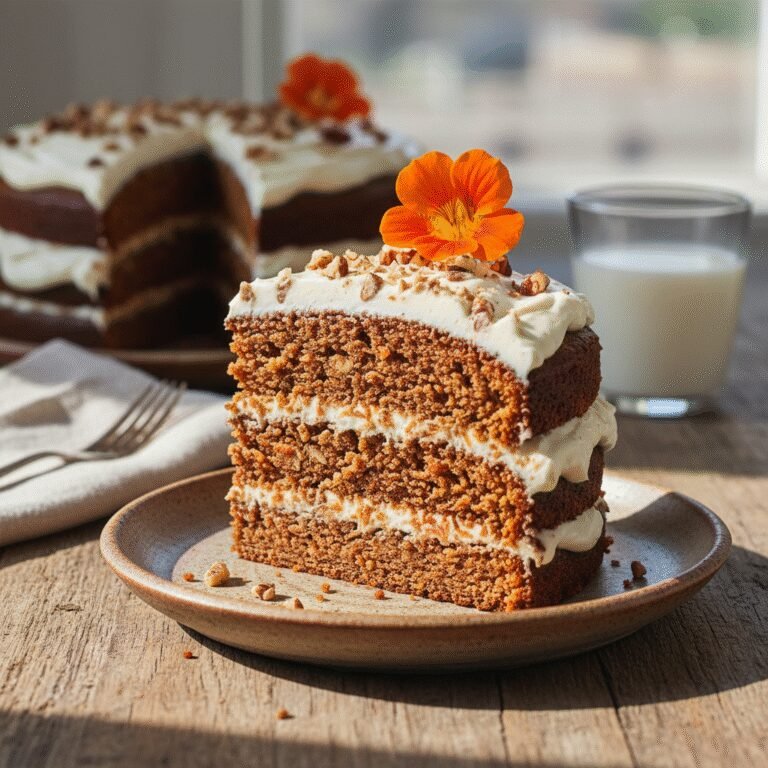
This moist vegan carrot cake is rich and flavorful, so it pairs beautifully with a beverage that cuts through the sweetness. Serve a slice alongside a hot cup of black coffee, an Earl Grey tea, or a cold glass of oat milk. For a festive presentation, garnish the top of the cake with candied walnuts, a dusting of cinnamon, or even edible flowers for a spring brunch. If you are serving this for a dinner party, a side of coconut whipped cream or a scoop of vanilla dairy-free ice cream elevates it to a restaurant-quality dessert. It is perfect for Easter celebrations, birthdays, or simply as a comforting afternoon treat.
Storage and Reheating Tips
Because of the fresh carrots and the moisture content, this cake is best stored in the refrigerator, especially if your kitchen is warm. Place the cake in an airtight cake carrier or cover it tightly with plastic wrap to prevent it from absorbing fridge odors. It will keep fresh in the fridge for up to 5-7 days. In fact, many find the flavor improves on the second day as the spices meld. For freezing, you can freeze individual slices wrapped in parchment paper and foil for up to 3 months. Thaw overnight in the fridge or on the counter for an hour before eating. If freezing unfrosted layers, wrap them tightly in plastic wrap and foil; frost them fresh after thawing.
Nutrition Facts (Estimated)
| Serving Size | 1 slice |
| Calories | 420 |
| Fat | 22g |
| Saturated Fat | 4g |
| Unsaturated Fat | 16g |
| Trans Fat | 0g |
| Cholesterol | 0mg |
| Sodium | 210mg |
| Carbohydrates | 54g |
| Fiber | 3g |
| Sugar | 32g |
| Protein | 4g |
Frequently Asked Questions
Can I make this recipe into cupcakes?
Absolutely! This batter works perfectly for cupcakes. Line a muffin tin with liners and fill them about 2/3 full. Bake at 350°F for 18-22 minutes. It should yield about 20-24 cupcakes.
Why did my cake sink in the middle?
Sinking usually happens if the oven door was opened too early, causing a sudden temperature drop, or if the cake was underbaked. It can also happen if there was too much leavening (baking soda/powder) or liquid in the batter.
Can I reduce the sugar in this recipe?
You can reduce the sugar slightly (by about 1/4 cup), but be aware that sugar contributes to the moisture and structure, not just sweetness. Reducing it too much may result in a rubbery texture.
Is this cake freezer friendly?
Yes, carrot cake freezes exceptionally well. The oil-based batter keeps it moist even after freezing and thawing. It’s best to freeze it without frosting if possible, but frosted slices freeze well too if wrapped carefully.
What helps the vegan buttercream stay stiff?
Using vegan butter sticks rather than tub margarine is crucial because sticks have a lower water content. Also, sifting the powdered sugar prevents lumps and ensures a stable structure. Chill the frosting if it gets too soft.
Can I add raisins or pineapple?
Yes! You can add 1/2 cup of raisins or 1/2 cup of well-drained crushed pineapple. If adding pineapple, you might want to slightly reduce the applesauce to avoid excess moisture.
Do I have to use coconut oil?
No, any neutral-flavored oil works. Canola, vegetable, or grapeseed oil are all excellent choices. Avoid strong oils like extra virgin olive oil unless you want that specific flavor profile.
Why is my vegan buttercream grainy?
Graininess usually comes from the powdered sugar not being sifted or the butter being too cold when mixing. Ensure your butter is softened (but not melted) and always sift your sugar.
Conclusion
There you have it—the definitive guide to making the best Moist Vegan Carrot Cake with Vegan Buttercream. This recipe proves that you don’t need dairy or eggs to create a dessert that is decadent, satisfying, and full of nostalgic flavor. Whether you are a seasoned vegan baker or just trying out plant-based options for the first time, this cake is forgiving, fun to make, and guaranteed to impress. The combination of the spicy, tender crumb and the sweet, tangy frosting is truly a match made in heaven. So grab your grater, preheat that oven, and get ready to enjoy a slice of pure bliss. Happy baking!