The Ultimate Moist Vegan Carrot Cake With Whipped Coconut Cream Frosting
Moist Vegan Carrot Cake With Coconut Cream Frosting Recipe
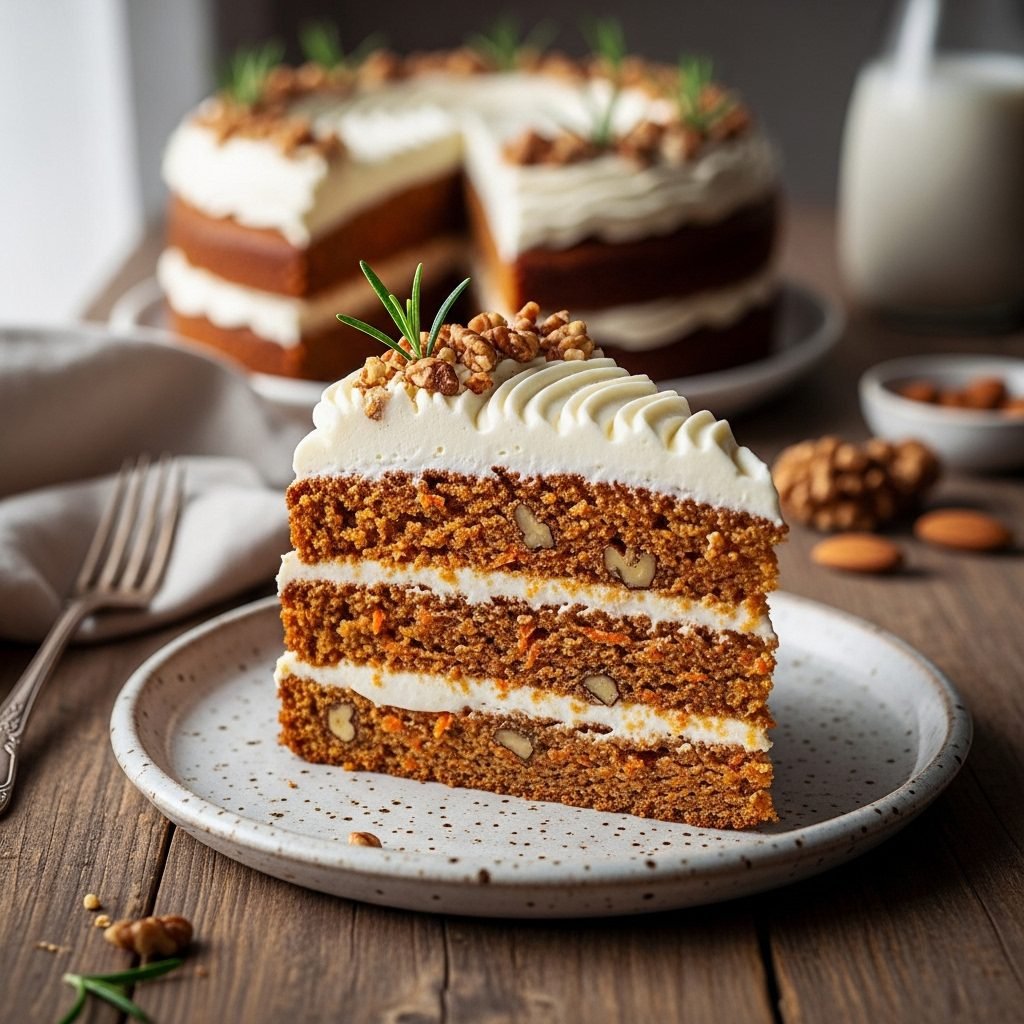
Discover the secret to the most incredibly moist, tender, and spiced vegan carrot cake you’ve ever tasted. Topped with a luscious, dairy-free whipped coconut cream frosting, this recipe rivals any traditional bakery version and is perfect for Easter, birthdays, or a cozy afternoon treat.
25 minutes
35 minutes
1 hour (plus cooling time)
12 servings
Dessert
Baking
American
Vegan
There is something undeniably comforting about a slice of carrot cake. It is the quintessential dessert that bridges the gap between savory earthiness and sweet indulgence, boasting a texture that is at once dense, fluffy, and satisfyingly moist. For years, the gold standard of carrot cake has relied heavily on eggs for structure and cream cheese for that signature tangy frosting. However, the plant-based culinary world has cracked the code, and I am thrilled to share a recipe that doesn’t just mimic the original—it surpasses it. This Moist Vegan Carrot Cake is a triumph of texture and flavor, dispelling the myth that vegan baking yields dry or crumbly results.
The magic lies in the balance of warm spices—cinnamon, nutmeg, and ginger—which infuse every crumb with an aromatic depth that pairs perfectly with the natural sweetness of the carrots. Unlike dry, sponge-like cakes, this batter utilizes a precise ratio of oil and moisture-rich ingredients like applesauce and brown sugar to ensure the cake stays tender for days. But the real showstopper here is the frosting. We are ditching the processed vegan cream cheeses often found in tubs for a homemade Whipped Coconut Cream Frosting. It is light, airy, and melts in your mouth, offering a subtle tropical undertone that elevates the spiced cake to a gourmet level. Whether you are a lifelong vegan, hosting a guest with dairy allergies, or simply looking to incorporate more plant-based treats into your repertoire, this cake promises to be a crowd-pleaser that will have everyone asking for seconds—and the recipe.
History & Origins
The history of carrot cake is a fascinating journey that traces back centuries, long before it became a staple in modern American coffee shops. Historians generally agree that carrot cake evolved from ‘carrot pudding,’ a dish popular in Medieval Europe. During the Middle Ages, sugar and other sweeteners were rare and prohibitively expensive commodities for the average household. Carrots, however, were abundant and known to contain more natural sugar than almost any other vegetable (second only to sugar beets). Resourceful cooks began incorporating them into sweet puddings and desserts to make them palatable without breaking the bank.
The transition from a steamed pudding to the baked cake we recognize today was gradual. Recipes for carrot cake began appearing in recipe books as early as the 19th century, often in Switzerland (where ‘Rüeblitorte’ remains a classic) and England. However, it wasn’t until the mid-20th century that carrot cake truly exploded in popularity in the United States. During World War II, rationing of sugar in the UK revived the medieval practice of using carrots as a sweetener, bringing the concept back into the public consciousness.
By the 1960s and 1970s, carrot cake found a new identity in America as a ‘health food.’ The inclusion of a vegetable led many to believe it was a nutritious alternative to chocolate cake, despite the generous amounts of oil and sugar typically used. It became a hippie-era icon, often dense with whole wheat flour and nuts. The addition of cream cheese frosting in the late 1960s solidified its status as a dessert icon. Today, the evolution continues with the rise of plant-based eating. Modern vegan carrot cake represents the latest chapter in this history, proving that culinary tradition can adapt to ethical and dietary shifts without losing the soul of the dish.
Why This Recipe Works
This recipe succeeds where many other vegan cakes fail because it focuses heavily on the science of moisture retention and structural integrity without eggs. In traditional baking, eggs provide lift, structure, and moisture. To replicate this, we use a combination of chemical leavening agents (baking soda and baking powder) reacting with an acid (apple cider vinegar). This reaction creates carbon dioxide bubbles, giving the cake a beautiful, airy rise that prevents it from becoming a dense brick.
Furthermore, the ‘moistness’ factor is achieved through a specific blend of oil and brown sugar. Oil is superior to butter in carrot cake because it remains liquid at room temperature, ensuring the cake feels moist on the palate rather than dry. Brown sugar, which contains molasses, is hygroscopic, meaning it attracts and holds water molecules, further preventing the cake from drying out.
Finally, the frosting technique is crucial. Traditional buttercream can be overly heavy and sweet. By using full-fat coconut milk that has been chilled, we separate the thick coconut cream from the water. When whipped with powdered sugar and a touch of lemon juice, it mimics the texture of whipped cream but with a stability closer to a soft buttercream. The lemon juice provides that necessary ‘tang’ usually associated with cream cheese, cutting through the sweetness and balancing the spice profile of the cake perfectly.
Why You’ll Love This Recipe
- ✓100% Vegan and Dairy-Free
- ✓Incredibly moist texture that lasts for days
- ✓Richly spiced with cinnamon, ginger, and nutmeg
- ✓Light and airy coconut cream frosting
- ✓No complicated egg replacers needed
- ✓Perfect for freezing and making ahead
Equipment You’ll Need
- ✓Two 8-inch round cake pans
- ✓Large mixing bowl
- ✓Medium mixing bowl
- ✓Box grater or food processor
- ✓Electric hand mixer or stand mixer
- ✓Whisk
- ✓Rubber spatula
- ✓Wire cooling rack
- ✓Parchment paper
Ingredients
- ✓2 1/2 cups all-purpose flour
- ✓2 teaspoons baking powder
- ✓1 teaspoon baking soda
- ✓1/2 teaspoon salt
- ✓2 teaspoons ground cinnamon
- ✓1 teaspoon ground ginger
- ✓1/4 teaspoon ground nutmeg
- ✓3/4 cup neutral oil (canola, vegetable, or melted coconut oil)
- ✓1 cup light brown sugar, packed
- ✓1/2 cup granulated sugar
- ✓1 cup unsweetened almond milk (or soy milk)
- ✓1 teaspoon apple cider vinegar
- ✓2 teaspoons pure vanilla extract
- ✓3 cups grated carrots (approx. 4-5 medium carrots, freshly grated)
- ✓3/4 cup chopped walnuts or pecans (optional)
- ✓2 cans (14 oz each) full-fat coconut milk, chilled in the fridge overnight (for frosting)
- ✓1/2 cup powdered sugar, sifted (for frosting)
- ✓1/2 teaspoon vanilla extract (for frosting)
- ✓1 teaspoon fresh lemon juice (for frosting)
Instructions
- Preheat your oven to 350°F (175°C). Grease two 8-inch round cake pans with oil and line the bottoms with parchment paper circles to ensure easy removal.
- In a small bowl or cup, combine the almond milk and apple cider vinegar. Stir gently and set aside for 5-10 minutes to curdle into a vegan ‘buttermilk’.
- In a large mixing bowl, whisk together the flour, baking powder, baking soda, salt, cinnamon, ginger, and nutmeg until well combined and no lumps remain.
- In a separate medium bowl, whisk together the oil, brown sugar, granulated sugar, vanilla extract, and the prepared almond milk mixture until smooth.
- Pour the wet ingredients into the dry ingredients. Use a rubber spatula to mix until just combined. Be careful not to overmix; a few small lumps are fine.
- Gently fold in the grated carrots and chopped walnuts (if using) until they are evenly distributed throughout the batter.
- Divide the batter evenly between the two prepared cake pans. Smooth the tops with your spatula.
- Bake for 30-35 minutes, or until a toothpick inserted into the center comes out clean or with just a few moist crumbs attached.
- Remove the cakes from the oven and let them cool in the pans for 15 minutes. Then, carefully invert them onto a wire rack to cool completely. The cakes must be 100% cool before frosting.
- To make the frosting: Remove the chilled cans of coconut milk from the fridge without shaking them. Open the cans and scoop out the thick, hardened coconut cream that has separated at the top into a mixing bowl. Discard the liquid water or save it for smoothies.
- Using an electric mixer, whip the coconut cream on high speed for 2-3 minutes until creamy and fluffy.
- Add the sifted powdered sugar, vanilla extract, and lemon juice. Whip for another minute until smooth and combined. If it feels too soft, refrigerate for 30 minutes to firm up.
- Once the cakes are completely cool, place one layer on a serving plate. Spread a generous layer of frosting over the top. Place the second cake layer on top and frost the top and sides of the entire cake.
- Garnish with extra chopped walnuts or a sprinkle of cinnamon if desired. Refrigerate the cake for at least 30 minutes before slicing to let the frosting set.
Expert Cooking Tips
- ✓Grate your own carrots using the medium holes of a box grater. Pre-shredded store-bought carrots are too dry and thick.
- ✓Do not skip the step of chilling the coconut milk cans overnight; this is essential for the cream to separate.
- ✓Measure flour correctly by spooning it into the measuring cup and leveling it off, rather than scooping directly from the bag.
- ✓Ensure your baking powder and baking soda are fresh to guarantee the cake rises properly.
- ✓If the frosting becomes too runny while decorating, pop the bowl and the cake back in the fridge for 15 minutes.
- ✓Use room temperature ingredients (except the coconut cream) to ensure the batter emulsifies properly.
- ✓Tap the cake pans on the counter before baking to release any large air bubbles.
Substitutions and Variations
This recipe is quite versatile if you need to make adjustments based on dietary needs or pantry staples. For a **Gluten-Free** version, substitute the all-purpose flour with a high-quality 1:1 gluten-free all-purpose baking flour blend (one that contains xanthan gum). The texture may be slightly denser but still delicious.
regarding the **Oil**, you can use melted coconut oil for a slight coconut flavor, or stick to neutral oils like avocado, canola, or vegetable oil. If you are looking to reduce fat, you can substitute half of the oil with unsweetened applesauce, though this will change the texture slightly, making it more ‘gummy’ and less fluffy.
For **Sugar**, coconut sugar is a fantastic refined-sugar-free alternative to brown sugar and adds a lovely caramel note. Maple syrup can be used but requires altering the liquid ratios, so granular sugars are safer.
If you have a **Nut Allergy**, simply omit the walnuts or pecans; you can replace them with raisins, dried cranberries, or even toasted pumpkin seeds for crunch.
Finally, for the **Frosting**, if you dislike coconut or can’t find full-fat canned milk, a standard vegan buttercream made with vegan butter sticks and powdered sugar works perfectly well.
Common Mistakes to Avoid
The most common mistake with vegan carrot cake is **overmixing the batter**. Once the wet and dry ingredients meet, the gluten begins to develop. If you mix too vigorously, you will end up with a rubbery, tough cake rather than a tender one. Mix only until the flour streaks disappear.
Another frequent error is **using ‘Lite’ coconut milk** for the frosting. Lite coconut milk does not have enough fat content to separate or whip up; you will end up with a watery soup. You must use full-fat canned coconut milk or coconut cream.
**Frosting a warm cake** is a recipe for disaster. Vegan frostings, especially coconut-based ones, are more heat-sensitive than dairy buttercreams. If the cake retains even a hint of warmth, the frosting will melt and slide right off. Be patient and let the cake cool completely.
Lastly, **opening the oven door too early** can cause the cake to sink in the middle. Resist the urge to check on it until at least 25 minutes have passed.
Serving Suggestions
This cake is rich and flavorful, so it pairs beautifully with beverages that can cut through the sweetness. Serve a slice with a hot cup of black coffee, an Earl Grey tea, or a glass of cold oat milk. It makes for a stunning centerpiece at Easter brunch, Mother’s Day gatherings, or autumn dinner parties. For an elegant presentation, garnish the top with edible flowers, candied ginger, or toasted coconut flakes. If you are serving this at a dinner party, a small dollop of tart raspberry coulis on the plate adds a nice acidity that contrasts well with the creamy frosting.
Storage and Reheating Tips
Because of the coconut cream frosting and the high moisture content of the cake, this dessert is best stored in the refrigerator. Place it in an airtight cake carrier or cover it gently with plastic wrap (once the frosting is set). It will keep well in the fridge for up to 5 days. In fact, many find it tastes even better on the second day as the spices have time to meld.
**Freezing:** You can freeze the cake layers unfrosted for up to 2 months. Wrap them tightly in plastic wrap and then aluminum foil. To freeze a finished slice or the whole frosted cake, place it in the freezer uncovered for an hour to harden the frosting, then wrap it tightly. Thaw overnight in the refrigerator before serving. Do not microwave to thaw, or the frosting will melt.
Nutrition Facts (Estimated)
| Serving Size | 1 slice |
| Calories | 420 |
| Fat | 24g |
| Saturated Fat | 12g |
| Unsaturated Fat | 10g |
| Trans Fat | 0g |
| Cholesterol | 0mg |
| Sodium | 210mg |
| Carbohydrates | 48g |
| Fiber | 3g |
| Sugar | 28g |
| Protein | 4g |
Frequently Asked Questions
Can I use store-bought shredded carrots?
It is highly recommended to grate them yourself. Store-bought shreds are often thick, dry, and hard, which can ruin the texture of the cake. Freshly grated carrots release moisture that is vital for the cake’s tenderness.
Why did my coconut cream not whip up?
This usually happens if the can wasn’t chilled long enough or if the brand of coconut milk contains guar gum or stabilizers that prevent separation. Ensure the can is in the coldest part of your fridge for at least 24 hours.
Can I make this as cupcakes instead?
Absolutely! This recipe will yield approximately 18-24 cupcakes. Reduce the baking time to 18-22 minutes and check for doneness with a toothpick.
Is this cake gluten-free?
As written, it contains wheat flour. However, you can successfully substitute the flour with a 1:1 Gluten-Free Baking Flour blend.
Does the frosting taste strongly of coconut?
It does have a distinct coconut flavor. If you want to mask it, adding a bit more lemon juice and vanilla helps, but for a strictly neutral flavor, you might prefer a vegan butter-based frosting.
Why did my cake sink in the middle?
This can happen if the oven door was opened too early, the oven wasn’t hot enough, or if too much leavening (baking soda/powder) was used. Ensure your oven is fully preheated.
Can I use fresh ginger instead of ground?
Yes, you can use about 1 tablespoon of freshly grated ginger for a zestier kick, but ground ginger provides a warmer, more traditional baking spice flavor.
What if I don’t have apple cider vinegar?
You can substitute it with white distilled vinegar or an equal amount of lemon juice. The acid is necessary to react with the baking soda.
Conclusion
This Moist Vegan Carrot Cake with Coconut Cream Frosting is more than just a dietary alternative; it is a celebration of flavor, texture, and the joy of baking. It proves that you don’t need dairy or eggs to create a dessert that is decadent, satisfying, and beautiful. Whether you are baking for a special occasion or just to treat yourself on a weekend, this recipe is forgiving, fun, and guaranteed to impress. So, grab your mixing bowls, grate those carrots, and get ready to enjoy a slice of pure, plant-based bliss. Happy baking!