
The Ultimate Moist Low Carb Mug Cake With Stevia: A Keto Chocolate Dream in 2 Minutes
Moist Low Carb Mug Cake With Stevia Recipe
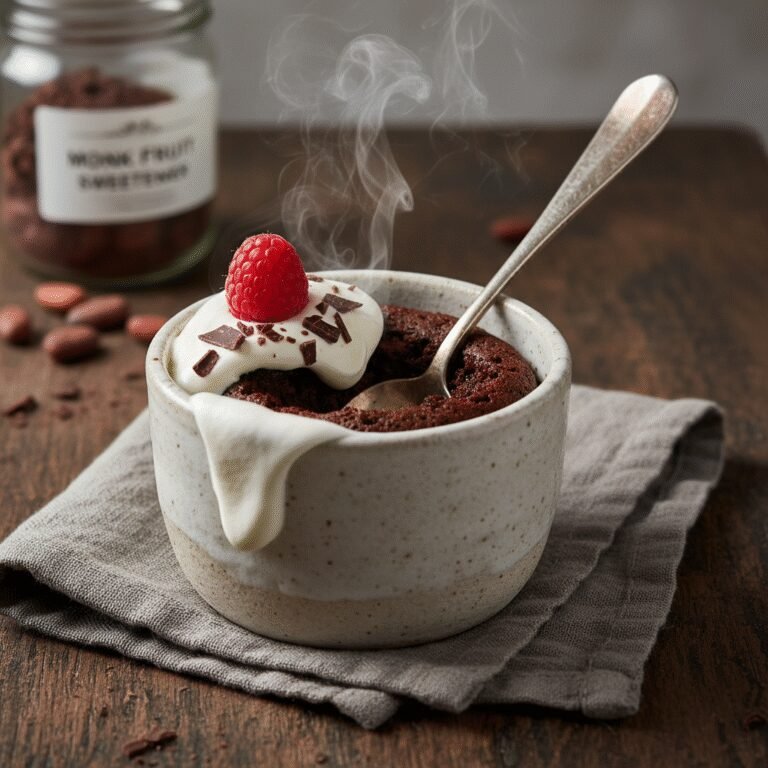
Satisfy your deepest chocolate cravings instantly with this ultra-moist, low-carb mug cake sweetened naturally with stevia. Ready in under two minutes, this gluten-free and keto-friendly treat delivers a rich, fudge-like texture without the sugar crash, making it the perfect guilt-free midnight snack.
2 minutes
90 seconds
4 minutes
1 serving
Dessert
Microwave
American
Keto
We have all been there: it is 9 PM, the house is quiet, and suddenly, a craving for something rich, decadent, and chocolatey hits you like a freight train. In the past, this might have meant raiding the pantry for sugary cookies or spending an hour baking an entire cake that you definitely do not need sitting on your counter. Enter the life-changing magic of the low-carb mug cake. This isn’t just any quick fix; it is a carefully crafted recipe designed to replicate the tender crumb and moist mouthfeel of a traditional bakery-style chocolate cake, all while keeping your blood sugar stable and your carb count low.
What makes this specific recipe a standout in the crowded world of keto desserts is its reliance on stevia as the primary sweetener. Many low-carb treats suffer from a cooling aftertaste or a gritty texture, but by balancing the stevia with the right ratio of fats and cocoa, we achieve a sweetness that feels natural and satisfying. The combination of almond flour and high-quality cocoa powder creates a dense, brownie-like consistency that is often missing in grain-free baking. Whether you are a seasoned keto veteran or just someone looking to cut down on refined sugar without sacrificing joy, this mug cake is a revelation. It is warm, comforting, and perfectly portioned for one, eliminating the temptation of leftovers. Imagine digging your spoon into a steaming, fluffy cake that took less time to make than a commercial break—that is the promise of this recipe.
History & Origins
The concept of the ‘mug cake’ is a relatively modern culinary phenomenon, largely born out of the microwave cooking boom of the late 20th century and the internet age’s demand for instant gratification. While microwave baking dates back to the introduction of the appliance itself, early attempts were often rubbery and unappetizing. It wasn’t until the mid-2000s, with the rise of food blogging and viral internet recipes, that the mug cake was refined into a legitimate dessert category. It offered a solution to urban dwellers with small kitchens, college students in dorms, and busy parents needing a quick treat.
Parallel to the rise of the mug cake was the increasing awareness of sugar’s impact on health and the subsequent explosion of the low-carb and ketogenic diet movements. As people turned away from wheat flour and cane sugar, home cooks began experimenting with almond flour, coconut flour, and alternative sweeteners. Stevia, a natural sweetener derived from the leaves of the Stevia rebaudiana plant, has been used for centuries in South America but only gained mainstream traction in the US market in the late 2000s and early 2010s. The convergence of these two trends—the convenience of microwave baking and the health-conscious shift toward low-glycemic ingredients—birthed the low-carb mug cake. This recipe represents the culmination of years of community experimentation, refining the delicate balance between gluten-free flours and natural sweeteners to create a modern classic that honors both convenience and health.
Why This Recipe Works
Baking is chemistry, and microwave baking is a particularly volatile branch of that science. This recipe works because it specifically addresses the two biggest pitfalls of keto mug cakes: dryness and the ‘eggy’ flavor. First, we tackle moisture. Almond flour is naturally high in fat, but it lacks the gluten structure of wheat flour. To compensate, we use a specific ratio of melted butter (or coconut oil) and a splash of heavy cream. This fat encapsulates the flour particles, preventing them from absorbing too much liquid and becoming tough during the rapid heat of the microwave.
Secondly, the sweetener issue. Stevia is incredibly potent, and using too much can lead to a bitter, metallic aftertaste. This recipe uses a precise amount of liquid or powdered stevia that is counterbalanced by the bitterness of the dark cocoa powder and the richness of the vanilla extract. The result is a harmonious flavor profile where the chocolate shines, not the sweetener. Furthermore, the inclusion of a small amount of baking powder provides just enough lift to make the cake fluffy rather than a dense puck, while the egg provides the necessary structure to hold it all together. The cooking time is also optimized; by stopping just before it looks fully set, we allow the residual heat to finish the cooking process, ensuring the center remains molten and moist.
Why You’ll Love This Recipe
- ✓Ready in under 5 minutes from prep to first bite.
- ✓Less than 4g of net carbs per serving, perfect for keto diets.
- ✓Uses pantry staples like almond flour and cocoa powder.
- ✓Single-serving portion control prevents overeating.
- ✓Naturally sweetened with stevia, avoiding sugar spikes.
- ✓Highly customizable with nuts, chips, or berries.
Equipment You’ll Need
- ✓Microwave-safe mug (10-12 oz)
- ✓Small mixing spoon or mini whisk
- ✓Measuring spoons
Ingredients
- ✓2 tablespoons superfine almond flour
- ✓1 tablespoon unsweetened cocoa powder
- ✓1/2 teaspoon baking powder
- ✓1 pinch sea salt
- ✓1 large egg
- ✓1 tablespoon unsalted butter, melted (or coconut oil)
- ✓1 tablespoon heavy whipping cream (or almond milk)
- ✓1/2 teaspoon pure vanilla extract
- ✓10-15 drops liquid stevia (or 1-2 tablespoons granular stevia blend, to taste)
- ✓1 tablespoon sugar-free chocolate chips (optional)
Instructions
- Begin by selecting a microwave-safe mug that holds at least 10-12 ounces to prevent overflowing. Place the tablespoon of butter in the mug and microwave for 15-20 seconds until fully melted.
- Add the almond flour, cocoa powder, baking powder, and salt directly into the mug with the melted butter. Stir vigorously with a spoon or mini whisk to remove any lumps, creating a thick paste.
- Crack the egg into the mug. Add the heavy whipping cream, vanilla extract, and liquid stevia.
- Whisk everything together thoroughly. Ensure you scrape the bottom edges of the mug where dry flour tends to hide. The batter should be smooth and glossy.
- If using chocolate chips, fold them in now. Push a few down into the center of the batter for a molten core effect.
- Place the mug in the center of the microwave. Cook on high power for 60 to 90 seconds. The timing depends heavily on your microwave’s wattage (usually 90 seconds for 700W, 60 seconds for 1000W+).
- Watch the cake rise; it is done when it has puffed up and the top looks set but slightly shiny in the center. Do not overcook, or it will become dry.
- Remove the mug carefully (it will be hot!) and let it sit for 1 minute to cool and set the structure before eating.
Expert Cooking Tips
- ✓Use superfine almond flour rather than almond meal for a lighter, cake-like texture.
- ✓Do not skip the salt; it is essential for enhancing the chocolate flavor and masking any stevia aftertaste.
- ✓Microwave power varies significantly; start with 60 seconds and add 10-second intervals if needed.
- ✓Grease the rim of the mug slightly with butter to help the cake rise evenly without sticking.
- ✓For an extra moist cake, add a teaspoon of mayonnaise or sour cream to the batter.
- ✓Mix dry ingredients first, then wet, to avoid clumps of baking powder or cocoa.
- ✓Letting the batter sit for 1 minute before cooking allows the almond flour to hydrate slightly.
Substitutions and Variations
This recipe is highly adaptable to various dietary needs and pantry limitations. If you are allergic to almonds or nut-free, you can substitute the almond flour with sunflower seed flour in a 1:1 ratio. Coconut flour is not a direct 1:1 substitute as it is highly absorbent; if you must use coconut flour, use only 1 tablespoon and add an extra tablespoon of liquid. For a dairy-free version, swap the butter for coconut oil or melted ghee, and replace the heavy cream with full-fat canned coconut milk or almond milk. Regarding the sweetener, if you prefer erythritol or monk fruit over stevia, you can use about 1 to 1.5 tablespoons of a granular blend. Just be aware that granular sweeteners can sometimes recrystallize upon cooling. If you don’t have an egg, you can try a ‘flax egg’ (1 tbsp ground flaxseed meal + 3 tbsp water), but the rise will be less dramatic and the texture denser.
Common Mistakes to Avoid
The most common mistake with mug cakes is overcooking. Because microwaves cook from the inside out, a cake that looks slightly wet on top is often perfectly done in the middle. If you cook it until it looks completely dry, the texture will be rubbery and tough. Another frequent error is using a mug that is too small or narrow; this causes the batter to spill over the sides during the rapid rise, creating a mess in your microwave. Always opt for a wider mug or a small ramekin. Additionally, failing to mix the batter thoroughly is a culprit for bad texture; finding a pocket of dry almond flour or a lump of baking powder at the bottom of the mug is unpleasant. Finally, be careful with stevia dosage; brands vary wildly in concentration, so start with less and taste the batter (if you are comfortable with raw egg) or adjust the next time you make it.
Serving Suggestions
While delicious on its own, this mug cake shines with toppings. A dollop of unsweetened whipped cream or coconut cream adds a luxurious coolness that contrasts beautifully with the warm cake. Fresh berries, particularly raspberries or strawberries, provide a tart acidity that cuts through the richness of the chocolate. For a nutty crunch, sprinkle chopped walnuts, pecans, or toasted almond slivers on top before or after cooking. If you are feeling extra decadent, drizzle a little sugar-free caramel sauce or melted peanut butter over the warm cake. Serve it immediately while it is still warm for the best gooey texture.
Storage and Reheating Tips
Mug cakes are best enjoyed immediately after cooking. The texture tends to change as they cool, becoming denser. However, if you cannot finish it, you can cover the mug with plastic wrap and store it in the refrigerator for up to 24 hours. To reheat, microwave it for 10-15 seconds, just enough to warm it through. Do not freeze the cooked cake, as the texture will become spongy and unappealing upon thawing. If you want to meal prep, you can pre-mix the dry ingredients in small ziplock bags or jars. When a craving strikes, simply dump a bag into a mug, add the wet ingredients, and cook.
Nutrition Facts (Estimated)
| Serving Size | 1 mug cake |
| Calories | 320 |
| Fat | 28g |
| Saturated Fat | 10g |
| Unsaturated Fat | 16g |
| Trans Fat | 0g |
| Cholesterol | 185mg |
| Sodium | 180mg |
| Carbohydrates | 8g |
| Fiber | 4g |
| Sugar | 1g |
| Protein | 9g |
Frequently Asked Questions
Can I make this recipe without an egg?
Yes, but the texture will be different. You can use a flax egg (1 tbsp ground flaxseed + 3 tbsp water) or 1/4 cup of pumpkin puree. The cake will be denser and less fluffy, more like a fudgy pudding.
Why did my mug cake turn out dry?
The most likely culprit is overcooking. Microwaves are powerful, and even 10 extra seconds can dry out almond flour. Next time, reduce the cooking time by 15-20 seconds. Also, ensure you measured your flour correctly; packing it down adds too much dry matter.
Can I bake this in an oven instead of a microwave?
Absolutely. Pour the batter into an oven-safe ramekin and bake at 350°F (175°C) for approximately 12-15 minutes. Keep an eye on it; it is done when a toothpick inserted comes out mostly clean.
Is stevia the only sweetener I can use?
No, you can use any heat-stable sweetener you prefer. Erythritol, Monk Fruit, or Allulose are great keto options. If you are not low-carb, maple syrup or honey works too, though the texture may be slightly wetter.
Why does my cake taste bitter?
Bitter cake usually results from too much baking powder or too much stevia. Stevia has a bitter aftertaste if overused. Ensure you are using high-quality cocoa powder as well, as some cheaper brands are harsher.
Can I double the recipe?
You can, but do not cook it in the same mug unless it is a soup mug or bowl. It is better to mix a double batch and split it between two mugs to ensure even cooking.
Is this recipe gluten-free?
Yes, provided you use certified gluten-free baking powder and ensure your almond flour was processed in a gluten-free facility. All the core ingredients are naturally gluten-free.
Can I add protein powder?
Yes, you can replace 1 tablespoon of almond flour with 1 tablespoon of protein powder (whey or casein). However, protein powder can dry out baked goods, so you might need to add an extra teaspoon of cream or water.
What kind of cocoa powder should I use?
Unsweetened Dutch-processed cocoa powder is best for a smoother, mellower chocolate flavor. Natural cocoa powder is more acidic and lighter in color but works fine too.
Conclusion
This Moist Low Carb Mug Cake with Stevia is more than just a recipe; it is a survival tool for anyone committed to a healthy lifestyle who refuses to give up the simple pleasure of chocolate. It proves that you do not need sugar, gluten, or hours of time to create something truly delicious. By keeping these simple ingredients on hand, you are always just a few minutes away from a warm, comforting treat that nourishes your body as much as it delights your taste buds. Whether you are celebrating a small victory, comforting a bad day, or just enjoying a quiet moment to yourself, this mug cake is the perfect companion. Give it a try tonight, and you might just find yourself wondering how you ever lived without it.