The Ultimate Moist Low Carb Mug Cake With Erythritol
Moist Low Carb Mug Cake With Erythritol Recipe
Satisfy your chocolate cravings in under 5 minutes with this ultra-moist, keto-friendly mug cake. Using erythritol for guilt-free sweetness and almond flour for a tender crumb, this single-serve dessert is the perfect solution for late-night treats without breaking your diet.
2 minutes
1 minute
3 minutes
1 serving
Dessert
Microwave
American / Keto
Keto / Gluten-Free
There is a specific kind of desperation that hits around 9 PM on a Tuesday. It is the craving for something rich, chocolatey, and comforting, but for those of us living a low-carb or ketogenic lifestyle, the options are often limited to a square of dark chocolate or a spoonful of peanut butter. Enter the holy grail of keto desserts: the Moist Low Carb Mug Cake with Erythritol. This isn’t just a compromise; it is a revelation. Many low-carb mug cakes suffer from the dreaded ‘spongey’ or rubbery texture, often resulting from an over-reliance on eggs or coconut flour without adequate fat to balance the microwave’s aggressive cooking method. This recipe changes the narrative entirely. By carefully balancing almond flour with high-quality cocoa powder and the right amount of healthy fats, we achieve a texture that rivals a traditional oven-baked brownie. The star of the show here is erythritol, a natural sweetener that provides the necessary sweetness without the insulin spike associated with sugar. Unlike other sweeteners that can leave a bitter aftertaste, erythritol pairs magnificently with the bitterness of dark cocoa, creating a harmonious flavor profile that feels sophisticated rather than sickly sweet. This cake is designed to be fudge-like in the center while fully cooked on the edges, offering a textural contrast that is deeply satisfying. Whether you are a veteran of the keto diet or just looking to reduce your sugar intake, this mug cake is a testament to the fact that healthy eating does not require sacrificing the simple joys of a warm, homemade dessert. It is quick, it is messy in the best way possible, and it is waiting for you to make it.
History & Origins
The concept of the ‘mug cake’ is a relatively modern culinary phenomenon, born from the intersection of microwave technology and the internet age’s demand for instant gratification. While the microwave oven was invented by Percy Spencer in 1945, it wasn’t until the mid-2000s, with the rise of food blogging and viral email chains, that the ‘cake in a mug’ concept truly took flight. Originally, these recipes were standard high-sugar, high-flour concoctions designed for college students in dorm rooms. However, as the understanding of nutrition evolved, so did the mug cake. The Ketogenic diet, which traces its clinical roots back to the 1920s as a treatment for epilepsy, saw a massive mainstream resurgence in the late 2010s. With this resurgence came a wave of home cooks attempting to recreate comfort foods using low-carb ingredients. The challenge was significant: how to replace the structural integrity of gluten and the caramelization of sugar in a microwave environment. The introduction of accessible almond flour and erythritol to the mass market was a game-changer. Erythritol, a sugar alcohol discovered in 1848 by Scottish chemist John Stenhouse, became the sweetener of choice for the modern keto baker due to its zero-calorie profile and high digestive tolerance compared to other polyols. This specific recipe represents the culmination of years of community trial and error, moving away from the dry, egg-heavy experiments of the early keto days toward a refined, culinary-grade dessert that respects both the history of the quick-bread and the nutritional science of the low-carb lifestyle.
Why This Recipe Works
Microwave baking is fundamentally different from oven baking. An oven heats from the outside in, allowing for crust formation and gradual rising. A microwave, conversely, excites water molecules throughout the batter simultaneously, effectively steaming the cake from the inside out. This is why many mug cakes turn out rubbery; the proteins in the egg coagulate too tightly before the structure sets. This recipe works because we manipulate the fat-to-protein ratio to mitigate this toughening effect. By using melted butter (or coconut oil) and a splash of heavy cream, we coat the flour proteins, inhibiting gluten formation (even in gluten-free flours, protein bonding occurs) and keeping the crumb tender. Furthermore, the choice of erythritol is crucial here. Sugar is hygroscopic, meaning it holds onto water. Erythritol behaves differently; it doesn’t hold moisture as well as sugar, which can lead to dryness. To combat this, we include a higher ratio of cocoa powder and almond flour, which adds density and richness. The addition of a pinch of salt and vanilla extract is not just for flavor; they act as flavor potentiators, masking the ‘cooling effect’ sometimes associated with erythritol. Finally, the cooking time is calibrated for a standard 1000-watt microwave to stop exactly at the point of set, utilizing carryover cooking to finish the center, ensuring a moist, lava-cake-like consistency rather than a dry sponge.
Why You’ll Love This Recipe
- ✓Ready in under 5 minutes from start to finish
- ✓Uses erythritol for zero-glycemic impact
- ✓Rich, fudge-like texture without being rubbery
- ✓Gluten-free and grain-free ingredients
- ✓Highly customizable with mix-ins like nuts or berries
- ✓Perfect single-serving portion control
Equipment You’ll Need
- ✓Microwave-safe mug (10-12 oz)
- ✓Small mixing bowl or ramekin
- ✓Whisk or fork
- ✓Measuring spoons
Ingredients
- ✓2 tablespoons superfine almond flour
- ✓1 tablespoon unsweetened cocoa powder
- ✓1 1/2 tablespoons granulated erythritol
- ✓1/2 teaspoon baking powder
- ✓1 tablespoon salted butter, melted
- ✓1 large egg, room temperature
- ✓1 tablespoon heavy whipping cream (or almond milk)
- ✓1/2 teaspoon vanilla extract
- ✓1 pinch pink Himalayan salt
Instructions
- Start by melting the butter in your microwave-safe mug for about 15-20 seconds until fully liquid.
- Add the almond flour, cocoa powder, erythritol, baking powder, and salt directly into the mug with the melted butter.
- Whisk the dry ingredients and butter together with a fork until a thick paste forms to ensure no lumps of cocoa powder remain.
- Crack the egg into the mug and add the heavy cream and vanilla extract.
- Vigorously whisk the batter with your fork for 30-45 seconds. You want to incorporate some air and ensure the egg is fully emulsified with the fats.
- Place the mug in the center of the microwave. Cook on high power for 60 seconds. Watch the cake rise; it should puff up significantly.
- Check the consistency. The top should be set but slightly shiny. If it looks too wet, microwave in additional 10-second intervals. Do not overcook.
- Remove carefully (the mug will be hot) and let it sit for 1 minute to cool and firm up before eating.
Expert Cooking Tips
- ✓Do not skip the cooling time; the cake continues to cook and set after removing it from the microwave.
- ✓Use room temperature eggs if possible to prevent the melted butter from seizing up when mixed.
- ✓If you find erythritol has a gritty texture, use powdered (confectioners) style erythritol instead of granulated.
- ✓Place a paper towel under the mug in the microwave just in case of any overflow during the rising process.
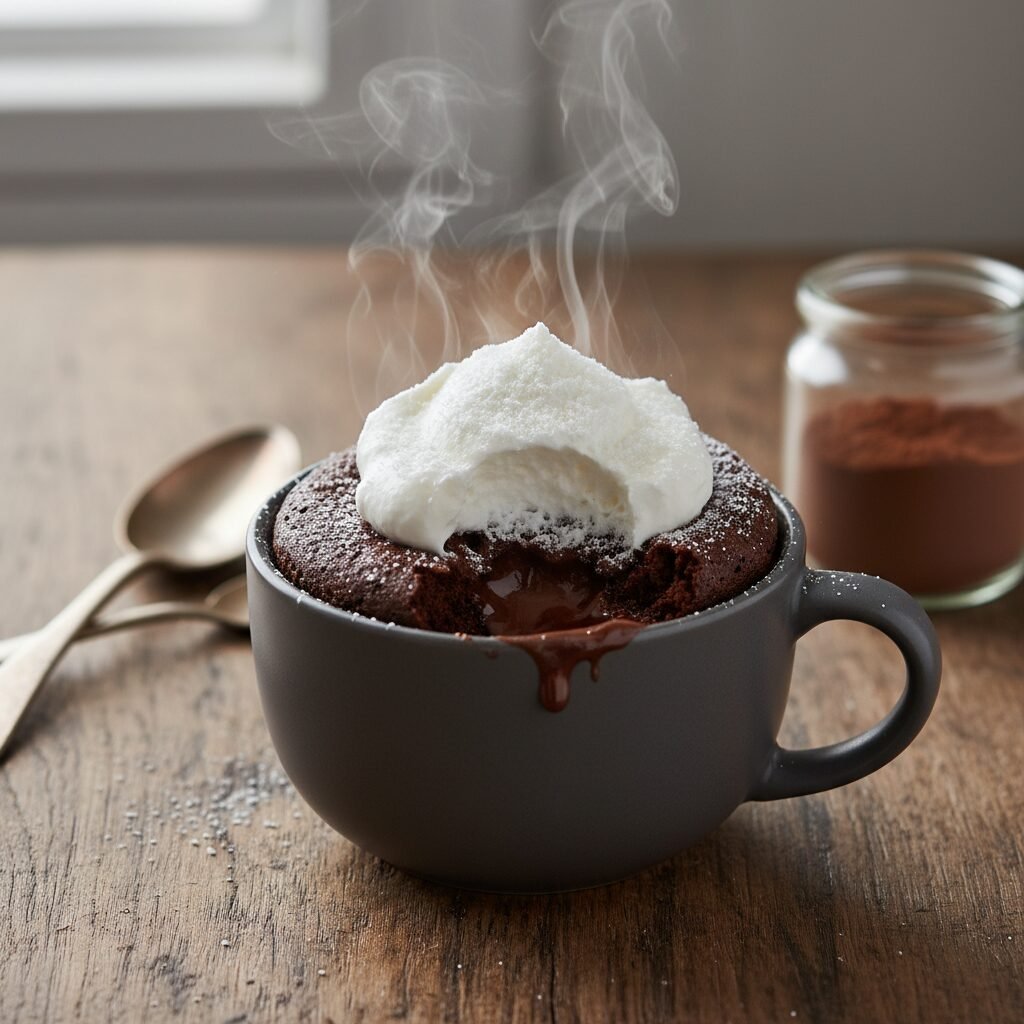
- ✓For a molten center, reduce the cooking time by 10-15 seconds.
Substitutions and Variations
Flexibility is key with mug cakes. If you do not have almond flour, you can substitute it with 1 tablespoon of coconut flour, but be aware that coconut flour absorbs much more liquid, so you may need to add an extra teaspoon of cream. For a dairy-free version, replace the butter with melted coconut oil and the heavy cream with full-fat canned coconut milk or almond milk. If you do not have erythritol, this recipe works equally well with monk fruit sweetener, xylitol (keep away from pets), or allulose. Allulose will actually result in a softer, more caramel-like texture and browns better than erythritol. You can also swap the cocoa powder for a scoop of low-carb protein powder, but remove a teaspoon of almond flour to compensate for the dryness.
Common Mistakes to Avoid
The most common mistake is overcooking the mug cake. Microwaves vary wildly in wattage. A cake that takes 60 seconds in a 1000W microwave might take 90 seconds in a 700W one, or only 45 seconds in a 1200W one. Always err on the side of undercooking. Another mistake is not mixing the batter thoroughly. Pockets of dry almond flour or unmixed egg white can ruin the texture. Ensure you scrape the bottom edges of the mug with your fork. Lastly, using a mug that is too small or too narrow can cause the batter to overflow or cook unevenly. A wide-mouth mug is superior to a tall, narrow one for even heat distribution.
Serving Suggestions
This mug cake is decadent enough to stand on its own, but it shines with toppings. A dollop of unsweetened whipped cream or coconut cream cuts through the richness of the chocolate. Fresh berries, particularly raspberries or strawberries, add a tart contrast and a pop of color. For an extra indulgence, add a tablespoon of sugar-free peanut butter into the center of the batter before cooking for a ‘lava’ effect. A dusting of powdered erythritol over the top makes for a beautiful presentation.
Storage and Reheating Tips
Mug cakes are best enjoyed immediately while warm. However, if you cannot finish it, you can store the leftovers in the refrigerator for up to 24 hours. Cover the mug tightly with plastic wrap to prevent it from drying out. To reheat, simply microwave for 10-15 seconds. Do not freeze this mug cake, as the texture of the almond flour sponge tends to become grainy and weep moisture upon thawing.
Nutrition Facts (Estimated)
| Serving Size | 1 mug cake |
| Calories | 320 |
| Fat | 28g |
| Saturated Fat | 12g |
| Unsaturated Fat | 14g |
| Trans Fat | 0g |
| Cholesterol | 85mg |
| Sodium | 180mg |
| Carbohydrates | 8g |
| Fiber | 5g |
| Sugar | 1g |
| Protein | 10g |
Frequently Asked Questions
Can I make this without an egg?
Yes, but the texture will be denser. You can use a ‘flax egg’ (1 tbsp ground flaxseed meal mixed with 3 tbsp water) or 1/4 teaspoon of xanthan gum mixed with extra liquid, but the rise will be less significant.
Why does my mug cake taste salty?
If you used salted butter and added the pinch of salt called for in the recipe, it might be too much for your palate. Try using unsalted butter or omitting the extra pinch of salt.
Is erythritol safe for dogs?
Erythritol is generally considered safe for dogs, unlike Xylitol which is toxic. However, chocolate is toxic to dogs, so keep this chocolate mug cake away from pets regardless of the sweetener used.
Can I bake this in the oven instead?
Yes. Pour the batter into a greased ramekin and bake at 350°F (175°C) for 12-15 minutes. The texture will be slightly lighter and more cake-like than the microwave version.
Why did my cake sink?
It is normal for a mug cake to deflate slightly after removing it from the heat. However, if it collapses completely, it may be undercooked, or you may have used too much baking powder, causing it to rise too fast and break the structure.
What is the net carb count?
This recipe contains approximately 3g to 4g of net carbs, depending on the specific brands of cocoa powder and almond flour used. Net carbs are calculated by subtracting fiber and sugar alcohols from total carbohydrates.
Can I multiply the recipe?
Do not multiply the ingredients to cook in a single mug; it will not cook evenly. If you want to make two servings, mix them in separate mugs and cook them one at a time.
Why is my cake dry?
Overcooking is the primary culprit. Even 10 extra seconds in a microwave can dry out almond flour. Also, ensure you measured the flour by leveling the spoon, not packing it down.
Does erythritol have a cooling effect?
Erythritol can have a sensation similar to mint. This is minimized in this recipe by the high fat content and the strong flavor of cocoa and vanilla.
Can I use Stevia instead?
Pure Stevia extract is much more potent than erythritol. If using liquid stevia, use only a few drops. If using a stevia blend, check the conversion chart on the package, as it likely won’t be a 1:1 volume swap.
Conclusion
In the world of dietary restrictions, finding a dessert that feels like a genuine treat rather than a compromise is a victory. This Moist Low Carb Mug Cake with Erythritol offers that victory in less than five minutes. It combines the ease of modern cooking with the nutritional principles of the ketogenic diet, resulting in a dessert that is rich, satisfying, and surprisingly foolproof. Whether you need a quick breakfast substitute, a post-workout snack, or a late-night chocolate fix, this recipe is a reliable staple that deserves a permanent place in your culinary repertoire. Grab your favorite mug, and enjoy the sweet side of low-carb living.