Ultra-Moist Keto Lemon Pound Cake With Monk Fruit Sweetener
Moist Keto Lemon Pound Cake With Monk Fruit Sweetener Recipe
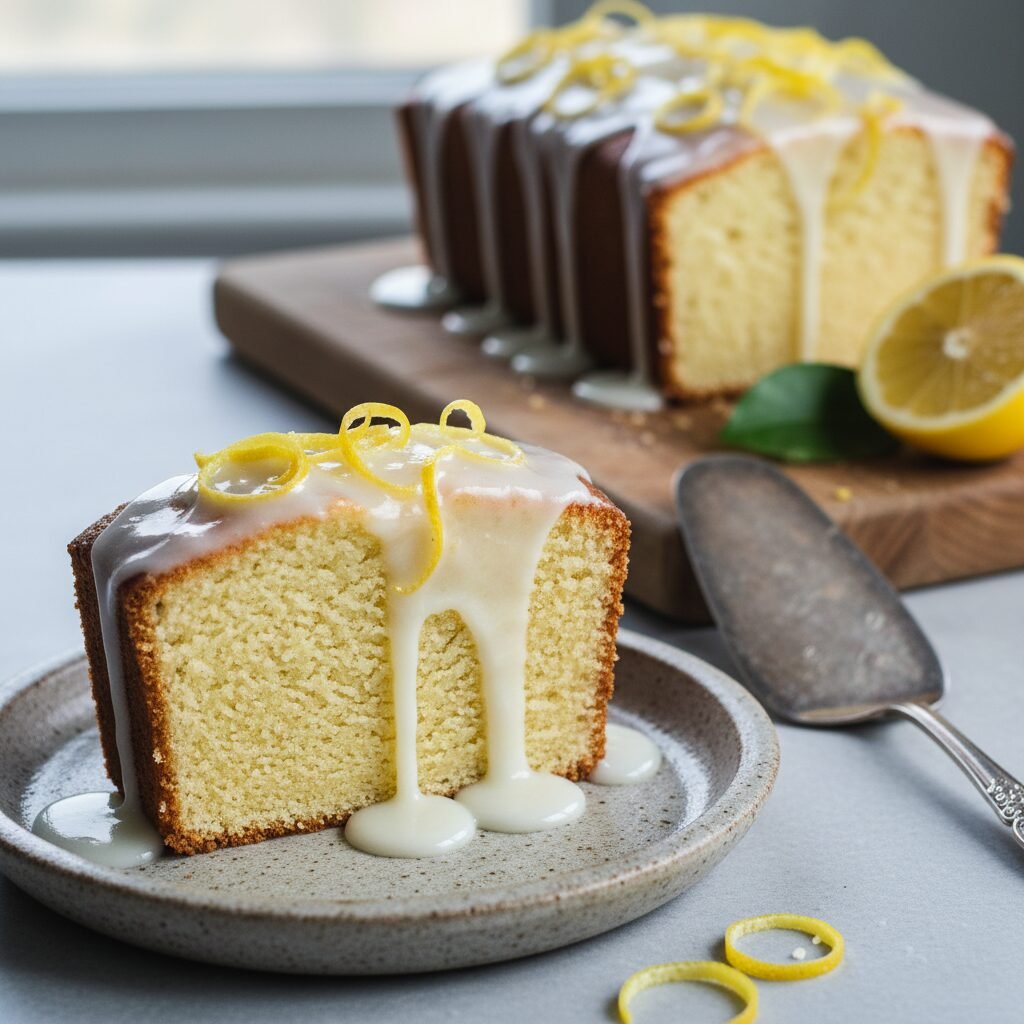
Bursting with bright citrus flavor and a tender, buttery crumb, this Keto Lemon Pound Cake is the ultimate sugar-free indulgence. Sweetened with monk fruit and topped with a zesty glaze, it is the perfect low-carb copycat of the coffee shop classic.
15 minutes
50 minutes
1 hour 15 minutes
10 servings
Dessert
Baking
American / Keto
Gluten-Free
If you have been following a ketogenic lifestyle for any amount of time, you likely know the struggle of finding a baked good that genuinely replicates the texture of traditional wheat flour desserts. All too often, low-carb cakes can turn out dry, gritty, or overly dense. However, this Moist Keto Lemon Pound Cake changes the game entirely. It is designed to be the ultimate ‘Starbucks Lemon Loaf’ copycat, but without the massive sugar spike and high carbohydrate count. The secret lies in the precise combination of almond flour and coconut flour, which creates a crumb structure that is soft yet sturdy, perfectly mimicking a classic pound cake. We utilize monk fruit sweetener, a zero-calorie natural sweetener that provides a clean, sugary taste without the cooling aftertaste often associated with pure erythritol. The result is a cake that is incredibly moist, deeply buttery, and exploding with fresh lemon zest in every bite. Whether you are serving this for a Sunday brunch, enjoying it with your morning bulletproof coffee, or sneaking a slice for a midnight snack, this cake proves that you do not have to sacrifice flavor or texture to stay in ketosis. It is a sunshine-filled slice of happiness that satisfies the sweet tooth while keeping your macros perfectly in check.
History & Origins
The history of the pound cake dates back to the early 1700s in Northern Europe. The original recipe was incredibly simple, calling for exactly one pound each of four ingredients: flour, butter, eggs, and sugar. This ratio made it easy for bakers to remember, hence the name ‘pound cake.’ As the recipe migrated to America, particularly the South, it evolved to include leavening agents like baking powder and liquids like milk or sour cream to create a lighter texture. In recent decades, the rise of the ketogenic diet has necessitated a reimagining of this classic. The challenge was replacing the structural integrity of gluten and the bulk of sugar. This led to the popularity of almond flour, a staple in Middle Eastern baking for centuries, being adapted for Western desserts. The introduction of Monk Fruit (Luo Han Guo) is a more recent innovation in Western baking. Monk fruit has been cultivated in Southern China for hundreds of years by Buddhist monks (hence the name) and used for its medicinal properties. Its extraction as a zero-glycemic sweetener has revolutionized keto baking, allowing for desserts like this lemon pound cake to exist—bridging the gap between 18th-century European baking traditions and modern metabolic health science.
Why This Recipe Works
This recipe succeeds where many keto cakes fail because of three critical factors: fat ratios, acidity, and the sweetener blend. First, the combination of superfine almond flour and a small amount of coconut flour is essential. Almond flour provides the high-fat content and moisture, while the highly absorbent coconut flour acts as a stabilizer, mimicking the structure of gluten to prevent the cake from crumbling apart. Second, the inclusion of sour cream (or Greek yogurt) and fresh lemon juice provides acidity. This acidity reacts with the baking powder to create lift, ensuring the cake rises beautifully rather than remaining a dense brick. Furthermore, the fat in the sour cream ensures the crumb stays moist for days. Finally, using a monk fruit sweetener blend (often mixed with erythritol) allows for caramelization and bulk similar to sugar, but the monk fruit extract specifically counteracts the ‘cooling’ sensation of erythritol, resulting in a warm, natural sweetness that pairs perfectly with the tart lemon. The glaze adds the final seal of moisture, locking in the texture and delivering an immediate punch of citrus zest upon the first bite.
Why You’ll Love This Recipe
- ✓Only 3g Net Carbs per slice
- ✓Incredibly moist texture thanks to sour cream
- ✓Sugar-free glaze that hardens perfectly
- ✓No chemical aftertaste from the sweetener
- ✓Freezes beautifully for meal prep
- ✓Rich in healthy fats from almond flour and butter
Equipment You’ll Need
- ✓9×5 inch Loaf Pan
- ✓Electric Hand Mixer or Stand Mixer
- ✓Large Mixing Bowl
- ✓Medium Mixing Bowl
- ✓Rubber Spatula
- ✓Citrus Zester/Microplane
- ✓Citrus Juicer
- ✓Parchment Paper
- ✓Wire Cooling Rack
Ingredients
- ✓2 1/2 cups Superfine Almond Flour
- ✓1/4 cup Coconut Flour
- ✓1 tbsp Baking Powder
- ✓1/2 tsp Sea Salt
- ✓1/2 cup Unsalted Butter, softened
- ✓3/4 cup Granular Monk Fruit Sweetener
- ✓4 large Eggs, room temperature
- ✓1/2 cup Full-Fat Sour Cream or Greek Yogurt
- ✓1 tsp Vanilla Extract
- ✓1/4 cup Fresh Lemon Juice
- ✓2 tbsp Fresh Lemon Zest
- ✓For the Glaze: 1/2 cup Powdered Monk Fruit Sweetener
- ✓For the Glaze: 1-2 tbsp Fresh Lemon Juice
- ✓For the Glaze: 1 tbsp Heavy Cream
Instructions
- Preheat your oven to 350°F (175°C). Line a 9×5 inch loaf pan with parchment paper, leaving an overhang on the sides for easy removal. Grease the paper lightly with butter or cooking spray.
- In a medium bowl, whisk together the almond flour, coconut flour, baking powder, and salt. Ensure there are no lumps in the almond flour.
- In a large bowl using a hand mixer or stand mixer, cream the softened butter and granular monk fruit sweetener together on medium-high speed for about 2-3 minutes until the mixture is fluffy and pale.
- Add the eggs one at a time, beating well after each addition. Scrape down the sides of the bowl as needed.
- Mix in the sour cream (or yogurt), vanilla extract, lemon juice, and lemon zest until fully combined. The batter may look slightly curdled at this stage; this is normal.
- Reduce the mixer speed to low and gradually add the dry ingredients to the wet ingredients. Mix just until combined and no dry streaks remain. Do not overmix.
- Pour the batter into the prepared loaf pan and smooth the top with a spatula. Tap the pan on the counter a few times to release any trapped air bubbles.
- Bake for 45 to 55 minutes. Check the cake at the 40-minute mark; if the top is browning too quickly, loosely tent it with aluminum foil.
- The cake is done when the top is golden brown and a toothpick inserted into the center comes out clean or with just a few moist crumbs.
- Remove from the oven and let the cake cool in the pan for at least 20 minutes. This is crucial as keto cakes are fragile when hot.
- Lift the cake out of the pan using the parchment paper handles and place it on a wire rack to cool completely.
- While the cake cools, prepare the glaze. Whisk together the powdered monk fruit sweetener, lemon juice, and heavy cream in a small bowl until smooth. Adjust consistency by adding more juice (thinner) or sweetener (thicker).
- Once the cake is completely cool, drizzle the glaze over the top. Let the glaze set for 10-15 minutes before slicing.
Expert Cooking Tips
- ✓Use room temperature ingredients (eggs, butter, sour cream) to ensure the batter emulsifies properly.
- ✓Do not skip the cooling time; almond flour cakes need time to set their structure as they cool.
- ✓Use superfine blanched almond flour, not almond meal, for a cake-like texture rather than a gritty one.
- ✓Fresh lemon juice is non-negotiable; bottled lemon juice lacks the zest oils and brightness needed.
- ✓If you don’t have powdered monk fruit for the glaze, you can blend granular sweetener in a high-speed blender for 30 seconds.
- ✓Tenting with foil prevents the almond flour from burning, as it browns faster than wheat flour.
Substitutions and Variations
If you do not have sour cream, full-fat Greek yogurt or even room temperature cream cheese can work as a substitute to provide moisture. For a dairy-free version, substitute the butter with melted coconut oil or a vegan butter alternative, and replace the sour cream with full-fat coconut cream (the thick part from a can of coconut milk). If you cannot find Monk Fruit sweetener, a purely Erythritol-based sweetener (like Swerve) or Allulose will work. Note that Allulose browns much faster, so reduce oven temperature to 325°F and bake longer. Do not try to substitute the almond flour with coconut flour in a 1:1 ratio; coconut flour is extremely absorbent and would require a completely different recipe. If you are out of fresh lemons, lemon extract can be used (1 tsp), but the flavor will lack the complexity of fresh juice and zest.
Common Mistakes to Avoid
The most common mistake is slicing the cake while it is still warm. Unlike wheat cakes, keto cakes rely on the cooling process to firm up; slicing too early will result in a crumbly mess. Another error is using cold ingredients, which causes the butter to seize and the batter to separate, leading to an uneven bake. Over-measuring the flour is also a risk; always spoon and level your almond flour or weigh it if possible, as packing it down adds too many dry ingredients. Finally, forgetting to grease or line the pan often results in the bottom sticking, as almond flour batters don’t have the same elasticity as gluten batters to pull away from the pan.
Serving Suggestions
This cake is stunning on its own, but it can be elevated for dessert. Serve a thick slice with a dollop of sugar-free whipped cream and a few fresh raspberries or blueberries on the side to cut through the richness. It pairs exceptionally well with black coffee, Earl Grey tea, or an unsweetened iced matcha latte. for a summer treat, serve it alongside a scoop of keto vanilla ice cream.
Storage and Reheating Tips
Because this cake contains no preservatives and has a high moisture content, it is best stored in the refrigerator. Wrap it tightly in plastic wrap or store it in an airtight container for up to 5-7 days. The cold temperature actually makes the texture even fudgier. For long-term storage, slice the cake individually, wrap each slice in parchment paper and then plastic wrap, and freeze for up to 3 months. Thaw a slice on the counter for 30 minutes or microwave for 15 seconds before eating.
Nutrition Facts (Estimated)
| Serving Size | 1 slice |
| Calories | 245 |
| Fat | 22g |
| Saturated Fat | 8g |
| Unsaturated Fat | 12g |
| Trans Fat | 0g |
| Cholesterol | 85mg |
| Sodium | 180mg |
| Carbohydrates | 6g |
| Fiber | 3g |
| Sugar | 1g |
| Protein | 7g |
Frequently Asked Questions
Can I bake this in a bundt pan?
Yes, but be very careful with greasing. Almond flour sticks easily. Grease the bundt pan heavily and dust it with almond flour before pouring the batter. You may need to adjust the baking time slightly.
Why did my cake fall in the center?
This usually happens if the cake was underbaked or if the oven door was opened too frequently during baking, causing a temperature drop. It can also happen if too much baking powder was used.
Is Monk Fruit sweetener safe for dogs?
Pure monk fruit is generally safe, but many blends contain Xylitol, which is highly toxic to dogs. Always check the label. It is best to keep all human treats away from pets.
Can I use almond meal instead of almond flour?
It is not recommended. Almond meal contains the skins and is coarser, which will result in a heavy, gritty cake that may not rise as well. Superfine blanched almond flour is best.
Does this cake taste like coconut?
No. The amount of coconut flour is small and is used primarily for structure. The lemon zest and juice, along with the butter, completely mask any subtle coconut flavor.
How do I know when it is fully cooked?
The toothpick test is reliable. Insert it into the deepest part of the center. It should come out clean or with moist crumbs, but no raw batter. The top should be firm to the touch.
What is the net carb count?
This recipe yields approximately 3g of net carbs per slice, calculated by subtracting fiber and sugar alcohols from the total carbohydrates.
Can I make muffins instead of a loaf?
Absolutely. This batter works great for muffins. Bake them at 350°F for 20-25 minutes.
Conclusion
This Moist Keto Lemon Pound Cake proves that living a low-carb lifestyle doesn’t mean saying goodbye to your favorite coffee shop treats. With its bright, sunny flavor and satisfyingly dense texture, it is a recipe that will fool even your non-keto friends and family. It is the perfect balance of tart and sweet, healthy and indulgent. Give this recipe a try for your next baking session, and don’t forget to pin it to your Keto Desserts board on Pinterest so you can easily find it whenever the craving strikes!