Moist Keto Coconut Cake With Erythritol – The Ultimate Low-Carb Dessert
Moist Keto Coconut Cake With Erythritol Recipe
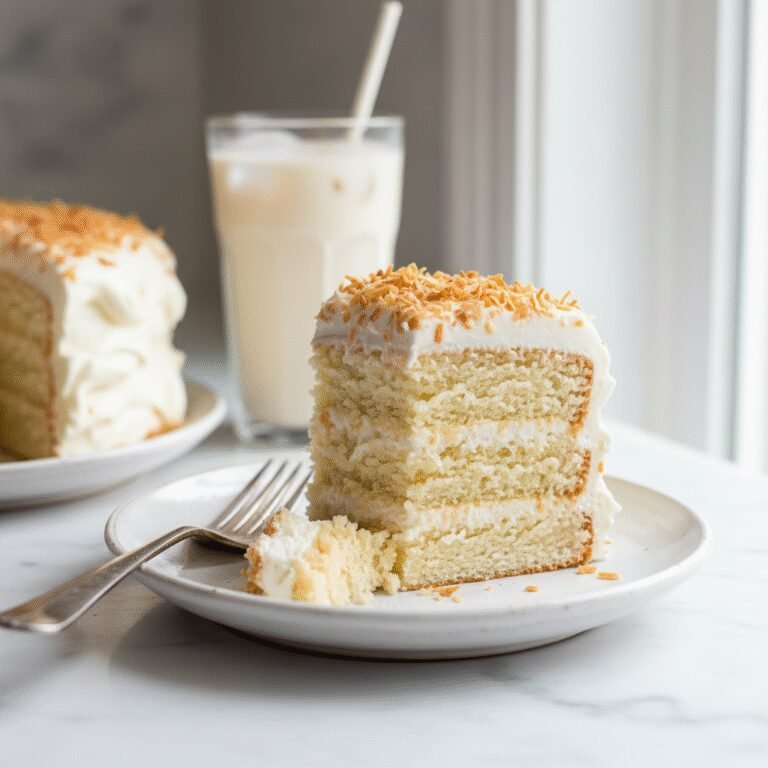
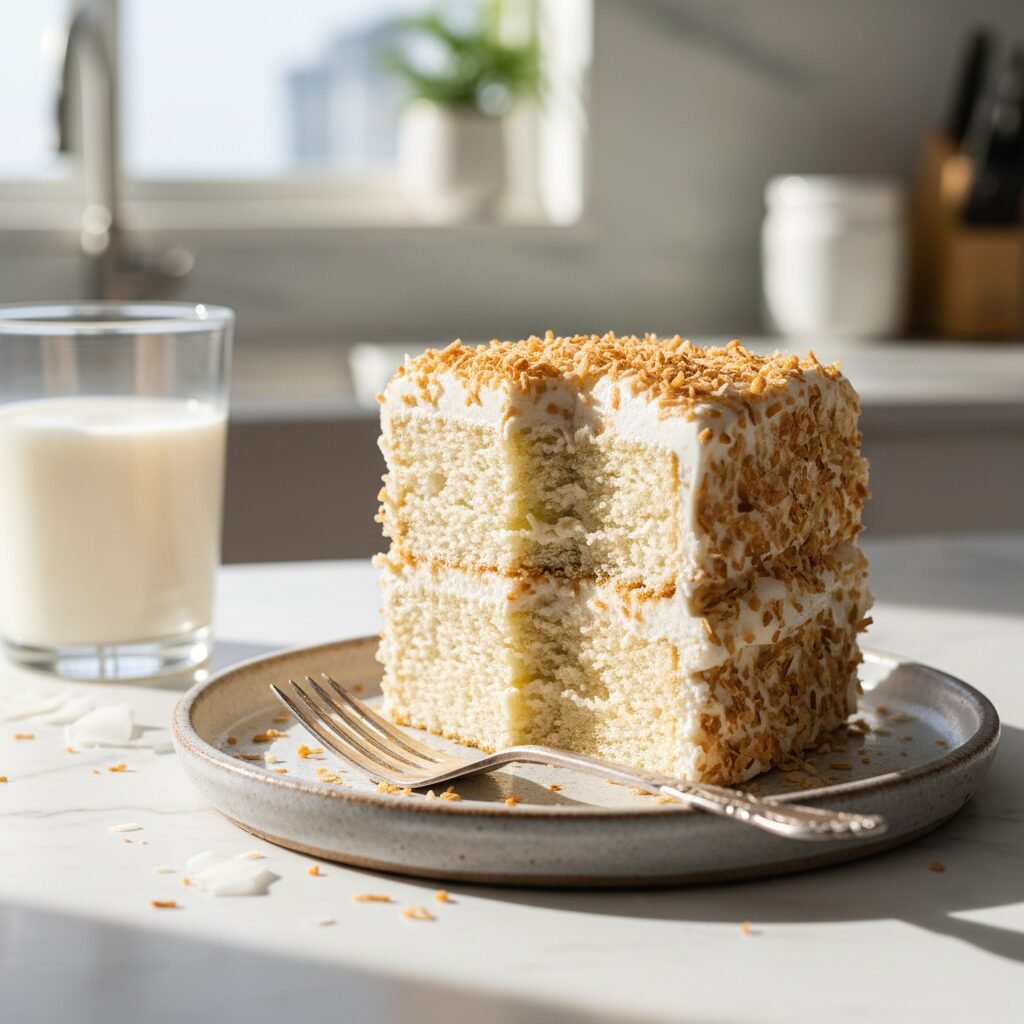
This incredibly moist Keto Coconut Cake is a low-carb dream come true, featuring layers of fluffy almond flour sponge and a rich, creamy coconut frosting. Sweetened perfectly with erythritol, it offers all the tropical flavor you crave without the sugar crash, making it the perfect guilt-free indulgence for any occasion.
20 minutes
30 minutes
1 hour 15 minutes
12 slices
Dessert
Baking
American / Keto
Gluten-Free
For anyone following a ketogenic lifestyle, the quest for the perfect dessert is often fraught with disappointment. Many low-carb baked goods suffer from being overly dense, dry, or possessing a distracting cooling sensation from improper sweetener use. However, this Moist Keto Coconut Cake with Erythritol breaks the mold entirely. It is a celebration of texture and flavor, proving that you do not need gluten or sugar to create a bakery-quality masterpiece. The crumb is tender and soft, reminiscent of a traditional Southern coconut cake, while the frosting is luscious, creamy, and perfectly sweet.
The secret lies in the delicate balance of almond and coconut flours, which work together to mimic the structure of wheat flour, combined with high-fat dairy to ensure deep moisture retention. We utilize powdered erythritol to achieve a smooth sweetness that dissolves seamlessly into the batter and frosting, avoiding the gritty texture often associated with granular low-carb sweeteners. Whether you are celebrating a birthday, hosting a brunch, or simply satisfying a Tuesday afternoon craving, this cake delivers a tropical escape on a plate. It is rich enough to feel decadent but light enough to leave you feeling energized rather than sluggish. Get ready to redefine what keto baking can be with a dessert that even your non-keto friends will be begging for seconds of.
History & Origins
The concept of the coconut cake is deeply rooted in the culinary history of the American South. While coconuts are not native to the continental United States, the expansion of the railroad system and maritime trade in the late 19th century brought fresh coconuts from the Caribbean to Southern ports like Charleston and New Orleans. Initially, grating fresh coconut was a labor-intensive task, making coconut cake a dessert reserved for high-society gatherings and special holidays. By the mid-20th century, the invention of sweetened flaked coconut solidified the cake’s status as an American icon, a staple at church potlucks and holiday tables.
Parallel to this culinary history is the evolution of the ketogenic diet. Originally developed in the 1920s at the Mayo Clinic as a treatment for epilepsy, the high-fat, low-carb protocol fell out of favor with the rise of anti-convulsant medications but saw a massive resurgence in the 21st century as a metabolic tool for weight loss and blood sugar management. As the diet gained popularity, home bakers began experimenting with ways to adapt traditional favorites.
The introduction of erythritol was a game-changer for this adaptation. Discovered in 1848 by Scottish chemist John Stenhouse, erythritol is a sugar alcohol (polyol) that occurs naturally in some fruits. Unlike early artificial sweeteners which often carried bitter aftertastes, or sugar which spikes insulin, erythritol provided a bulky, sugar-like sweetness with zero glycemic impact. This recipe represents the convergence of these two histories: the traditional, hospitable Southern coconut cake and the modern, science-backed nutritional approach of the ketogenic lifestyle.
Why This Recipe Works
Baking without gluten and sugar requires a fundamental understanding of food chemistry, as you are removing the two structural pillars of traditional baking. This recipe works exceptionally well because it addresses the three main pitfalls of keto baking: dryness, density, and sweetener aftertaste.
First, regarding texture: Almond flour alone can be heavy and oily, while coconut flour is extremely absorbent and can make baked goods dry. By using a specific ratio of the two, we create a crumb that is structured yet tender. The almond flour provides the fat and richness, while the small amount of coconut flour absorbs just enough moisture to give the cake a ‘fluffy’ lift that mimics all-purpose flour.
Second, moisture retention is achieved through the inclusion of full-fat sour cream and butter. Sugar is hygroscopic (it holds water), and since erythritol lacks this property to the same degree, we must introduce moisture through fats. The acidity in the sour cream also activates the baking powder, ensuring a good rise.
Finally, the sweetener strategy is crucial. We use powdered erythritol rather than granular. Granular erythritol often fails to dissolve fully in high-fat batters, leading to a crunchy, gritty texture. The powdered version dissolves instantly, ensuring a smooth buttercream and a consistent sweetness throughout the cake without the overwhelming ‘cooling effect’ that occurs when undissolved erythritol hits the tongue.
Why You’ll Love This Recipe
- ✓Only 4g Net Carbs per slice
- ✓Incredibly moist crumb structure
- ✓Sugar-free and diabetic-friendly
- ✓Rich, creamy cream cheese frosting
- ✓Gluten-free and grain-free
- ✓No gritty texture thanks to powdered sweetener
Equipment You’ll Need
- ✓Two 8-inch or 9-inch round cake pans
- ✓Electric hand mixer or stand mixer
- ✓Large mixing bowls
- ✓Rubber spatula
- ✓Parchment paper
- ✓Wire cooling rack
- ✓Measuring cups and spoons
Ingredients
- ✓2 ½ cups blanched almond flour (super fine)
- ✓½ cup coconut flour
- ✓1 ½ cups powdered erythritol (divided for cake and frosting)
- ✓1 tbsp baking powder
- ✓½ tsp salt
- ✓½ cup unsalted butter, melted and cooled
- ✓½ cup full-fat sour cream (room temperature)
- ✓4 large eggs (room temperature)
- ✓½ cup unsweetened coconut milk (carton, not canned)
- ✓2 tsp vanilla extract
- ✓1 tsp coconut extract (optional but recommended)
- ✓8 oz cream cheese, softened
- ✓½ cup unsalted butter, softened (for frosting)
- ✓¼ cup heavy whipping cream
- ✓1 cup unsweetened shredded coconut (for garnish)
Instructions
- Preheat your oven to 350°F (175°C). Grease two 8-inch round cake pans and line the bottoms with parchment paper to prevent sticking.
- In a medium bowl, whisk together the almond flour, coconut flour, baking powder, and salt. Ensure there are no lumps in the almond flour.
- In a large mixing bowl, use an electric mixer to beat the 4 eggs, melted butter, sour cream, coconut milk, vanilla extract, coconut extract, and ¾ cup of the powdered erythritol until smooth and well combined.
- Gradually add the dry ingredients to the wet ingredients. Mix on low speed until just combined. Do not overmix, but ensure the coconut flour is fully incorporated as it takes a moment to absorb the liquid. Let the batter sit for 2-3 minutes to thicken slightly.
- Divide the batter evenly between the two prepared cake pans. Use a spatula to smooth the tops.
- Bake for 25-30 minutes, or until the tops are golden brown and a toothpick inserted into the center comes out clean or with just a few moist crumbs.
- Remove from the oven and let the cakes cool in the pans for at least 20 minutes. This is critical as keto cakes are fragile when hot. Carefully invert them onto a wire rack to cool completely before frosting.
- While the cakes cool, prepare the frosting. In a large bowl, beat the softened cream cheese and softened butter until pale and fluffy (about 3 minutes).
- Gradually add the remaining ¾ cup powdered erythritol and the heavy whipping cream. Beat on high until the frosting is smooth, creamy, and holds stiff peaks.
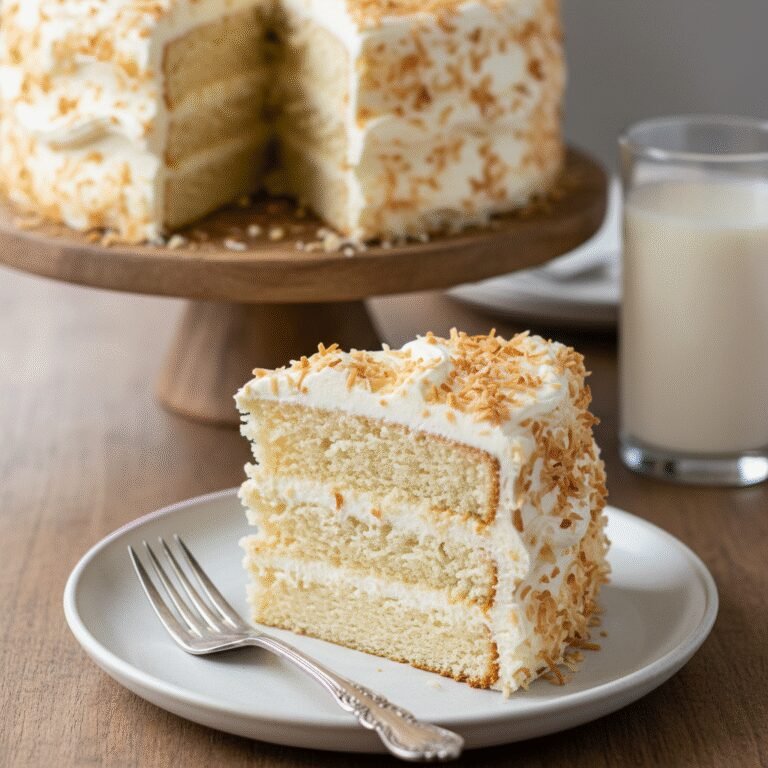
- Once the cakes are completely cool, place one layer on a serving plate. Spread a generous layer of frosting over the top. Place the second layer on top and frost the top and sides of the entire cake.
- Gently press the unsweetened shredded coconut into the sides and top of the cake for decoration.
- Refrigerate the cake for at least 30 minutes before slicing to allow the frosting and crumb to set for the cleanest cuts.
Expert Cooking Tips
- ✓Room temperature ingredients are non-negotiable. Cold eggs or sour cream will cause the melted butter to seize, resulting in a lumpy batter.
- ✓Weigh your flours if possible. Packing almond flour into a cup can lead to a dense cake. If using cups, spoon and level method is best.
- ✓Use powdered erythritol for the frosting. Granular erythritol will make your buttercream crunchy and gritty.
- ✓Let the batter rest for a few minutes before baking. Coconut flour needs time to absorb moisture.
- ✓Do not skip the parchment paper. Keto cakes lack gluten, making them more prone to sticking to the pan.
- ✓Toast the shredded coconut garnish in a dry pan for 2 minutes for an extra depth of flavor and a nice color contrast.
- ✓If the frosting is too soft to work with, refrigerate it for 15 minutes to stiffen up before assembling the cake.
Substitutions and Variations
This recipe is quite flexible within the keto framework. If you do not have sour cream, full-fat Greek yogurt is an excellent 1:1 substitute that provides the same moisture and acidity. For the sweetener, you can use a Monk Fruit/Erythritol blend if you prefer, as long as it measures 1:1 with sugar. If you are dairy-free, replace the butter with melted coconut oil (for the cake) and a sustainable palm shortening or vegan butter (for the frosting), and use coconut cream instead of sour cream and cream cheese, though this will significantly alter the flavor profile. If you have a nut allergy, this recipe is difficult to adapt as almond flour is the main structural component; sunflower seed flour can work but often turns green due to a reaction with baking powder.
Common Mistakes to Avoid
The most common mistake is cutting the cake while it is still warm. Keto cakes rely on the cooling process to set their structure; cutting too early will result in a crumbled mess. Another error is using canned coconut milk (the thick kind) instead of the carton milk for the batter; canned milk is too heavy and can make the cake dense and soggy. Finally, over-baking is a risk with almond flour. It burns faster than wheat flour, so keep an eye on it at the 25-minute mark. If the top is browning too fast but the center is raw, tent it loosely with aluminum foil.
Serving Suggestions
This cake is rich, so it pairs beautifully with a hot cup of black coffee or an unsweetened herbal tea to cut through the creaminess. For a summer twist, serve it with a side of fresh raspberries or sliced strawberries; the tartness of the berries complements the sweet coconut flavor perfectly. If you are feeling extra decadent, a drizzle of sugar-free caramel sauce over the slice adds a lovely finish.
Storage and Reheating Tips
Because of the cream cheese frosting and the high moisture content, this cake must be stored in the refrigerator. It will keep fresh in an airtight container or cake dome for up to 5 days. In fact, it often tastes better on day two as the flavors meld. For long-term storage, you can freeze individual slices. Wrap them tightly in plastic wrap and then aluminum foil. Thaw overnight in the fridge before eating. Do not freeze the whole cake unless it is unfrosted, as the frosting texture can change slightly upon thawing.
Nutrition Facts (Estimated)
| Serving Size | 1 slice |
| Calories | 345 |
| Fat | 31g |
| Saturated Fat | 14g |
| Unsaturated Fat | 15g |
| Trans Fat | 0g |
| Cholesterol | 85mg |
| Sodium | 210mg |
| Carbohydrates | 8g |
| Fiber | 4g |
| Sugar | 2g |
| Protein | 7g |
Frequently Asked Questions
Does erythritol leave a cooling aftertaste?
Erythritol can have a cooling sensation, similar to mint, if used in large quantities. However, this recipe balances it with fats (butter, cream cheese) and almond flour, which masks that sensation significantly. Using powdered erythritol also helps reduce this effect compared to granular.
Can I use liquid stevia instead of erythritol?
It is not recommended to replace the erythritol entirely with liquid stevia. The bulk of the erythritol (the physical volume) is necessary for the structure of the cake. You could replace a small portion, but removing the granular bulk will result in a much smaller, denser cake.
Why did my cake sink in the middle?
Sinking usually happens if the cake was underbaked or if the oven door was opened too early, causing a temperature drop. It can also happen if too much baking powder was used. Ensure your toothpick comes out clean before removing it from the oven.
Is this cake safe for dogs?
While coconut is generally safe for dogs, this cake contains erythritol. While erythritol is not toxic to dogs like Xylitol is, large amounts can cause digestive upset. It is best to keep human treats away from pets to be safe.
Can I make this into cupcakes?
Absolutely! This recipe will yield approximately 12-15 standard cupcakes. Reduce the baking time to 18-22 minutes. Check them early to ensure they don’t dry out.
How do I make the frosting stiffer?
If your kitchen is warm, the butter and cream cheese might be too soft. Place the bowl in the fridge for 20 minutes. Also, adding a little more powdered erythritol can stiffen the texture, but be careful not to make it too sweet.
Can I use desiccated coconut instead of shredded?
Yes, desiccated coconut is finer and drier. It works well for the garnish, but if you decide to add it inside the batter, it may absorb more moisture, so you might need a tablespoon more of coconut milk.
Is baking powder gluten-free?
Most baking powders are gluten-free, but some brands use wheat starch as a filler. Always check the label to ensure your baking powder is certified gluten-free if you have celiac disease.
Conclusion
This Moist Keto Coconut Cake with Erythritol is proof that living a low-carb lifestyle doesn’t mean saying goodbye to the desserts you love. With its tender crumb, luscious frosting, and bold tropical flavor, it stands toe-to-toe with any traditional bakery cake. It requires simple ingredients, straightforward techniques, and delivers a result that feels truly special. Whether you are a seasoned keto veteran or just looking to reduce your sugar intake, this recipe is a keeper. Don’t forget to pin this recipe to your Keto Desserts board on Pinterest so you can find it whenever the craving strikes!