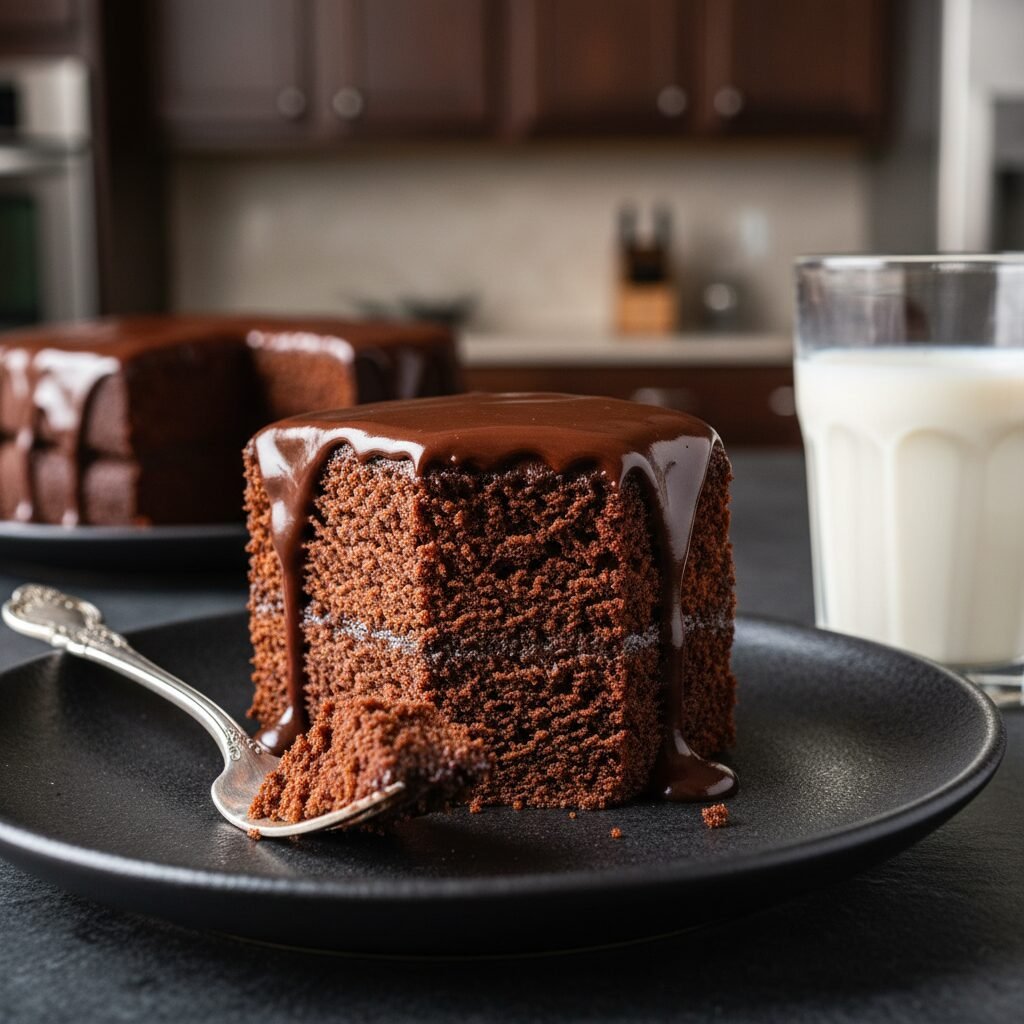
Decadent Moist Keto Chocolate Cake With Monk Fruit Sweetener
Moist Keto Chocolate Cake With Monk Fruit Sweetener Recipe
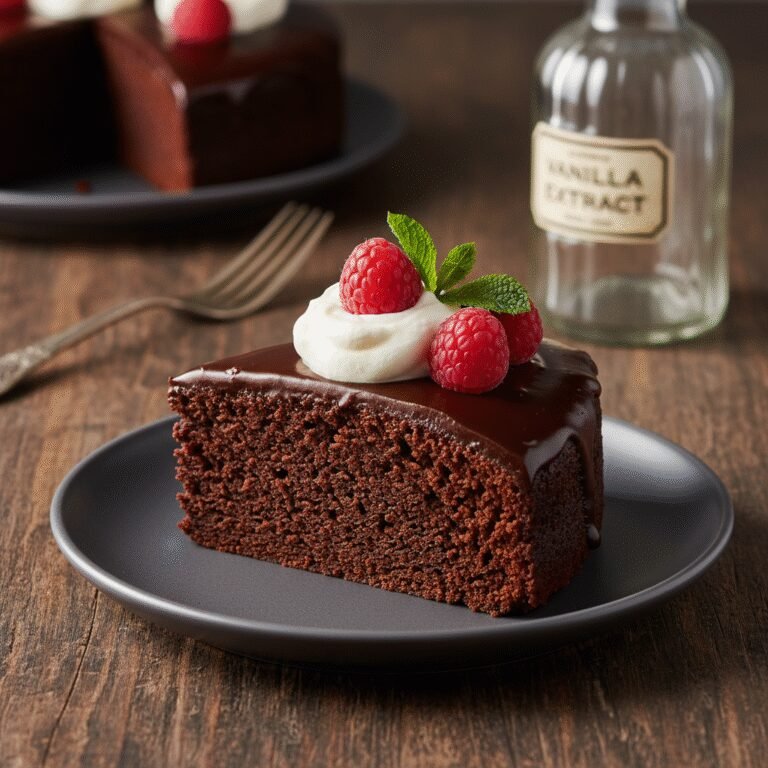
Discover the holy grail of low-carb baking with this ultra-moist Keto Chocolate Cake. Sweetened with monk fruit and featuring a rich, fudgy crumb, this sugar-free dessert proves you don’t have to sacrifice decadence for a healthy lifestyle.
20 minutes
30 minutes
50 minutes
12 Servings
Dessert
Baking
American / Keto
Gluten-Free
If you have been on the ketogenic diet for any length of time, you know the struggle is real when it comes to finding a cake that doesn’t taste like cardboard or dry sponge. Most low-carb flours, particularly coconut flour, have a notorious reputation for sucking the moisture right out of baked goods, leaving you with a crumbly mess that requires a gallon of milk to swallow. Enter the Moist Keto Chocolate Cake with Monk Fruit Sweetener—a recipe that has been rigorously tested to defy the odds. This isn’t just ‘good for a keto cake’; it is a genuinely delicious, rich, and decadent dessert that rivals any traditional wheat-and-sugar counterpart. The secret lies in the precise balance of almond flour for healthy fats and structure, a touch of coconut flour for absorption, and the magic of monk fruit sweetener. Unlike other artificial sweeteners that can leave a chemical aftertaste or a strange cooling sensation, monk fruit provides a clean, rounded sweetness that pairs perfectly with the bitterness of dark cocoa. We utilize a ‘blooming’ technique with hot coffee to intensify the chocolate flavor, resulting in a deep, complex profile that feels sophisticated and indulgent. Whether you are baking for a diabetic family member, a gluten-free friend, or just trying to keep your own carb count low without losing your joy for food, this cake is the answer. It is luscious, tender, and holds up beautifully under a layer of sugar-free buttercream or ganache. Get ready to redefine what is possible in a low-carb kitchen.
History & Origins
The history of chocolate cake is a journey that parallels the evolution of chocolate processing itself. While the Aztecs and Mayans consumed chocolate as a bitter beverage for centuries, it wasn’t until 1764, when Dr. James Baker discovered how to make chocolate by grinding cocoa beans between massive circular millstones, that the ingredient became accessible for baking. However, the ‘chocolate cake’ as we know it—soft, round, and frosted—is a relatively modern invention, largely appearing in American cookbooks in the late 19th century after the price of cocoa powder dropped. The specific style of ‘Devil’s Food Cake,’ known for its dark color and moist texture, emerged in the early 1900s. Fast forward to the 21st century, and we see a massive dietary shift. The Ketogenic diet, originally developed in the 1920s at the Mayo Clinic to treat epilepsy in children, saw a massive resurgence in the 2010s as a weight-loss and metabolic health powerhouse. This created a culinary vacuum: how do we recreate the comfort foods of the past without the carbohydrates? This is where Monk Fruit enters the narrative. Known as ‘Luo Han Guo,’ this small green melon has been cultivated by Buddhist monks in Southern China since the 13th century. For hundreds of years, it was used in traditional Chinese medicine. It wasn’t until 2010 that the FDA approved monk fruit as a sweetener, changing the game for sugar-free baking. By combining the ancient tradition of Monk Fruit with the American classic chocolate cake, this recipe represents the convergence of culinary history and modern nutritional science.
Why This Recipe Works
This recipe succeeds where many other keto cakes fail due to a few critical food science principles. First is the fat-to-flour ratio. Almond flour is naturally high in fat, but it lacks gluten, the protein that gives traditional cake its elasticity. To compensate, we use a higher quantity of eggs and added fats (butter and sour cream). The sour cream is the MVP here; its acidity reacts with the baking soda (if used) or simply tenderizes the protein structures, ensuring the crumb remains soft rather than rubbery. Second is the use of Monk Fruit sweetener specifically. Sugar is structural in baking; it holds moisture. Many sugar alcohols like erythritol can recrystallize upon cooling, leading to a ‘crunchy’ texture in the cake. Monk fruit blends usually dissolve better and maintain a smoother texture. Third, we employ the ‘blooming’ method. By adding hot coffee or boiling water to the cocoa powder at the very end of the mixing process, we dissolve the cocoa butter solids and release flavor compounds that are dormant at room temperature. This liquid also hydrates the coconut flour instantly, preventing it from soaking up moisture during the baking process itself, which is the leading cause of dry keto cakes. The result is a batter that is thin, pours easily, and bakes up into a level, moist cake with a tight, tender crumb.
Why You’ll Love This Recipe
- ✓Zero Sugar Spike: Sweetened entirely with monk fruit for a diabetic-friendly treat.
- ✓Ultra Moist Texture: Thanks to the addition of sour cream and the blooming method.
- ✓Gluten-Free & Grain-Free: Perfect for celiacs or those with grain sensitivities.
- ✓Rich Chocolate Flavor: Enhanced by hot coffee to bring out deep cocoa notes.
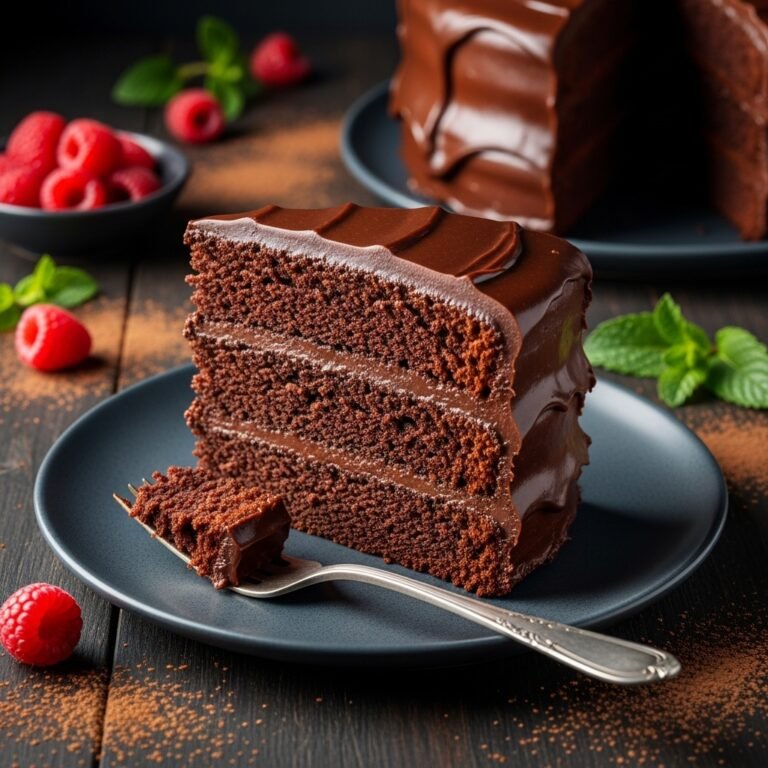
- ✓Sturdy Crumb: Holds together well for layering and frosting, unlike crumbly almond cakes.
Equipment You’ll Need
- ✓Two 8-inch round cake pans
- ✓Parchment paper
- ✓Electric hand mixer or stand mixer
- ✓Large mixing bowl
- ✓Medium mixing bowl
- ✓Sifter or fine-mesh sieve
- ✓Rubber spatula
- ✓Wire cooling rack
Ingredients
- ✓2 cups Super Fine Almond Flour
- ✓1/2 cup Coconut Flour
- ✓3/4 cup Unsweetened Cocoa Powder (Dutch-processed preferred)
- ✓1 1/2 cups Granulated Monk Fruit Sweetener (erythritol blend)
- ✓2 tsp Baking Powder
- ✓1 tsp Baking Soda
- ✓1/2 tsp Sea Salt
- ✓4 large Eggs, room temperature
- ✓1/2 cup Unsalted Butter, melted and slightly cooled
- ✓1/2 cup Full-Fat Sour Cream or Greek Yogurt, room temperature
- ✓2 tsp Vanilla Extract
- ✓1 cup Hot Strong Brewed Coffee (or hot water)
Instructions
- Preheat your oven to 350°F (175°C). Grease two 8-inch round cake pans with butter or coconut oil and line the bottoms with parchment paper to ensure easy removal.
- In a medium bowl, sift together the almond flour, coconut flour, cocoa powder, baking powder, baking soda, and salt. Whisk well to break up any clumps, especially in the almond flour.
- In a large mixing bowl (or stand mixer bowl), beat the eggs, monk fruit sweetener, melted butter, sour cream, and vanilla extract on medium speed until the mixture is smooth and slightly creamy, about 2 minutes.
- Reduce the mixer speed to low. Gradually add the dry ingredients to the wet ingredients in two or three batches. Mix until just combined—do not overmix.
- With the mixer on the lowest speed, carefully pour in the hot coffee (or hot water) in a slow, steady stream. The batter will become quite thin and liquid; this is normal and necessary for moisture.
- Divide the batter evenly between the two prepared cake pans. Tap the pans gently on the counter to release any large air bubbles.
- Bake in the preheated oven for 28-35 minutes. Test for doneness by inserting a toothpick into the center; it should come out clean or with just a few moist crumbs attached. Do not overbake.
- Remove from the oven and let the cakes cool in the pans for at least 20 minutes. This step is crucial as keto cakes are fragile when hot.
- Run a thin knife around the edges to loosen, then carefully invert the cakes onto a wire rack to cool completely before frosting.
Expert Cooking Tips
- ✓Room Temperature Ingredients: Ensure your eggs and sour cream are at room temperature. Cold ingredients can shock the melted butter, causing it to seize and curdle the batter.
- ✓Weigh Your Flour: For the most accurate results, use a kitchen scale. Compressed almond flour can lead to a dry cake.
- ✓Don’t Skip the Coffee: You will not taste the coffee in the final product. It simply enhances the richness of the chocolate. If you absolutely cannot use coffee, hot water works, but the flavor will be slightly less intense.
- ✓Cool Completely: Keto baking relies on the cooling process to set the structure. If you try to move or frost the cake while it’s warm, it will likely crumble.
- ✓Sift the Cocoa: Cocoa powder is notorious for forming hard little lumps that don’t break down during mixing. Always sift it.
Substitutions and Variations
If you need to make this recipe dairy-free, you can substitute the butter with melted coconut oil or avocado oil. Replace the sour cream with full-fat canned coconut cream (the thick part from the top of the can) or a dairy-free almond milk yogurt. For the sweetener, this recipe calls for a Monk Fruit/Erythritol blend (like Lakanto). You can use pure Allulose for an even softer texture, but be aware that Allulose browns faster, so you may need to cover the cake with foil halfway through baking. If you don’t have almond flour, you cannot swap it 1:1 for coconut flour as coconut flour is much more absorbent; stick to the ratio provided. Dutch-processed cocoa powder gives a fudgier taste, but regular unsweetened cocoa powder works fine too.
Common Mistakes to Avoid
The most common mistake with keto baking is overbaking. Because almond flour doesn’t dry out visibly like wheat flour, it’s easy to leave it in too long. Trust the toothpick test and remember the cake continues to cook slightly as it cools in the pan. Another mistake is using ‘almond meal’ instead of ‘super fine almond flour.’ Almond meal contains the skins and is coarser, which will result in a gritty, heavy cake rather than a light, fluffy one. Finally, do not omit the parchment paper. Keto cakes stick to pans more stubbornly than wheat cakes, and parchment is your best insurance policy against a broken cake layer.
Serving Suggestions
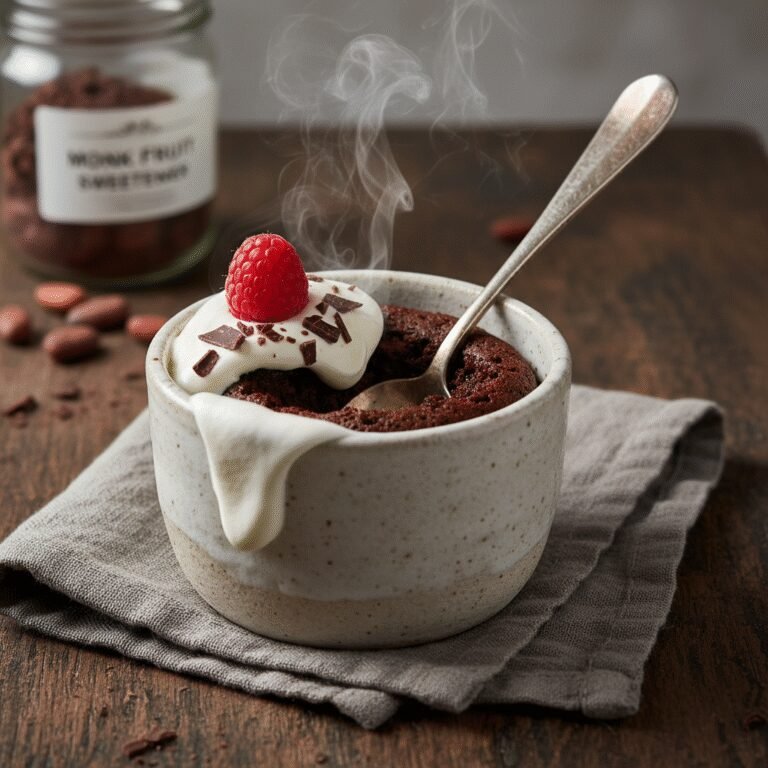
This cake is incredibly versatile. For a classic birthday cake vibe, frost it with a keto-friendly chocolate buttercream or a cream cheese frosting sweetened with powdered monk fruit. For a more elegant dinner party dessert, serve a slice slightly warm with a dollop of sugar-free whipped cream and a handful of fresh raspberries or strawberries. The tartness of the berries cuts through the richness of the chocolate beautifully. You can also pour a sugar-free ganache over the top for a glossy, bakery-style finish. Pair it with a hot espresso or a glass of unsweetened almond milk.
Storage and Reheating Tips
Because this cake contains no sugar (which acts as a preservative) and uses dairy, it is best stored in the refrigerator if you live in a warm climate or if it is frosted with cream cheese. It will keep in an airtight container in the fridge for up to 5 days. The cake actually tastes better and fudgier the next day as the flavors meld. For long-term storage, you can freeze the unfrosted cake layers. Wrap each layer tightly in plastic wrap, then in aluminum foil, and freeze for up to 3 months. Thaw overnight in the refrigerator before frosting and serving.
Nutrition Facts (Estimated)
| Serving Size | 1 Slice (without frosting) |
| Calories | 245 |
| Fat | 21g |
| Saturated Fat | 8g |
| Unsaturated Fat | 11g |
| Trans Fat | 0g |
| Cholesterol | 85mg |
| Sodium | 210mg |
| Carbohydrates | 6g |
| Fiber | 3.5g |
| Sugar | 0.8g |
| Protein | 7g |
Frequently Asked Questions
Can I use only coconut flour instead of almond flour?
No, you cannot simply swap them 1:1. Coconut flour is extremely absorbent and requires significantly more liquid and eggs. This recipe relies on the specific blend for the correct texture. If you have a nut allergy, you would need to find a recipe specifically designed for coconut flour only.
Does monk fruit have a cooling effect?
Pure monk fruit is very potent, so it is usually blended with erythritol. Erythritol can have a cooling effect, but because this recipe uses a significant amount of fat and cocoa, and if you use a high-quality brand, the cooling sensation is usually masked completely.
Why did my cake fall in the center?
This usually happens if the oven door was opened too early during baking, causing a temperature drop, or if the cake was underbaked. It can also happen if too much baking powder was used. Ensure your oven temperature is accurate using an oven thermometer.
Is this cake safe for pets?
Absolutely not. Chocolate is toxic to dogs and cats. Additionally, some sweeteners (like Xylitol, though not used here) are deadly to dogs. Keep this cake away from pets.
Can I make this into cupcakes?
Yes! This batter makes excellent cupcakes. Line a muffin tin with liners and bake for 18-22 minutes at 350°F. It should yield about 18-24 cupcakes depending on size.
What is the net carb count?
The net carb count is calculated by subtracting fiber and sugar alcohols from the total carbohydrates. This cake has approximately 2.5g to 3g of net carbs per slice, depending on the exact brands of ingredients used.
Can I use stevia instead of monk fruit?
You can, but stevia often has a bitter, metallic aftertaste that pairs poorly with chocolate. If you must use stevia, look for a ‘baking blend’ that measures 1:1 with sugar, but monk fruit or allulose is highly recommended for better flavor.
Why do I need to add hot coffee?
The hot liquid ‘blooms’ the cocoa powder, releasing more flavor, and helps dissolve the sweetener. It also ensures the batter is fluid enough to hydrate the coconut flour properly before baking starts.
Conclusion
Baking on a ketogenic diet doesn’t mean you have to give up the joys of a rich, chocolatey celebration cake. This Moist Keto Chocolate Cake with Monk Fruit Sweetener is a testament to how far low-carb baking has come. With its tender crumb, deep flavor profile, and diabetic-friendly credentials, it is a dessert you can feel good about serving to anyone, regardless of their dietary restrictions. So, preheat your oven, brew some strong coffee, and get ready to enjoy a slice of chocolate heaven that won’t kick you out of ketosis. Don’t forget to pin this recipe for your next birthday or holiday gathering!