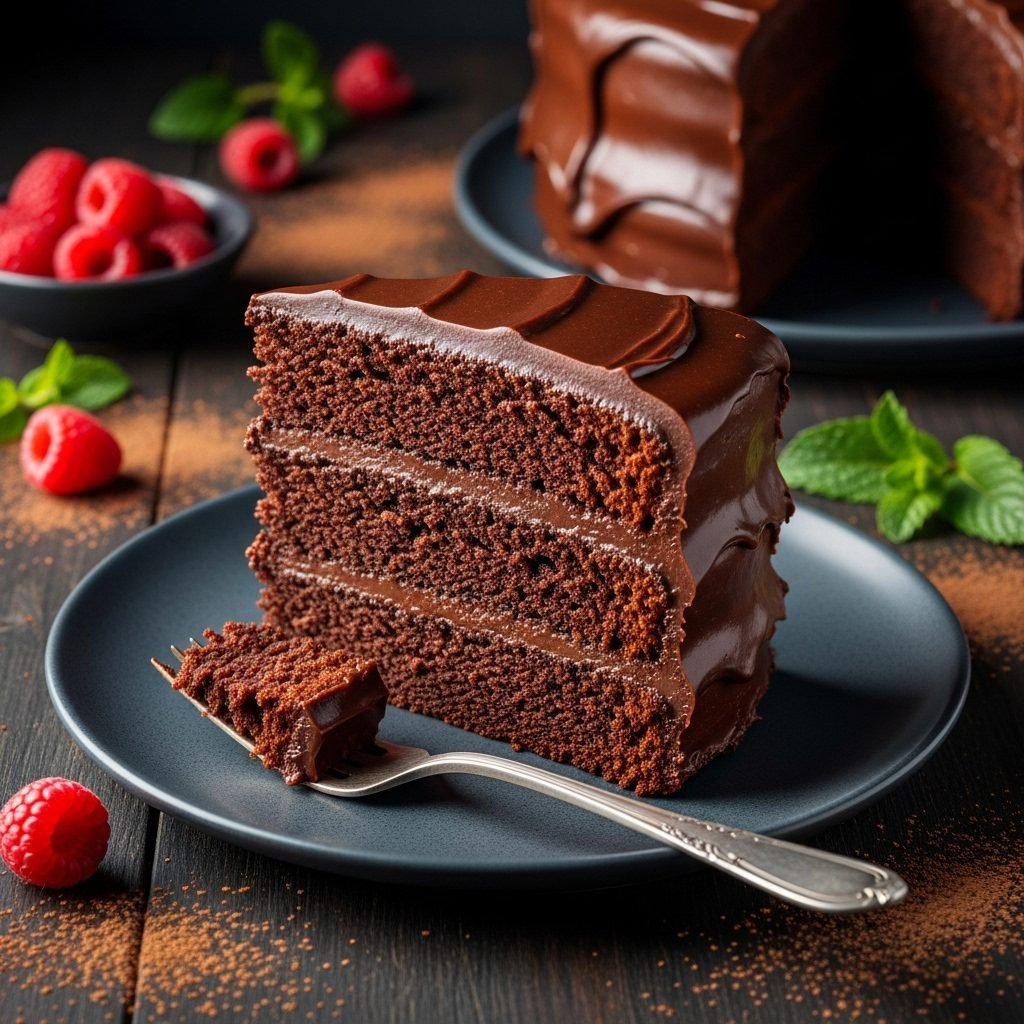
The Ultimate Moist Keto Chocolate Cake with Fudgy Frosting
Moist Keto Chocolate Cake Recipe
Say goodbye to dry, crumbly low-carb desserts. This Moist Keto Chocolate Cake is rich, decadent, and incredibly tender, proving you don’t need sugar or gluten to enjoy a slice of heaven. It’s the perfect guilt-free treat for birthdays or any chocolate craving.
20 minutes
30 minutes
50 minutes
12 servings
Dessert
Baking
American
Gluten-Free
If you have been on a ketogenic diet for any length of time, you know the struggle is real when it comes to finding a decent dessert. Specifically, chocolate cake. Far too often, low-carb baking results in dry, eggy, or cardboard-like textures that leave you missing the ‘real thing.’ But today, that changes. This recipe is the culmination of years of testing, tweaking, and tasting to create what I truly believe is the best moist keto chocolate cake on the internet. We are talking about a deep, intense chocolate flavor paired with a crumb so tender and moist, you would never guess it is made with almond flour.
The secret lies in the balance of fats and the specific blend of low-carb flours. Unlike traditional cakes that rely on gluten for structure, this recipe uses the natural oils in almond flour and the binding power of eggs, bolstered by a secret ingredient—hot coffee—to bloom the cocoa powder. This technique not only intensifies the chocolate profile but also ensures the cake stays moist for days. Whether you are celebrating a special occasion or just need a midweek pick-me-up, this cake delivers that satisfying, melt-in-your-mouth experience without spiking your blood sugar. Prepare to impress even your non-keto friends; they won’t believe it’s sugar-free!
History & Origins
While the ketogenic diet is a relatively modern dietary trend, gaining massive popularity in the 21st century, the history of chocolate cake dates back much further. The concept of a chocolate cake as we know it began in the late 19th century. Before 1886, chocolate was primarily consumed as a beverage. It wasn’t until cooks began adding chocolate to batter that the dessert we adore was born. The first recipes were often yellow cakes with chocolate frosting, but eventually, the ‘Devil’s Food’ style emerged—dark, rich, and intensely chocolatey.
Fast forward to the 1920s and 30s, when baking became easier with the advent of consistent oven temperatures and commercially available baking powders. However, the low-carb revolution didn’t truly begin to intersect with baking until the Atkins diet craze of the 90s and the subsequent rise of Keto. Early low-carb baking was experimental and often lackluster, relying heavily on soy flour or vital wheat gluten. It wasn’t until the widespread availability of blanched almond flour and high-quality sugar alcohols like erythritol and monk fruit that keto baking truly evolved into an art form. This recipe pays homage to the classic, rich chocolate cakes of the early 1900s while utilizing modern nutritional science to strip away the carbohydrates, effectively bridging the gap between historical indulgence and modern wellness.
Why This Recipe Works
This recipe succeeds where many others fail due to the precise chemistry of moisture retention in the absence of gluten. Traditional cakes use sugar, which is hygroscopic (water-loving), to hold moisture. In keto baking, we replace sugar with sweeteners like erythritol, which don’t hold moisture the same way and can sometimes have a cooling effect or crystallize. To combat this, we rely on high-fat ingredients.
First, we use superfine blanched almond flour rather than almond meal. The finer grind mimics all-purpose flour’s texture, preventing grittiness. Second, we incorporate sour cream and melted butter. The acidity in the sour cream reacts with the baking soda to create lift (crucial since almond flour is heavy), while the fat content ensures a velvety crumb.
Third, and most importantly, we use the ‘blooming’ technique. By mixing boiling hot water (or coffee) with the cocoa powder before adding it to the batter, we dissolve the cocoa solids completely. This releases the flavor compounds trapped in the cocoa butter and ensures the cake has a deep, dark color and flavor, rather than a pale, mild taste. The liquid also adds immediate hydration that the almond flour absorbs during the bake, preventing dryness.
Why You’ll Love This Recipe
- ✓Only 4g Net Carbs per giant slice
- ✓Incredibly moist crumb texture that rivals wheat flour cakes
- ✓Rich, deep chocolate flavor enhanced by coffee
- ✓Simple one-bowl batter method
- ✓Freezer-friendly for meal prep desserts
Equipment You’ll Need
- ✓Two 8-inch round cake pans
- ✓Large mixing bowl
- ✓Electric hand mixer or stand mixer
- ✓Whisk
- ✓Parchment paper
- ✓Wire cooling rack
- ✓Measuring cups and spoons
- ✓Spatula
Ingredients
- ✓2 cups Blanched Almond Flour (superfine)
- ✓1/3 cup Coconut Flour
- ✓3/4 cup Unsweetened Cocoa Powder
- ✓1 1/2 cups Granulated Erythritol or Monk Fruit Sweetener
- ✓2 tsp Baking Powder
- ✓1 tsp Baking Soda
- ✓1/2 tsp Salt
- ✓4 large Eggs, room temperature
- ✓1/2 cup Unsalted Butter, melted
- ✓1/2 cup Sour Cream or Greek Yogurt, room temperature
- ✓1 tsp Vanilla Extract
- ✓1/2 cup Hot Strong Coffee (or hot water)
Instructions
- Preheat your oven to 350°F (175°C). Grease two 8-inch round cake pans generously with butter or coconut oil. Line the bottoms with parchment paper to ensure the cakes release perfectly.
- In a large mixing bowl, whisk together the dry ingredients: almond flour, coconut flour, cocoa powder, sweetener, baking powder, baking soda, and salt. Make sure to break up any clumps of almond flour.
- In a separate medium bowl, whisk the eggs, melted butter, sour cream, and vanilla extract until smooth and well combined.
- Pour the wet mixture into the dry ingredients. Use an electric mixer on low speed to combine until a thick batter forms. Do not overmix, but ensure all flour is hydrated.
- Slowly pour in the hot coffee (or hot water) while mixing on low speed. The batter will become thinner and glossy. This is normal; do not add more flour.
- Divide the batter evenly between the two prepared cake pans. Tap the pans gently on the counter to release any large air bubbles.
- Bake for 25-30 minutes. Test for doneness by inserting a toothpick into the center; it should come out clean or with just a few moist crumbs attached. Be careful not to overbake, as almond flour can dry out quickly.
- Remove from the oven and let the cakes cool in the pans for at least 15-20 minutes. This is crucial as keto cakes are fragile when hot and need time to set.
- Run a knife around the edges, then carefully invert the cakes onto a wire cooling rack to cool completely before frosting.
Expert Cooking Tips
- ✓Room Temperature Ingredients: Ensure your eggs and sour cream are at room temperature. This prevents the melted butter from seizing up when mixed.
- ✓Weigh Your Flour: If possible, use a kitchen scale. Packed almond flour can lead to a dry cake.
- ✓Don’t Skip the Parchment: Almond flour cakes stick more than wheat cakes. Parchment circles are a lifesaver.
- ✓Cool Completely: Do not attempt to frost this cake while it is even slightly warm, or the frosting will melt and the cake may crumble.
- ✓Blooming Cocoa: Using hot coffee enhances the chocolate flavor without making the cake taste like coffee.
Substitutions and Variations
If you need to make substitutions, here are the best options for this recipe. For the almond flour, you can use sunflower seed flour for a nut-free version, though the color may turn slightly green due to the reaction with baking soda (add a splash of lemon juice to prevent this). Do not substitute almond flour 1:1 with coconut flour alone, as coconut flour is extremely absorbent. For the sweetener, Allulose is a great alternative to Erythritol and results in a very moist cake, but it browns faster, so keep an eye on the oven. If you are dairy-free, you can swap the butter for melted coconut oil and the sour cream for coconut cream (the thick part from a can of full-fat coconut milk). The hot coffee can be replaced with hot water or hot almond milk if you prefer to avoid caffeine entirely.
Common Mistakes to Avoid
The most common mistake with keto baking is overbaking. Because there is no gluten, the structure is set by eggs and cooling. If you wait until the cake feels completely firm in the oven, it will be dry by the time it cools. Trust the toothpick test. Another mistake is using a granulated sweetener that is too coarse. If your sweetener is very grainy, pulse it in a blender to powder it before measuring; otherwise, your cake might have a crunchy texture. Finally, do not try to skimp on the fat. Low-fat substitutions will ruin the texture of a keto cake, making it rubbery.
Serving Suggestions
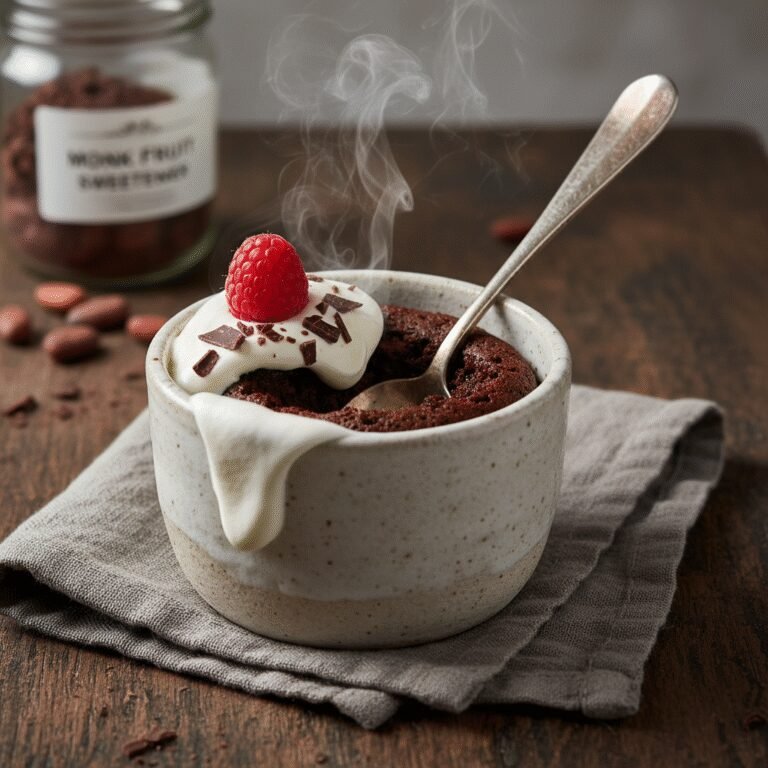
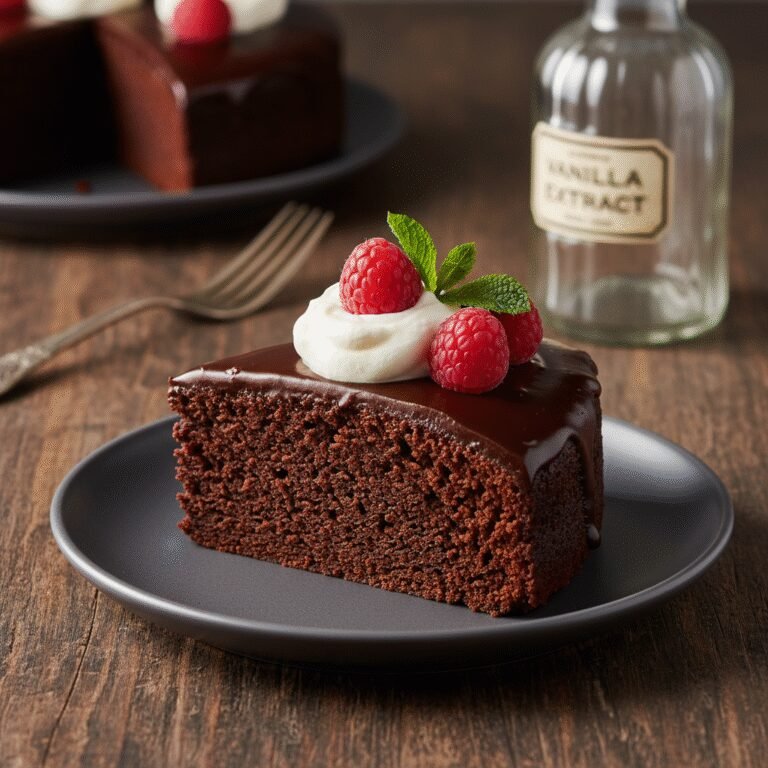
This cake is spectacular on its own, but it shines when paired with a keto-friendly chocolate buttercream or a ganache made from sugar-free chocolate chips and heavy cream. Serve a slice with a dollop of unsweetened whipped cream and a few fresh raspberries or strawberries to cut through the richness. For a warm treat, microwave a slice for 10 seconds and serve with a scoop of keto vanilla ice cream.
Storage and Reheating Tips
Store the frosted cake in the refrigerator. Due to the dairy content and the lack of preservatives, it keeps best chilled for up to 5 days. Ideally, store it in an airtight cake carrier to prevent it from absorbing fridge odors. You can also freeze individual slices. Wrap each slice tightly in plastic wrap and then foil. Freeze for up to 3 months. To eat, thaw in the fridge overnight or unwrap and microwave gently until room temperature.
Nutrition Facts (Estimated)
| Serving Size | 1 slice |
| Calories | 320 |
| Fat | 28g |
| Saturated Fat | 12g |
| Unsaturated Fat | 14g |
| Trans Fat | 0g |
| Cholesterol | 85mg |
| Sodium | 210mg |
| Carbohydrates | 8g |
| Fiber | 4g |
| Sugar | 1g |
| Protein | 9g |
Frequently Asked Questions
Can I bake this in a 9×13 pan instead?
Yes, you can bake this in a 9×13 inch rectangular pan. You will likely need to increase the baking time to about 35-40 minutes. Keep an eye on it and use the toothpick test.
Does the cake taste like coconut?
No, the small amount of coconut flour is used for texture and absorption. The rich cocoa and vanilla flavors completely mask any coconut taste.
Why did my cake fall in the center?
This usually happens if the oven door was opened too early during baking, causing a temperature drop, or if the cake was underbaked. Ensure your baking powder is fresh as well.
Can I use stevia?
Pure stevia extract is much potent than erythritol. You cannot swap them 1:1. If you use a stevia baking blend that measures like sugar, it will work, but pure stevia liquid or powder requires a complete recipe reformulation.
Is this cake safe for diabetics?
Generally, yes. It uses low-glycemic ingredients. However, everyone’s insulin response is different, so it is always best to check your blood sugar if you are unsure.
Why is my cake gritty?
Grittiness usually comes from the sweetener recrystallizing or using almond meal (skins on) instead of superfine blanched almond flour. Use powdered sweetener for the best texture.
Can I make cupcakes with this batter?
Absolutely! This recipe makes about 18-24 cupcakes. Bake them for 18-22 minutes at the same temperature.
What frosting do you recommend?
A cream cheese frosting or a chocolate buttercream made with powdered erythritol, butter, cocoa powder, and heavy cream works perfectly.
Conclusion
Baking on a keto diet doesn’t mean you have to lower your standards. This Moist Keto Chocolate Cake is proof that you can have your cake and eat it too—literally. It’s rich, satisfying, and brings back the joy of celebration without the sugar crash. I hope this recipe becomes a staple in your kitchen just as it has in mine. Whether you are a seasoned keto veteran or just starting out, this cake is a delicious reminder that a healthy lifestyle can still be incredibly sweet. Happy baking!