The Ultimate Moist Keto Cheesecake With Monk Fruit Sweetener
Moist Keto Cheesecake With Monk Fruit Sweetener Recipe
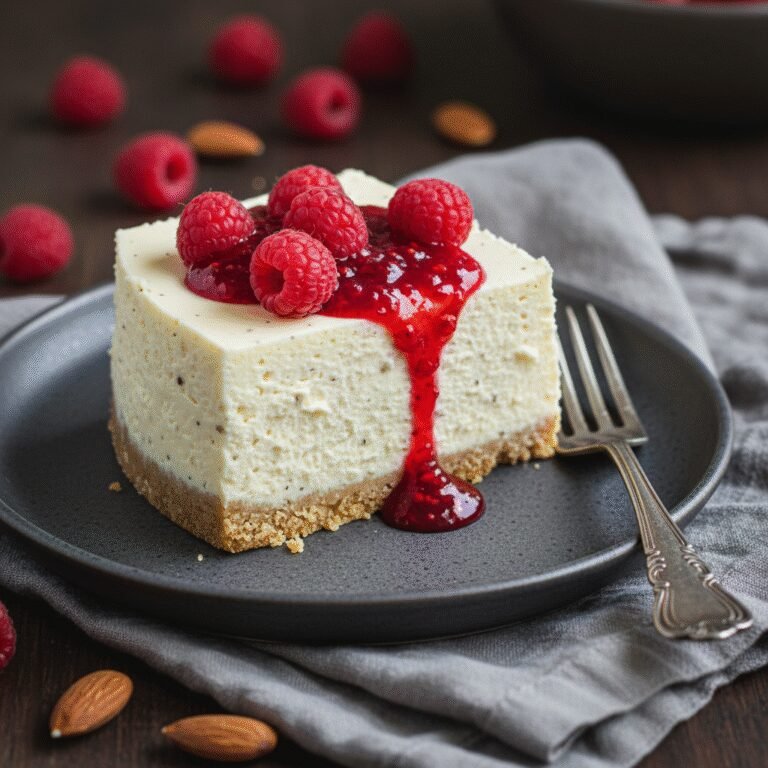
Indulge in a guilt-free dessert that rivals any New York bakery classic with this ultra-creamy Keto Cheesecake. Sweetened with monk fruit and featuring a buttery almond flour crust, it delivers all the decadent flavor you crave without the carbs.
20 minutes
1 hour 10 minutes
1 hour 30 minutes (plus cooling time)
12 servings
Dessert
Baking
American
Gluten-Free
If you have been following a ketogenic lifestyle for any length of time, you know that the craving for a truly decadent, rich dessert can strike at any moment. Often, low-carb alternatives fall flat—literally and figuratively—resulting in dry textures, strange aftertastes, or a complete lack of that satisfying mouthfeel we associate with premium sweets. Enter the Moist Keto Cheesecake with Monk Fruit Sweetener, a recipe meticulously designed to shatter those misconceptions. This isn’t just ‘good for keto’; it is a culinary masterpiece that stands toe-to-toe with traditional sugar-laden cheesecakes.
The secret lies in the harmony of ingredients. We bypass the gritty texture often found in erythritol-heavy desserts by utilizing powdered monk fruit sweetener, which dissolves seamlessly into the batter, creating a velvety smoothness that coats the palate. The base is a nutty, buttery almond flour crust that mimics the crunch and savoriness of a classic graham cracker bottom, providing the perfect counterpoint to the tangy, luscious filling.
This cheesecake is dense yet fluffy, rich yet not overpowering, and possesses that signature wobble when it comes fresh out of the oven. Whether you are hosting a dinner party for non-keto guests or simply treating yourself after a week of disciplined eating, this dessert bridges the gap between healthy living and gourmet indulgence. It represents the pinnacle of low-carb baking: a treat where no compromises are made, and every bite is a celebration of flavor and texture.
History & Origins
The history of cheesecake is a journey that spans millennia, predating modern baking by thousands of years. While we often associate it with the iconic New York style of the 20th century, the concept of a cheese-based cake can be traced back to ancient Greece. Physical anthropologists have excavated cheese molds dating back to 2,000 B.C., and it is believed that cheese ‘cakes’ were served to athletes during the first Olympic Games in 776 B.C. to provide them with energy. The writer Athenaeus even recorded a recipe in 230 A.D., which involved pounding cheese until smooth and mixing it with honey and wheat—a primitive precursor to our modern delight.
As the Roman Empire expanded, they adopted the recipe, adding eggs and baking it under hot bricks, calling it ‘libum.’ The recipe traveled across Europe, evolving through the Middle Ages where it took on various regional forms. However, the cheesecake as we know it today was revolutionized in 1872 in Chester, New York. A dairyman named William Lawrence accidentally invented modern cream cheese while attempting to replicate a French cheese known as Neufchâtel. This denser, richer cheese became the foundation for the classic American cheesecake.
The keto adaptation is a much more recent chapter in this culinary history, born out of the low-carb movement of the late 20th and early 21st centuries. As people sought to reduce sugar intake without sacrificing their favorite comforts, alternative flours like almond and coconut replaced wheat, and natural sweeteners like monk fruit (Luo Han Guo)—historically used by monks in Southern China since the 13th century—replaced sugar. This recipe marries the ancient tradition of the cheese tart with the accidental genius of American cream cheese and the modern health-conscious innovation of monk fruit, creating a dessert that honors history while embracing the future of nutrition.
Why This Recipe Works
This recipe succeeds where many other low-carb cheesecakes fail due to a few critical scientific and culinary principles. First and foremost is the choice of sweetener. Granular sweeteners often struggle to dissolve in high-fat, low-moisture environments like a cheesecake batter, leading to a gritty texture. By using powdered monk fruit sweetener (often a blend with erythritol), we ensure the sweetener dissolves completely, mimicking the chemical behavior of superfine sugar. This results in a texture that is indistinguishable from a traditional sugar-sweetened cake.
Secondly, the structural integrity of the crust is paramount. Traditional graham cracker crusts rely on the gluten in the flour and the caramelization of sugar to hold together. In this keto version, we rely on the natural oils in the almond flour combined with melted butter. The almond flour provides a coarser, denser crumb that holds up against the moisture of the filling without becoming soggy, offering that essential textural contrast.
Finally, the method of baking in a water bath (bain-marie) is non-negotiable for this recipe. Cheesecake is essentially a custard; it requires gentle, even heat to coagulate the egg proteins without curdling them. The water bath insulates the pan, ensuring the outer edges don’t cook faster than the center. This technique, combined with cooling the cake gradually in the oven, prevents the surface tension from breaking, which is the primary cause of the dreaded cheesecake crack. The result is a perfectly smooth, flat top and a creamy interior that is cooked through but never rubbery.
Why You’ll Love This Recipe
- ✓Zero added sugar and low glycemic index
- ✓Rich, creamy texture identical to NY style cheesecake
- ✓Gluten-free almond flour crust
- ✓No cooling aftertaste common with some sweeteners
- ✓High in healthy fats and protein
- ✓Freezer-friendly for long-term storage
Equipment You’ll Need
- ✓9-inch Springform Pan
- ✓Large Roasting Pan (for water bath)
- ✓Electric Hand Mixer or Stand Mixer
- ✓Rubber Spatula
- ✓Parchment Paper
- ✓Aluminum Foil (heavy duty)
- ✓Measuring Cups and Spoons
- ✓Mixing Bowls
Ingredients
- ✓2 cups Almond Flour (super fine)
- ✓1/3 cup Unsalted Butter (melted)
- ✓3 tbsp Powdered Monk Fruit Sweetener (for crust)
- ✓1 tsp Vanilla Extract (for crust)
- ✓32 oz Cream Cheese (full fat, softened to room temperature)
- ✓1 1/4 cups Powdered Monk Fruit Sweetener (for filling)
- ✓3 large Eggs (room temperature)
- ✓1 cup Sour Cream (full fat, room temperature)
- ✓1 tbsp Vanilla Extract (for filling)
- ✓1 tsp Lemon Zest (optional)
Instructions
- Preheat your oven to 350°F (175°C). Line the bottom of a 9-inch springform pan with parchment paper and grease the sides lightly with butter.
- In a medium bowl, combine the almond flour, melted butter, 3 tablespoons of monk fruit sweetener, and 1 teaspoon of vanilla extract. Mix until the mixture resembles damp sand.
- Press the crust mixture firmly into the bottom of the prepared springform pan, ensuring an even layer. You can use the bottom of a measuring cup to pack it down tightly. Bake for 10 minutes until slightly golden. Remove and let cool. Reduce oven temperature to 325°F (160°C).
- While the crust cools, prepare the filling. In a large mixing bowl, beat the softened cream cheese with an electric mixer on low-medium speed until completely smooth and creamy. Do not rush this step; lumps here will remain in the final cake.
- Add the 1 1/4 cups of powdered monk fruit sweetener, sour cream, vanilla extract, and lemon zest. Beat until fully combined, scraping down the sides of the bowl with a rubber spatula.
- Add the eggs one at a time, mixing on low speed just until incorporated. Crucial: Do not overmix after adding the eggs, as incorporating too much air can cause the cheesecake to crack.
- Prepare the water bath. Tightly wrap the bottom and sides of the springform pan with 2-3 layers of heavy-duty aluminum foil to prevent water from seeping in.
- Pour the cheesecake batter over the cooled crust and smooth the top with a spatula.
- Place the wrapped springform pan inside a large roasting pan. Pour boiling water into the roasting pan until it reaches about halfway up the sides of the springform pan.
- Carefully place the roasting pan into the oven and bake at 325°F (160°C) for 60-70 minutes. The center should still be slightly jiggly (like Jell-O) while the edges are set.
- Turn off the oven and crack the oven door open slightly (you can use a wooden spoon to hold it ajar). Let the cheesecake cool in the oven for 1 hour. This slow cooling process prevents cracks.
- Remove the cheesecake from the water bath and remove the foil. Let it cool completely to room temperature on a wire rack.
- Cover the pan with plastic wrap and refrigerate for at least 6 hours, preferably overnight, to allow the texture to firm up and flavors to meld.
Expert Cooking Tips
- ✓Ensure all dairy ingredients (cream cheese, eggs, sour cream) are at room temperature before starting. Cold ingredients lead to lumpy batter.
- ✓Use powdered sweetener rather than granular to avoid a gritty texture in the finished cake.
- ✓Do not overbeat the batter once the eggs are added; air bubbles cause cracks.
- ✓Invest in heavy-duty foil for the water bath to prevent a soggy crust.
- ✓If you don’t have a roasting pan, you can place a pan of hot water on the rack beneath the cheesecake to create a humid environment.
- ✓Run a knife under hot water and wipe it clean between every slice for professional-looking cuts.
- ✓Don’t skip the overnight chilling; the flavor improves significantly after resting.
Substitutions and Variations
This recipe is quite versatile if you need to make adjustments based on what is in your pantry. For the crust, if you have a nut allergy, you can substitute the almond flour with ground sunflower seeds or a crushed keto-friendly cookie alternative. If you prefer a different flavor profile, pecan flour makes an excellent, rich substitute for almond flour. Regarding the sweetener, while monk fruit is recommended for its clean taste, you can use powdered erythritol (Swerve) or allulose. However, be aware that allulose can cause the cheesecake to brown faster, so keep an eye on the oven. If you cannot find sour cream, full-fat Greek yogurt is a viable 1:1 substitute, though it adds a slightly tangier note. For a dairy-free version, high-quality vegan cream cheese and coconut cream can replace the dairy components, though the texture will be slightly less firm.
Common Mistakes to Avoid
The most common mistake when making cheesecake is using cold ingredients. If your cream cheese is cold, it won’t blend smoothly, leading you to overmix the batter in an attempt to remove lumps. Overmixing introduces air, which expands in the oven and then collapses, causing cracks. Another frequent error is opening the oven door during baking. The sudden drop in temperature can cause the cake to sink. Similarly, cooling the cheesecake too quickly by moving it straight from the hot oven to the fridge will almost certainly result in surface cracks due to thermal shock. Finally, failing to wrap the pan securely in foil can lead to water seeping into the crust, resulting in a mushy, unappetizing base.
Serving Suggestions
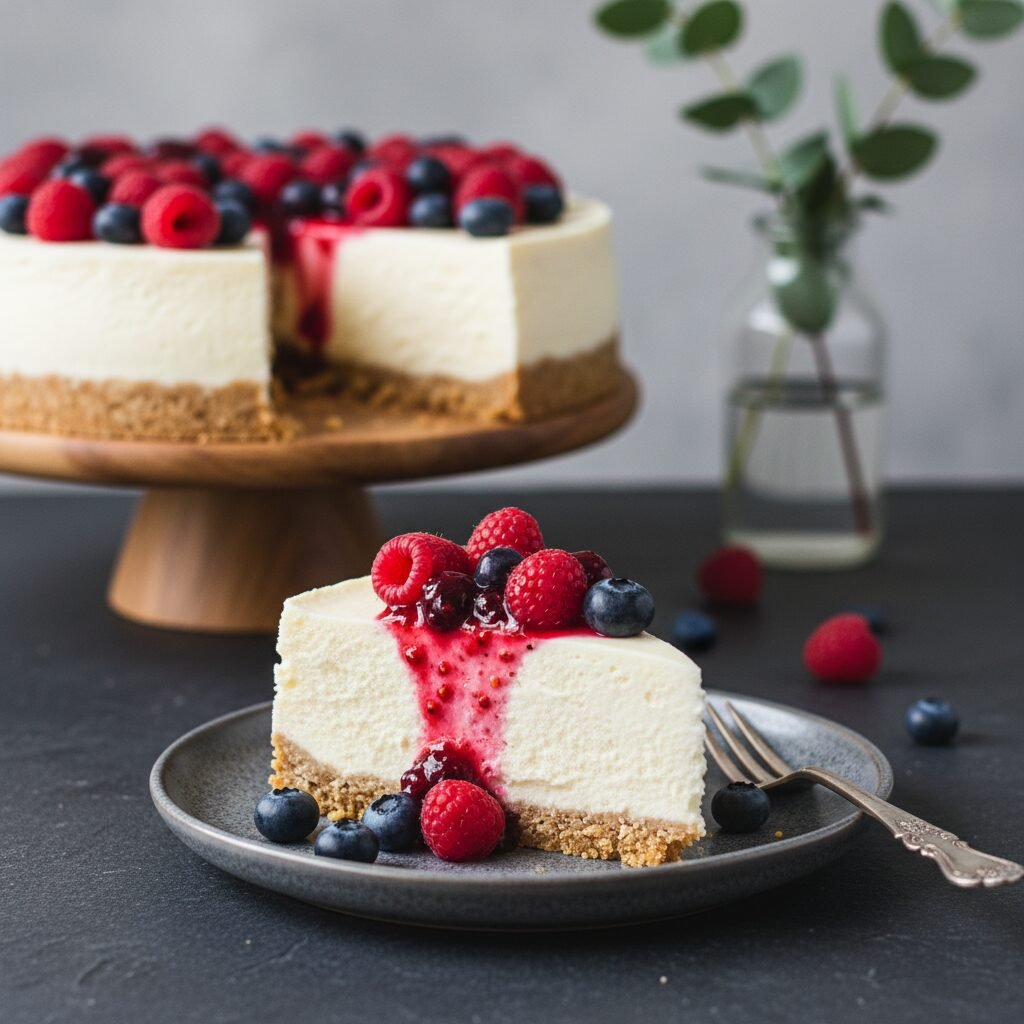
This rich cheesecake is a blank canvas for a variety of keto-friendly toppings. A simple fresh berry compote made by simmering raspberries or strawberries with a touch of water and monk fruit is a classic choice that cuts through the richness of the cheese. Fresh whipped cream, sweetened with a drop of liquid stevia, adds a lovely lightness. For a decadent twist, drizzle with a sugar-free chocolate ganache or a keto salted caramel sauce. Serve chilled, and for an elegant presentation, garnish with fresh mint leaves and a dusting of powdered monk fruit just before serving.
Storage and Reheating Tips
Cheesecake stores exceptionally well, making it a perfect make-ahead dessert. Store the cake in the refrigerator, loosely covered with plastic wrap or in a cake dome, for up to 5 days. For longer storage, freeze the cheesecake. You can freeze the whole cake or individual slices. To freeze, wrap each slice tightly in plastic wrap, followed by a layer of aluminum foil to prevent freezer burn. It will keep in the freezer for up to 2 months. Thaw overnight in the refrigerator before serving. Do not microwave to thaw, as this will melt the fats and ruin the texture.
Nutrition Facts (Estimated)
| Serving Size | 1 slice |
| Calories | 320 |
| Fat | 29g |
| Saturated Fat | 14g |
| Unsaturated Fat | 12g |
| Trans Fat | 0g |
| Cholesterol | 85mg |
| Sodium | 210mg |
| Carbohydrates | 5g |
| Fiber | 2g |
| Sugar | 1g |
| Protein | 7g |
Frequently Asked Questions
Can I make this cheesecake without a water bath?
Yes, but a water bath is highly recommended for the creamiest texture and to prevent cracks. If you skip it, bake at a slightly lower temperature (300°F) and place a pan of water on the rack below to keep the oven air humid.
Why did my cheesecake crack?
Cracks are usually caused by overmixing the batter (introducing too much air), overbaking, or cooling the cheesecake too quickly. The slow cooling method in the turned-off oven helps prevent this.
Does monk fruit have a cooling effect?
Pure monk fruit does not, but many commercial brands are blends of monk fruit and erythritol. Erythritol can have a cooling sensation. Using a powdered version and balancing it with the fat in the cream cheese minimizes this effect significantly.
How do I know when it is done baking?
The cheesecake is done when the edges are slightly puffy and set, but the center 2-3 inches still wobble like Jell-O when you gently shake the pan. It will firm up as it cools.
Can I use granular sweetener instead of powdered?
You can, but it may not dissolve completely, leading to a grainy texture. If you only have granular, you can blitz it in a high-speed blender for a few seconds to powder it yourself.
Is this recipe safe for diabetics?
Generally, yes. Monk fruit has a zero glycemic index and does not spike blood sugar. However, everyone’s body is different, so it’s always best to check your blood sugar if you are unsure.
Why is my crust soggy?
A soggy crust usually happens if water from the water bath seeped into the springform pan. Ensure you use wide, heavy-duty foil and wrap the pan multiple times to create a watertight seal.
Can I use low-fat cream cheese?
It is not recommended. Low-fat cream cheese has a higher water content and fillers that can affect the stability and creaminess of the cheesecake. Full-fat block cream cheese works best.
Conclusion
Mastering the art of the keto cheesecake is a game-changer for anyone living a low-carb lifestyle. It proves that you do not have to sacrifice texture, flavor, or the joy of baking to maintain your health goals. This Moist Keto Cheesecake with Monk Fruit Sweetener is more than just a diet recipe; it is a dessert that brings people together, regardless of their dietary restrictions. The creamy richness, the buttery crust, and the perfect sweetness make it a standout dish for holidays, birthdays, or just a Tuesday night treat. We hope this guide helps you create a dessert that you are proud to serve and delighted to eat. Happy baking!