The Ultimate Moist Keto Cheesecake With Erythritol (No Sugar Added!)
Moist Keto Cheesecake With Erythritol Recipe
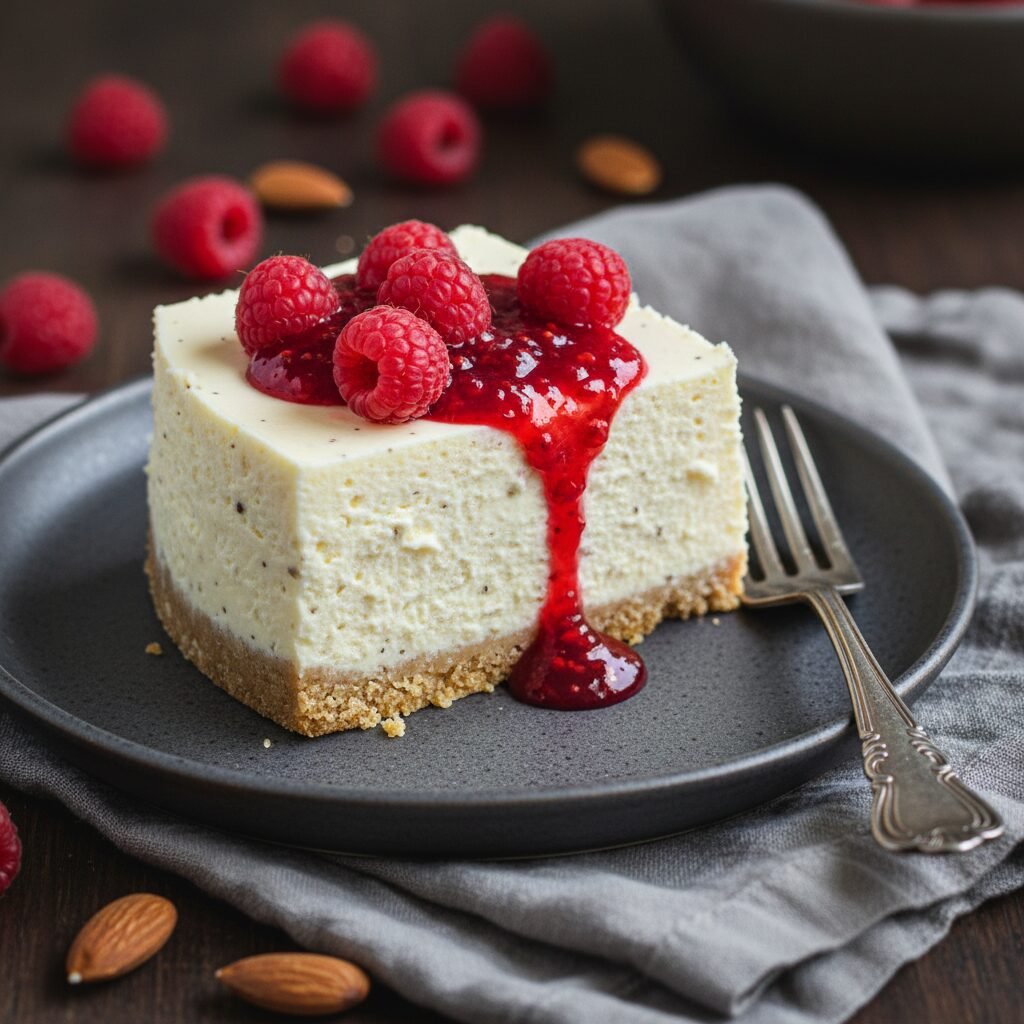
Indulge in a rich, creamy, and decadently moist cheesecake that fits perfectly into your ketogenic lifestyle. This foolproof recipe uses erythritol for a sugar-free sweetness that rivals any traditional New York-style slice, all supported by a buttery almond flour crust.
20 minutes
70 minutes
6 hours (includes cooling)
12 servings
Dessert
Baking
American
Ketogenic
For anyone following a ketogenic diet, the quest for the perfect dessert is often fraught with disappointment. We have all experienced the dry, crumbly textures or the strange, chemical aftertastes of low-carb treats that promise the world but deliver very little satisfaction. However, cheesecake is the rare exception in the baking world where the low-carb version can genuinely rival, if not surpass, the original. This Moist Keto Cheesecake with Erythritol is the culmination of endless testing to find the perfect balance of tang, sweetness, and velvety texture without a single grain of sugar. The secret lies in the high-fat content of quality cream cheese and sour cream, which provides that luxurious mouthfeel we all crave. Unlike other sweeteners that can leave a gritty texture, using powdered erythritol ensures a smooth consistency that melts on the tongue. This recipe is not just a ‘diet’ alternative; it is a show-stopping dessert in its own right. Whether you are hosting a dinner party for non-keto guests or simply treating yourself after a long week of clean eating, this cheesecake delivers comfort and indulgence in every bite. The almond flour crust adds a nutty depth that pairs beautifully with the bright notes of lemon and vanilla in the filling. Get ready to redefine what is possible with keto baking.
History & Origins
The history of cheesecake is a fascinating journey that dates back far longer than the famous New York delis of the 20th century. Believe it or not, the earliest known cheesecake origins can be traced back to Ancient Greece, specifically the island of Samos, around 2000 BC. Archaeologists have found cheese molds dating back to this period. It was considered such a potent source of energy that it was served to athletes during the first Olympic Games in 776 BC. The Romans later adopted the recipe, calling it ‘libum,’ which was often served as an offering to the gods or on special occasions. As the Roman Empire expanded, the technique of mixing cheese with sweeteners spread across Europe, evolving with local ingredients. However, the cheesecake we recognize today—smooth, dense, and rich—is a distinctly American innovation. In 1872, a New York dairy farmer named William Lawrence was attempting to replicate French Neufchâtel cheese but accidentally created a richer, creamier product: cream cheese. This ‘Philadelphia’ style cream cheese became the base for the iconic New York Cheesecake. In recent years, the ketogenic movement has breathed new life into this ancient dish. By swapping wheat flour for nut flours and sugar for natural sweeteners like erythritol, modern bakers have reclaimed this historic dessert, proving that history’s favorite treat can evolve to meet modern nutritional science without losing its soul.
Why This Recipe Works
This recipe succeeds where many other low-carb desserts fail because it relies on the science of fat and moisture retention. Traditional cheesecakes rely on sugar not just for sweetness, but for texture; sugar is hygroscopic, meaning it holds onto water. When you remove sugar, you risk a dry cake. To combat this, this recipe utilizes a specific ratio of full-fat cream cheese to sour cream. The sour cream adds extra fat and acidity, which tenderizes the protein structure of the eggs, preventing the filling from becoming rubbery. Furthermore, the choice of erythritol is crucial. Granulated erythritol can often re-crystallize upon cooling, leading to a crunchy, gritty texture. By using powdered (confectioners style) erythritol, the sweetener dissolves completely into the batter, ensuring a silky smooth finish. We also employ the water bath (bain-marie) method. While it might seem like an extra hassle, baking the cheesecake in a water bath regulates the temperature, keeping the heat gentle and even. This prevents the edges from overcooking before the center is set and generates steam that keeps the top of the cheesecake moist and crack-free. The almond flour crust provides a sturdy yet tender base that mimics the mouthfeel of graham crackers without the carbohydrate load.
Why You’ll Love This Recipe
- ✓100% Keto and Gluten-Free
- ✓Uses powdered erythritol for a grit-free texture
- ✓Includes a water bath method for crack-free results
- ✓Rich, dense New York-style consistency
- ✓Only 5g net carbs per slice
- ✓Freezes beautifully for meal prep
Equipment You’ll Need
- ✓9-inch Springform pan
- ✓Large roasting pan (for water bath)
- ✓Electric hand mixer or stand mixer
- ✓Parchment paper
- ✓Aluminum foil (heavy duty)
- ✓Rubber spatula
- ✓Measuring cups and spoons
Ingredients
- ✓2 cups Almond Flour (super fine)
- ✓1/3 cup Unsalted Butter (melted)
- ✓3 tbsp Erythritol (granular for crust)
- ✓1 tsp Vanilla Extract (for crust)
- ✓32 oz Full-Fat Cream Cheese (softened to room temp)
- ✓1 1/4 cups Powdered Erythritol (must be powdered)
- ✓3 large Eggs (room temp)
- ✓1/2 cup Full-Fat Sour Cream (room temp)
- ✓1 tbsp Vanilla Extract (for filling)
- ✓1 tsp Lemon Juice (freshly squeezed)
- ✓1/4 tsp Salt
Instructions
- Preheat your oven to 325°F (160°C). Grease the bottom and sides of a 9-inch springform pan. Ideally, line the bottom with parchment paper for easy removal.
- To make the crust: In a medium bowl, combine the almond flour, melted butter, 3 tablespoons of granular erythritol, and 1 teaspoon of vanilla extract. Mix until the texture resembles damp sand.
- Press the crust mixture firmly and evenly into the bottom of the prepared springform pan. You can use the bottom of a measuring cup to smooth it out. Bake for 10 minutes until slightly golden. Remove and let it cool while you prepare the filling. Reduce oven heat to 300°F (150°C).
- Prepare the pan for the water bath: Tightly wrap the outside bottom and sides of the springform pan with 2-3 layers of heavy-duty aluminum foil to prevent water from seeping in.
- To make the filling: In a large bowl using a hand mixer or stand mixer, beat the softened cream cheese and powdered erythritol on low-medium speed until completely smooth and creamy. Do not rush this step; lumps here mean lumps later.
- Add the sour cream, vanilla extract, lemon juice, and salt. Beat until combined, scraping down the sides of the bowl with a rubber spatula.
- Add the eggs one at a time, beating on LOW speed just until incorporated after each addition. It is critical not to overbeat once the eggs are added, as incorporating too much air can cause the cheesecake to crack.
- Pour the batter over the pre-baked crust and smooth the top with a spatula.
- Place the foil-wrapped springform pan inside a large roasting pan. Carefully pour boiling water into the roasting pan until it reaches about halfway up the sides of the springform pan.
- Bake in the center of the oven at 300°F (150°C) for 60-70 minutes. The center should still be slightly jiggly (like Jell-O) while the edges are set. It will firm up as it cools.
- Turn off the oven and crack the door open about an inch. Let the cheesecake cool inside the oven for 1 hour. This slow cooling prevents cracks.
- Remove from the oven and water bath. Remove the foil. Run a thin knife around the edge to loosen it from the pan. Let it cool completely to room temperature.
- Cover with plastic wrap and refrigerate for at least 4 hours, preferably overnight, before slicing and serving.
Expert Cooking Tips
- ✓Room temperature ingredients are non-negotiable. Cold cream cheese will result in a lumpy batter that cannot be fixed.
- ✓Use powdered erythritol for the filling. If you only have granular, blend it in a high-speed blender until it becomes a fine powder.
- ✓Do not overmix the batter after adding eggs. Overmixing adds air bubbles which expand and burst during baking, causing cracks.
- ✓Invest in heavy-duty foil for the water bath. Standard foil often tears, leading to a soggy crust.
- ✓The ‘jiggle test’ is the best way to check doneness. If the center ripples like a liquid, it needs more time. If it wobbles like gelatin, it is done.
Substitutions and Variations
This recipe is quite versatile within the keto framework. If you do not have almond flour, you can use pecan meal or walnut meal for the crust, though the flavor profile will change slightly to be nuttier. For a nut-free version, you can make a crustless cheesecake or use ground sunflower seeds. Regarding the sweetener, while erythritol is recommended for its neutral flavor, you can use a Monk Fruit/Erythritol blend or Allulose. Note that Allulose browns faster, so keep an eye on the oven. If you cannot find sour cream, full-fat Greek yogurt is an acceptable substitute, though sour cream provides a richer texture. Do not substitute the full-fat cream cheese for low-fat or whipped varieties; the stabilizers in whipped cheese will ruin the texture.
Common Mistakes to Avoid
The most common mistake is rushing the temperature changes. Taking the cheesecake out of the oven immediately after baking causes it to shock and crack due to the rapid temperature drop; always let it cool in the oven. Another frequent error is water leakage. If you don’t wrap the pan securely with foil, water from the bain-marie will seep into the crust, making it soggy. Some bakers also try to reduce the calories by using low-fat dairy, but keto cheesecake relies on fat for structure and mouthfeel—low-fat versions will turn out rubbery and dry. Finally, resist the urge to slice it before it has fully chilled. The cheesecake needs the cold time to firm up; cutting it warm will result in a messy collapse.
Serving Suggestions
This rich cheesecake is a blank canvas for toppings. A simple keto-friendly berry coulis made by simmering fresh strawberries or raspberries with a little water and sweetener is a classic choice. Fresh berries and a sprig of mint add a pop of color. For chocolate lovers, a drizzle of sugar-free dark chocolate ganache or melted sugar-free chocolate chips works wonders. A dollop of homemade keto whipped cream (heavy cream whipped with vanilla and sweetener) is also a perfect accompaniment.
Storage and Reheating Tips
Store the cheesecake in the refrigerator, loosely covered with plastic wrap or in a cake dome, for up to 5 days. The flavor actually improves after the first 24 hours. For long-term storage, this cheesecake freezes exceptionally well. Slice the cake, then wrap each slice individually in plastic wrap, followed by a layer of aluminum foil. Place the wrapped slices in a freezer-safe bag or container. They can be frozen for up to 2 months. Thaw overnight in the refrigerator before serving. Do not microwave to thaw, as it will melt the high fat content.
Nutrition Facts (Estimated)
| Serving Size | 1 slice |
| Calories | 345 |
| Fat | 32g |
| Saturated Fat | 18g |
| Unsaturated Fat | 11g |
| Trans Fat | 0g |
| Cholesterol | 115mg |
| Sodium | 210mg |
| Carbohydrates | 6g |
| Fiber | 1.5g |
| Sugar | 2g |
| Protein | 7g |
Frequently Asked Questions
Why did my cheesecake crack?
Cracks are usually caused by overmixing the batter (adding too much air), overbaking, or cooling the cheesecake too quickly. Using the water bath and the oven-cooling method described prevents this.
Can I use granulated erythritol in the filling?
It is not recommended. Granulated erythritol does not dissolve as well as sugar and can re-crystallize when chilled, giving your cheesecake a gritty or crunchy texture. Powdered is best.
Is the water bath absolutely necessary?
Technically no, but highly recommended. Without it, the edges will cook much faster than the center, the texture will be less creamy, and the top is almost guaranteed to crack and sink.
Why does my cheesecake taste ‘cooling’?
This is a common characteristic of erythritol. To mitigate the cooling sensation, ensure you are using a high-quality brand, or try a blend of erythritol and monk fruit. The fats in the cheese also help mask this effect.
Can I make this dairy-free?
It is difficult to replicate the texture of keto cheesecake without dairy. While vegan cream cheese exists, the fat and protein ratios are different. It would require significant experimentation.
What size eggs should I use?
Use large eggs. Using medium or extra-large eggs will alter the liquid-to-solid ratio, potentially affecting the set of the custard.
My cheesecake is brown on top, is it burnt?
A light golden brown top is normal for a New York style cheesecake. If it is browning too quickly before the center is set, loosely tent a piece of foil over the top for the remainder of the baking time.
Can I use liquid sweetener?
Liquid stevia or monk fruit can be used, but you will lose the bulk that powdered erythritol provides. You may need to add a little more almond flour or cream cheese to compensate for the lost volume.
Conclusion
Creating a bakery-quality Moist Keto Cheesecake with Erythritol is easier than it seems and is a skill that will serve you well throughout your low-carb journey. By following the steps for the water bath and cooling process, you ensure a dessert that is not only visually stunning but texturally perfect. It is the kind of recipe that banishes the feeling of restriction often associated with dieting. Gather your ingredients, take your time with the process, and prepare to be amazed by how delicious sugar-free living can be. Enjoy every guilt-free bite!