The Ultimate Moist Keto Carrot Cake With Monk Fruit Sweetener
Moist Keto Carrot Cake With Monk Fruit Sweetener Recipe
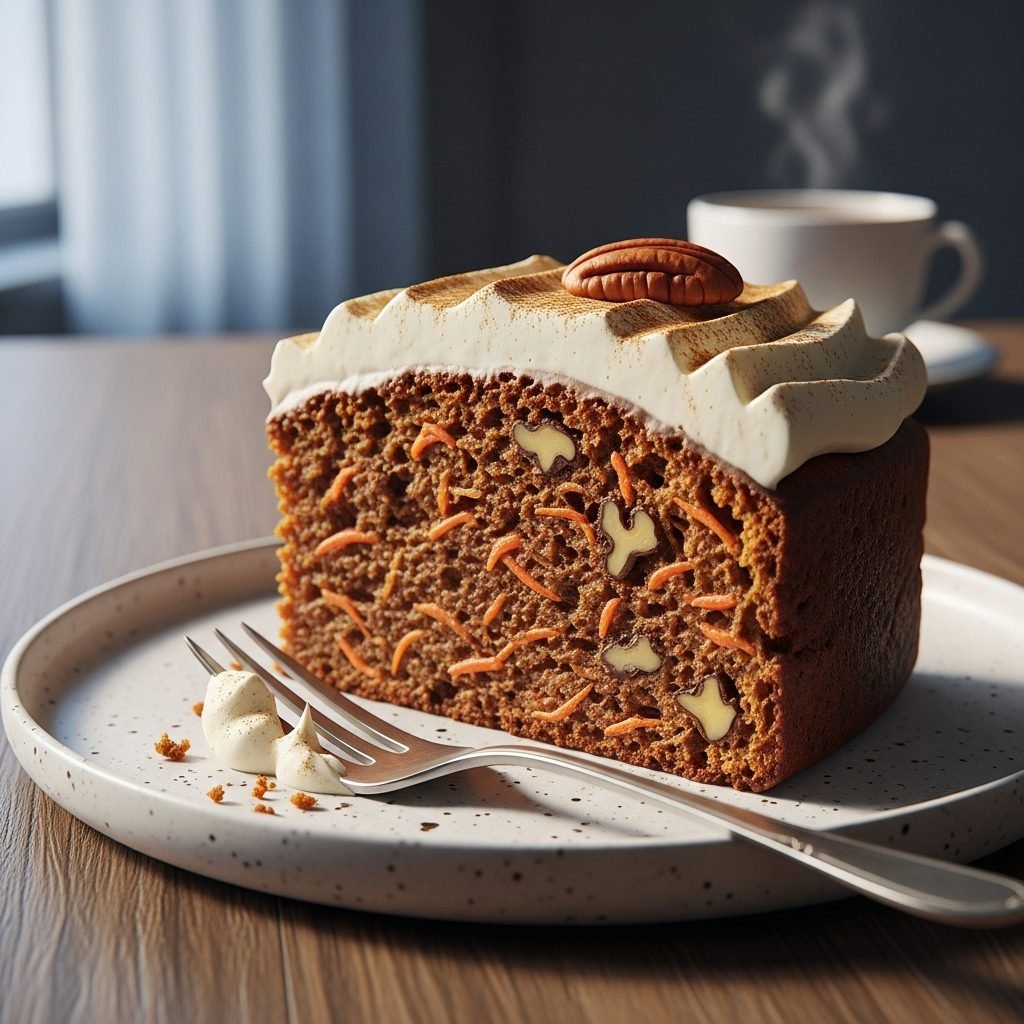
Indulge in the nostalgic comfort of a classic carrot cake without the sugar crash. This ultra-moist, low-carb masterpiece features a tender crumb spiced with cinnamon and nutmeg, sweetened with natural monk fruit, and crowned with a luscious, sugar-free cream cheese frosting.
20 minutes
35 minutes
1 hour 15 minutes
12 servings
Dessert
Baking
American
Gluten-Free
For many embarking on a ketogenic lifestyle, the hardest goodbye is often the warm, spiced comfort of a traditional carrot cake. There is something undeniably soothing about the combination of sweet carrots, warming spices like cinnamon and nutmeg, and the tangy richness of cream cheese frosting. However, traditional recipes are laden with refined flour and cups of sugar, making them a strict no-go for low-carb dieters. But fear not, dessert lovers: this Moist Keto Carrot Cake with Monk Fruit Sweetener is here to revolutionize your baking repertoire. We have cracked the code to creating a cake that is not only compliant with your dietary goals but actually rivals the high-carb original in taste and texture.
The secret lies in the careful balance of almond and coconut flours to mimic the crumb of wheat flour, paired with the magical sweetening power of monk fruit. Unlike other artificial sweeteners that can leave a bitter, chemical aftertaste, monk fruit offers a clean, natural sweetness that pairs perfectly with the earthiness of the carrots and walnuts. We specifically use a ‘golden’ monk fruit blend in the batter to replicate the depth of brown sugar, and a powdered version in the frosting for that silky-smooth finish. This cake is dense yet fluffy, incredibly moist without being soggy, and packed with the aromatic flavors of fall. Whether you are celebrating a birthday, hosting a brunch, or simply craving a guilt-free treat on a Tuesday night, this recipe proves that you really can have your cake and eat it too.
History & Origins
The history of carrot cake is a fascinating journey through necessity and culinary evolution. While we often think of it as a modern American staple, its roots likely trace back to the Middle Ages in Europe. During this period, sugar was a rare and expensive luxury, imported from distant lands and priced far beyond the reach of the common household. Cooks discovered that carrots, which contain more natural sugar than almost any other vegetable (second only to sugar beets), could be used to sweeten puddings and steamed cakes. These early iterations were less like the fluffy cakes we know today and more akin to dense, steamed puddings served with sweet sauces.
The concept experienced a significant revival during World War II in the United Kingdom. With strict rationing of sugar and other baking staples, the government promoted recipes using carrots to add sweetness and moisture to baked goods. The Ministry of Food disseminated recipes for carrot cakes and puddings to help citizens cope with shortages while maintaining morale. However, the carrot cake’s explosion into American pop culture occurred in the 1960s and 1970s. It was marketed as a ‘health food’—a somewhat ironic label given the amount of sugar and oil usually involved—and became a fixture in cafes and restaurants across the US. The addition of cream cheese frosting, now inseparable from the cake itself, solidified its legendary status. Today, as we move through the 21st century, the culinary world is adapting once again. The rise of the ketogenic and low-carb movements has birthed a new era for this historic dessert, transforming it from a sugar bomb back into a nutrient-dense treat, utilizing modern ingredients like almond flour and monk fruit to honor its legacy while fitting modern health needs.
Why This Recipe Works
Baking with keto ingredients can often result in dry, crumbly, or eggy textures, but this recipe is scientifically formulated to avoid those common pitfalls. The primary reason this specific recipe works so well is the dual-flour approach. We use a base of superfine almond flour, which provides healthy fats and a tender crumb, mixed with a smaller amount of coconut flour. Coconut flour is highly absorbent; it holds onto moisture and gives the cake structure, preventing it from falling apart—a common issue with almond flour-only recipes. By balancing these two, we achieve a texture that is remarkably close to wheat-based cake.
Furthermore, the choice of sweetener is critical. We utilize a Golden Monk Fruit sweetener containing erythritol. The ‘golden’ variety mimics the molasses notes of brown sugar, which is essential for the deep, caramelized flavor profile associated with carrot cake. Monk fruit is heat-stable, meaning it won’t break down or turn bitter during baking. Additionally, the inclusion of room-temperature sour cream (or Greek yogurt) activates the baking soda and adds acidity, which tenderizes the protein in the almond flour and results in a lighter, fluffier rise. Finally, by finely grating the carrots rather than shredding them thickly, we ensure they cook through completely and distribute moisture evenly throughout the batter, eliminating any crunchy raw vegetable texture.
Why You’ll Love This Recipe
- ✓Only 4g Net Carbs per slice
- ✓Uses Golden Monk Fruit for authentic brown sugar flavor
- ✓Ultra-moist crumb thanks to sour cream and almond flour
- ✓Zero sugar spike or glycemic impact
- ✓Rich, velvety sugar-free cream cheese frosting
- ✓Freezes beautifully for meal prep
Equipment You’ll Need
- ✓Two 8-inch round cake pans or one 9×13 pan
- ✓Large mixing bowl
- ✓Medium mixing bowl
- ✓Electric hand mixer or stand mixer
- ✓Box grater or food processor (shredding disc)
- ✓Rubber spatula
- ✓Parchment paper
- ✓Cooling rack
- ✓Measuring cups and spoons
Ingredients
- ✓2 1/2 cups superfine almond flour
- ✓1/4 cup coconut flour
- ✓1 tbsp baking powder
- ✓1 1/2 tsp ground cinnamon
- ✓1/2 tsp ground nutmeg
- ✓1/4 tsp ground ginger
- ✓1/4 tsp salt
- ✓1/2 cup unsalted butter, melted and cooled
- ✓3/4 cup Golden Monk Fruit Sweetener (granular)
- ✓4 large eggs, room temperature
- ✓1 tsp pure vanilla extract
- ✓1/3 cup sour cream or full-fat Greek yogurt, room temperature
- ✓1/2 cup unsweetened almond milk
- ✓2 cups finely grated raw carrots (about 4 medium carrots)
- ✓3/4 cup chopped pecans or walnuts
- ✓— FROSTING —
- ✓8 oz cream cheese, softened to room temperature
- ✓1/2 cup unsalted butter, softened
- ✓1 cup Powdered Monk Fruit Sweetener
- ✓1 tsp pure vanilla extract
- ✓1 tbsp heavy whipping cream (optional, for texture)
Instructions
- Preheat your oven to 350°F (175°C). Grease two 8-inch round cake pans (or one 9×13 pan) and line the bottoms with parchment paper to ensure easy removal.
- In a medium bowl, whisk together the almond flour, coconut flour, baking powder, cinnamon, nutmeg, ginger, and salt. Ensure there are no lumps, especially in the almond flour.
- In a large bowl, using an electric mixer, beat the melted butter and Golden Monk Fruit sweetener together until well combined (about 1-2 minutes).
- Add the eggs one at a time, beating well after each addition. Then, mix in the vanilla extract, sour cream, and almond milk until the batter is smooth.
- Gradually add the dry ingredients into the wet ingredients. Mix on low speed until just combined. Do not overmix.
- Using a rubber spatula, gently fold in the finely grated carrots and chopped pecans (reserve a few nuts for garnish if desired).
- Divide the batter evenly between the prepared cake pans. Smooth the tops with the spatula.
- Bake for 30-35 minutes, or until the tops are golden brown and a toothpick inserted into the center comes out clean or with just a few moist crumbs.
- Remove from the oven and let the cakes cool in the pans for at least 20 minutes. This is crucial as keto cakes are fragile when hot. Then, carefully invert them onto a wire rack to cool completely before frosting.
- While the cakes cool, make the frosting. In a large bowl, beat the softened cream cheese and butter together until fluffy and pale (about 3 minutes).
- Add the powdered monk fruit sweetener and vanilla extract. Beat on low speed initially to incorporate the sweetener, then switch to high speed for 2 minutes until creamy. If the frosting is too stiff, add 1 tablespoon of heavy cream.
- Once the cakes are completely cool, frost the top of one layer, place the second layer on top, and frost the top and sides. Garnish with extra chopped pecans.
Expert Cooking Tips
- ✓Grate the carrots finely. Large chunks of carrot will not cook down sufficiently in the baking time and can make the cake crumble.
- ✓Bring all cold ingredients (eggs, cream cheese, sour cream) to room temperature before mixing. This prevents the batter from curdling and ensures a smooth emulsion.
- ✓Use ‘Superfine’ almond flour, not almond meal. Almond meal still has the skins and will result in a gritty, heavy texture.
- ✓Let the cake cool completely. Keto baking relies on the cooling process to set the structure. Frosting a warm cake will result in a melted mess.
- ✓If the top of the cake is browning too quickly in the oven but the center isn’t done, tent it loosely with aluminum foil.
- ✓Weigh your flour if possible. Packing almond flour into a cup can lead to a dry cake. If using cups, spoon the flour in and level it off.
- ✓For the frosting, use powdered sweetener only. Granular sweetener will result in a gritty, crunchy frosting.
Substitutions and Variations
This recipe is quite versatile, allowing for several dietary adjustments. If you are dairy-free, you can substitute the butter in the cake with melted coconut oil or a neutral-flavored oil like avocado oil. For the sour cream, a dairy-free coconut yogurt works well. The cream cheese frosting is harder to replicate without dairy, but there are high-quality vegan cream cheeses available that work reasonably well; you may just need to add a bit more stabilizer or keep the cake refrigerated until serving. If you have a nut allergy to almonds, you can try using sunflower seed flour, though keep in mind this may react with the baking powder and turn green due to chlorophyll (a harmless chemical reaction). To prevent this, add a tablespoon of lemon juice or vinegar to the batter. Walnuts and pecans can be omitted entirely or swapped for pumpkin seeds for a crunch. Regarding sweeteners, you can use erythritol or allulose blends if you prefer them over monk fruit, but be aware that allulose can cause cakes to brown faster.
Common Mistakes to Avoid
The most common mistake with keto carrot cake is wetness. Carrots hold a lot of water. If you wash your carrots right before grating, dry them thoroughly. Do not squeeze the water out of the carrots, but don’t add extra water either. Another mistake is using granular sweetener in the frosting; it will not dissolve like sugar does, leaving a sandy texture. Always use powdered (confectioners style) sweetener for frostings. A third pitfall is impatience. Unlike wheat cakes, keto cakes are very soft when hot. If you try to flip the cake out of the pan immediately after baking, it will almost certainly break. Let it rest. Finally, ensure your baking powder is fresh. Without gluten, we rely heavily on the leavening agent for lift. If your baking powder is old, you will end up with a dense, flat brick.
Serving Suggestions
This cake is rich, so small slices go a long way. Serve it chilled or at room temperature. It pairs beautifully with a hot cup of black coffee or an unsweetened almond milk latte, which cuts through the richness of the cream cheese frosting. For a fancy presentation, garnish the top with whole pecan halves arranged in a circle, or a light dusting of cinnamon. If you are serving this for a brunch, it complements savory egg dishes perfectly. For an extra touch of decadence, drizzle a small amount of sugar-free caramel sauce over the slice right before serving.
Storage and Reheating Tips
Because of the cream cheese frosting and the moisture content of the cake, this dessert must be stored in the refrigerator. Place it in an airtight cake carrier or container; it will stay fresh for up to 5-6 days. In fact, many find it tastes even better on the second day as the flavors meld. This cake also freezes exceptionally well. You can freeze individual slices by wrapping them tightly in plastic wrap and then placing them in a freezer bag. They will last for up to 3 months. To eat, simply thaw a slice in the refrigerator overnight or on the counter for 30 minutes. Do not microwave the frosted cake to thaw, or the frosting will melt completely.
Nutrition Facts (Estimated)
| Serving Size | 1 slice |
| Calories | 345 |
| Fat | 31g |
| Saturated Fat | 12g |
| Unsaturated Fat | 16g |
| Trans Fat | 0g |
| Cholesterol | 85mg |
| Sodium | 210mg |
| Carbohydrates | 8g |
| Fiber | 4g |
| Sugar | 2g |
| Protein | 8g |
Frequently Asked Questions
Are carrots actually keto-friendly?
Yes, in moderation. While carrots have more sugar than leafy greens, the amount used in this cake is spread across 12 servings, resulting in a very low net carb count per slice.
Can I use store-bought shredded carrots?
It is not recommended. Store-bought shreds are usually thick, dry, and hard. They won’t cook down properly. Hand-grating fresh carrots yields the best moisture and texture.
Why did my cake turn green?
This is a reaction between the chlorophyll in sunflower seeds (if you substituted flour) or walnuts and the baking powder/soda. It is harmless but looks odd. Acid (lemon juice) helps prevent it.
Can I make this as cupcakes?
Absolutely. This batter will make about 12-15 cupcakes. Reduce the baking time to 20-25 minutes and check for doneness earlier.
What if I don’t have monk fruit?
You can use any 1:1 keto-friendly sweetener like Swerve (erythritol) or Allulose. Just be sure to use the ‘brown’ version for the cake and ‘powdered’ for the frosting.
My frosting is too runny, what do I do?
Refrigerate it for 20 minutes to firm up the butter and cheese. If it’s still runny, add more powdered sweetener or a tablespoon of coconut flour to absorb moisture.
Can I leave out the coconut flour?
No. Coconut flour is highly absorbent and balances the moisture. If you remove it, the cake will be too wet and oily.
Is baking powder gluten-free?
Most are, but always check the label. Some brands use wheat starch as a filler. Look for brands labeled gluten-free or that use cornstarch/potato starch.
Conclusion
There is no reason to feel deprived on a ketogenic diet when recipes like this exist. This Moist Keto Carrot Cake with Monk Fruit Sweetener delivers everything you love about the traditional dessert—the spice, the texture, and the creamy frosting—without the inflammatory sugar and carbs. It is a labor of love that pays off with every forkful, proving that healthy eating can be just as delicious as it is nutritious. Whether you are a seasoned keto veteran or just looking to reduce your sugar intake, this cake is sure to become a household favorite. So grate those carrots, whip up that frosting, and enjoy a slice of pure, guilt-free happiness.