The Ultimate Moist Gluten-Free Pumpkin Cake with Creamy Dairy-Free Frosting
Moist Gluten Free Pumpkin Cake Dairy Free Frosting Recipe
Embrace the cozy flavors of fall with this incredibly moist gluten-free pumpkin cake, topped with a luscious dairy-free cream cheese style frosting. Perfectly spiced and tender, this easy recipe proves that allergy-friendly baking can be just as decadent and delicious as the traditional version.
20 minutes
35 minutes
55 minutes
12-15 servings
Dessert
Baking
American
Gluten-Free
As the leaves begin to turn and the air grows crisp, the craving for warm, aromatic spices and comforting textures becomes undeniable. There is something inherently magical about the scent of cinnamon, nutmeg, and cloves wafting through the kitchen, signaling the arrival of autumn. For those of us navigating the world of dietary restrictions, however, finding a baked good that truly satisfies that seasonal itch without compromising on texture can be a daunting task. Gluten-free baking often carries a stigma of being dry, crumbly, or dense, while dairy-free frostings can sometimes lack that rich, velvety mouthfeel we all adore. This recipe for Moist Gluten-Free Pumpkin Cake with Dairy-Free Frosting is here to shatter those misconceptions once and for all. We have spent countless hours in the test kitchen refining the ratios to ensure that every bite is pillow-soft, tender, and bursting with real pumpkin flavor. The secret lies in the high moisture content of the pumpkin puree combined with a carefully selected blend of gluten-free flours and healthy fats, creating a crumb so delicate you would never guess it is free from wheat. Topped with a tangy, sweet, and impossibly smooth dairy-free frosting, this cake is not just a fantastic alternative; it is a standalone showstopper. Whether you are hosting a Thanksgiving feast, looking for a weekend baking project, or simply need a sweet treat to pair with your afternoon coffee, this cake promises to deliver comfort and joy in every slice. It is a celebration of inclusive baking, proving that everyone deserves a slice of happiness, regardless of dietary needs.
History & Origins
The culinary journey of the pumpkin is as rich and layered as the cake itself. Native to North America, pumpkins have been a staple in indigenous diets for thousands of years, long before European settlers arrived. Indigenous peoples roasted pumpkin strips over open fires and dried them for preservation. When colonists settled in the New World, they quickly adopted this versatile gourd, though their early versions of ‘pumpkin pie’ were vastly different from what we know today—often involving filling a hollowed-out pumpkin with milk, spices, and honey, then roasting it whole in hot ashes. As baking technology advanced with the introduction of chemical leavening agents in the 19th century, the transition from custards to cakes began to take shape. The concept of a ‘spice cake’ became popular, utilizing ingredients like molasses and dried fruits. However, the incorporation of vegetable purees like pumpkin into cake batter gained significant traction in the mid-20th century, driven by a desire for moister cakes and the convenience of canned pumpkin. In recent decades, the culinary landscape has shifted dramatically to accommodate health consciousness and food sensitivities. The rise of Celiac disease awareness and the choice for plant-based lifestyles have propelled the innovation of gluten-free and dairy-free baking. What started as niche health food store items has blossomed into a gourmet movement. This specific recipe honors that history by marrying the traditional, rustic flavors of early American spice cakes with modern food science, utilizing xanthan gum and almond flour blends to replicate the structural integrity of wheat without the gluten.
Why This Recipe Works
The primary challenge in gluten-free baking is mimicking the structural elasticity that gluten protein provides. Without it, baked goods often crumble. This recipe succeeds by leveraging the natural properties of pumpkin puree. Pumpkin is not just a flavor agent; it is a hydrocolloid that holds water, providing immense moisture and density that prevents the cake from drying out—a common pitfall in GF baking. We pair this with a high-quality 1:1 gluten-free flour blend that contains xanthan gum, which acts as a binder to replace the missing gluten network. Furthermore, we opt for oil instead of butter in the cake batter. Oil remains liquid at room temperature, which coats the flour particles more effectively than solid fats, resulting in a sensation of moistness that lasts for days. For the leavening, a combination of baking soda and baking powder is used. The baking soda reacts with the slight acidity of the brown sugar and pumpkin, creating carbon dioxide bubbles that lift the heavy batter, ensuring the cake is fluffy rather than dense. Finally, the dairy-free frosting utilizes a mix of vegan butter and vegetable shortening or dairy-free cream cheese. This combination stabilizes the frosting, preventing it from melting too quickly while mimicking the tang and texture of traditional cream cheese frosting.
Why You’ll Love This Recipe
- ✓Incredibly moist texture that stays soft for days
- ✓Richly spiced with cinnamon, ginger, and nutmeg
- ✓Completely gluten-free and dairy-free
- ✓Easy one-bowl mixing method for the batter
- ✓Perfect balance of sweetness and spice
- ✓Kid-friendly and perfect for school snacks
Equipment You’ll Need
- ✓9×13 inch baking pan
- ✓Large mixing bowl
- ✓Medium mixing bowl
- ✓Electric hand mixer or stand mixer
- ✓Whisk
- ✓Rubber spatula
- ✓Measuring cups and spoons
- ✓Wire cooling rack
- ✓Parchment paper
Ingredients
- ✓2 cups Gluten-Free All-Purpose Flour Blend (ensure it contains xanthan gum)
- ✓2 teaspoons baking powder
- ✓1 teaspoon baking soda
- ✓1/2 teaspoon salt
- ✓2 teaspoons ground cinnamon
- ✓1 teaspoon ground ginger
- ✓1/2 teaspoon ground nutmeg
- ✓1/4 teaspoon ground cloves
- ✓1 1/2 cups granulated sugar (or half brown sugar for deeper flavor)
- ✓1 cup vegetable oil (or melted coconut oil)
- ✓4 large eggs (room temperature)
- ✓1 can (15 oz) pure pumpkin puree (not pumpkin pie filling)
- ✓1 teaspoon pure vanilla extract
- ✓FOR THE FROSTING:
- ✓1/2 cup vegan butter, softened
- ✓1/2 cup dairy-free cream cheese, softened
- ✓3-4 cups powdered sugar, sifted
- ✓1 teaspoon vanilla extract
- ✓1-2 tablespoons dairy-free milk (almond or oat), if needed for consistency
Instructions
- Preheat your oven to 350°F (175°C). Grease a 9×13 inch baking pan generously with oil or cooking spray, or line it with parchment paper for easy removal.
- In a medium bowl, whisk together the gluten-free flour, baking powder, baking soda, salt, cinnamon, ginger, nutmeg, and cloves until well combined and aerated.
- In a large mixing bowl, combine the sugar, oil, eggs, pumpkin puree, and vanilla extract. Whisk vigorously until the mixture is smooth and glossy.
- Gradually add the dry ingredients to the wet ingredients. Using a rubber spatula, fold the mixture gently until just combined and no streaks of flour remain. Do not overmix, even with gluten-free flour, as it can affect the rise.
- Pour the batter into the prepared baking pan and smooth the top into an even layer with the spatula.
- Bake in the preheated oven for 30 to 35 minutes, or until a toothpick inserted into the center comes out clean or with just a few moist crumbs attached.
- Remove the cake from the oven and place the pan on a wire cooling rack. Allow the cake to cool completely in the pan. This is crucial as frosting a warm cake will cause the frosting to melt.
- While the cake cools, prepare the frosting. In a large bowl using a hand mixer or stand mixer, beat the softened vegan butter and dairy-free cream cheese together until creamy and smooth.
- Gradually add the powdered sugar, about one cup at a time, beating on low speed until incorporated. Add the vanilla extract.
- Increase the mixer speed to high and whip for 2-3 minutes until the frosting is light and fluffy. If the frosting is too stiff, add dairy-free milk one teaspoon at a time until spreadable.
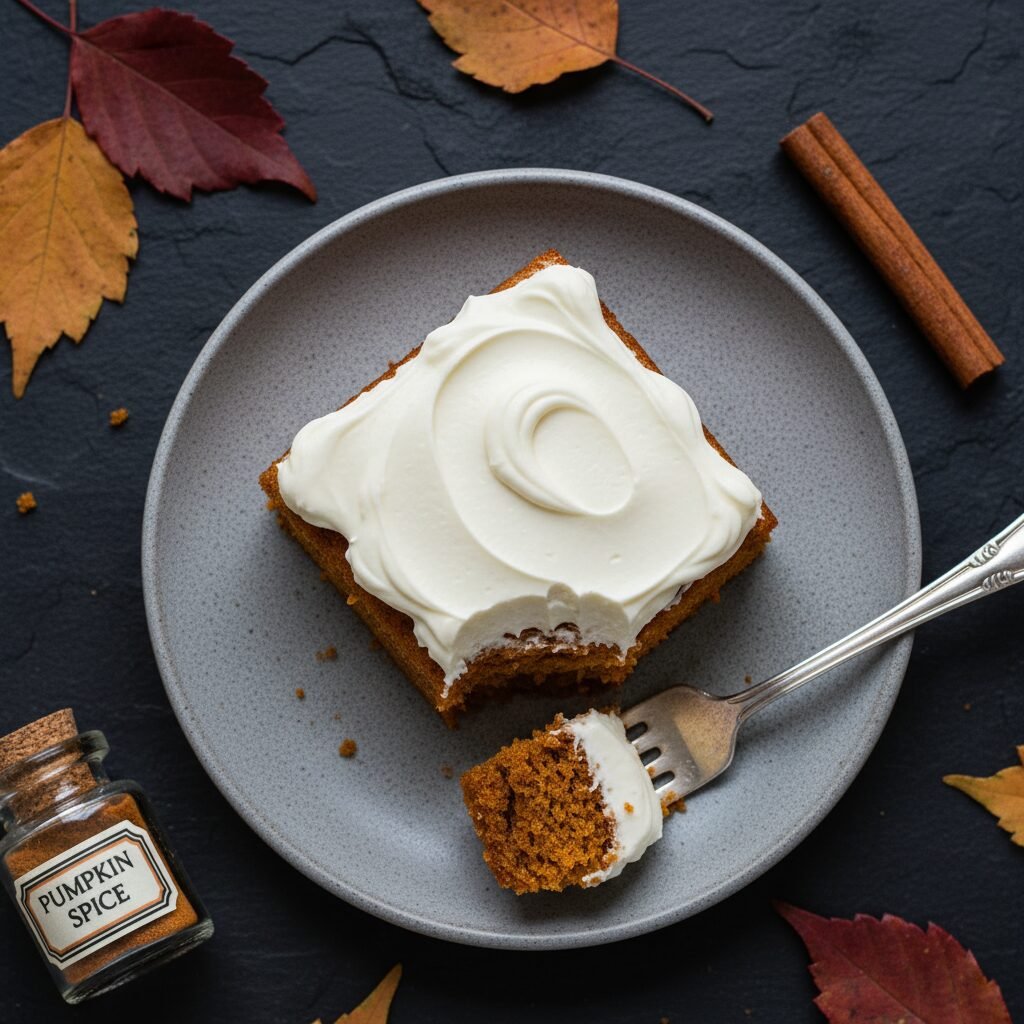
- Once the cake is completely cool, spread the frosting generously over the top. Slice into squares and serve.
Expert Cooking Tips
- ✓Ensure your ingredients, especially eggs and vegan butter, are at room temperature to prevent the batter from curdling.
- ✓Measure your flour correctly by spooning it into the measuring cup and leveling it off, rather than scooping directly, to avoid a dense cake.
- ✓Check the label of your pumpkin puree to ensure it is 100% pumpkin and not pre-sweetened pie filling.
- ✓Allow the cake to cool fully before frosting; gluten-free cakes can be more fragile when warm.
- ✓If your GF flour blend does not contain xanthan gum, add 1 teaspoon to the dry ingredients to help bind the cake.
- ✓Sift the powdered sugar before making the frosting to ensure a lump-free, silky texture.
Substitutions and Variations
This recipe is quite versatile and can accommodate several substitutions based on your pantry staples or dietary needs. If you do not have a pre-mixed gluten-free flour blend, you can make your own using a mix of rice flour, potato starch, and tapioca starch, but remember to add xanthan gum. For the sugar, you can use coconut sugar for a lower glycemic index, though it will darken the color of the cake. If you are not strictly dairy-free, regular butter and cream cheese can be swapped in at a 1:1 ratio for the frosting. For an egg-free version, flax eggs (1 tablespoon ground flaxseed meal mixed with 3 tablespoons water per egg) work surprisingly well in this recipe due to the strong flavor of the pumpkin masking the flax taste. You can also substitute the vegetable oil with melted coconut oil or even applesauce for a lower-fat version, though the texture may be slightly denser. Finally, if you don’t have individual spices, you can substitute the cinnamon, ginger, nutmeg, and cloves with 1 tablespoon of pumpkin pie spice.
Common Mistakes to Avoid
A very common mistake when baking this cake is over-baking. Gluten-free flours can dry out faster than wheat flour if left in the oven too long. Start checking for doneness at the 30-minute mark. Another issue is using ‘pumpkin pie filling’ instead of ‘pure pumpkin puree.’ The pie filling has added sugar and spices which will throw off the recipe’s balance and sweetness. Additionally, failing to let the vegan butter soften properly can lead to a lumpy frosting. Do not try to melt it in the microwave to soften it quickly, as melted butter will not whip up into a frosting structure. Lastly, be careful not to over-mix the frosting once the sugar is added, as vegan butter can sometimes separate if beaten too long at high heat.
Serving Suggestions
This cake is a versatile dessert that presents beautifully on a rustic wooden board or a ceramic platter. Serve it as a simple afternoon snack with a cup of hot chai tea or coffee. For a more elegant presentation at a dinner party, garnish each square with a dusting of cinnamon, a sprinkle of chopped pecans or walnuts for crunch, or even a few candied pumpkin seeds. A drizzle of dairy-free caramel sauce over the frosting adds a decadent touch that guests love. If you want to lean into the fall theme, serve it alongside a scoop of dairy-free vanilla ice cream or a dollop of coconut whipped cream.
Storage and Reheating Tips
Because of the moisture content from the pumpkin, this cake stores exceptionally well. It can be kept in an airtight container at room temperature for up to 2 days. However, for longer storage, it is best to refrigerate it, where it will keep for up to 5-7 days. The cold actually helps the gluten-free crumb firm up slightly, making it easier to handle. If you wish to freeze the cake, you can do so frosted or unfrosted. To freeze frosted slices, place them on a baking sheet in the freezer for an hour until the frosting is solid, then wrap them individually in plastic wrap and foil. They will last for up to 3 months. Thaw in the refrigerator overnight before serving.
Nutrition Facts (Estimated)
| Serving Size | 1 slice |
| Calories | 320 |
| Fat | 16g |
| Saturated Fat | 4g |
| Unsaturated Fat | 10g |
| Trans Fat | 0g |
| Cholesterol | 35mg |
| Sodium | 180mg |
| Carbohydrates | 42g |
| Fiber | 3g |
| Sugar | 22g |
| Protein | 4g |
Frequently Asked Questions
Can I make this recipe into cupcakes instead of a sheet cake?
Yes, absolutely! This batter works perfectly for cupcakes. Line a muffin tin with paper liners and fill them about 2/3 full. Bake at 350°F for 18-22 minutes. This recipe should yield about 24 cupcakes.
Why did my cake sink in the middle?
Sinking usually happens if the cake was underbaked or if the oven door was opened too early, causing a sudden temperature drop. It can also occur if there was too much leavening (baking soda/powder) or liquid in the batter.
Is this cake safe for people with Celiac disease?
Yes, as long as you use certified gluten-free flour and ensure that all your other ingredients (like spices and baking powder) are processed in a gluten-free facility to avoid cross-contamination.
Can I use fresh pumpkin instead of canned?
You can, but you must roast and puree the pumpkin yourself. Be sure to strain the fresh puree through a cheesecloth to remove excess water, as fresh pumpkin is often much more watery than the canned variety, which can affect the bake.
What is the best brand of gluten-free flour to use?
We recommend high-quality blends like King Arthur Measure for Measure or Bob’s Red Mill 1-to-1 Baking Flour. These blends are formulated to replicate the texture of wheat flour closely.
My frosting is too runny, how do I fix it?
If the frosting is too soft, add more powdered sugar a few tablespoons at a time. You can also refrigerate the frosting for 15-20 minutes to help the vegan butter firm up before whipping it again.
Can I reduce the sugar in this recipe?
You can reduce the sugar in the cake by about 1/4 cup without significantly affecting the texture. However, reducing it too much will affect the moisture level. The frosting relies on sugar for structure, so it is harder to reduce sugar there.
Does this cake taste like coconut if I use coconut oil?
If you use refined coconut oil, it has a neutral flavor and will not taste like coconut. Unrefined or virgin coconut oil will impart a slight coconut flavor, which actually pairs quite nicely with pumpkin.
Conclusion
There is no need to compromise on flavor or texture when baking for dietary restrictions, and this Moist Gluten-Free Pumpkin Cake is the ultimate proof. It brings together the warmth of autumn spices, the richness of pumpkin, and the sweetness of a creamy frosting in a way that feels indulgent and comforting. We hope this recipe becomes a staple in your kitchen during the fall season, bringing smiles to the faces of your friends and family, whether they are gluten-free or not. Happy baking!