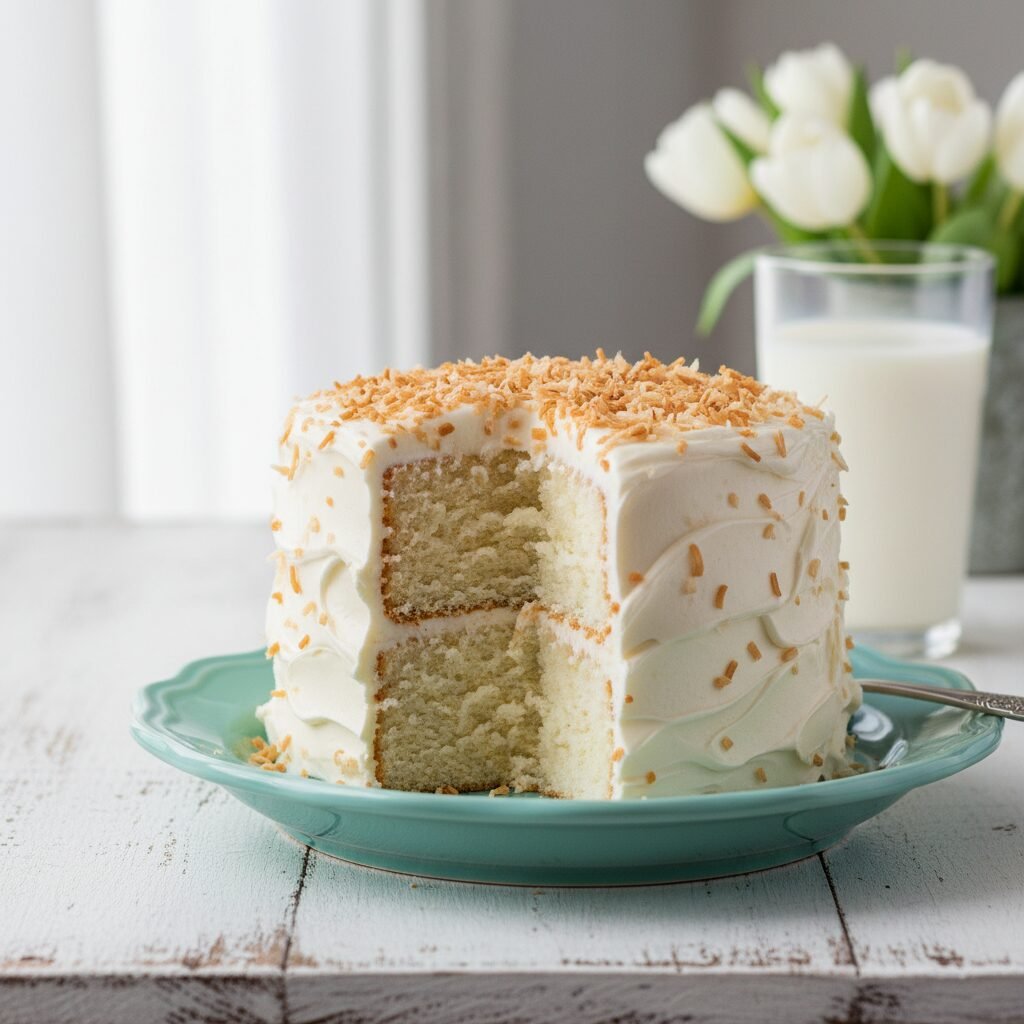
The Ultimate Moist Gluten-Free Coconut Cake with Creamy Dairy-Free Frosting
Moist Gluten Free Coconut Cake Dairy Free Frosting Recipe
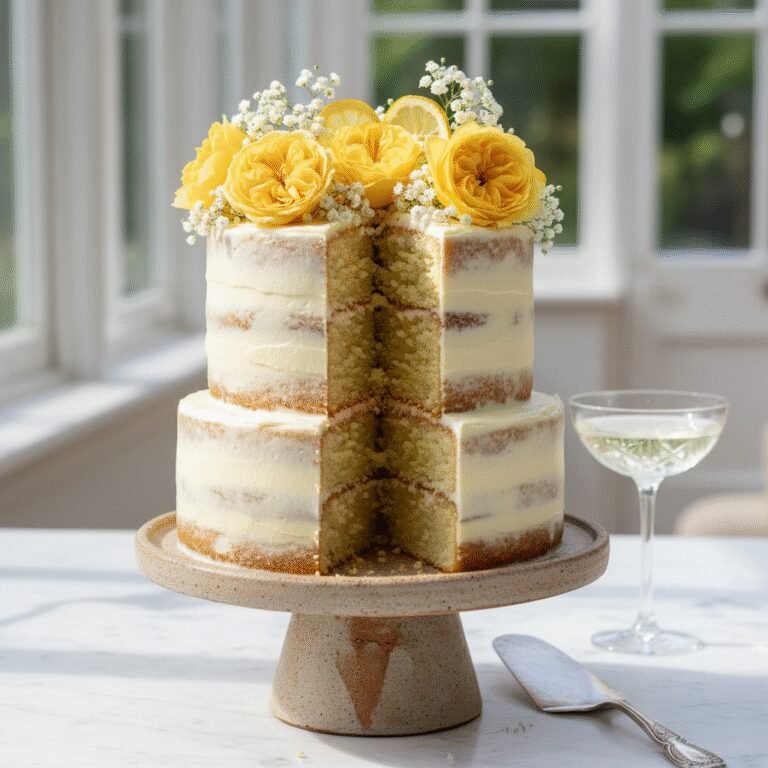
Experience the tropical bliss of this incredibly moist gluten-free coconut cake, layered with a luscious dairy-free buttercream. It is perfectly tender, never gritty, and packed with triple coconut flavor that rivals any traditional Southern bakery classic.
30 minutes
35 minutes
1 hour 15 minutes
12 servings
Dessert
Baking
American
Gluten-Free
There is something undeniably nostalgic and comforting about a slice of classic coconut cake. It conjures up images of grandmothers’ kitchens, Easter brunches, and sunny afternoon teas. However, for those of us navigating the world of gluten-free and dairy-free living, finding a cake that lives up to those memories can be a daunting task. Too often, gluten-free cakes suffer from the dreaded ‘dry and crumbly’ syndrome, while dairy-free frostings can lack that silky, buttery mouthfeel we crave. This recipe is my personal triumph over those culinary hurdles. After testing dozens of flour blends and fat ratios, I have finally cracked the code to a gluten-free coconut cake that is unapologetically moist, tender, and rich.
This cake is not just a ‘good for gluten-free’ alternative; it is a showstopper in its own right. We achieve this incredible texture by utilizing full-fat canned coconut milk and a blend of high-quality gluten-free flours that mimic the protein structure of wheat flour without the gluten. The result is a crumb that is soft and plush, holding up beautifully to the weight of the frosting. Speaking of frosting, we use a whipped coconut buttercream that is smooth, stable, and perfectly sweet, eliminating the need for cow’s milk or butter entirely. Whether you are baking for a birthday, a holiday celebration, or just a Tuesday night craving, this cake promises to deliver a slice of paradise that everyone—dietary restrictions or not—will devour.
History & Origins
The coconut cake is a storied dessert with deep roots in the American South, though its key ingredient traveled a long way to get there. Coconuts were considered an exotic luxury in the United States until the late 19th century when increased trade with the Caribbean and the invention of the railroad allowed for fresher distribution. The earliest receipts (recipes) for coconut cake appeared in cookbooks around the 1880s and 1890s, often featuring a simple pound cake or yellow cake base layered with a boiled icing and copious amounts of freshly grated coconut. It quickly became a staple of Southern hospitality, a centerpiece for Christmas and Easter tables, and a sign of a baker’s prowess.
Historically, the ‘Seven Minute Frosting’—a marshmallow-like meringue—was the standard pairing, but as buttercream gained popularity in the mid-20th century, richer, creamier versions evolved. The transition to gluten-free and dairy-free variations is a much more modern chapter in this history. With the rise of Celiac disease awareness and the adoption of plant-based diets in the 21st century, home bakers began experimenting with alternative flours like almond, rice, and tapioca. Early attempts were often dense or gritty, but the evolution of sophisticated gluten-free flour blends has allowed us to recreate this Southern icon with remarkable fidelity. This recipe honors that 19th-century tradition of luxury and hospitality while adapting it for the modern, health-conscious kitchen, proving that food history is not static but a constantly evolving narrative of taste and adaptation.
Why This Recipe Works
The science behind this cake’s success lies in the careful balance of hydration and fat. Gluten-free flours, particularly rice flours, are notorious for being thirsty; they absorb more liquid than wheat flour, which can lead to a dry final product if not compensated for. To combat this, we use full-fat canned coconut milk rather than the watered-down carton variety. The high fat content in the coconut milk coats the flour particles, inhibiting the development of a gummy texture while providing deep, lasting moisture. Additionally, we use a combination of oil and vegan butter in the batter. Oil is liquid at room temperature, which ensures the cake stays soft and moist for days, while the vegan butter adds that necessary structural integrity and flavor complexity.
Another key factor is the use of room-temperature ingredients. Because gluten-free batters rely heavily on emulsification to trap air (since there is no gluten network to hold gas bubbles), having your eggs and dairy-free liquids at the same temperature allows them to bond seamlessly, creating a uniform crumb. Finally, the addition of a small amount of apple cider vinegar reacts with the baking soda. This acid-base reaction creates carbon dioxide bubbles, giving the heavy gluten-free batter a much-needed lift, resulting in a cake that is fluffy and light rather than dense and heavy.
Why You’ll Love This Recipe
- ✓Incredibly moist texture that stays soft for days
- ✓Rich triple coconut flavor from milk, extract, and flakes
- ✓Completely gluten-free and dairy-free safe
- ✓Stable frosting that pipes beautifully
- ✓No gritty aftertaste common in GF baking
- ✓Freezer-friendly for make-ahead convenience
Equipment You’ll Need
- ✓Two 8-inch round cake pans
- ✓Stand mixer or electric hand mixer
- ✓Large mixing bowls
- ✓Whisk
- ✓Rubber spatula
- ✓Wire cooling rack
- ✓Measuring cups and spoons
- ✓Offset spatula for frosting
Ingredients
- ✓2 1/2 cups Gluten-Free All-Purpose Flour Blend (with xanthan gum)
- ✓1 1/2 cups Granulated Sugar
- ✓2 tsp Baking Powder
- ✓1 tsp Baking Soda
- ✓1/2 tsp Sea Salt
- ✓1 cup Full-Fat Canned Coconut Milk (shaken well)
- ✓1/2 cup Vegetable Oil or Melted Coconut Oil
- ✓3 large Eggs (room temperature)
- ✓2 tsp Pure Vanilla Extract
- ✓1 tsp Coconut Extract
- ✓1 tsp Apple Cider Vinegar
- ✓1 cup Unsweetened Shredded Coconut (for batter)
- ✓1 cup Vegan Butter Sticks (slightly softened)
- ✓3-4 cups Powdered Sugar (sifted)
- ✓2-3 tbsp Coconut Cream (from the top of the can)
- ✓1 1/2 cups Toasted Coconut Flakes (for decoration)
Instructions
- Preheat your oven to 350°F (175°C). Grease two 8-inch round cake pans with oil and line the bottoms with parchment paper to ensure easy release.
- In a large mixing bowl, whisk together the gluten-free flour blend, granulated sugar, baking powder, baking soda, and salt until well combined and free of lumps.
- In a separate medium bowl or large measuring cup, whisk together the canned coconut milk, oil, eggs, vanilla extract, coconut extract, and apple cider vinegar. Ensure the mixture is smooth.
- Pour the wet ingredients into the dry ingredients. Using a stand mixer or hand mixer, beat on medium speed for about 2 minutes. The batter should be smooth and slightly thick. Do not overmix, but ensure all flour is hydrated.
- Gently fold in the 1 cup of shredded coconut using a rubber spatula.
- Divide the batter evenly between the two prepared cake pans. Smooth the tops with a spatula.
- Bake for 30-35 minutes, or until a toothpick inserted into the center comes out clean or with just a few moist crumbs. The tops should be golden brown.
- Remove from the oven and let the cakes cool in the pans for 10 minutes. Then, carefully invert them onto a wire rack to cool completely before frosting. This is crucial as gluten-free cakes are fragile when warm.
- While the cakes cool, prepare the frosting. In a stand mixer, beat the softened vegan butter on medium-high speed until creamy and pale (about 3-4 minutes).
- Gradually add the powdered sugar, one cup at a time, beating on low speed until incorporated. Increase to high speed to fluff up the mixture.
- Add the coconut cream, vanilla, and a pinch of salt. Beat on high for another 2-3 minutes until the frosting is light, airy, and spreadable.
- To assemble, place one cake layer on a serving plate. Spread a generous layer of frosting over the top. Place the second cake layer on top.
- Frost the top and sides of the entire cake with the remaining frosting. Press the toasted coconut flakes onto the sides and top of the cake for decoration.
- Slice and serve immediately, or store in the refrigerator for a firmer texture.
Expert Cooking Tips
- ✓Measure flour by weight (grams) if possible, or use the spoon-and-level method to avoid a dense cake.
- ✓Ensure all ingredients, especially eggs and coconut milk, are at room temperature to prevent the batter from curdling.
- ✓Do not skip the parchment paper circles; gluten-free cakes stick to pans more stubbornly than wheat cakes.
- ✓Shake the can of coconut milk vigorously before opening to mix the thick cream with the water.
- ✓Let the cake cool completely—even chill it slightly—before frosting, as dairy-free butter melts faster than regular butter.
- ✓If your frosting is too soft, refrigerate it for 15 minutes before piping or spreading.
- ✓Toast the coconut flakes for the topping in a dry pan for 2-3 minutes for enhanced flavor and crunch.
Substitutions and Variations
This recipe is quite versatile but relies on specific chemistry. If you cannot find a gluten-free flour blend with xanthan gum already included, you must add 1 teaspoon of xanthan gum separately, or the cake will crumble apart. For the sugar, you can substitute cane sugar with granulated erythritol or monk fruit sweetener for a lower-sugar version, though the texture may be slightly drier. If you are not strictly dairy-free, you can use regular unsalted butter in the frosting and regular whole milk in the batter, though the coconut milk provides superior moisture. For an egg-free vegan version, you can try using ‘flax eggs’ (1 tbsp ground flaxseed meal + 3 tbsp water per egg), but be aware the cake will be denser and won’t rise quite as high. In terms of oil, avocado oil or melted refined coconut oil works best; avoid olive oil as its flavor is too strong.
Common Mistakes to Avoid
The most common mistake in gluten-free baking is over-measuring the flour. Dipping the cup into the bag packs the flour down, resulting in a dry, brick-like cake. Always spoon flour into the cup and level it off. Another mistake is opening the oven door too early. Gluten-free structures take longer to set; opening the door causes a temperature drop that can make the center collapse. Patience is key. Regarding the frosting, a common error is using melted vegan butter or butter that is too soft. It needs to be just slightly softened, cool to the touch, or the frosting will be a soupy mess. Finally, do not try to frost a warm cake. The dairy-free fats have a lower melting point and will slide right off.
Serving Suggestions
This cake is a stunner on its own, but it pairs beautifully with fresh tropical fruits. Serve a slice with a side of fresh mango cubes, pineapple rings, or a passion fruit coulis to cut through the sweetness of the frosting. It is the perfect centerpiece for spring gatherings, Easter brunch, or Mother’s Day. For a beverage pairing, a hot cup of Earl Grey tea complements the floral notes of the coconut, or a glass of cold almond milk works wonders. If you are serving this at a dinner party, a scoop of dairy-free vanilla bean ice cream on the side takes it to the next level.
Storage and Reheating Tips
Because this cake contains fresh ingredients and dairy-free fats, it is best stored in the refrigerator, especially in warmer climates. Place the cake in an airtight cake carrier or wrap slices individually in plastic wrap to prevent them from drying out. It will keep fresh in the fridge for up to 5 days. When you are ready to eat, let the slice sit at room temperature for about 15-20 minutes to allow the frosting to soften and the cake to relax. This cake also freezes exceptionally well. You can freeze the unfrosted layers for up to 2 months, or freeze individual frosted slices wrapped tightly in plastic wrap and foil. Thaw overnight in the refrigerator before serving.
Nutrition Facts (Estimated)
| Serving Size | 1 slice |
| Calories | 480 |
| Fat | 28g |
| Saturated Fat | 18g |
| Unsaturated Fat | 8g |
| Trans Fat | 0g |
| Cholesterol | 45mg |
| Sodium | 210mg |
| Carbohydrates | 58g |
| Fiber | 3g |
| Sugar | 32g |
| Protein | 4g |
Frequently Asked Questions
Can I make this cake ahead of time?
Yes, absolutely. In fact, the flavors often meld better the next day. You can bake the layers one day, wrap them tightly, and frost them the next day, or make the entire cake and store it in the fridge for up to 2 days before serving.
Why did my cake sink in the middle?
Sinking usually happens if the cake was underbaked or the oven door was opened too early. It can also happen if there was too much leavening (baking powder/soda) or too much liquid. Ensure your oven temperature is accurate using an oven thermometer.
Can I use almond flour instead of a GF blend?
No, almond flour behaves very differently from a 1-to-1 gluten-free flour blend. It lacks the starch necessary to hold the structure. You need a blend based on rice flour, potato starch, and tapioca starch for this recipe.
Is coconut milk the same as coconut cream?
Not exactly. Coconut milk is the liquid from the can. Coconut cream is the thick, solid white layer that separates to the top. This recipe uses the milk for the batter and a bit of the cream for the frosting.
My frosting is grainy, how do I fix it?
Grainy frosting usually means the powdered sugar wasn’t sifted or the butter was too cold to integrate properly. Ensure you sift the sugar and beat the frosting for the full recommended time to dissolve the sugar crystals.
Can I turn this into cupcakes?
Yes! This batter works great for cupcakes. Fill muffin liners 2/3 full and bake for 18-22 minutes at 350°F. It should yield about 20-24 cupcakes.
What brand of gluten-free flour do you recommend?
I highly recommend King Arthur Measure for Measure or Bob’s Red Mill 1-to-1 Baking Flour. These blends are formulated to replace wheat flour perfectly in cakes.
Is this cake vegan?
As written, it is dairy-free but contains eggs. To make it vegan, you would need to substitute the eggs with a flax egg or a commercial egg replacer, though this will slightly alter the texture.
How do I toast coconut flakes?
Spread the flakes in a single layer on a baking sheet and bake at 325°F for 5-7 minutes, stirring halfway through. Watch them closely as they burn very quickly!
Conclusion
Mastering a gluten-free and dairy-free coconut cake that actually tastes indulgent is a game-changer for anyone with dietary restrictions. This recipe bridges the gap between ‘diet food’ and ‘dessert bliss,’ proving that you don’t need wheat or dairy to enjoy a slice of heaven. The combination of the tender, moisture-rich sponge and the cloud-like coconut frosting makes for a treat that feels special, celebratory, and incredibly satisfying. Whether you are an experienced gluten-free baker or just starting out, this recipe is robust and forgiving enough to become a staple in your repertoire. So, grab your mixer, open a can of coconut milk, and get ready to bake the best coconut cake you’ve ever had—gluten or no gluten.