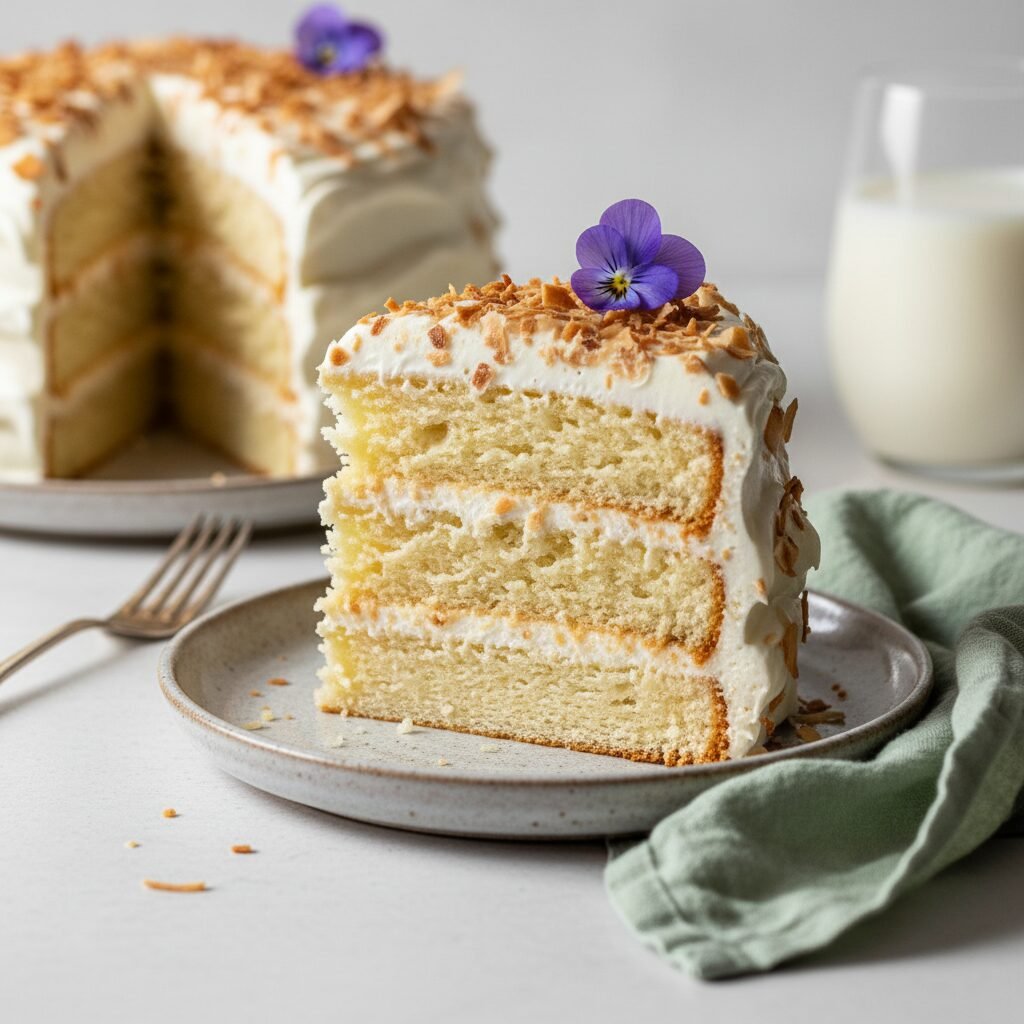
The Ultimate Moist Dairy-Free Vanilla Cake with Whipped Coconut Cream Frosting
Moist Dairy Free Vanilla Cake With Coconut Cream Frosting Recipe
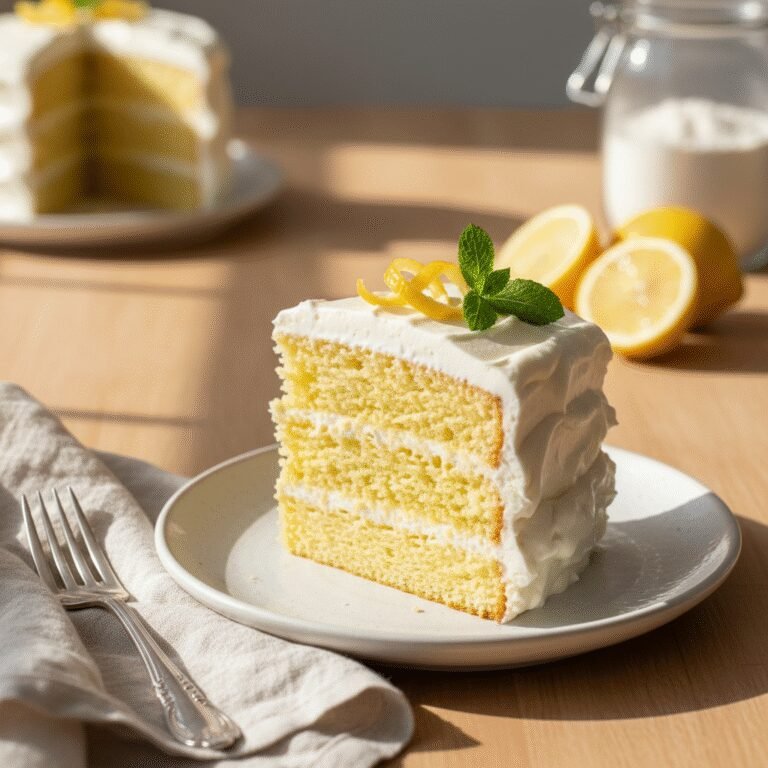
Discover the secret to a perfectly tender, fluffy, and incredibly moist dairy-free vanilla cake that rivals any traditional bakery treat. Topped with a luscious, cloud-like whipped coconut cream frosting, this recipe is a dream come true for vegans and allergy-sufferers alike.
30 minutes
30 minutes
1 hour 30 minutes (includes cooling)
12 servings (2 8-inch rounds)
Dessert
Baking
American
Dairy-Free
For years, the quest for the perfect dairy-free vanilla cake felt like a compromise. Often, you were forced to choose between a cake that tasted good but had the density of a brick, or a cake that was light but crumbled into dry dust the moment a fork touched it. Those days are officially over. This Moist Dairy-Free Vanilla Cake with Coconut Cream Frosting is not just a ‘good alternative’; it is a standalone masterpiece of baking science that delivers a tender crumb, intense vanilla aroma, and a melt-in-your-mouth texture that will have even the most devoted dairy lovers asking for a second slice.
What sets this cake apart is the careful balance of fat and moisture. By utilizing a specific blend of plant-based milk and oil rather than butter, we achieve a crumb that stays moist for days. But the real showstopper here is the frosting. Traditional buttercream can sometimes feel heavy or overly greasy. Our whipped coconut cream frosting provides a sophisticated, airy sweetness that complements the vanilla sponge perfectly without overpowering it. It is cool, creamy, and carries a whisper of tropical fragrance that elevates the simple vanilla profile into something gourmet.
Whether you are baking for a child with a dairy allergy, hosting a vegan dinner party, or simply looking to reduce your dairy intake without sacrificing joy, this cake is your answer. It is sturdy enough to layer for birthdays yet simple enough for a weekend tea time. Prepare to have your expectations shattered and your cravings satisfied with every forkful of this snowy, vanilla-scented delight.
History & Origins
The history of the vanilla cake is a journey that spans continents and centuries, evolving from simple, bread-like sweet loaves to the chemically leavened, fluffy confections we know today. The story begins with the discovery of vanilla itself. Cultivated by the Totonac people of modern-day Mexico and later the Aztecs, vanilla was a sacred flavor, originally used to scent chocolate drinks. It wasn’t until the Spanish conquest in the early 16th century that vanilla made its way to Europe, where it eventually became a staple in royal desserts. However, the concept of a light, fluffy ‘cake’ didn’t truly solidify until the mid-19th century with the invention of baking powder, which allowed bakers to move away from yeast.
The specific lineage of dairy-free baking, however, has roots in necessity as much as lifestyle. During the Great Depression and World War II, rationing of butter, milk, and eggs forced home bakers to get creative. This era gave birth to the ‘Wacky Cake’ or ‘Depression Cake,’ which relied on vinegar and baking soda for lift and oil for moisture. These historical recipes laid the groundwork for modern vegan baking.
In recent decades, the movement has shifted from scarcity to health and ethics. As lactose intolerance awareness grew and the vegan movement gained momentum in the United States, the demand for high-quality dairy substitutes exploded. The use of coconut cream as a frosting is a relatively modern adaptation, borrowing from Southeast Asian cuisine where coconut milk is a dessert staple. By whipping the solidified fat from canned coconut milk, innovative bakers found a way to mimic the texture of heavy whipping cream, bridging the gap between tropical tradition and the classic Western birthday cake.
Why This Recipe Works
This recipe succeeds where many others fail due to a few key principles of food chemistry. First and foremost is the use of oil instead of vegan butter or margarine in the batter. While butter contains water and milk solids, oil is 100% fat. In baking, fat coats the flour proteins (gluten), preventing them from bonding too strongly with water. Because oil remains liquid at room temperature, it ensures the cake feels moist on the palate, whereas butter-based cakes can firm up and feel drier once cooled. This is why this cake has such a superior, tender mouthfeel.
Secondly, we create a ‘vegan buttermilk’ by combining almond milk (or soy milk) with apple cider vinegar. This mixture curdles slightly, increasing the acidity of the batter. This acid reacts vigorously with the baking soda and baking powder, creating carbon dioxide bubbles that expand during baking. This reaction is critical for lifting the heavy flour and sugar mixture, resulting in a light, airy sponge rather than a dense puck.
Finally, the coconut cream frosting works because of the unique properties of saturated coconut fat. When chilled, the fat in coconut milk solidifies. By separating this solid fat from the liquid water and whipping it, we incorporate air bubbles just like in dairy whipped cream. The addition of powdered sugar stabilizes this structure, creating a frosting that is pipeable, luscious, and holds its shape, providing the perfect creamy counterpoint to the soft vanilla sponge.
Why You’ll Love This Recipe
- ✓Completely dairy-free and vegan-friendly.
- ✓Stays moist for days thanks to oil-based batter.
- ✓Luscious, cloud-like whipped coconut frosting.
- ✓Simple pantry ingredients with no obscure substitutes.
- ✓Versatile base recipe perfect for cupcakes or layer cakes.
- ✓Intense, pure vanilla flavor profile.
Equipment You’ll Need
- ✓Two 8-inch round cake pans
- ✓Electric hand mixer or stand mixer
- ✓Large mixing bowls
- ✓Whisk
- ✓Rubber spatula
- ✓Parchment paper
- ✓Wire cooling rack
- ✓Measuring cups and spoons
Ingredients
- ✓2 ½ cups All-purpose flour
- ✓1 ½ cups Granulated sugar
- ✓2 ½ tsp Baking powder
- ✓½ tsp Baking soda
- ✓1 tsp Fine sea salt
- ✓1 ½ cups Unsweetened almond milk (or soy milk), room temperature
- ✓1 tbsp Apple cider vinegar
- ✓½ cup Neutral oil (canola, vegetable, or melted coconut oil)
- ✓1 tbsp Pure vanilla extract
- ✓2 cans (13.5 oz each) Full-fat unsweetened coconut milk (refrigerated overnight)
- ✓½ cup Powdered sugar, sifted
- ✓1 tsp Vanilla bean paste or extract (for frosting)
Instructions
- The night before you bake, place the cans of full-fat coconut milk in the coldest part of your refrigerator. This is essential for separating the cream from the liquid.
- Preheat your oven to 350°F (175°C). Grease two 8-inch round cake pans with oil and line the bottoms with parchment paper for easy removal.
- In a small bowl or measuring cup, combine the almond milk and apple cider vinegar. Stir gently and let it sit for 5-10 minutes to curdle and create your ‘vegan buttermilk’.
- In a large mixing bowl, whisk together the flour, sugar, baking powder, baking soda, and salt until well combined and no lumps remain.
- Add the oil and vanilla extract to the curdled milk mixture. Whisk the wet ingredients together until fully incorporated.
- Pour the wet ingredients into the dry ingredients. Use a whisk or electric mixer on low speed to mix until just combined. Do not overmix; a few small lumps are okay. Overmixing will make the cake tough.
- Divide the batter evenly between the two prepared cake pans. Tap the pans gently on the counter to release any large air bubbles.
- Bake for 28-32 minutes, or until a toothpick inserted into the center comes out clean or with just a few moist crumbs. The tops should be pale golden.
- Remove from the oven and let the cakes cool in the pans for 10 minutes. Then, carefully invert them onto a wire rack to cool completely. The cakes must be 100% cool before frosting.
- While the cakes cool, make the frosting. Remove the coconut milk cans from the fridge without shaking them. Open the cans and scoop out the hardened thick cream from the top into a chilled mixing bowl. Reserve the liquid water for smoothies (do not use it in the frosting).
- Using a hand mixer or stand mixer, whip the coconut cream on high speed for 2-4 minutes until it becomes fluffy and light.
- Add the powdered sugar and vanilla bean paste. Whip for another minute until smooth and creamy.
- Once the cakes are fully cooled, spread a layer of frosting on top of one cake, place the second cake on top, and frost the top and sides. Garnish as desired.
Expert Cooking Tips
- ✓Use a kitchen scale to measure your flour. Scooping directly can pack the flour and lead to a dry cake; weigh it or use the ‘spoon and level’ method.
- ✓Ensure your baking powder and baking soda are fresh. Expired leavening agents are the number one cause of flat, dense cakes.
- ✓Chill your mixing bowl and beaters before making the coconut whipped cream to help it hold its volume better.
- ✓Do not open the oven door before the 25-minute mark. A sudden drop in temperature can cause the cake to sink in the middle.
- ✓If your coconut cream is too soft after whipping, place the bowl in the fridge for 20 minutes to firm up before frosting the cake.
Substitutions and Variations
This recipe is quite resilient, allowing for several substitutions. For the flour, you can use a high-quality 1:1 Gluten-Free All-Purpose Baking Flour blend (ensure it contains xanthan gum) to make this cake gluten-free. For the milk, soy milk is the best alternative to almond milk as its high protein content curdles best with vinegar, but oat milk works well too. Avoid rice milk as it is too thin. For the oil, melted refined coconut oil works if you want a slight coconut flavor, or avocado oil for a neutral taste. In the frosting, if you cannot use coconut, a store-bought vegan butter can be whipped with powdered sugar for a traditional vegan buttercream. Maple syrup can be used instead of sugar in the cake, but it will alter the texture slightly; reduce the liquid milk by 2 tablespoons if doing so.
Common Mistakes to Avoid
The most common mistake with this recipe is failing to chill the coconut milk long enough. It needs at least 12 hours, preferably 24, in the fridge to separate properly; the freezer will not work the same way and may ruin the texture. Another mistake is overmixing the batter. Once the wet and dry ingredients meet, the gluten begins to develop. Mixing too vigorously results in a rubbery, chewy texture rather than a soft crumb. Lastly, frosting the cake while it is still even slightly warm will cause the coconut cream to melt instantly, turning your beautiful cake into a slippery mess. Patience is key during the cooling process.
Serving Suggestions
This vanilla cake is a beautiful blank canvas. Serve it with a generous heap of fresh berries—strawberries, raspberries, or blueberries—to cut through the sweetness. A drizzle of vegan caramel sauce or a sprinkle of toasted coconut flakes adds excellent texture and flavor depth. For a birthday celebration, top with colorful vegan sprinkles. This cake pairs exceptionally well with a hot cup of Earl Grey tea or a dark roast coffee, as the bitterness balances the creamy sweetness of the frosting. Slice with a sharp knife dipped in hot water for clean, professional-looking cuts.
Storage and Reheating Tips
Because the frosting is made from coconut cream, this cake is heat-sensitive. It is best stored in the refrigerator in an airtight cake carrier or container. It will keep fresh for up to 4-5 days. However, cold cake can taste less sweet and feel denser, so let the slices sit at room temperature for about 15-20 minutes before eating for the best texture. If you want to freeze the cake, it is best to do so unfrosted. Wrap the individual cake layers tightly in plastic wrap, then foil, and freeze for up to 3 months. Thaw in the fridge overnight before frosting.
Nutrition Facts (Estimated)
| Serving Size | 1 slice |
| Calories | 420 |
| Fat | 22g |
| Saturated Fat | 12g |
| Unsaturated Fat | 8g |
| Trans Fat | 0g |
| Cholesterol | 0mg |
| Sodium | 210mg |
| Carbohydrates | 54g |
| Fiber | 1g |
| Sugar | 28g |
| Protein | 4g |
Frequently Asked Questions
Can I use ‘lite’ coconut milk for the frosting?
No, lite coconut milk does not have enough fat content to whip up or hold its shape. You must use full-fat canned coconut milk or specifically labeled ‘coconut cream’.
My cake sank in the middle. What happened?
This usually happens if the oven door was opened too early, the oven temperature wasn’t accurate (too cool), or the batter was overmixed. Use an oven thermometer to ensure accuracy.
Can I make this into cupcakes?
Absolutely! This recipe will make approximately 20-24 cupcakes. Bake them at 350°F for 18-22 minutes.
Does this cake taste strongly of coconut?
The cake sponge itself has a very neutral vanilla flavor. However, the frosting does have a distinct coconut flavor. If you dislike coconut, use a vegan butter-based frosting instead.
Can I use olive oil?
You can, but olive oil has a strong flavor that might clash with the vanilla. If you use it, choose a ‘light’ or ‘pure’ olive oil rather than extra virgin.
Is this recipe gluten-free?
The ingredients listed include wheat flour, so it is not gluten-free by default. However, it works very well with a 1:1 Gluten-Free flour blend.
Why is my frosting runny?
The coconut milk might not have been cold enough, or the can didn’t separate well (some brands contain emulsifiers like guar gum which prevent separation). Try to find cans without guar gum.
Can I reduce the sugar?
You can reduce the sugar in the cake by about 1/4 cup without ruining the structure, but reducing it further may affect the moisture and tenderness.
Conclusion
Creating a stunning, delicious cake without dairy doesn’t require magic—just the right ingredients and a little bit of love. This Moist Dairy-Free Vanilla Cake with Coconut Cream Frosting proves that you don’t need butter or eggs to achieve a bakery-quality dessert. It’s a recipe that invites everyone to the table, regardless of dietary restrictions, to share in the simple joy of a slice of cake. We hope this becomes your go-to recipe for celebrations, quiet weekends, and everything in between. If you make it, don’t forget to snap a photo and tag us—we love seeing your beautiful creations!