The Ultimate Moist Dairy-Free Lemon Cake with Creamy Vegan Buttercream
Moist Dairy Free Lemon Cake With Dairy Free Buttercream Recipe
Experience the perfect balance of zesty brightness and sugary delight with this incredibly moist dairy-free lemon cake. Topped with a luscious, velvety dairy-free buttercream, this recipe proves you don’t need traditional butter or milk to achieve bakery-quality results.
25 minutes
30 minutes
1 hour 15 minutes
12 servings (2-layer 8-inch cake)
Dessert
Baking
American
Dairy-Free
There is something undeniably cheerful about a lemon cake. It is sunshine on a plate, a bright remedy for a gloomy day, and the perfect finale to any meal that requires a palate-cleansing burst of citrus. For those who navigate the world of baking without dairy, finding a cake that retains that quintessential tender crumb and rich mouthfeel can sometimes be a challenge. Often, dairy-free alternatives suffer from being too dense, too dry, or lacking that buttery undertone we all crave. However, this Moist Dairy-Free Lemon Cake shatters those misconceptions entirely. It is engineered to be light, fluffy, and unapologetically moist, utilizing the chemistry of oil and acidity to create a texture that rivals—and arguably surpasses—its dairy-laden counterparts.
The magic begins with the aroma. As this cake bakes, your kitchen will be filled with the intoxicating scent of caramelized sugar and fresh lemon zest, a sensory preview of the treat to come. But the real triumph is the frosting. We pair the sponge with a Dairy-Free Lemon Buttercream that is whipped to perfection. It is smooth, stable, and melts in your mouth, providing a creamy counterpoint to the tangy sponge. This cake is versatile enough for a casual afternoon tea yet elegant enough for a birthday celebration or a holiday spread. Whether you are lactose intolerant, baking for a friend with allergies, or simply looking for a lighter cake option that doesn’t compromise on flavor, this recipe is your new gold standard. Get ready to embrace the zest and enjoy a slice of pure, citrusy heaven that everyone can enjoy, regardless of their dietary restrictions.
History & Origins
The history of the lemon cake is as rich and layered as the dessert itself. While lemons have been cultivated in the Mediterranean and Asia for thousands of years, their incorporation into sweet, baked goods is a slightly more modern evolution in the grand timeline of culinary history. Early European cakes were often yeast-based, more akin to breads or brioche. It wasn’t until the 18th and 19th centuries, with the refinement of sugar and the invention of chemical leavening agents like baking powder and baking soda, that the ‘cake’ as we know it—light, spongy, and sweet—began to take shape.
The ‘Pound Cake,’ dating back to the early 1700s, is the great-grandfather of the modern lemon cake. Originally consisting of a pound each of flour, sugar, butter, and eggs, it was a dense and heavy confection. Over time, bakers began adding citrus zest and juices to cut through the richness of the butter and eggs, discovering that the acid not only improved flavor but also tenderized the crumb. As we moved into the 20th century, the ‘Chiffon Cake’ was invented in the late 1920s by Harry Baker, who used oil instead of butter to create an incredibly moist and airy texture. This was a pivotal moment for dairy-free baking, even if it wasn’t explicitly branded as such at the time.
In recent decades, the demand for dairy-free and plant-based recipes has surged, driven by health consciousness, ethical choices, and the prevalence of lactose intolerance. This shift forced pastry chefs to innovate, moving away from the reliance on cow’s milk and butter. Today’s dairy-free lemon cake represents the culmination of centuries of baking science—combining the ancient love for citrus flavor with modern techniques that allow us to achieve perfect textures without animal products. It is a testament to how culinary traditions adapt and evolve to meet the needs of the current generation while honoring the classic flavors of the past.
Why This Recipe Works
This recipe succeeds where many others fail because it relies on the specific scientific properties of its ingredients to ensure moisture and lift, rather than just swapping ingredients one-for-one. First and foremost, the use of oil instead of solid fat (like butter or margarine) is crucial for the texture. Oil remains liquid at room temperature, whereas butter solidifies. This means that an oil-based cake will always taste moister and stay soft for days longer than a butter-based cake, which can dry out as it sits. For a dairy-free cake, high-quality neutral oil is superior to many vegan butter substitutes in the batter because it guarantees that tender, melt-in-the-mouth crumb.
Secondly, we utilize the ‘buttermilk effect’ by combining dairy-free milk (such as almond or soy) with fresh lemon juice. This mixture curdles slightly, creating an acidic liquid that reacts vigorously with the baking soda. This reaction produces carbon dioxide bubbles, which expand during baking to give the cake a significant lift and an airy structure. The acidity of the lemon juice and zest also works to weaken the gluten strands in the flour, preventing the cake from becoming tough or rubbery. Finally, the frosting uses high-fat dairy-free butter sticks rather than tub margarine. Tub margarine has a high water content which can lead to a runny frosting; sticks have a lower water content, allowing us to whip up a buttercream that is stable, pipeable, and rich, mimicking the mouthfeel of traditional buttercream perfectly.
Why You’ll Love This Recipe
- ✓Incredibly moist texture that stays soft for days
- ✓Bright, zesty natural lemon flavor without artificial extracts
- ✓100% Dairy-Free and easily adaptable to be Vegan
- ✓Silky smooth buttercream that pipes perfectly
- ✓Uses simple pantry staples you likely already have
- ✓Perfect balance of sweet and tart
Equipment You’ll Need
- ✓Two 8-inch round cake pans
- ✓Stand mixer or electric hand mixer
- ✓Large mixing bowl
- ✓Medium mixing bowl
- ✓Whisk
- ✓Rubber spatula
- ✓Microplane or zest grater
- ✓Citrus juicer
- ✓Wire cooling rack
- ✓Parchment paper
Ingredients
- ✓2 1/2 cups All-purpose flour
- ✓1 1/2 cups Granulated sugar
- ✓1 1/2 tsp Baking powder
- ✓1/2 tsp Baking soda
- ✓1/2 tsp Salt
- ✓1 cup Unsweetened almond milk (or soy milk), room temperature
- ✓1/2 cup Vegetable oil (or canola/grapeseed oil)
- ✓3 Large eggs, room temperature
- ✓1/4 cup Fresh lemon juice (approx. 1-2 lemons)
- ✓1 tbsp Fresh lemon zest
- ✓1 tsp Pure vanilla extract
- ✓1 cup Dairy-free butter sticks, slightly softened (for frosting)
- ✓3-4 cups Powdered sugar, sifted (for frosting)
- ✓2 tbsp Fresh lemon juice (for frosting)
- ✓1 tsp Lemon zest (for frosting)
- ✓Pinch of salt (for frosting)
Instructions
- Preheat your oven to 350°F (175°C). Grease two 8-inch round cake pans with oil and line the bottoms with parchment paper rounds to ensure easy release.
- In a liquid measuring cup or small bowl, combine the room temperature almond milk with 1 tablespoon of the lemon juice (reserve the rest for the batter). Let it sit for 5-10 minutes to curdle and create a dairy-free ‘buttermilk’.
- In a medium bowl, whisk together the flour, baking powder, baking soda, and salt until well combined and aerated. Set aside.
- In a large mixing bowl (or the bowl of a stand mixer), combine the granulated sugar, vegetable oil, eggs, vanilla extract, remaining lemon juice, and lemon zest. Beat on medium-high speed for about 2-3 minutes until the mixture is pale and slightly thickened.
- Reduce the mixer speed to low. Add the flour mixture and the milk mixture alternately, beginning and ending with the flour (Flour, Milk, Flour, Milk, Flour). Mix only until the flour typically disappears. Do not overmix.
- Use a rubber spatula to gently fold the batter by hand a few times, scraping the bottom and sides of the bowl to ensure everything is incorporated.
- Divide the batter evenly between the two prepared cake pans. Tap the pans gently on the counter to release any large air bubbles.
- Bake in the center of the preheated oven for 28-32 minutes, or until a toothpick inserted into the center comes out clean or with just a few moist crumbs.
- Remove cakes from the oven and let them cool in the pans for 10 minutes. Then, carefully invert them onto a wire rack to cool completely before frosting.
- To make the frosting: In a large bowl, beat the softened dairy-free butter sticks on medium-high speed for 3-4 minutes until very pale and fluffy.
- Gradually add the powdered sugar, one cup at a time, beating on low speed until incorporated. Once all sugar is added, increase speed to high and beat for another 2 minutes.
- Add the lemon juice, lemon zest, and a pinch of salt. Beat for a final minute until creamy and smooth. If the frosting is too soft, add more sugar; if too stiff, add a teaspoon of dairy-free milk.
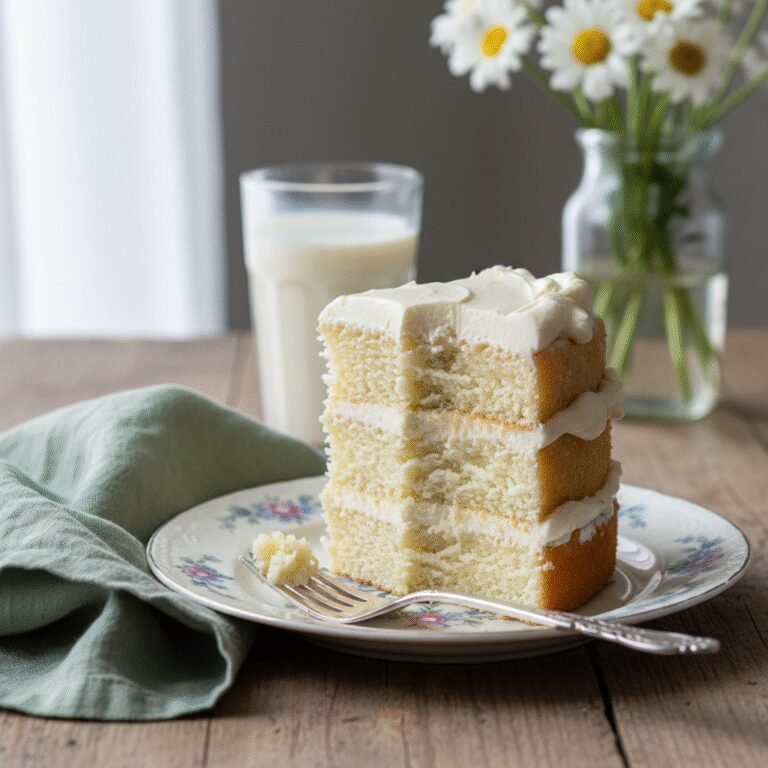
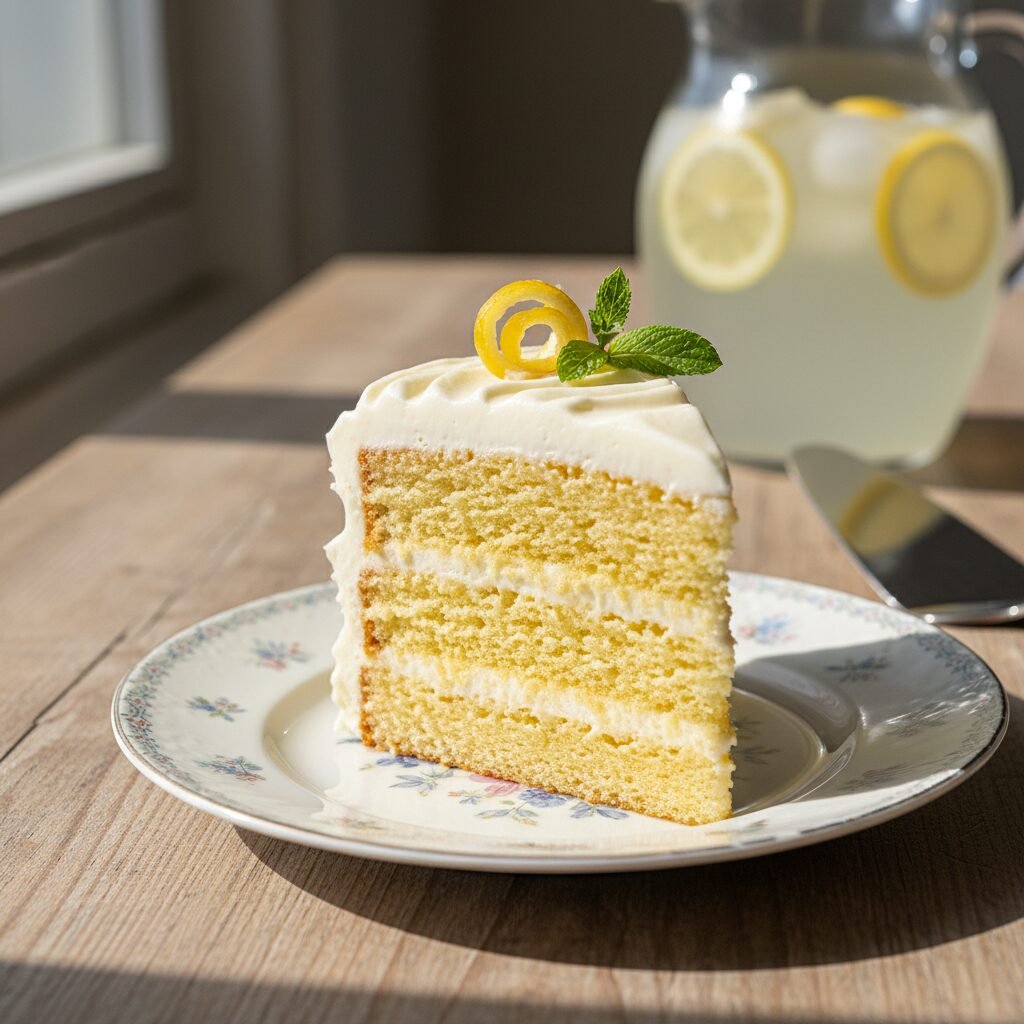
- Once the cakes are completely cool, place one layer on a serving plate. Spread a generous layer of frosting over the top. Place the second layer on top and cover the top and sides with the remaining buttercream.
- Garnish with fresh lemon slices or zest and serve.
Expert Cooking Tips
- ✓Use room temperature ingredients (eggs and milk) to ensure the batter emulsifies properly without curdling.
- ✓Rub the lemon zest into the granulated sugar with your fingers before mixing; this releases the essential oils for a more potent lemon flavor.
- ✓Do not overmix the batter once the flour is added, as this will develop gluten and result in a tough, dense cake.
- ✓Weigh your flour using a kitchen scale (approx. 120g per cup) for the most accurate results; scooping can compact the flour.
- ✓Ensure your dairy-free butter for the frosting is not melted, just slightly softened, to maintain structure.
- ✓Sift your powdered sugar before making the buttercream to avoid gritty lumps in your frosting.
- ✓Cool the cakes completely before frosting; even a slightly warm cake will melt the buttercream and cause the layers to slide.
Substitutions and Variations
This recipe is highly adaptable to suit various pantry situations and dietary needs. For the flour, you can use a high-quality 1:1 Gluten-Free All-Purpose Baking Flour blend (one that contains xanthan gum) to make this cake gluten-free. The texture may be slightly more fragile, but still delicious. If you need to make this recipe vegan (egg-free), you can substitute the 3 eggs with ‘flax eggs’ (3 tbsp ground flaxseed meal mixed with 9 tbsp water, let sit for 10 minutes) or a commercial egg replacer like Bob’s Red Mill. Note that egg-free cakes may not rise quite as high. For the oil, any neutral oil works well, such as canola, grapeseed, or vegetable oil. Melted coconut oil can be used, but ensure all other ingredients are room temperature so it doesn’t solidify during mixing. For the dairy-free milk, soy milk has the highest protein content and curdles best for the ‘buttermilk’, but almond, oat, or cashew milk work wonderfully too. In the frosting, ensure you use dairy-free butter *sticks* (like Miyoko’s or Country Crock Plant Butter) rather than tub spreads, as tub spreads have too much water content and will lead to a soupy frosting.
Common Mistakes to Avoid
The most common mistake with this cake is over-baking. Because it is an oil-based cake, it should be very moist. If you leave it in the oven until it looks dry on top, it might be overdone inside. Start checking at the 28-minute mark. Another frequent error is over-mixing the batter. Once the wet and dry ingredients meet, mix gently and stop as soon as the flour streaks disappear. Over-mixing activates the gluten and leads to a rubbery texture. Regarding the frosting, a major pitfall is using the dairy-free butter when it is too warm or melted. It must be cool-room-temperature. If your kitchen is hot, your frosting might become runny; if this happens, place the bowl in the fridge for 10-15 minutes and re-whip. Lastly, failing to line the cake pans with parchment paper often results in the cake sticking to the bottom, causing it to tear when you try to remove it.
Serving Suggestions
This cake is a stunner on its own, but presentation can elevate it to a showstopper. Serve slices on delicate dessert plates accompanied by a fresh raspberry or blueberry coulis, as the tartness of berries complements the lemon beautifully. A dollop of dairy-free coconut whipped cream on the side adds an extra layer of decadence. For a sophisticated touch, garnish the top of the cake with candied lemon slices, edible flowers (like pansies or violas), or fresh sprigs of thyme or mint for a pop of green. This cake pairs exceptionally well with a hot cup of Earl Grey tea, whose bergamot notes echo the citrus in the cake, or a chilled glass of sparkling wine for a celebration.
Storage and Reheating Tips
Because this cake is dairy-free and oil-based, it keeps incredibly well. It can be stored at room temperature in an airtight cake carrier or container for up to 3 days. In fact, the flavor often improves on the second day as the lemon infuses further into the crumb. If you live in a particularly hot or humid climate, it is safer to store the cake in the refrigerator to prevent the frosting from melting. In the fridge, it will last for up to 5-6 days; just be sure to let slices come to room temperature before eating for the best texture and flavor. For long-term storage, you can freeze the unfrosted cake layers wrapped tightly in plastic wrap for up to 3 months. You can also freeze individual slices of the frosted cake: place them on a baking sheet to freeze the frosting solid, then wrap tightly in plastic wrap and foil.
Nutrition Facts (Estimated)
| Serving Size | 1 slice |
| Calories | 420 |
| Fat | 22g |
| Saturated Fat | 4g |
| Unsaturated Fat | 17g |
| Trans Fat | 0g |
| Cholesterol | 35mg |
| Sodium | 210mg |
| Carbohydrates | 54g |
| Fiber | 1g |
| Sugar | 32g |
| Protein | 4g |
Frequently Asked Questions
Can I make this into cupcakes instead of a cake?
Yes, absolutely! This batter works perfectly for cupcakes. Line a muffin tin with liners and fill them about 2/3 full. Bake at 350°F for 18-22 minutes. This recipe yields approximately 20-24 cupcakes.
Why did my cake sink in the middle?
Sinking usually happens if the oven door was opened too early (letting heat escape) or if the cake was underbaked. It can also happen if there was too much leavening (baking powder/soda). Ensure your oven temperature is accurate using an oven thermometer.
Is this cake vegan?
As written, the recipe contains eggs, so it is dairy-free but not vegan. However, you can substitute the eggs with flax eggs or a commercial egg replacer to make it fully vegan. See the substitutions section for details.
Can I use olive oil instead of vegetable oil?
Yes, you can use olive oil. However, keep in mind that extra virgin olive oil has a strong flavor that will be noticeable in the final cake. Some people love the lemon-olive oil combination, but for a neutral flavor, use ‘light’ or ‘pure’ olive oil.
My frosting is too runny, what do I do?
If the frosting is runny, your kitchen might be too warm or the butter was too soft. Add more powdered sugar (1/2 cup at a time) or place the bowl in the fridge for 20 minutes to firm up the fats, then whip again.
Can I use bottled lemon juice?
Technically yes, but we strongly recommend fresh lemon juice. Bottled juice often contains preservatives that can alter the flavor, giving it a metallic or artificial taste. Fresh lemons provide the bright, floral notes that make this cake special.
Do I have to use almond milk?
No, you can use any plant-based milk. Soy milk is excellent because it curdles well with the lemon juice to make buttermilk. Oat milk and cashew milk are also great creamy options.
Can I bake this in a bundt pan?
Yes, but you may need to adjust the baking time. A bundt cake is thicker and usually takes 45-55 minutes to bake. Be sure to grease and flour the bundt pan very thoroughly to prevent sticking.
Conclusion
There you have it—the secret to baking a Moist Dairy-Free Lemon Cake that sacrifices absolutely nothing in terms of flavor or texture. This recipe is a testament to the fact that dietary restrictions don’t have to mean missing out on the joys of a decadent, homemade dessert. From the tender, citrus-infused crumb to the cloud-like sweetness of the buttercream, every bite is a celebration of bright, sunny flavors. Whether you are an experienced baker or a novice in the kitchen, this straightforward recipe is designed to deliver success. So, preheat your oven, grab those fresh lemons, and get ready to impress your friends and family with a cake that tastes like a slice of summer. Don’t forget to snap a photo of your beautiful creation and tag us on social media—we love seeing your baking triumphs!