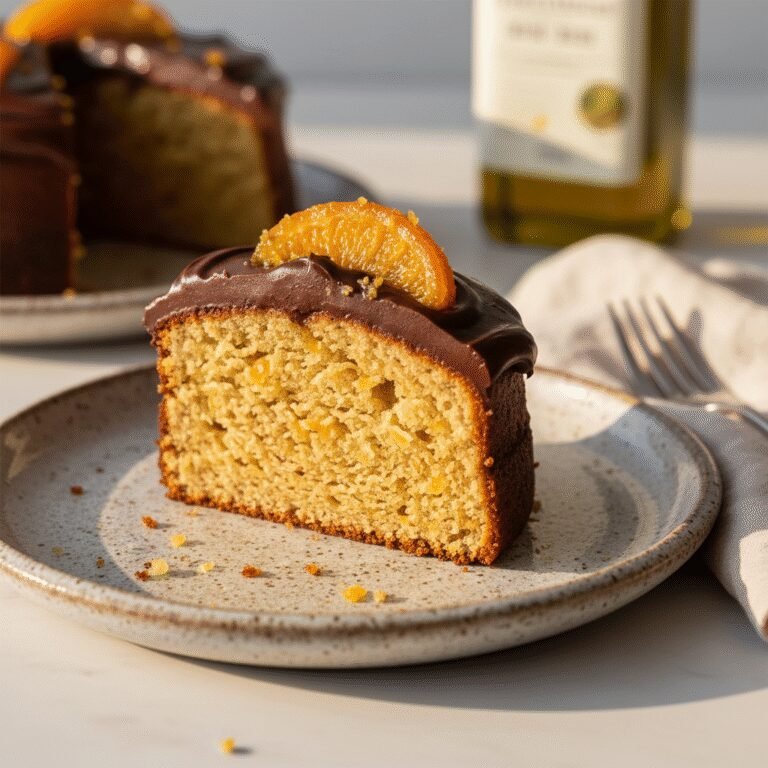
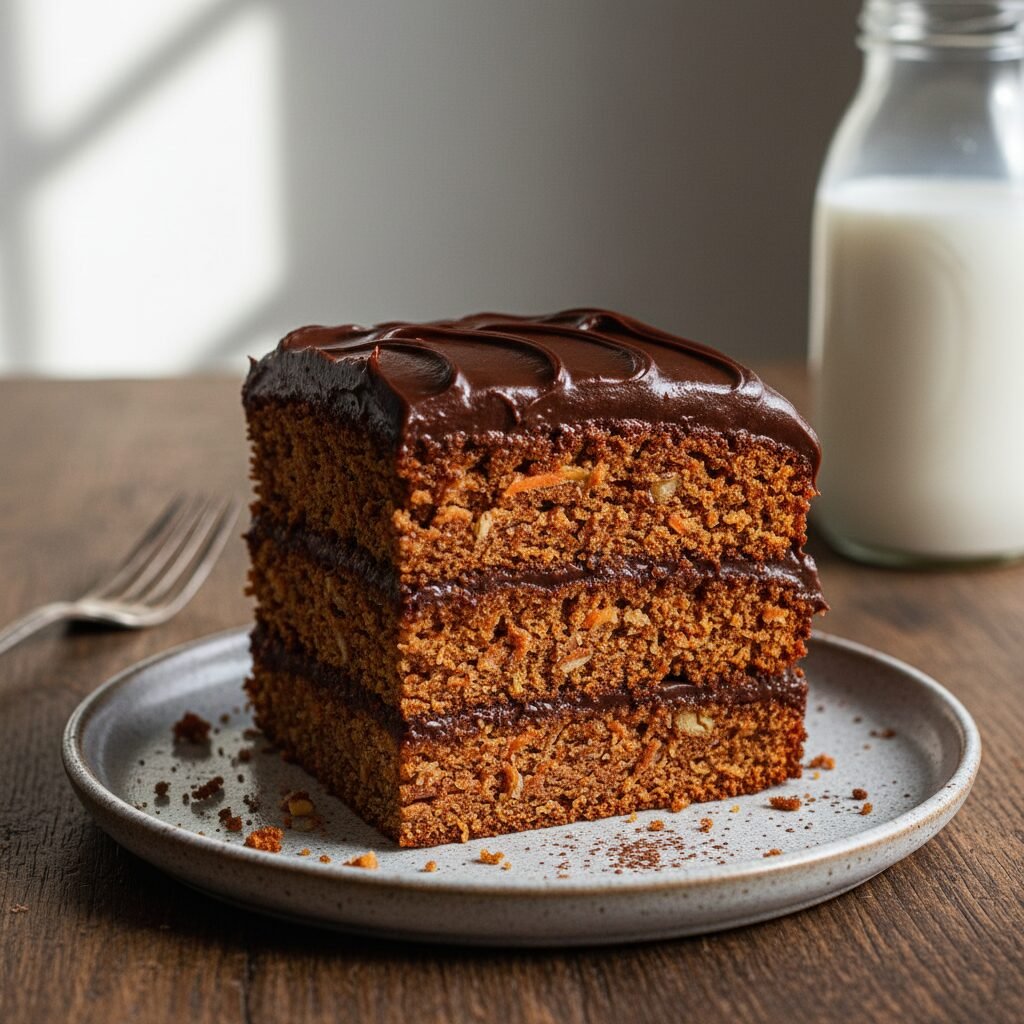
The Ultimate Moist Dairy-Free Carrot Cake with Decadent Chocolate Frosting
Moist Dairy Free Carrot Cake With Dairy Free Chocolate Frosting Recipe
Discover the secret to the most tender, spice-infused carrot cake that completely skips the dairy without sacrificing an ounce of flavor. Topped with a luscious, velvety dairy-free chocolate buttercream, this unexpected twist on a classic favorite creates a perfect harmony of warm spices and rich cocoa.
25 minutes
35 minutes
1 hour 15 minutes
12-15 servings
Dessert
Baking
American
Dairy-Free
If there is one cake that universally signals comfort, home, and celebration, it is the humble carrot cake. For decades, this spice-laden dessert has held a top spot in the pantheon of American baking. However, for those of us navigating a dairy-free lifestyle—whether due to allergies, lactose intolerance, or personal preference—finding a carrot cake that retains that signature moist, dense crumb without relying on butter or buttermilk can be a challenge. Furthermore, the standard pairing is almost always cream cheese frosting. While delicious, it can be difficult to replicate without dairy. That is where this recipe changes the game. We are taking a bold, delicious detour by pairing our ultra-moist carrot sponge with a rich, whipped dairy-free chocolate frosting.
Believe it or not, the earthiness of chocolate pairs magnificently with the warm notes of cinnamon, nutmeg, and ginger found in the cake. It is a flavor profile reminiscent of Mexican hot chocolate or spiced mochas. This cake is not just ‘good for being dairy-free’; it is simply an outstanding cake, period. We achieve the incredible texture by using a blend of oil and brown sugar, which ensures the cake stays soft for days. The carrots, freshly grated, release moisture during baking, steaming the crumb from the inside out. When you take that first bite—the tender, spiced cake mingling with the smooth, bittersweet chocolate frosting—you will wonder why chocolate and carrots haven’t been best friends all along. This recipe is designed to be foolproof, requiring no fancy equipment, just a love for baking and a craving for something sweet.
History & Origins
The origins of carrot cake are somewhat debated, but food historians generally trace its lineage back to medieval Europe. During the Middle Ages, sugar was a rare and expensive luxury, accessible only to the wealthy. Carrots, however, were abundant and known to contain high amounts of natural sugars—more than almost any other vegetable aside from sugar beets. Consequently, cooks began using carrots to sweeten puddings and steamed desserts. These ‘carrot puddings’ were the ancestors of the modern cake, often boiled in a cloth or baked slowly in an oven.
Fast forward to the 20th century, and the carrot cake we recognize today began to take shape. During World War II, when rationing limited the availability of sugar in the United Kingdom, the government distributed recipes using carrots as a sweetener, reviving the old tradition. However, it wasn’t until the 1960s and 1970s in the United States that carrot cake exploded in popularity. It became the darling of the ‘health food’ movement, falsely perceived as a healthy option simply because it contained a vegetable, despite the substantial amount of oil and sugar usually involved.
The pairing of carrot cake with cream cheese frosting became the standard in American cafeterias and bakeries during this boom. However, chocolate frosting on carrot cake is not without precedent; in some South American and European variations, chocolate glazes or ganaches are common. By revisiting this combination, we are nodding to a global tradition of spiced chocolate desserts while modernizing the method for the dairy-free kitchen.
Why This Recipe Works
This recipe succeeds where many dairy-free baking attempts fail because it leans into ingredients that naturally enhance moisture without relying on dairy fats. First, we use a neutral oil (like canola or vegetable oil) instead of butter. In baking science, oil remains liquid at room temperature, whereas butter solidifies. This means an oil-based cake will always feel moister and more tender on the palate than a butter-based one, which can dry out as it sits. This is particularly advantageous for carrot cake, which is meant to be dense and moist.
Secondly, the use of both granulated white sugar and dark brown sugar is crucial. The molasses in the brown sugar is hygroscopic, meaning it attracts and holds water molecules, further preventing the cake from drying out. It also adds a caramel-like depth that complements the spices.
Regarding the carrots, this recipe strictly calls for freshly grated carrots. Pre-shredded carrots from the store are often coated in starches to prevent clumping and are significantly drier. By grating them yourself, you preserve the natural juices of the vegetable. As the cake bakes, these juices release, effectively steaming the batter from within. Finally, the dairy-free chocolate frosting works because high-quality cocoa powder and vegan butter sticks (which have a lower water content than tub margarine) create a structure that mimics traditional buttercream perfectly. The bitterness of the cocoa cuts through the sweetness of the cake, providing a balanced, sophisticated finish.
Why You’ll Love This Recipe
- ✓Completely dairy-free without sacrificing texture or taste.
- ✓Stays incredibly moist for up to 5 days due to the oil-based batter.
- ✓A unique flavor twist with chocolate frosting instead of traditional cream cheese.
- ✓Simple, one-bowl mixing method for the cake batter.
- ✓Rich in warm spices like cinnamon, ginger, and nutmeg.
- ✓Can be easily adapted to be nut-free or vegan.
Equipment You’ll Need
- ✓9×13 inch baking pan or two 9-inch round pans
- ✓Large mixing bowl
- ✓Medium mixing bowl
- ✓Whisk
- ✓Rubber spatula
- ✓Box grater or food processor with shredding attachment
- ✓Electric hand mixer or stand mixer (for frosting)
- ✓Measuring cups and spoons
Ingredients
- ✓2 cups all-purpose flour
- ✓2 teaspoons baking powder
- ✓1 teaspoon baking soda
- ✓1/2 teaspoon salt
- ✓2 teaspoons ground cinnamon
- ✓1/2 teaspoon ground nutmeg
- ✓1/2 teaspoon ground ginger
- ✓1 1/4 cups neutral oil (canola, vegetable, or melted coconut oil)
- ✓1 cup granulated sugar
- ✓1 cup packed dark brown sugar
- ✓4 large eggs, room temperature
- ✓1 teaspoon pure vanilla extract
- ✓3 cups freshly grated carrots (approx. 5-6 medium carrots)
- ✓1/2 cup chopped walnuts or pecans (optional)
- ✓1 cup dairy-free butter sticks, softened (for frosting)
- ✓3/4 cup unsweetened cocoa powder (for frosting)
- ✓3 to 4 cups powdered sugar (for frosting)
- ✓2-3 tablespoons dairy-free milk (almond, soy, or oat) (for frosting)
- ✓1 teaspoon vanilla extract (for frosting)
Instructions
- Preheat your oven to 350°F (175°C). Grease and flour a 9×13 inch baking pan or two 9-inch round cake pans. If using round pans, line the bottoms with parchment paper for easier removal.
- In a medium bowl, whisk together the flour, baking powder, baking soda, salt, cinnamon, nutmeg, and ginger until well combined and no lumps remain. Set aside.
- In a large mixing bowl, whisk together the oil, granulated sugar, and brown sugar until the mixture is smooth and combined. It will look like wet sand.
- Add the eggs one at a time, whisking well after each addition. Stir in the vanilla extract.
- Gradually add the dry ingredients to the wet ingredients. Switch to a rubber spatula and mix gently until just combined. Do not overmix.
- Fold in the freshly grated carrots and chopped nuts (if using) until they are evenly distributed throughout the batter.
- Pour the batter into the prepared pan(s). If using two round pans, ensure the batter is divided evenly.
- Bake for 30-40 minutes. A 9×13 pan usually takes about 35-40 minutes, while round pans may take 30-35 minutes. The cake is done when a toothpick inserted into the center comes out clean or with just a few moist crumbs attached.
- Remove the cake from the oven and let it cool in the pan for 10 minutes. Then, transfer the cake to a wire rack to cool completely before frosting. It is crucial the cake is 100% cool, or the frosting will melt.
- While the cake cools, prepare the frosting. In a large bowl using a hand mixer or stand mixer, beat the softened dairy-free butter until creamy and pale (about 2-3 minutes).
- Sift the cocoa powder to remove lumps, then add it to the butter. Mix on low speed until combined.
- Gradually add the powdered sugar, one cup at a time, alternating with a tablespoon of dairy-free milk. Beat on medium-high speed until the frosting is fluffy and smooth.
- Stir in the vanilla extract. If the frosting is too stiff, add another teaspoon of milk. If it is too runny, add a bit more powdered sugar.
- Once the cake is completely cool, spread the chocolate frosting generously over the top. Slice and serve.
Expert Cooking Tips
- ✓Always grate your own carrots. Pre-bagged shredded carrots are too dry and thick, which will result in a dry, crunchy cake.
- ✓Ensure your eggs are at room temperature. This helps them emulsify better with the oil and sugar, creating a more uniform crumb.
- ✓Do not overmix the batter once the flour is added. Overmixing develops gluten, which can make the cake tough instead of tender.
- ✓If using round pans, weigh the batter to ensure equal layers for even cooking and a level cake.
- ✓Sift your cocoa powder and powdered sugar for the frosting. Dairy-free butter can sometimes be softer than dairy butter, so you want to avoid over-beating to get lumps out.
- ✓Let the cake cool completely. This is non-negotiable. Even a slightly warm cake will turn your beautiful frosting into a chocolate soup.
Substitutions and Variations
This recipe is quite versatile. If you need to make this **Vegan**, replace the 4 eggs with ‘flax eggs’ (4 tablespoons ground flaxseed meal mixed with 12 tablespoons warm water, let sit for 5 minutes) or a commercial egg replacer. Note that the texture will be slightly denser.
For **Gluten-Free**, swap the all-purpose flour for a high-quality 1:1 gluten-free baking flour blend that contains xanthan gum.
If you have a **Nut Allergy**, simply omit the walnuts or pecans; you can replace them with raisins or leave them out entirely.
For the **Oil**, you can use melted coconut oil, avocado oil, or light olive oil. Avoid strong-flavored oils like extra virgin olive oil.
For the **Frosting**, if you cannot find dairy-free butter sticks, you can use a high-fat vegetable shortening, though the flavor will be less buttery. You can also make a ganache using full-fat coconut milk and dairy-free chocolate chips instead of buttercream.
Common Mistakes to Avoid
The most common mistake people make with carrot cake is using pre-shredded carrots from the grocery store. These are designed for salads, are often dry, and are cut too thick to soften properly during the baking time. Always grate them fresh on the medium or small holes of a box grater.
Another mistake is opening the oven door too early. Carrot cake batter is heavy; opening the door before the structure sets can cause the center to sink. Wait until at least 30 minutes have passed before checking.
Finally, failing to measure flour correctly is a culprit for dry cake. Do not scoop the flour directly with the measuring cup, as this packs it down. Instead, spoon the flour into the cup and level it off with a knife, or use a kitchen scale.
Serving Suggestions
This cake is rich and substantial, so it pairs beautifully with beverages that can cut through the sweetness. Serve a slice with a hot cup of black coffee, an espresso, or a glass of unsweetened almond milk. If you want to dress up the presentation, garnish the top of the chocolate frosting with a few reserved pecan halves, a dusting of extra cocoa powder, or even some edible gold leaf for a festive occasion. For a fresh contrast, a side of fresh raspberries or strawberries works wonderfully against the dark chocolate frosting.
Storage and Reheating Tips
Because this cake is oil-based and contains fresh vegetables, it stays moist for a long time. It can be stored at room temperature in an airtight container for up to 3 days. However, if your kitchen is very warm, the frosting might melt, so the fridge is safer. In the refrigerator, it will keep for up to 6-7 days.
To freeze, you can freeze the unfrosted cake layers wrapped tightly in plastic wrap for up to 3 months. You can also freeze slices of the frosted cake; place them on a baking sheet in the freezer until solid, then wrap them individually in plastic wrap and foil. Thaw in the refrigerator overnight before eating.
Nutrition Facts (Estimated)
| Serving Size | 1 slice |
| Calories | 480 |
| Fat | 26g |
| Saturated Fat | 6g |
| Unsaturated Fat | 18g |
| Trans Fat | 0g |
| Cholesterol | 35mg |
| Sodium | 210mg |
| Carbohydrates | 58g |
| Fiber | 3g |
| Sugar | 38g |
| Protein | 5g |
Frequently Asked Questions
Can I reduce the sugar in this recipe?
You can reduce the sugar by about 1/4 cup total without ruining the structure, but keep in mind that sugar provides moisture as well as sweetness. Reducing it too much may result in a drier cake.
Why use oil instead of dairy-free butter in the cake?
Oil is 100% fat and remains liquid at room temperature, whereas butter (and vegan butter) contains water and solids that harden. Oil creates a superior, moister texture for dense cakes like carrot cake.
Can I make this into cupcakes?
Absolutely. This batter will make approximately 24 standard cupcakes. Bake them at 350°F for 18-22 minutes.
Is this recipe vegan?
As written, it contains eggs, so it is dairy-free but not vegan. However, you can use flax eggs or a commercial egg replacer to make it vegan. See the substitutions section for details.
Can I add pineapple or coconut?
Yes, many people love these additions. You can add 1/2 cup of drained crushed pineapple or 1/2 cup of shredded coconut. If adding pineapple, squeeze out as much liquid as possible so the batter doesn’t get too wet.
What brand of dairy-free butter is best for frosting?
Look for ‘butter sticks’ rather than tub margarine. Brands like Miyoko’s, Country Crock Plant Butter, or Earth Balance sticks work best because they have a lower water content and hold their shape better.
My frosting is too runny, what do I do?
This usually happens if the kitchen is too warm or too much milk was added. Add more powdered sugar, 1/4 cup at a time, or place the bowl in the fridge for 10 minutes to firm up the fats before whipping again.
Do I have to peel the carrots?
It is recommended to peel them for the best texture and color, but if you scrub them very thoroughly, you can leave the skins on. Unpeeled carrots can sometimes add a slight bitterness.
Conclusion
This Moist Dairy-Free Carrot Cake with Chocolate Frosting proves that you don’t need traditional dairy to create a dessert that is indulgent, comforting, and technically perfect. The marriage of the spiced, tender crumb with the sophisticated depth of chocolate creates a flavor profile that feels both nostalgic and excitingly new. Whether you are baking for an allergy-friendly birthday party, a holiday gathering, or just a Tuesday night craving, this recipe is sure to impress. Don’t be surprised if your guests—dairy eaters included—ask for a second slice and the recipe card. Happy baking!