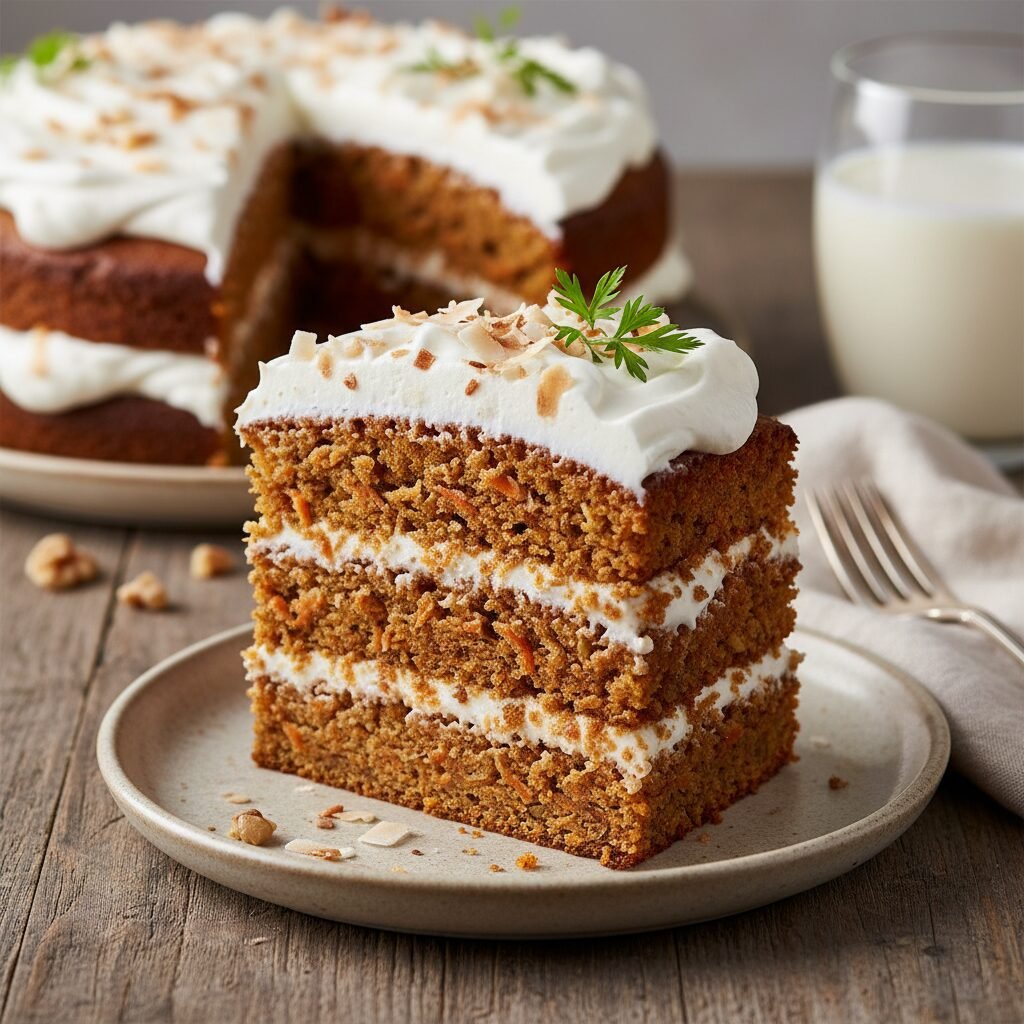
The Ultimate Moist Dairy-Free Carrot Cake with Whipped Coconut Cream Frosting
Moist Dairy Free Carrot Cake With Coconut Cream Frosting Recipe
Discover the secret to the most incredibly moist, spiced dairy-free carrot cake you will ever taste. Topped with a luscious, fluffy coconut cream frosting, this recipe rivals any traditional bakery version and is perfect for birthdays, holidays, or a cozy weekend treat.
30 minutes
35 minutes
1 hour 5 minutes (plus cooling time)
12 servings
Dessert
Baking
American
Dairy-Free
If you have been searching for a dairy-free dessert that doesn’t compromise on texture or flavor, your search ends here. This Moist Dairy-Free Carrot Cake with Coconut Cream Frosting is a revelation in the world of alternative baking. Often, dairy-free cakes can suffer from being too dense or drying out quickly, but this recipe utilizes the natural moisture of fresh carrots combined with a neutral oil base to create a crumb that is tender, springy, and stays fresh for days. The magic lies in the balance of warm spices—cinnamon, nutmeg, and ginger—which cut through the sweetness and complement the earthiness of the carrots perfectly.
What truly sets this cake apart, however, is the frosting. Traditional cream cheese frosting is a staple for carrot cake, but for those avoiding dairy, finding a worthy substitute can be challenging. Enter whipped coconut cream. When chilled and whipped with a touch of vanilla and powdered sugar, high-quality coconut cream transforms into a cloud-like topping that is rich, creamy, and stable enough to pipe. It adds a subtle tropical undertone that pairs surprisingly well with the spiced cake. Whether you are baking for a vegan friend, someone with lactose intolerance, or simply want to try a lighter, fresher take on a classic, this cake delivers on every front. It is a rustic yet elegant showstopper that proves you don’t need butter or milk to achieve baking perfection.
History & Origins
The origins of carrot cake are somewhat debated by food historians, but many trace its lineage back to medieval Europe. During the Middle Ages, sweeteners like sugar and honey were expensive and hard to come by for the average person. Carrots, which contain more natural sugar than almost any other vegetable (second only to sugar beets), were used as a substitute to sweeten puddings and steamed cakes. These early iterations were more akin to a dense, steamed pudding than the fluffy layer cakes we know today.
Fast forward to the 20th century, and carrot cake experienced a significant revival during World War II in Great Britain. Due to strict rationing of sugar and other baking staples, the government promoted recipes using carrots to add sweetness and moisture to baked goods. This cemented the carrot’s role in home baking. However, the modern American version of carrot cake—complete with its signature cream cheese frosting—didn’t explode in popularity until the 1960s and 70s, becoming a health food craze staple. As dietary preferences have evolved in the 21st century, so too has the recipe. The shift towards plant-based and dairy-free diets has inspired bakers to reinvent this classic. By swapping butter for oil (which was actually common in early recipes) and utilizing coconut products for frosting, we are seeing a new chapter in the history of this resilient and beloved dessert.
Why This Recipe Works
This recipe succeeds because it embraces the science of moisture retention without relying on dairy fats. First, the use of oil instead of butter is crucial. Butter is about 20% water, which evaporates during baking, sometimes leading to a drier crumb if not careful. Oil is 100% fat and remains liquid at room temperature, ensuring the cake stays incredibly soft and moist even after sitting out. Secondly, the high ratio of freshly grated carrots releases water as the cake bakes, essentially steaming the crumb from the inside out.
For the frosting, the choice of full-fat coconut cream is essential. Unlike almond or soy milk, coconut cream has a high fat content that solidifies when chilled. This allows it to whip up similarly to heavy whipping cream, trapping air bubbles to create a light, spreadable texture. The slight sweetness of the coconut cuts the sharpness of the spices in the cake, creating a flavor profile that is balanced rather than cloying. Furthermore, the addition of brown sugar in the batter adds acidity and molasses notes, which react with the baking soda to create a great lift, preventing the heavy ingredients (carrots and nuts) from sinking to the bottom.
Why You’ll Love This Recipe
- ✓Completely dairy-free without sacrificing flavor or texture.
- ✓Incredibly moist crumb that stays fresh for days.
- ✓Rich, stable coconut cream frosting that pipes beautifully.
- ✓Packed with warm spices like cinnamon, nutmeg, and ginger.
- ✓Versatile recipe that allows for mix-ins like walnuts or raisins.
- ✓Perfect for those with lactose intolerance or dairy allergies.
Equipment You’ll Need
- ✓Two 8-inch or 9-inch round cake pans
- ✓Large mixing bowl
- ✓Medium mixing bowl
- ✓Electric hand mixer or stand mixer
- ✓Box grater or food processor
- ✓Rubber spatula
- ✓Wire cooling rack
- ✓Measuring cups and spoons
- ✓Parchment paper
Ingredients
- ✓2 cups all-purpose flour
- ✓2 teaspoons baking powder
- ✓1 teaspoon baking soda
- ✓1 1/2 teaspoons ground cinnamon
- ✓1/2 teaspoon ground ginger
- ✓1/4 teaspoon ground nutmeg
- ✓1/2 teaspoon salt
- ✓3/4 cup vegetable oil (or melted coconut oil)
- ✓4 large eggs, room temperature
- ✓1 cup granulated sugar
- ✓1/2 cup light brown sugar, packed
- ✓1 teaspoon pure vanilla extract
- ✓3 cups grated carrots (approx. 5-6 medium carrots)
- ✓1/2 cup chopped walnuts or pecans (optional)
- ✓1/2 cup raisins (optional)
- ✓2 cans (14 oz each) full-fat coconut milk or coconut cream, chilled overnight
- ✓1/2 cup powdered sugar, sifted
- ✓1 teaspoon vanilla bean paste or extract (for frosting)
Instructions
- Preheat your oven to 350°F (175°C). Grease two 8-inch or 9-inch round cake pans and line the bottoms with parchment paper for easy removal.
- In a medium bowl, whisk together the flour, baking powder, baking soda, cinnamon, ginger, nutmeg, and salt until well combined. Set aside.
- In a large bowl, beat the eggs, granulated sugar, brown sugar, oil, and vanilla extract with an electric mixer on medium-high speed for about 2-3 minutes, until the mixture is pale and slightly thickened.
- Reduce the mixer speed to low. Gradually add the dry ingredients to the wet mixture, mixing only until just combined. Do not overmix.
- Fold in the grated carrots and any optional add-ins like nuts or raisins using a rubber spatula.
- Divide the batter evenly between the prepared cake pans. Tap the pans gently on the counter to release any large air bubbles.
- Bake for 30-35 minutes, or until a toothpick inserted into the center comes out clean or with just a few moist crumbs.
- Remove the cakes from the oven and let them cool in the pans for 10 minutes. Then, turn them out onto a wire rack to cool completely before frosting.
- While the cakes cool, prepare the frosting. Open the chilled cans of coconut milk/cream. Carefully scoop out the solidified cream from the top into a chilled mixing bowl, leaving the liquid water behind (save the water for smoothies).
- Whip the coconut cream on high speed for 2-3 minutes until fluffy. Add the sifted powdered sugar and vanilla bean paste.
- Continue to whip for another minute until smooth and creamy. If the frosting is too soft, refrigerate it for 15-20 minutes to firm up.
- Once the cakes are completely cool, place one layer on a serving plate. Spread a generous layer of coconut frosting over the top.
- Place the second cake layer on top. Frost the top and sides of the cake with the remaining frosting.
- Garnish with extra chopped nuts or toasted coconut flakes if desired. Refrigerate the cake for at least 30 minutes before slicing to set the frosting.
Expert Cooking Tips
- ✓Grate your own carrots rather than buying pre-shredded ones; pre-shredded carrots are dry and hard.
- ✓Ensure your coconut milk cans are full-fat and have been chilled for at least 24 hours to separate the cream.
- ✓Do not overmix the batter once the flour is added, or the cake will become dense and rubbery.
- ✓Let the cakes cool completely before frosting; even a slightly warm cake will melt the coconut cream.
- ✓Toast the walnuts or pecans before adding them to the batter for a deeper, nuttier flavor.
- ✓If your kitchen is very warm, chill the bowl and beaters before whipping the coconut cream.
- ✓Weigh your flour using a scale for the most accurate results, or use the spoon-and-level method.
Substitutions and Variations
This recipe is quite resilient and allows for several substitutions to fit dietary needs or pantry availability. For the flour, you can swap the all-purpose flour for a high-quality 1:1 Gluten-Free Baking Flour blend if you need a gluten-free option; just ensure the blend contains xanthan gum. If you are looking to reduce refined sugar, you can substitute the granulated sugar with coconut sugar, though this will darken the cake slightly and give it a more caramel-like flavor. For the oil, melted coconut oil works beautifully and enhances the coconut theme, but avocado oil or grapeseed oil are excellent neutral alternatives. If you have an egg allergy, flax eggs (1 tablespoon ground flaxseed meal + 3 tablespoons water per egg) work reasonably well, though the cake may be slightly denser. For the frosting, if you cannot use coconut, a dairy-free butter and powdered sugar buttercream or a cashew-based cream frosting are viable alternatives. Finally, feel free to swap the walnuts for pecans, macadamia nuts, or omit them entirely for a nut-free version.
Common Mistakes to Avoid
The most common mistake with carrot cake is using pre-packaged shredded carrots. These are often treated to stay crisp and lack the moisture required to make the cake tender. Always peel and grate fresh carrots using the medium holes of a box grater. Another pitfall is rushing the cooling process. Coconut cream frosting is very temperature-sensitive; if the cake is even remotely warm, the frosting will slide right off. Additionally, failing to chill the coconut milk cans long enough is a recipe for disaster. The separation of fat and water takes time and cold temperatures; if you try to whip room-temperature coconut milk, you will end up with a soup rather than a frosting. Lastly, be careful not to over-whip the coconut cream once the sugar is added, as the friction can generate heat and cause it to break or become runny.
Serving Suggestions
This cake is a versatile dessert that fits almost any occasion. Serve it chilled or at slight room temperature. It pairs exceptionally well with a hot cup of black coffee or an Earl Grey tea, as the bitterness of the beverages balances the sweet, creamy frosting. For a brunch setting, serve thin slices alongside a fruit salad to cut through the richness. If you are serving this for a dinner party, a garnish of candied carrot ribbons or edible flowers on top adds a sophisticated touch. You can also sprinkle toasted coconut flakes or crushed pistachios over the frosting for added texture and visual appeal.
Storage and Reheating Tips
Because this cake features a coconut cream frosting and fresh vegetable content, it must be stored in the refrigerator. Place the cake in an airtight cake carrier or cover it gently with plastic wrap (using toothpicks to keep the wrap off the frosting). It will stay fresh for up to 5 days in the fridge. In fact, many find that the flavors meld and improve on the second day. You can also freeze the cake layers. Wrap unfrosted layers tightly in plastic wrap and foil, and freeze for up to 3 months. Thaw overnight in the refrigerator before frosting. If freezing a frosted cake, place it in the freezer uncovered for an hour to harden the frosting, then wrap tightly.
Nutrition Facts (Estimated)
| Serving Size | 1 slice |
| Calories | 450 |
| Fat | 26g |
| Saturated Fat | 12g |
| Unsaturated Fat | 12g |
| Trans Fat | 0g |
| Cholesterol | 35mg |
| Sodium | 310mg |
| Carbohydrates | 52g |
| Fiber | 3g |
| Sugar | 28g |
| Protein | 5g |
Frequently Asked Questions
Can I use low-fat coconut milk for the frosting?
No, low-fat coconut milk does not contain enough fat to separate and whip into a stable frosting. You must use full-fat canned coconut milk or coconut cream.
Why did my coconut frosting turn out runny?
This usually happens if the can wasn’t chilled long enough, or if some of the coconut water got mixed in with the cream. Ensure you only scoop the solid white part.
Can I make this cake ahead of time?
Absolutely. This cake tastes even better the next day as the moisture equilibrates and the spices meld. Just keep it refrigerated.
Can I use olive oil instead of vegetable oil?
You can, but olive oil has a strong flavor that might clash with the spices. A light or ‘pure’ olive oil is better than extra virgin for baking.
How do I grate the carrots?
Use the medium holes on a box grater. Avoid the finest setting as it can make the batter too wet, and avoid the largest setting as the chunks may not cook through.
Is this recipe vegan?
The recipe as written contains eggs, so it is dairy-free but not vegan. However, you can use flax eggs or a commercial egg replacer to make it vegan.
Can I make cupcakes with this batter?
Yes! This recipe will make about 20-24 cupcakes. Bake them for 18-22 minutes at the same temperature.
Why did my cake sink in the middle?
This can happen if the oven door was opened too early, or if the cake was underbaked. It can also result from too much leavening (baking powder/soda).
Conclusion
This Moist Dairy-Free Carrot Cake with Coconut Cream Frosting is more than just an allergy-friendly alternative; it is a standout dessert in its own right. With its perfect blend of warming spices, tender crumb, and luscious tropical frosting, it challenges the notion that dairy is necessary for decadence. Whether you are an experienced baker or a novice in the kitchen, this recipe is straightforward and forgiving, rewarding you with a bakery-quality treat that everyone at the table can enjoy. So grab your grater and your mixing bowl, and get ready to bake a cake that might just become your new family tradition.