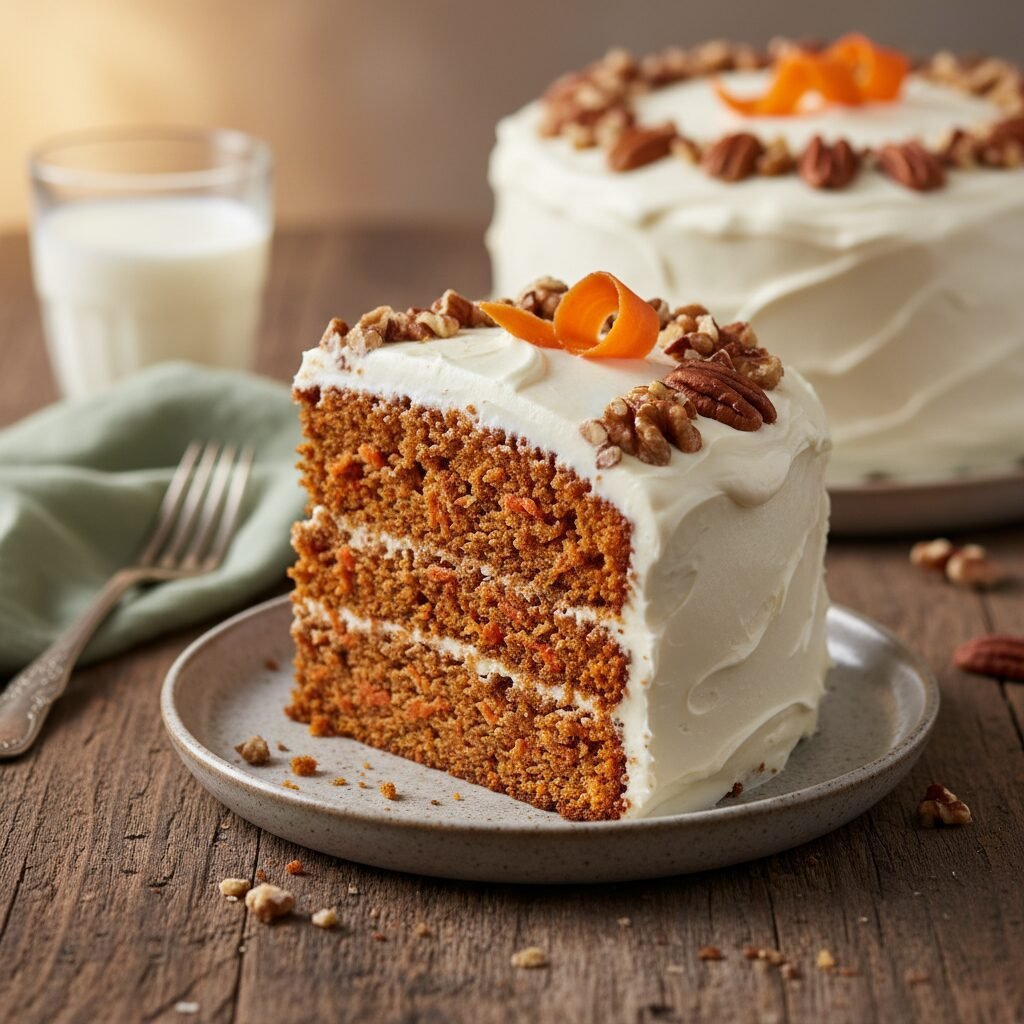
The Ultimate Moist Dairy-Free Carrot Cake with Creamy Vanilla Frosting
Moist Dairy Free Carrot Cake Recipe
Discover the secret to the most decadent, tender, and perfectly spiced carrot cake that happens to be completely dairy-free. This foolproof recipe delivers a moist crumb and a luscious frosting that rivals any traditional bakery version, making it the perfect centerpiece for celebrations or a cozy weekend treat.
25 minutes
35 minutes
1 hour 15 minutes (includes cooling)
12 servings
Dessert
Baking
American
Dairy-Free
Carrot cake is one of those timeless desserts that evokes a deep sense of comfort and nostalgia. It is a staple on Easter brunch tables, a favorite for autumn gatherings, and a reliable crowd-pleaser for birthdays. However, for those navigating a dairy-free lifestyle—whether due to allergies, lactose intolerance, or dietary preference—finding a cake that retains that signature rich, moist texture without butter or cream cheese can feel like a culinary gamble. Often, dairy-free alternatives end up dry, crumbly, or lacking in that luxurious mouthfeel we all crave. But fear not, because this recipe is the definitive solution to those baking woes.
This Moist Dairy-Free Carrot Cake is not just a ‘good alternative’; it is genuinely better than many traditional butter-based recipes. By utilizing the chemistry of oil-based batters and the natural moisture of fresh carrots and applesauce, we achieve a crumb that stays tender for days. The flavor profile is complex and warming, featuring a robust blend of cinnamon, nutmeg, and ginger that dances on the palate without overpowering the delicate sweetness of the carrots. Furthermore, the frosting—often the Achilles’ heel of dairy-free desserts—is a revelation. We use a combination of high-quality vegan butter and cream cheese alternatives (or a cashew base if you prefer) to create a tangy, velvety topping that holds its shape and melts in your mouth. Whether you are a seasoned baker or a novice in the kitchen, this recipe is designed to guide you to success, proving once and for all that you don’t need dairy to create a masterpiece of a dessert.
History & Origins
The history of carrot cake is a fascinating journey that traces back to medieval Europe. Long before the modern frosted layer cake existed, carrots were used in sweet puddings. In the Middle Ages, sugar and other sweeteners were rare and prohibitively expensive commodities for the average person. Carrots, however, were abundant and contain more natural sugar than almost any other vegetable, second only to sugar beets. Cooks learned to utilize this natural sweetness to create dense, steamed carrot puddings that served as the ancestors to our modern cake.
The evolution from pudding to cake likely occurred gradually, but the concept saw a significant resurgence during World War II in the United Kingdom. With strict rationing of sugar and luxury ingredients, the government promoted the use of carrots as a healthy sweetener in baked goods. Propaganda campaigns and Ministry of Food recipes popularized ‘Carrot Cake’ as a patriotic and nutritious treat during lean times.
However, the carrot cake we know and love today—the spiced, risen cake often slathered in cream cheese frosting—truly exploded in popularity in the United States during the 1960s and 1970s. It rode the wave of the burgeoning ‘health food’ movement; after all, a cake with a vegetable in it was perceived as a healthier indulgence. It became a cafeteria staple and a restaurant favorite. While the original ‘health’ claims might be dubious given the sugar content, its staying power is undeniable. Today, the shift toward plant-based and dairy-free diets writes the next chapter in this dessert’s history, adapting the classic formula to suit modern ethical and dietary needs without sacrificing its historical soul.
Why This Recipe Works
This recipe succeeds where others fail because it relies on the superior moisture-retaining properties of oil compared to butter. In baking science, butter is about 80% fat and 20% water, and while it adds flavor, it turns solid at room temperature. Oil, being 100% fat and liquid at room temperature, coats the flour proteins more effectively, inhibiting gluten formation (which makes cakes tough) and ensuring the cake remains soft and moist even after sitting out. This is why oil-based cakes, like carrot or red velvet, are texturally superior for this style of baking.
Furthermore, we utilize a blend of brown and white sugars. The molasses in the brown sugar is hygroscopic, meaning it attracts and holds water molecules, further preventing the cake from drying out. It also adds a depth of flavor that white sugar alone cannot achieve. The addition of unsweetened applesauce acts as a ‘secret weapon’; it provides structure via pectin and adds moisture without adding fat, balancing the density of the cake. Finally, we bloom our spices. By ensuring the cinnamon, nutmeg, and ginger are evenly distributed, we create a warmth that permeates every bite. The chemical reaction between the baking soda and the slight acidity of the brown sugar and applesauce ensures a perfect rise, giving you a cake that is light yet substantial.
Why You’ll Love This Recipe
- ✓Incredibly moist texture that lasts for days
- ✓Rich, warm spice blend of cinnamon, nutmeg, and ginger
- ✓Completely dairy-free without sacrificing flavor
- ✓Versatile batter that works for cupcakes or bundt cakes
- ✓Easy-to-make luscious vegan cream cheese frosting
- ✓Perfect balance of sweetness and spice
Equipment You’ll Need
- ✓Two 9-inch round cake pans
- ✓Large mixing bowl
- ✓Medium mixing bowl
- ✓Whisk
- ✓Rubber spatula
- ✓Box grater or food processor
- ✓Electric mixer (hand or stand)
- ✓Wire cooling rack
- ✓Parchment paper
Ingredients
- ✓2 cups all-purpose flour
- ✓2 teaspoons baking powder
- ✓1 teaspoon baking soda
- ✓1/2 teaspoon salt
- ✓2 teaspoons ground cinnamon
- ✓1/2 teaspoon ground nutmeg
- ✓1/2 teaspoon ground ginger
- ✓1 1/4 cups neutral oil (vegetable, canola, or melted coconut oil)
- ✓1 cup granulated sugar
- ✓1 cup packed light brown sugar
- ✓1 teaspoon vanilla extract
- ✓4 large eggs (room temperature)
- ✓1/2 cup unsweetened applesauce
- ✓3 cups grated carrots (approx. 5-6 medium carrots)
- ✓1 cup chopped walnuts or pecans (optional)
- ✓For the Frosting: 1/2 cup vegan butter (sticks, not tub)
- ✓For the Frosting: 8 oz vegan cream cheese
- ✓For the Frosting: 4 cups powdered sugar
- ✓For the Frosting: 1 teaspoon vanilla extract
Instructions
- Preheat your oven to 350°F (175°C). Grease two 9-inch round cake pans with oil and line the bottoms with parchment paper to ensure easy release.
- In a medium mixing bowl, whisk together the flour, baking powder, baking soda, salt, cinnamon, nutmeg, and ginger until well combined and lump-free.
- In a large bowl, whisk together the oil, granulated sugar, brown sugar, and vanilla extract until the mixture is smooth and the sugars are well incorporated.
- Add the eggs one at a time to the wet mixture, whisking vigorously after each addition. Stir in the applesauce.
- Gradually add the dry ingredients to the wet ingredients. Use a rubber spatula to gently fold the mixture until just combined. Do not overmix.
- Fold in the freshly grated carrots and chopped nuts (if using) until they are evenly distributed throughout the batter.
- Divide the batter evenly between the two prepared cake pans. Tap the pans gently on the counter to release any large air bubbles.
- Bake for 30-35 minutes, or until a toothpick inserted into the center comes out clean or with just a few moist crumbs attached.
- Remove the cakes from the oven and let them cool in the pans for 10 minutes. Then, carefully invert them onto a wire rack to cool completely before frosting.
- To make the frosting: In a large bowl using a handheld or stand mixer, beat the vegan butter and vegan cream cheese together until creamy and smooth.
- Gradually add the powdered sugar, one cup at a time, beating on low speed until incorporated. Add the vanilla extract and beat on high for 2-3 minutes until fluffy.
- Once the cakes are entirely cool, frost the top of one layer, stack the second layer, and frost the top and sides. Garnish with extra nuts if desired.
Expert Cooking Tips
- ✓Grate your own carrots: Avoid pre-shredded carrots from the store as they are dry and hard. Freshly grated carrots provide essential moisture.
- ✓Room temperature ingredients: Ensure your eggs and applesauce are at room temperature to prevent the oil from seizing and to create a smoother emulsion.
- ✓Don’t overmix: When combining wet and dry ingredients, stop as soon as the flour streaks disappear. Overmixing develops gluten and leads to a tough cake.
- ✓Cool completely: Dairy-free frostings can be more heat-sensitive. Ensure the cake is stone-cold before applying frosting to prevent sliding.
- ✓Weigh your flour: If possible, use a kitchen scale (240g for 2 cups). If using cups, spoon and level the flour rather than scooping directly.
- ✓Toast the nuts: If adding walnuts or pecans, toast them in a dry pan for 5 minutes beforehand to unlock a deeper, nuttier flavor.
Substitutions and Variations
This recipe is highly adaptable. If you need to make it gluten-free, swap the all-purpose flour for a high-quality 1:1 Gluten-Free Baking Flour blend that includes xanthan gum. For a refined sugar-free option, coconut sugar can replace the brown and white sugars, though the cake will be darker and have a more caramel-like flavor. If you have an egg allergy, you can use ‘flax eggs’ (1 tablespoon ground flaxseed meal mixed with 3 tablespoons water per egg), though the cake will be slightly denser. For the oil, melted coconut oil adds a nice flavor, but avocado oil or grapeseed oil are excellent neutral options. If you dislike nuts, golden raisins or dried cranberries make excellent mix-in alternatives. For the frosting, if you cannot find vegan cream cheese, a simple vanilla buttercream using vegan butter and oat milk works beautifully.
Common Mistakes to Avoid
The most common mistake is using pre-packaged shredded carrots; these are often coated in preservatives and are too dry, leading to a dry cake. Another error is opening the oven door too early, which can cause the cake to sink in the middle due to a sudden temperature drop. Be careful not to over-beat the batter once the flour is added. Regarding the frosting, using ‘tub’ style vegan margarine instead of ‘stick’ style vegan butter can result in a runny frosting that won’t hold its shape. Always look for sticks with a higher fat content for stability.
Serving Suggestions
This cake is rich and flavorful, so it pairs beautifully with a hot cup of black coffee or an unsweetened herbal tea like chamomile or peppermint to cut through the sweetness. For a dessert spread, serve it alongside fresh berries or a tart fruit compote. It is the quintessential dessert for Easter brunch, but its warm spices make it equally at home on a Thanksgiving table. Serve slightly chilled or at room temperature depending on your preference for the frosting’s texture.
Storage and Reheating Tips
Because of the fresh carrots and the cream cheese in the frosting, this cake is best stored in the refrigerator. Place it in an airtight cake carrier or cover it gently with plastic wrap. It will keep fresh for up to 5 days. In fact, many find the flavor improves on the second day as the spices meld. You can also freeze the cake slices. Wrap individual slices tightly in plastic wrap and then foil; they will keep for up to 3 months in the freezer. Thaw in the fridge overnight before eating.
Nutrition Facts (Estimated)
| Serving Size | 1 slice |
| Calories | 480 |
| Fat | 26g |
| Saturated Fat | 5g |
| Unsaturated Fat | 20g |
| Trans Fat | 0g |
| Cholesterol | 35mg |
| Sodium | 310mg |
| Carbohydrates | 58g |
| Fiber | 3g |
| Sugar | 32g |
| Protein | 5g |
Frequently Asked Questions
Can I make this recipe into cupcakes?
Absolutely! This batter works perfectly for cupcakes. Line a muffin tin with paper liners and fill them about 3/4 full. Reduce the baking time to 18-22 minutes. It should yield approximately 24 cupcakes.
Why did my carrot cake sink in the middle?
Sinking usually happens if the cake was underbaked or if the oven door was opened too early during the baking process. It can also happen if there was too much leavening (baking soda/powder) or if the batter was overmixed, incorporating too much air that collapses later.
Is this cake vegan?
The base recipe contains eggs, so it is dairy-free but not vegan. However, you can make it vegan by substituting the 4 chicken eggs with flax eggs (4 tbsp flax meal + 12 tbsp water) or a commercial egg replacer.
Can I reduce the sugar in this recipe?
You can reduce the sugar by about 1/4 cup without significantly affecting the texture. However, reducing it too much will result in a drier, less tender cake, as sugar provides moisture and structure, not just sweetness.
What is the best way to grate the carrots?
Use the medium holes of a box grater for the best texture—visible flecks of carrot that melt into the cake. You can also use the grating attachment of a food processor for speed, but hand-grating often yields a moister result.
My frosting is too runny, what do I do?
If your vegan cream cheese frosting is runny, add more powdered sugar, 1/4 cup at a time. Also, ensure your kitchen isn’t too hot. You can refrigerate the frosting for 20 minutes to help it firm up before piping.
Can I add pineapple to this recipe?
Yes, crushed pineapple is a popular addition. If you add 1/2 cup of well-drained crushed pineapple, slightly reduce the applesauce to avoid making the batter too wet.
Do I have to peel the carrots?
Yes, it is recommended to peel the carrots. The skins can sometimes be bitter and tough, which interferes with the delicate texture of the cake.
Conclusion
There you have it—a Moist Dairy-Free Carrot Cake recipe that promises to banish the stigma of dry dairy-free desserts forever. With its tender crumb, aromatic spices, and that irresistible creamy frosting, this cake is a testament to how delicious inclusive baking can be. Whether you are baking for an allergy, a lifestyle choice, or simply for the love of carrot cake, this recipe is sure to become a cherished favorite in your recipe box. Don’t forget to share your creations on social media and tag us; we love seeing your beautiful bakes!