The Ultimate Moist Dairy-Free Banana Cake with Creamy Chocolate Frosting
Moist Dairy Free Banana Cake With Dairy Free Chocolate Frosting Recipe
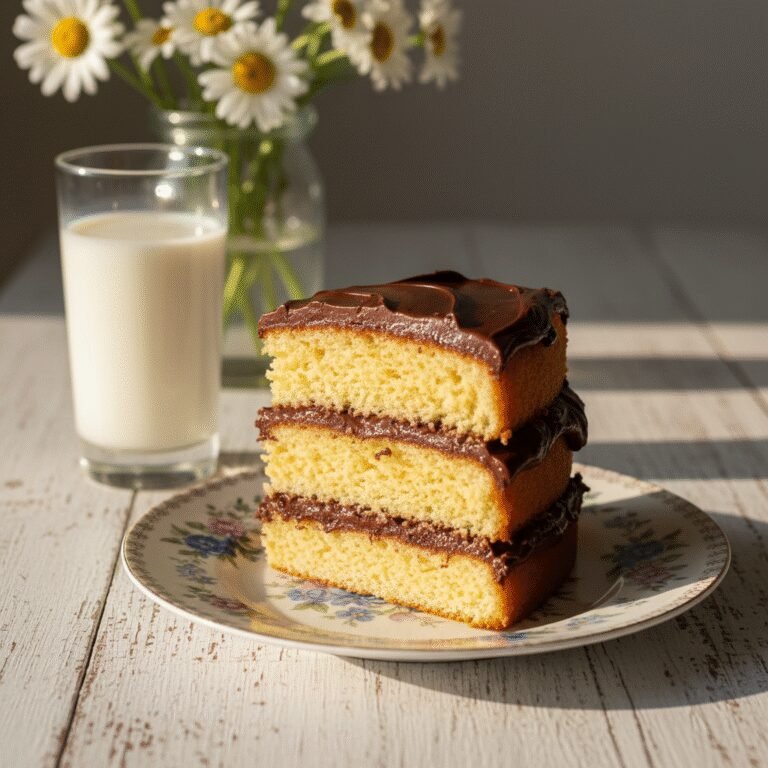
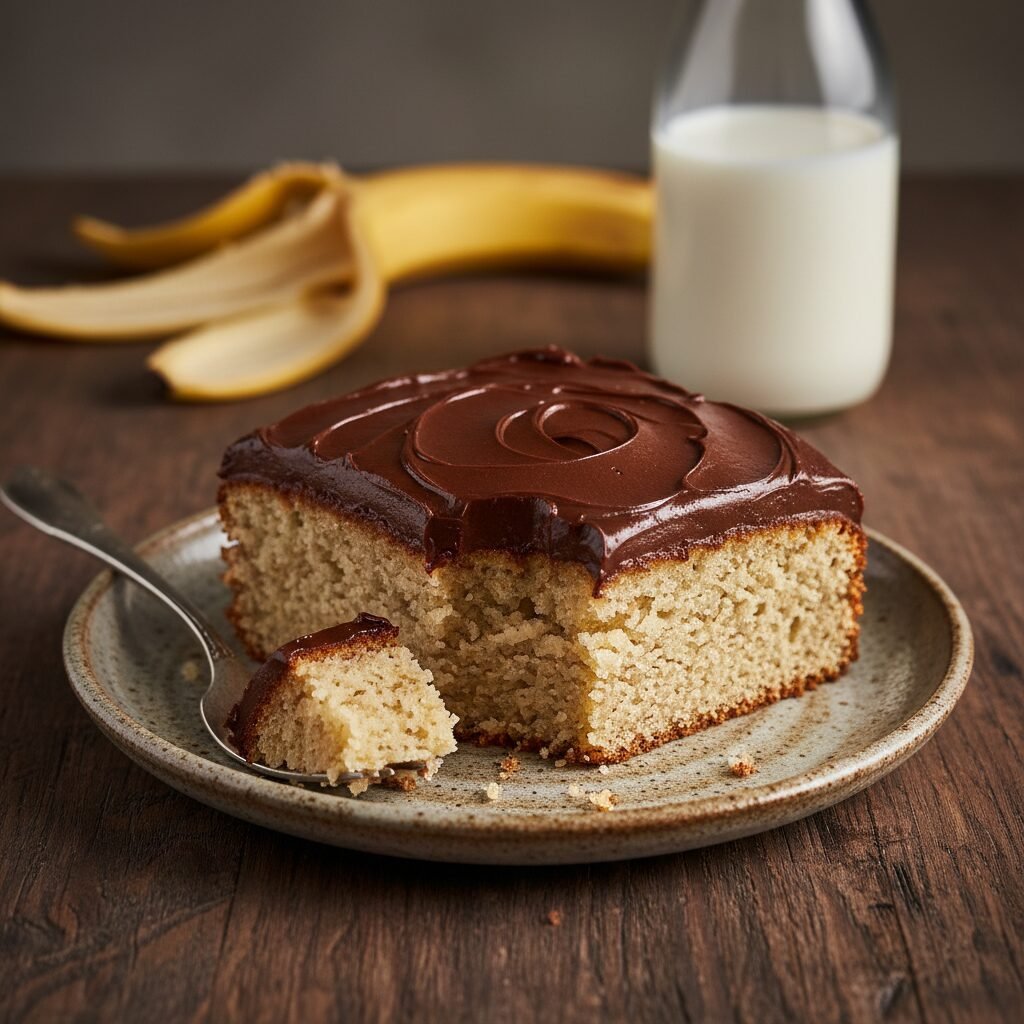
Discover the most incredible dairy-free banana cake that rivals any traditional bakery treat. This recipe delivers a impossibly moist crumb paired with a decadent, velvety chocolate frosting that will have everyone asking for seconds—completely dairy-free!
20 minutes
35 minutes
55 minutes
12 servings
Dessert
Baking
American
Dairy-Free
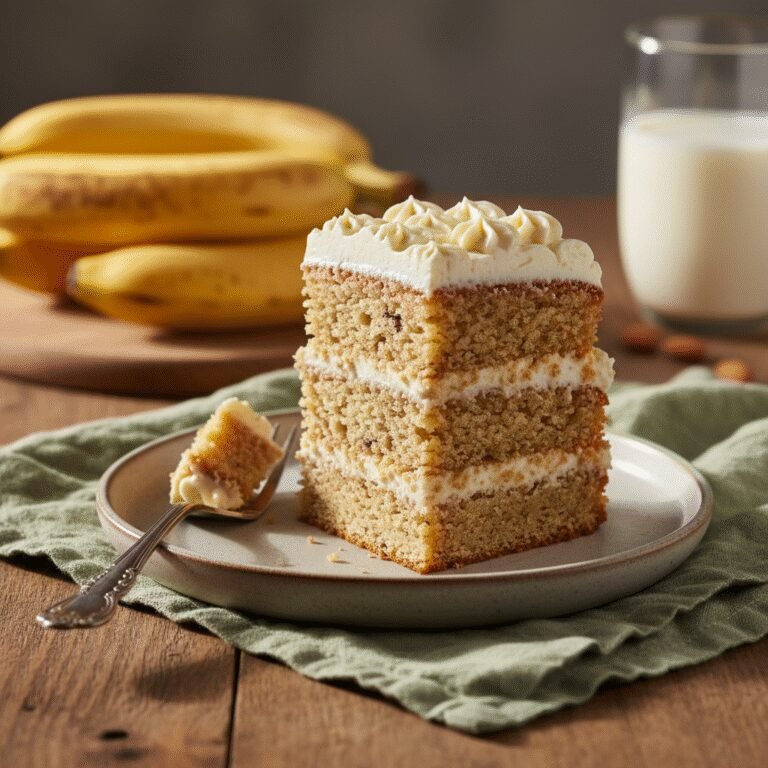
There is something undeniably comforting about the aroma of bananas baking in the oven, a scent that promises warmth, nostalgia, and a delicious reward. However, for those navigating a dairy-free lifestyle, finding a cake that retains that quintessential tender crumb and rich flavor without the use of butter or milk can often feel like a compromise. Enter this Ultimate Moist Dairy-Free Banana Cake. This isn’t just a good alternative; it is a standout dessert in its own right. We have engineered this recipe to ensure that the absence of dairy is undetectable. By utilizing the natural moisture of overripe bananas and the tenderizing properties of high-quality oil, we achieve a texture that is often superior to butter-based cakes—lighter, fluffier, and incredibly moist for days.
The magic doesn’t stop at the sponge. The crowning glory is the dairy-free chocolate frosting, a whipped masterpiece that banishes the notion that buttercream needs actual butter to be luscious. We use a specific blend of plant-based butter sticks and cocoa powder to create a frosting that is deeply chocolatey, silky smooth, and perfectly pipeable. Whether you are baking for a birthday, a potluck, or simply a Tuesday night craving, this cake bridges the gap between dietary necessity and pure indulgence. It is a celebration of flavor where banana meets chocolate in a timeless dance, proving once and for all that you do not need dairy to create a masterpiece in the kitchen.
History & Origins
The history of banana cake is deeply intertwined with the history of the banana itself in North America and the evolution of chemical leavening agents. Bananas were considered an exotic luxury in the United States until the late 19th century when improved shipping and refrigeration techniques made them more accessible. However, the true catalyst for banana-based baked goods was the Great Depression. During the 1930s, food waste was a cardinal sin. Housewives, unwilling to throw away overripe, brown bananas, began incorporating them into quick breads. This coincided with the mass commercialization of baking soda and baking powder, which allowed for reliable rising without the laborious process of yeast fermentation.
While banana bread became a staple of American households, banana cake evolved as a slightly more refined cousin. It typically contained more sugar and was beaten longer to aerate the batter, resulting in a lighter texture compared to the denser bread. As the 20th century progressed, the mid-century baking boom saw the introduction of elaborate frostings, with chocolate becoming a favorite pairing to offset the sweetness of the fruit. The shift towards dairy-free baking is a more modern chapter in this history. As awareness of lactose intolerance and veganism grew in the late 20th and early 21st centuries, home bakers began experimenting. Early adaptations often used margarine or shortening, which left a waxy aftertaste. Today, thanks to the artisanal plant-based movement, we have access to high-quality dairy-free milks and butters that allow us to honor the historical roots of this Depression-era classic while adapting it for the modern, health-conscious, or allergy-aware palate.
Why This Recipe Works
This recipe succeeds where many others fail because it relies on the science of fat and sugar ratios rather than simply swapping ingredients one-for-one. First, we use oil instead of a solid fat like butter for the cake batter. Oil remains liquid at room temperature, which means the cake stays incredibly soft and moist on the counter, whereas butter-based cakes can firm up and dry out. The oil also coats the flour proteins more effectively, inhibiting gluten formation and ensuring a tender, melt-in-your-mouth crumb.
Secondly, the acidity in the brown sugar reacts with the baking soda. This chemical reaction produces carbon dioxide gas, which creates lift and contributes to the cake’s fluffy texture. We also incorporate a ‘buttermilk’ substitute made from almond milk and vinegar; this added acidity further tenderizes the crumb and adds a subtle tang that balances the sweetness of the ripe bananas. For the frosting, the key is using dairy-free butter sticks rather than tub margarine. Sticks have a lower water content, which prevents the frosting from separating or becoming too runny. Combined with sifted cocoa powder and a splash of vanilla, the result is a stable, rich frosting that holds its shape and provides the perfect creamy contrast to the soft cake.
Why You’ll Love This Recipe
- ✓Completely dairy-free without sacrificing flavor or texture.
- ✓Uses oil for a superior, longer-lasting moist crumb.
- ✓Rich, pipeable chocolate frosting that tastes like real buttercream.
- ✓Perfect way to use up overripe, spotted bananas.
- ✓Simple pantry staples—no obscure specialty ingredients required.
Equipment You’ll Need
- ✓9×13 inch baking pan or two 9-inch round pans
- ✓Large mixing bowl
- ✓Medium mixing bowl
- ✓Electric hand mixer or stand mixer
- ✓Whisk
- ✓Rubber spatula
- ✓Measuring cups and spoons
- ✓Wire cooling rack
Ingredients
- ✓3 large overripe bananas, mashed (approx. 1.5 cups)
- ✓2 1/2 cups all-purpose flour
- ✓1 1/2 cups granulated sugar
- ✓1/2 cup packed light brown sugar
- ✓1 tsp baking powder
- ✓1 tsp baking soda
- ✓1/2 tsp salt
- ✓3/4 cup vegetable oil or melted coconut oil
- ✓3 large eggs, room temperature
- ✓1 tsp vanilla extract
- ✓1/2 cup unsweetened almond milk (mixed with 1 tsp apple cider vinegar)
- ✓For the Frosting:
- ✓1 cup dairy-free butter sticks, slightly softened
- ✓3/4 cup unsweetened cocoa powder
- ✓3-4 cups powdered sugar
- ✓2-3 tbsp unsweetened almond milk
- ✓1 tsp vanilla extract
- ✓Pinch of salt
Instructions
- Preheat your oven to 350°F (175°C). Grease and flour a 9×13 inch baking pan or line it with parchment paper for easy removal.
- In a small cup, mix the 1/2 cup almond milk with 1 teaspoon of apple cider vinegar. Let it sit for 5-10 minutes to curdle and create a dairy-free ‘buttermilk’.
- In a medium bowl, whisk together the flour, baking powder, baking soda, and salt until well combined. Set aside.
- In a large mixing bowl, mash the bananas until smooth. Add the granulated sugar, brown sugar, oil, eggs, and vanilla extract. Whisk vigorously until the mixture is fully combined and slightly lighter in color.
- Stir the almond milk mixture into the wet ingredients.
- Gradually add the dry ingredients to the wet ingredients. Use a rubber spatula to fold the batter gently. Stop mixing as soon as the flour streaks disappear to avoid overworking the gluten.
- Pour the batter into the prepared baking pan and smooth the top with a spatula.
- Bake for 30-35 minutes, or until a toothpick inserted into the center comes out clean or with just a few moist crumbs attached.
- Remove the cake from the oven and place the pan on a wire rack. Let it cool completely before frosting. This is crucial to prevent the frosting from melting.
- To make the frosting: In a large bowl using a hand mixer or stand mixer, beat the softened dairy-free butter until creamy (about 2 minutes).
- Add the cocoa powder and beat on low speed until combined.
- Gradually add the powdered sugar, one cup at a time, alternating with a tablespoon of almond milk. Beat on medium-high speed until fluffy and smooth.
- Stir in the vanilla extract and a pinch of salt. If the frosting is too stiff, add a teaspoon more milk; if too soft, add more sugar.
- Spread the frosting generously over the cooled cake. Slice and serve.
Expert Cooking Tips
- ✓Ensure your bananas are heavily spotted or brown; this guarantees maximum sweetness and moisture.
- ✓Do not overmix the batter after adding the flour, or the cake will become dense and rubbery.
- ✓Room temperature eggs incorporate better into the batter, creating a more uniform emulsion.
- ✓Sift your powdered sugar and cocoa powder to avoid lumpy frosting.
- ✓If using coconut oil, make sure your other ingredients are not cold, or the oil will solidify instantly.
- ✓Let the cake cool completely—even a slightly warm cake will cause the dairy-free butter to separate.
- ✓Tap the cake pan on the counter before baking to release any large air bubbles.
Substitutions and Variations
This recipe is highly adaptable to various pantry needs. If you do not have almond milk, soy milk or oat milk work beautifully as they have a high protein content that mimics dairy milk well. For the oil, you can substitute melted coconut oil for a slight tropical flavor, or avocado oil for a neutral taste; avoid olive oil as its flavor is too strong. To make this recipe egg-free (vegan), you can use three ‘flax eggs’ (3 tbsp ground flaxseed meal mixed with 9 tbsp water, let sit for 5 minutes), though the cake will be slightly denser. For the flour, a 1:1 gluten-free all-purpose baking blend can be used to make the cake gluten-free. In the frosting, if you cannot find dairy-free butter sticks, high-quality vegetable shortening can be used, though you may want to increase the vanilla and add a splash of butter extract to mimic the flavor.
Common Mistakes to Avoid
The most common mistake with banana cake is using under-ripe bananas. Yellow or green bananas lack the sugar content and soft texture needed for a moist cake; always wait until they are brown and spotty. Another frequent error is measuring flour incorrectly. Scooping the flour directly with the measuring cup packs it down, leading to a dry cake. Instead, use the ‘spoon and level’ method or a kitchen scale. regarding the frosting, using tub margarine instead of sticks is a recipe for disaster; tub spreads have high water content and will result in a soupy mess that slides off the cake. Finally, impatience is a killer—frosting a warm cake will melt the fats in your frosting, destroying the aeration you worked so hard to achieve.
Serving Suggestions
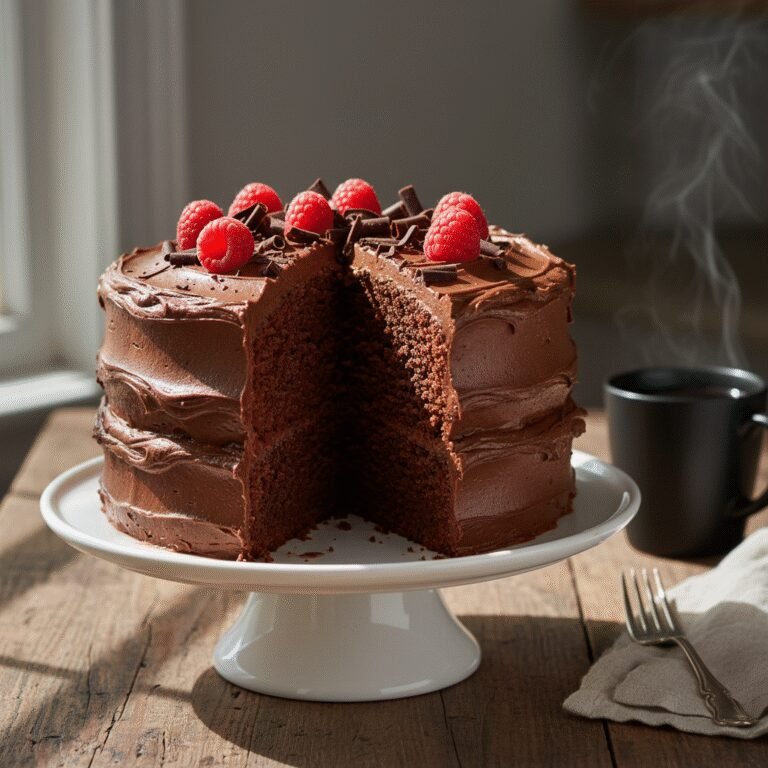
This cake is versatile enough for a casual snack or a dinner party dessert. Serve it simply as a square on a nice plate, perhaps with a dusting of extra cocoa powder. For an elevated presentation, top each slice with fresh berries—raspberries or sliced strawberries cut through the richness of the chocolate beautifully. A scoop of dairy-free vanilla ice cream or a dollop of coconut whipped cream on the side turns this into a decadent sundae-style treat. If you are serving this for brunch, it pairs wonderfully with a hot cup of black coffee or an oat milk latte, as the bitterness of the coffee balances the sweet frosting.
Storage and Reheating Tips
Because this cake is made with oil and fruit, it stays moist for a long time. Store the frosted cake in an airtight container at room temperature for up to 3 days. If your kitchen is particularly hot, or if you want to keep it longer, store it in the refrigerator for up to 5 days. Note that the frosting will harden slightly in the fridge, so let the slice sit at room temperature for 15 minutes before eating for the best texture. The cake also freezes exceptionally well. You can freeze individual slices wrapped tightly in plastic wrap and foil for up to 3 months. Thaw overnight in the fridge or on the counter for a few hours.
Nutrition Facts (Estimated)
| Serving Size | 1 slice |
| Calories | 380 |
| Fat | 18g |
| Saturated Fat | 4g |
| Unsaturated Fat | 12g |
| Trans Fat | 0g |
| Cholesterol | 35mg |
| Sodium | 210mg |
| Carbohydrates | 52g |
| Fiber | 2g |
| Sugar | 28g |
| Protein | 4g |
Frequently Asked Questions
Can I make this recipe as cupcakes?
Yes! This recipe yields about 24 standard cupcakes. Bake them at 350°F for 18-22 minutes.
My frosting is too runny, what should I do?
Add more powdered sugar, 1/4 cup at a time, until it thickens. Ensure your dairy-free butter wasn’t melted, just softened.
Can I reduce the sugar in the cake?
You can reduce the sugar by about 1/4 cup without ruining the texture, but reducing it further may affect the moisture and shelf life.
Is this cake vegan?
As written, it contains eggs. However, you can swap the eggs for flax eggs or a commercial egg replacer to make it fully vegan.
Why did my cake sink in the middle?
This usually happens if the oven door was opened too early, or if the cake was underbaked. Check with a toothpick before removing.
Can I use whole wheat flour?
You can substitute up to 50% of the all-purpose flour with white whole wheat flour. Using 100% whole wheat may make the cake heavy and dry.
What brand of dairy-free butter is best?
Look for ‘buttery sticks’ rather than tubs. Brands like Miyoko’s Creamery, Country Crock Plant Butter, or Earth Balance sticks work well.
Can I add nuts or chocolate chips?
Absolutely. You can fold in up to 1 cup of walnuts, pecans, or dairy-free chocolate chips into the batter before baking.
Conclusion
We hope this Moist Dairy-Free Banana Cake becomes a new staple in your baking repertoire. It is proof that dietary restrictions do not have to mean restricting flavor or joy. Whether you are dairy-intolerant, vegan, or just out of butter, this recipe delivers comfort in every bite. The combination of the fruity, tender sponge and the deep, dark chocolate frosting is a match made in heaven. So, grab those spotted bananas from the counter and get baking—your kitchen is about to smell amazing, and your taste buds will thank you!