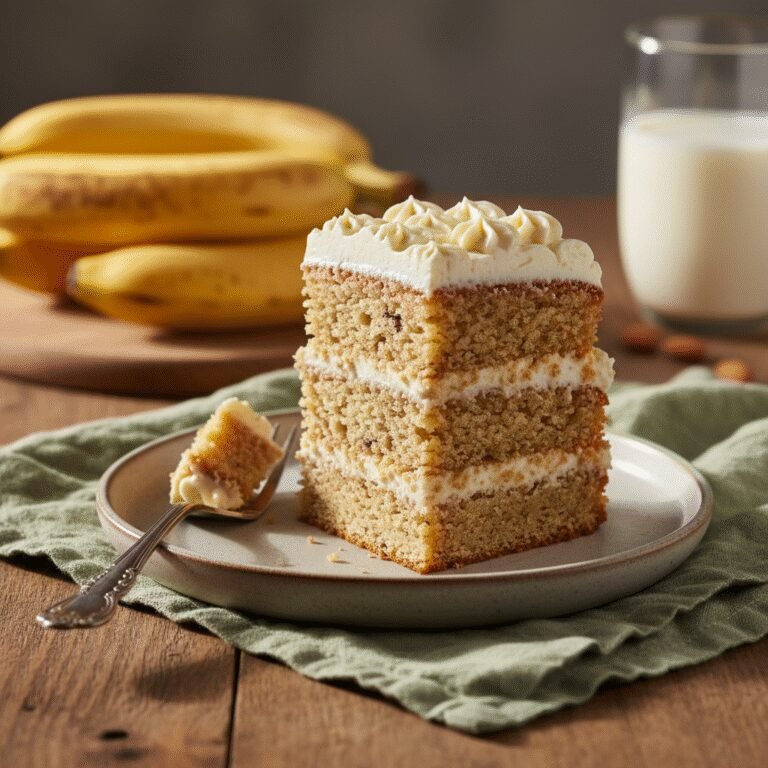
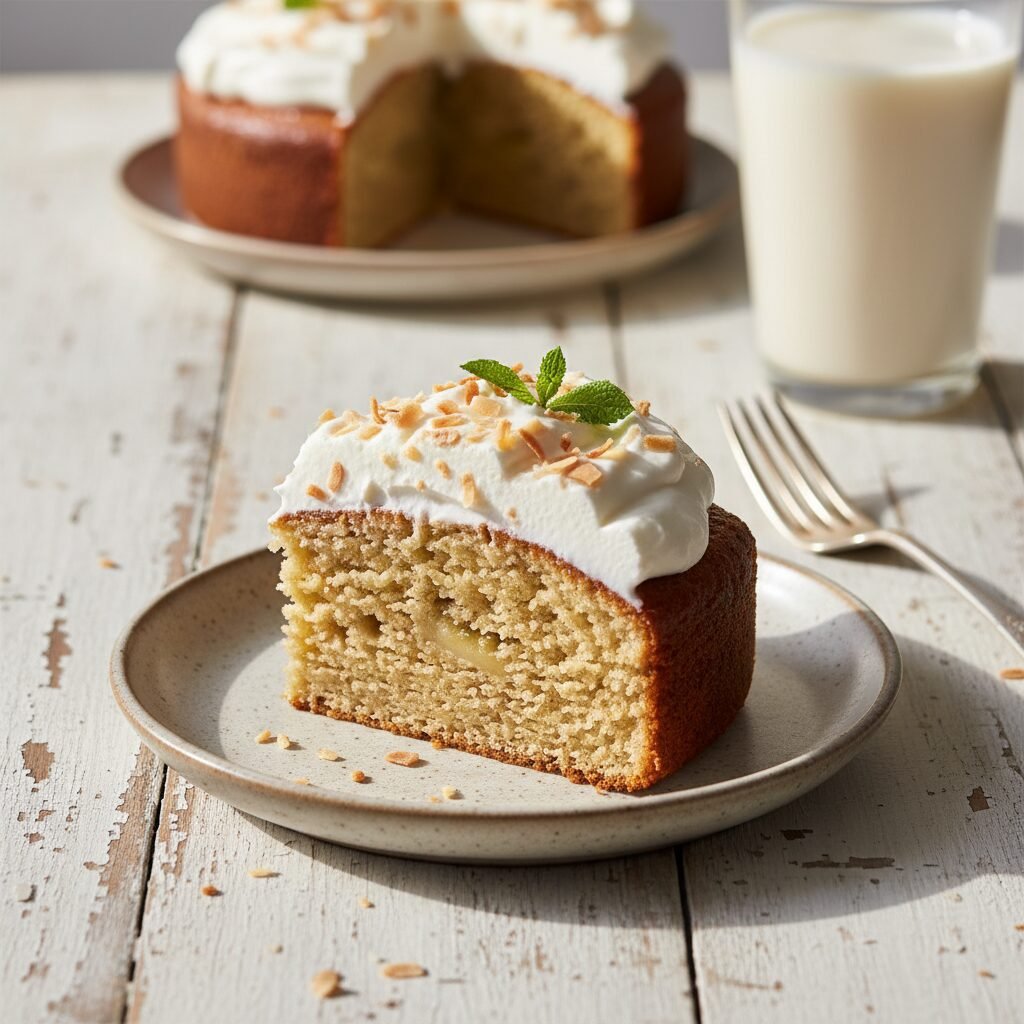
The Ultimate Moist Dairy-Free Banana Cake with Whipped Coconut Cream Frosting
Moist Dairy Free Banana Cake With Coconut Cream Frosting Recipe
Discover the secret to the most tender, melt-in-your-mouth banana cake that happens to be completely dairy-free. Topped with a cloud-like, naturally sweet coconut cream frosting, this dessert is a tropical dream come true that rivals any traditional bakery treat.
20 minutes
30 minutes
50 minutes
12 servings
Dessert
Baking
American / Fusion
Dairy-Free
There is something profoundly comforting about the aroma of baking bananas. It permeates the home with a sweet, earthy promise of warmth and indulgence. But for many, the world of cakes—specifically moist, tender, decadent cakes—often feels gated behind a wall of butter and heavy cream. This Moist Dairy-Free Banana Cake with Coconut Cream Frosting shatters that barrier, offering a texture so lush and a crumb so delicate that you will question why you ever relied on dairy in the first place. We are talking about a cake that stays soft for days, thanks to the magical alchemy of ripe bananas and high-quality oil, paired with a frosting that is as light as air and purely plant-based.
This recipe was born out of a necessity to find a dessert that could cater to lactose-intolerant guests without feeling like a ‘diet’ compromise. The result is a masterpiece of flavor engineering. The base is robustly banana-forward, enhanced with a hint of cinnamon and vanilla, while the frosting brings a subtle, cooling tropical note that cuts through the density of the cake. It is not just a substitute; it is an upgrade. Whether you are hosting a summer brunch, looking for a comfort bake on a rainy Sunday, or celebrating a birthday where dietary restrictions are a concern, this cake is a showstopper. The coconut cream frosting is particularly special—whipped to stiff peaks, it mimics the mouthfeel of whipped cream but offers a stability and richness that pairs perfectly with the humid crumb of the banana sponge. Get ready to redefine what dairy-free baking can taste like.
History & Origins
The history of banana cake is inextricably linked to the rise of chemical leavening agents and the economic conditions of the early 20th century. While bananas have been cultivated for thousands of years, primarily in Southeast Asia and Papua New Guinea, they only became widely available in the United States in the late 19th century with the advent of better refrigeration and transport logistics. However, the true explosion of banana-based baked goods occurred during the Great Depression in the 1930s. During this era of scarcity, throwing away food was unthinkable. Housewives needed a way to use overripe, blackened bananas that were no longer palatable for raw eating. Simultaneously, the mass production of baking powder and baking soda made quick breads and cakes easier and more reliable to rise.
Thus, the banana bread—and subsequently, the lighter, sweeter banana cake—was born. It became a staple of American comfort food. The dairy-free evolution of this classic reflects a more modern culinary trajectory. As awareness of lactose intolerance grew and veganism moved from the fringes to the mainstream in the late 20th and early 21st centuries, bakers began experimenting with substitutions. Coconut milk and cream, staples in Southeast Asian, Caribbean, and South American cuisines, were natural successors to dairy cream. They offered the high fat content necessary for baking physics while providing a complementary flavor profile. This specific recipe represents the convergence of Depression-era resourcefulness and modern plant-based innovation, marrying the nostalgic, homey feel of 1930s Americana with the global pantry staples of the modern health-conscious kitchen.
Why This Recipe Works
This recipe succeeds where many dairy-free baked goods fail—texture. The primary challenge in dairy-free baking is replacing the fat and protein structure usually provided by butter and milk. In this recipe, we utilize oil instead of a solid fat substitute. Oil remains liquid at room temperature, which means the cake stays incredibly moist and tender on the palate, whereas butter-based cakes can firm up and feel dry once cooled. The oil coats the flour proteins more effectively, inhibiting excessive gluten formation, resulting in a tender, short crumb rather than a tough, chewy texture.
Furthermore, bananas act as a powerful hygroscopic agent, meaning they attract and hold water molecules. This ensures the cake retains moisture long after it has left the oven. For the frosting, we rely on the high saturated fat content of coconut cream. When chilled, the fat solidifies, allowing it to be whipped similarly to heavy dairy cream. By using only the solid ‘cream’ from a can of full-fat coconut milk and leaving the liquid water behind, we achieve a thick, stable frosting that holds its shape without the need for stabilizers or gums. The combination of the dense, moisture-rich cake and the airy, fatty frosting creates a perfect balance of textures and flavors.
Why You’ll Love This Recipe
- ✓Incredibly moist crumb that stays fresh for days.
- ✓100% Dairy-Free and easily adaptable to be Vegan.
- ✓Natural sweetness from ripe bananas reduces refined sugar need.
- ✓Silky, cloud-like coconut cream frosting.
- ✓Simple pantry ingredients with no obscure substitutes.
- ✓Perfect balance of warm cinnamon and tropical coconut.
Equipment You’ll Need
- ✓9×13 inch baking pan or two 9-inch round pans
- ✓Electric hand mixer or stand mixer
- ✓Large mixing bowls
- ✓Rubber spatula
- ✓Measuring cups and spoons
- ✓Wire cooling rack
- ✓Potato masher or fork (for bananas)
Ingredients
- ✓3 cups all-purpose flour (spooned and leveled)
- ✓1 tsp baking powder
- ✓1 tsp baking soda
- ✓1/2 tsp sea salt
- ✓1 tsp ground cinnamon
- ✓1 1/2 cups granulated sugar
- ✓1 cup vegetable oil (or melted coconut oil)
- ✓3 large eggs (room temperature)
- ✓1 1/2 cups mashed ripe bananas (approx. 3-4 bananas)
- ✓1 tsp pure vanilla extract
- ✓1/2 cup unsweetened almond milk (or soy milk)
- ✓1 tsp lemon juice or apple cider vinegar
- ✓2 cans (14oz each) full-fat coconut milk or coconut cream, chilled overnight
- ✓1/2 cup powdered sugar
- ✓1/2 tsp vanilla extract (for frosting)
Instructions
- Begin by placing your cans of coconut milk in the refrigerator. They need to chill for at least 8 hours, preferably overnight, to separate the cream from the liquid.
- Preheat your oven to 350°F (175°C). Grease a 9×13 inch baking pan (or two 9-inch round cake pans) with oil and line the bottom with parchment paper for easy removal.
- In a small cup, mix the almond milk with the lemon juice (or vinegar) to create a dairy-free ‘buttermilk’. Let it sit for 5 minutes to curdle slightly.
- In a medium bowl, whisk together the flour, baking powder, baking soda, salt, and cinnamon until well combined and lump-free. Set aside.
- In a large mixing bowl, beat the eggs, granulated sugar, oil, and 1 teaspoon of vanilla extract until the mixture is pale and slightly thickened (about 2 minutes).
- Add the mashed bananas and the prepared almond milk mixture to the wet ingredients. Whisk until fully incorporated.
- Gently fold the dry ingredients into the wet ingredients using a rubber spatula. Mix only until no streaks of flour remain. Do not overmix, or the cake will be dense.
- Pour the batter evenly into the prepared baking pan(s). Tap the pan gently on the counter to release any large air bubbles.
- Bake for 28-35 minutes, or until a toothpick inserted into the center comes out clean or with just a few moist crumbs attached. The top should be golden brown and spring back when lightly touched.
- Remove the cake from the oven and let it cool completely in the pan placed on a wire rack. It is crucial the cake is 100% cool before frosting, or the coconut cream will melt.
- While the cake cools, prepare the frosting. Remove the coconut milk cans from the fridge without shaking them. Open the cans and scoop out the hardened white cream at the top into a chilled mixing bowl. Discard the clear liquid (or save it for smoothies).
- Using an electric mixer, whip the coconut cream on high speed for 3-5 minutes until it becomes fluffy and creamy.
- Add the powdered sugar and 1/2 teaspoon vanilla extract. Continue to whip for another minute until smooth and stiff peaks form.
- Spread the frosting generously over the cooled cake. Top with toasted coconut flakes or banana slices if desired. Slice and serve immediately.
Expert Cooking Tips
- ✓Use spotty bananas: The browner the banana skins, the sweeter and more moist your cake will be.
- ✓Chill the bowl: Place your mixing bowl and beaters in the freezer for 10 minutes before whipping the coconut cream to help it hold its volume.
- ✓Don’t overmix: Once you add the flour, mix gently. Overworking the gluten leads to a tough, rubbery cake.
- ✓Room temperature eggs: Using room temperature eggs helps the batter emulsify better, leading to a more uniform texture.
- ✓Weigh your flour: If possible, use a kitchen scale. If not, spoon flour into the cup and level it off to avoid packing it down.
- ✓Coconut brand matters: Some brands of coconut milk contain emulsifiers (like guar gum) that prevent separation. Look for brands containing only coconut and water.
- ✓Cool completely: Coconut frosting is heat-sensitive. If the cake is even slightly warm, the frosting will turn into a glaze.
Substitutions and Variations
This recipe is highly adaptable to various dietary needs. For the flour, you can substitute a high-quality 1:1 Gluten-Free All-Purpose Baking Flour blend if you are gluten-intolerant; look for one that contains xanthan gum for structure. If you are strictly vegan and do not eat eggs, you can use ‘flax eggs’ (1 tbsp ground flaxseed meal + 3 tbsp water per egg) or a commercial egg replacer, though the cake may be slightly denser. For the sugar, coconut sugar can be used for a lower glycemic index and a caramel-like flavor, though it will darken the color of the cake. In terms of oil, melted coconut oil works beautifully and enhances the coconut flavor, but avocado oil or light olive oil are great neutral options. For the milk component, oat milk or soy milk can be used interchangeably with almond milk. If you cannot find coconut milk for the frosting, a standard dairy-free buttercream made with vegan butter sticks and powdered sugar is a reliable alternative.
Common Mistakes to Avoid
The most common mistake with this recipe is failing to chill the coconut milk long enough. If the can isn’t cold, the fat won’t separate from the water, and you will end up with a runny soup instead of a whip-able cream. Another frequent error is using under-ripe bananas; green or bright yellow bananas lack the sugar content and softness required for the texture and flavor of this cake. Overmixing the batter is a classic baking error that applies here too; stop mixing as soon as the flour disappears. Finally, attempting to frost the cake before it is completely cool is a disaster for coconut cream. Unlike butter, coconut oil melts at a very low temperature (76°F), so even a hint of residual heat will ruin your frosting.
Serving Suggestions
This cake is stunning on its own, but you can elevate the presentation for special occasions. Serve slices on dessert plates garnished with toasted coconut flakes or chopped walnuts for added crunch. A drizzle of dairy-free caramel sauce or a sprinkle of cinnamon adds a gourmet touch. For a fresh contrast, serve with fresh berries—strawberries or raspberries cut through the sweetness beautifully. It pairs exceptionally well with a hot cup of dark roast coffee or an iced oat milk latte. If you are serving this at a summer gathering, a side of dairy-free vanilla bean ice cream creates the ultimate indulgence.
Storage and Reheating Tips
Because the frosting is made from coconut cream, this cake is best stored in the refrigerator. Place leftovers in an airtight container to prevent the cake from drying out; it will keep well in the fridge for up to 5 days. The frosting will firm up when chilled, similar to a cheesecake texture. If you prefer a softer frosting, let the slice sit at room temperature for 15-20 minutes before eating. The unfrosted cake layers can be frozen for up to 3 months. Wrap them tightly in plastic wrap and then foil. Thaw overnight in the refrigerator before frosting.
Nutrition Facts (Estimated)
| Serving Size | 1 slice |
| Calories | 340 |
| Fat | 16g |
| Saturated Fat | 8g |
| Unsaturated Fat | 7g |
| Trans Fat | 0g |
| Cholesterol | 35mg |
| Sodium | 180mg |
| Carbohydrates | 45g |
| Fiber | 2g |
| Sugar | 22g |
| Protein | 4g |
Frequently Asked Questions
Can I make this cake into cupcakes?
Yes! This recipe makes approximately 24 standard cupcakes. Bake them at 350°F for 18-22 minutes. Watch them closely and test with a toothpick.
Why did my coconut cream frosting turn out runny?
This usually happens if the coconut milk wasn’t chilled long enough, or if the can contained emulsifiers preventing separation. It can also happen if you accidentally included some of the coconut water. If it’s too soft, try adding more powdered sugar or chilling it again.
Can I use frozen bananas?
Absolutely. Thaw the frozen bananas completely and drain off any excess liquid before mashing them. Frozen bananas often yield an even moister cake.
Is this cake vegan?
The recipe as written uses eggs, so it is dairy-free but not vegan. However, you can substitute the eggs with flax eggs or a commercial egg replacer to make it fully vegan.
Can I reduce the sugar?
You can reduce the sugar in the cake by about 1/4 cup without significantly affecting the texture. However, sugar adds moisture, so reducing it too much may result in a drier cake.
My cake sank in the middle, what happened?
This is often caused by opening the oven door too early, which releases heat and collapses the rising structure. It can also be caused by too much leavening (baking soda/powder) or under-baking.
Can I use low-fat coconut milk for the frosting?
No. Low-fat or ‘light’ coconut milk does not have enough fat content to whip up or hold its shape. You must use full-fat canned coconut milk or coconut cream.
Does the cake taste strongly of coconut?
The cake itself has a mild banana flavor. If you use vegetable oil, the coconut taste is minimal. The frosting definitely tastes like coconut, but it pairs wonderfully with the banana. If you dislike coconut, use a vegan butter frosting instead.
Conclusion
This Moist Dairy-Free Banana Cake with Coconut Cream Frosting is more than just an alternative for those with dietary restrictions; it is a celebration of flavor and texture that stands on its own merit. By harnessing the natural moisture of bananas and the richness of coconut, you can create a dessert that feels indulgent and wholesome all at once. Whether you are a seasoned baker or a novice in the kitchen, this recipe is forgiving and rewarding. So, the next time you see those bananas browning on your counter, don’t just think of bread—think of this luxurious, fluffy cake that brings a little taste of the tropics to your table. Happy baking!