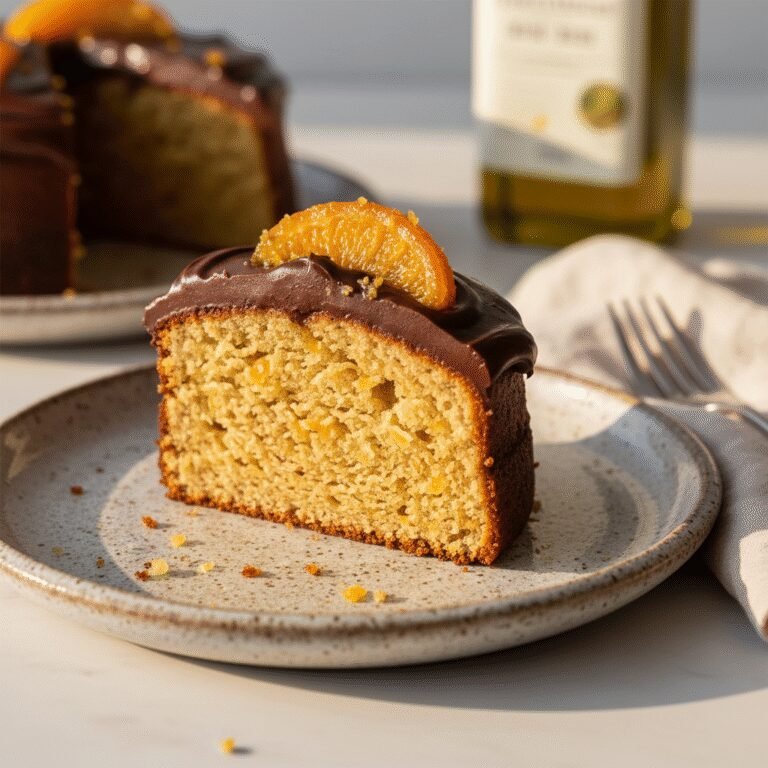
The Ultimate Moist Coconut Milk Chocolate Cake
Moist Coconut Milk Chocolate Cake Recipe
Discover the secret to the moistest, fudgiest chocolate cake you will ever bake. By using full-fat coconut milk, this recipe achieves a velvet-like crumb that stays fresh for days, offering an intense chocolate experience that happens to be dairy-free friendly.
20 minutes
35 minutes
55 minutes
12 servings (Two 8-inch rounds)
Dessert
Baking
American Fusion
Dairy-Free
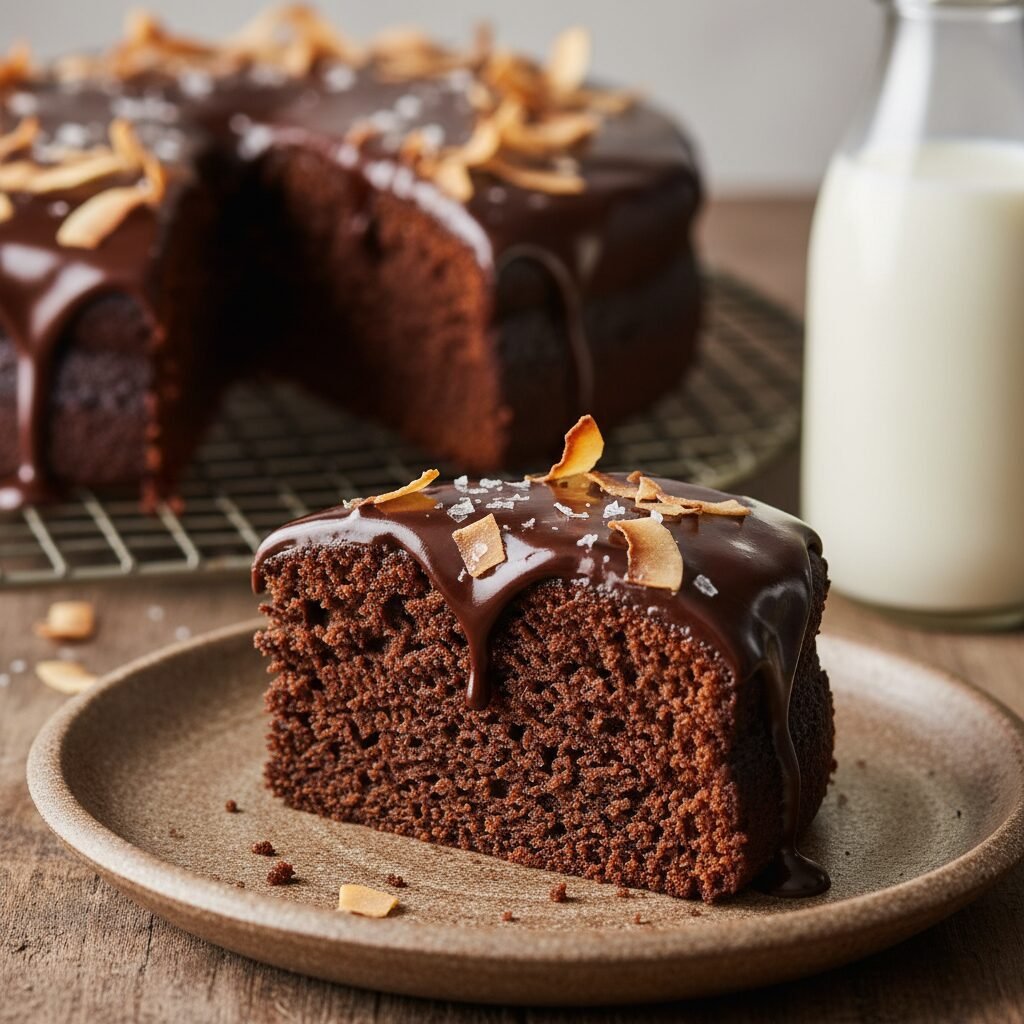
If you have been on a lifelong quest for a chocolate cake that doesn’t dry out the moment it hits the air, your search ends here. This Moist Coconut Milk Chocolate Cake is a revelation in the world of baking, challenging the traditional reliance on butter and heavy cream. The magic lies in the use of canned full-fat coconut milk, an ingredient that provides a luxurious richness and a silky mouthfeel that standard milk simply cannot compete with. Unlike butter-based cakes which can sometimes become dense or firm when cool, the unique fat structure of coconut milk ensures this cake remains incredibly soft, tender, and moist at room temperature. While the coconut milk does its heavy lifting in the texture department, it is surprisingly subtle in flavor, allowing the deep, dark cocoa notes to take center stage. This is not just a cake for those avoiding dairy; it is a cake for anyone who appreciates a decadently fudgy crumb. Whether you are celebrating a birthday, hosting a dinner party, or simply comforting yourself on a rainy afternoon, this cake delivers a bakery-quality experience right from your home kitchen. It pairs beautifully with a glossy chocolate ganache or a simple dusting of powdered sugar, making it versatile enough for both rustic and elegant presentations. Prepare to be asked for the recipe after every single slice is devoured.
History & Origins
The history of chocolate cake is a journey from a beverage to a solid confection, but the quest for moisture has always been the driving force behind its evolution. In the early American cookbooks of the 19th century, chocolate cakes were often dry and bread-like, best consumed with tea or wine to help wash them down. The game changed significantly with the introduction of Devil’s Food Cake in the early 20th century, which utilized boiling water and baking soda to create a darker, fluffier crumb. During the Great Depression, ‘Wacky Cake’ or ‘Depression Cake’ emerged, omitting eggs and butter due to rationing, often using oil and vinegar instead; this taught bakers that delicious cakes didn’t strictly require dairy. However, the specific integration of coconut milk into chocolate cake is a more modern innovation, born from the intersection of vegan baking experiments and the global fusion of culinary ingredients. As home bakers sought alternatives to dairy that didn’t sacrifice richness, full-fat coconut milk became a hero ingredient. Originally a staple in Southeast Asian, Caribbean, and South American cuisines for savory curries and sweet puddings, coconut milk found its way into Western baking as a superior fat source. It mimics the richness of heavy cream while providing the tenderizing properties of oil. Today, the coconut milk chocolate cake is celebrated not just as an ‘alternative’ diet recipe, but as a superior method for achieving the perfect moist texture that professional bakers strive for.
Why This Recipe Works
This recipe succeeds where others fail due to the science of emulsion and fat content. The primary reason this cake is so moist is the full-fat canned coconut milk. Unlike regular cow’s milk, which is mostly water and sugar with some fat, canned coconut milk is a stable emulsion of oil and water with a high percentage of medium-chain triglycerides (MCTs). These fats coat the flour proteins more effectively than butter, inhibiting the formation of tough gluten strands. This results in a tender, melt-in-your-mouth crumb. Additionally, we use oil instead of butter. Butter is about 20% water and solidifies at room temperature, which can lead to a drier texture once the cake cools. Oil remains liquid at room temperature, keeping the cake sensationally soft for days. The recipe also calls for boiling hot coffee. Adding hot liquid to cocoa powder ‘blooms’ it, meaning it dissolves the cocoa solids and releases flavor compounds that are otherwise trapped, intensifying the chocolate taste. The chemical reaction between the acidic ingredients (cocoa, coffee) and the baking soda creates immediate aeration, giving lift to the heavy batter. Finally, the balance of brown and white sugars adds hygroscopic properties, drawing moisture from the air into the cake to prevent staling.
Why You’ll Love This Recipe
- ✓Incredibly moist and fudgy texture that lasts for days
- ✓Deep, intense chocolate flavor boosted by hot coffee
- ✓Dairy-free friendly without sacrificing richness
- ✓Simple one-bowl mixing method means less cleanup
- ✓Versatile base that works for layers, sheet cakes, or cupcakes
- ✓Uses pantry staples and canned coconut milk
Equipment You’ll Need
- ✓Two 8-inch round cake pans
- ✓Parchment paper
- ✓Large mixing bowl
- ✓Whisk
- ✓Sifter or fine-mesh sieve
- ✓Measuring cups and spoons
- ✓Wire cooling rack
- ✓Offset spatula (for frosting)
Ingredients
- ✓2 cups all-purpose flour
- ✓2 cups granulated sugar
- ✓3/4 cup unsweetened cocoa powder (Dutch-process or regular)
- ✓2 teaspoons baking powder
- ✓1 1/2 teaspoons baking soda
- ✓1 teaspoon fine sea salt
- ✓1 can (13.5 oz) full-fat unsweetened coconut milk (shaken well)
- ✓2 large eggs, room temperature
- ✓1/2 cup vegetable oil, canola oil, or melted coconut oil
- ✓2 teaspoons pure vanilla extract
- ✓1 cup boiling hot coffee (or boiling water)
Instructions
- Preheat your oven to 350°F (175°C). Grease two 8-inch round cake pans generously with oil or cooking spray. Line the bottoms with parchment paper rounds to ensure the cakes release perfectly. Dust the sides with a little cocoa powder.
- In a large mixing bowl, sift together the all-purpose flour, sugar, cocoa powder, baking powder, baking soda, and salt. Whisk the dry ingredients briefly to ensure they are evenly distributed.
- In a medium bowl or large measuring cup, whisk together the full-fat coconut milk, room temperature eggs, oil, and vanilla extract until the mixture is smooth and fully combined.
- Pour the wet ingredient mixture into the bowl of dry ingredients. Whisk by hand or use a mixer on low speed until just combined. Do not overmix at this stage.
- Carefully pour the boiling hot coffee (or boiling water) into the batter. Whisk gently and consistently until the water is fully incorporated. The batter will be very thin and liquid-like; this is exactly how it should be to ensure moisture.
- Divide the batter evenly between the two prepared cake pans. Tap the pans gently on the counter once or twice to release any large air bubbles.
- Bake in the center of the preheated oven for 30 to 35 minutes. Test for doneness by inserting a wooden toothpick into the center of the cake; it should come out clean or with just a few moist crumbs attached.
- Remove the cakes from the oven and place the pans on a wire cooling rack. Allow them to cool in the pans for about 15 to 20 minutes. This resting period is crucial as the cake is very tender when hot.
- Run a thin knife around the edges of the cake to loosen it from the pan. Invert the cakes onto the wire rack, peel off the parchment paper, and allow them to cool completely to room temperature before frosting.
Expert Cooking Tips
- ✓Always use full-fat canned coconut milk found in the Asian aisle, not the refrigerated carton coconut milk, as the fat content is crucial for the texture.
- ✓Do not skip the boiling liquid step; blooming the cocoa powder releases the full depth of the chocolate flavor.
- ✓Ensure your eggs and coconut milk are at room temperature to prevent the batter from seizing or curdling when mixed.
- ✓Be careful not to overbake; check the cake at the 30-minute mark, as chocolate cakes can dry out quickly if left too long.
- ✓If you are sensitive to coconut flavor, use a high-quality Dutch-process cocoa powder and strong coffee, which will mask the coconut notes almost entirely.
- ✓Sifting the cocoa powder is essential as it tends to be lumpy, and breaking up those lumps later in the batter is difficult without overmixing.
- ✓Let the cake cool completely before frosting; the crumb is so tender that spreading frosting on a warm cake will cause it to tear.
Substitutions and Variations
This recipe is quite robust and allows for several substitutions. For a gluten-free version, substitute the all-purpose flour with a high-quality 1:1 gluten-free baking flour blend that contains xanthan gum; the moisture from the coconut milk helps prevent the gritty texture common in GF bakes. To make this cake completely vegan, replace the 2 eggs with ‘flax eggs’ (2 tablespoons ground flaxseed meal mixed with 6 tablespoons warm water, let sit for 5 minutes) or a commercial egg replacer; note that the cake may be slightly denser but still delicious. If you do not want to use coffee, boiling water works perfectly fine, though the chocolate flavor may be slightly less intense. You can substitute the vegetable oil with melted coconut oil for a more pronounced coconut aroma, or avocado oil for a neutral healthy fat. For the sugar, you can use half brown sugar and half white sugar if you want an even deeper, caramel-like undertone, though the texture will be slightly heavier.
Common Mistakes to Avoid
The most common mistake is using ‘lite’ coconut milk or the coconut milk beverage sold in cartons intended for cereal. These products have a high water content and lack the fat required to structure the cake, resulting in a gummy or rubbery texture. Another error is overmixing the batter after adding the flour; this develops gluten and leads to a tough cake. Stop mixing as soon as the ingredients are combined. Many bakers also fear the thinness of the batter and add more flour; do not do this! The batter is supposed to be liquid. Lastly, opening the oven door too early can cause the cake to collapse in the center. Wait until at least 25 minutes have passed before peeking.
Serving Suggestions
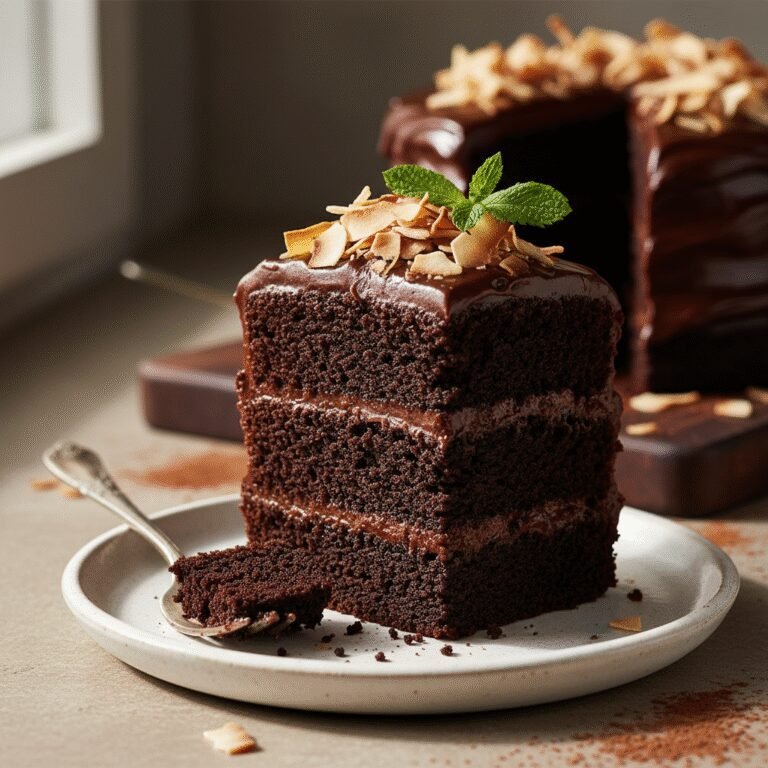
This cake is rich enough to be served with a simple dusting of powdered sugar and fresh berries, but it truly shines when paired with a whipped coconut cream frosting or a dark chocolate ganache. For a sophisticated dessert, serve a slice slightly warmed with a scoop of vanilla bean ice cream or a dollop of tart raspberry coulis to cut through the richness. It also pairs exceptionally well with an espresso or a tall glass of cold oat milk. If you are celebrating, garnish with toasted coconut flakes or edible flowers for a stunning visual contrast against the dark crumb.
Storage and Reheating Tips
Because this cake is oil and coconut milk-based, it stays moist at room temperature longer than butter cakes. Store the frosted cake in an airtight cake carrier at room temperature for up to 3 days. If you live in a very hot or humid climate, store it in the refrigerator for up to 5 days, but allow it to come to room temperature before serving for the best texture and flavor release. The unfrosted cake layers freeze beautifully. Wrap each cooled layer tightly in plastic wrap, then in aluminum foil, and freeze for up to 3 months. Thaw the layers in the refrigerator overnight before assembling and frosting.
Nutrition Facts (Estimated)
| Serving Size | 1 slice |
| Calories | 450 |
| Fat | 24g |
| Saturated Fat | 14g |
| Unsaturated Fat | 8g |
| Trans Fat | 0g |
| Cholesterol | 35mg |
| Sodium | 320mg |
| Carbohydrates | 58g |
| Fiber | 4g |
| Sugar | 35g |
| Protein | 6g |
Frequently Asked Questions
Does this cake taste strongly of coconut?
No, the coconut flavor is very subtle. The cocoa powder and coffee mask most of the coconut taste. It tastes primarily of rich dark chocolate.
Can I use this recipe to make cupcakes?
Yes! This batter makes excellent cupcakes. Fill muffin liners 2/3 full and bake at 350°F for 18-22 minutes.
My batter is extremely runny, did I do something wrong?
Not at all. This recipe produces a very thin, liquid batter. This high moisture content is what evaporates and steams the cake as it bakes, creating that ultra-soft crumb.
Can I use fresh coconut milk?
Fresh coconut milk can be inconsistent in fat content. It is safer to use canned, unsweetened full-fat coconut milk for reliable baking results.
Why do I need to use boiling water or coffee?
The heat helps to ‘bloom’ the cocoa powder, dissolving the solids and releasing more flavor. It also helps the sugar dissolve and activates the leavening agents immediately.
Can I bake this in a 9×13 inch pan?
Yes, this recipe fits perfectly in a standard 9×13 inch rectangular pan. You will likely need to increase the baking time to 35-45 minutes.
What creates the rise if there is no butter being creamed?
The rise comes entirely from the chemical reaction between the baking soda/powder and the acidic ingredients (cocoa, coffee), as well as the steam generated by the liquid batter.
Is this cake suitable for stacking?
Yes, but because it is so tender, it is recommended to chill the layers before stacking to make them easier to handle. It works best as a 2-layer cake.
Conclusion
In the world of chocolate desserts, the Moist Coconut Milk Chocolate Cake stands out as a testament to how alternative ingredients can sometimes yield superior results. It is a recipe that defies the dry-cake stereotype, offering a lush, melting texture that feels indulgent and comforting. Whether you are an experienced baker or a novice, this forgiving one-bowl method ensures success every time. By swapping traditional dairy for the creamy goodness of coconut milk, you create a treat that is accessible to more dietary needs without compromising an ounce of flavor. Bake this for your next gathering, and enjoy the silence that falls over the room as everyone takes their first bite.